What Is a Good Geographic Traffic for Nonprofits?
Your nonprofit helps homeless veterans in Denver. You’ve built a solid website and run awareness campaigns. But when you analyze traffic, you see visitors from across the country. While national awareness is nice, your programs serve Denver. Geographic traffic analysis shows whether you’re reaching people you can actually help.
Why Geographic Traffic Matters for Nonprofits
Location data helps nonprofits allocate limited resources wisely:
Service areas determine impact. If your programs serve specific communities, website traffic from outside those areas has limited value for your mission.
Local fundraising works best locally. Donors often prefer giving to organizations serving their own communities.
Event planning benefits from geographic insight. Knowing where supporters live helps plan volunteer events and community meetings.
Grant reporting often requires geographic data. Foundations want to know who you serve, and website analytics provide evidence.
For community-focused nonprofits, 40-60% of traffic should come from your service area. National organizations may have different benchmarks, but knowing your geographic distribution is key.
How to Check in GA4
Nonprofits can use GA4 geography reports effectively:
- Go to Reports > Acquisition > User acquisition
- Add comparison for Country or City
- Set up a conversion event for donations or volunteer sign-ups
- Compare conversion rates by geography
- Use the Geo map visualization for quick insights
Track both traffic volume and action rates. High traffic with low conversions indicates awareness-building is working, but the call to action needs improvement for that region.
Create segments for different supporter types. Compare geographic patterns for donors versus volunteers versus newsletter subscribers.
The Easier Way
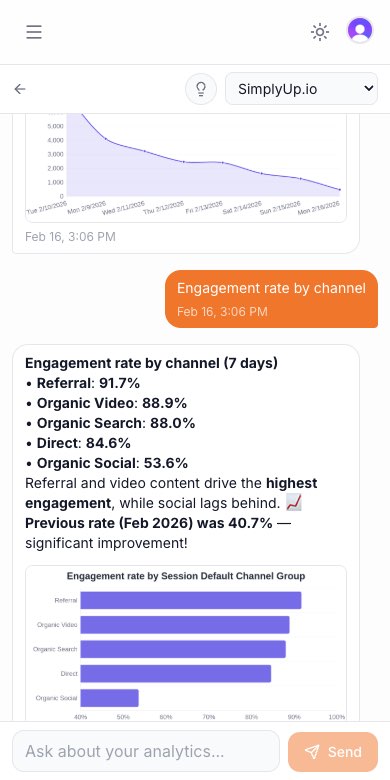
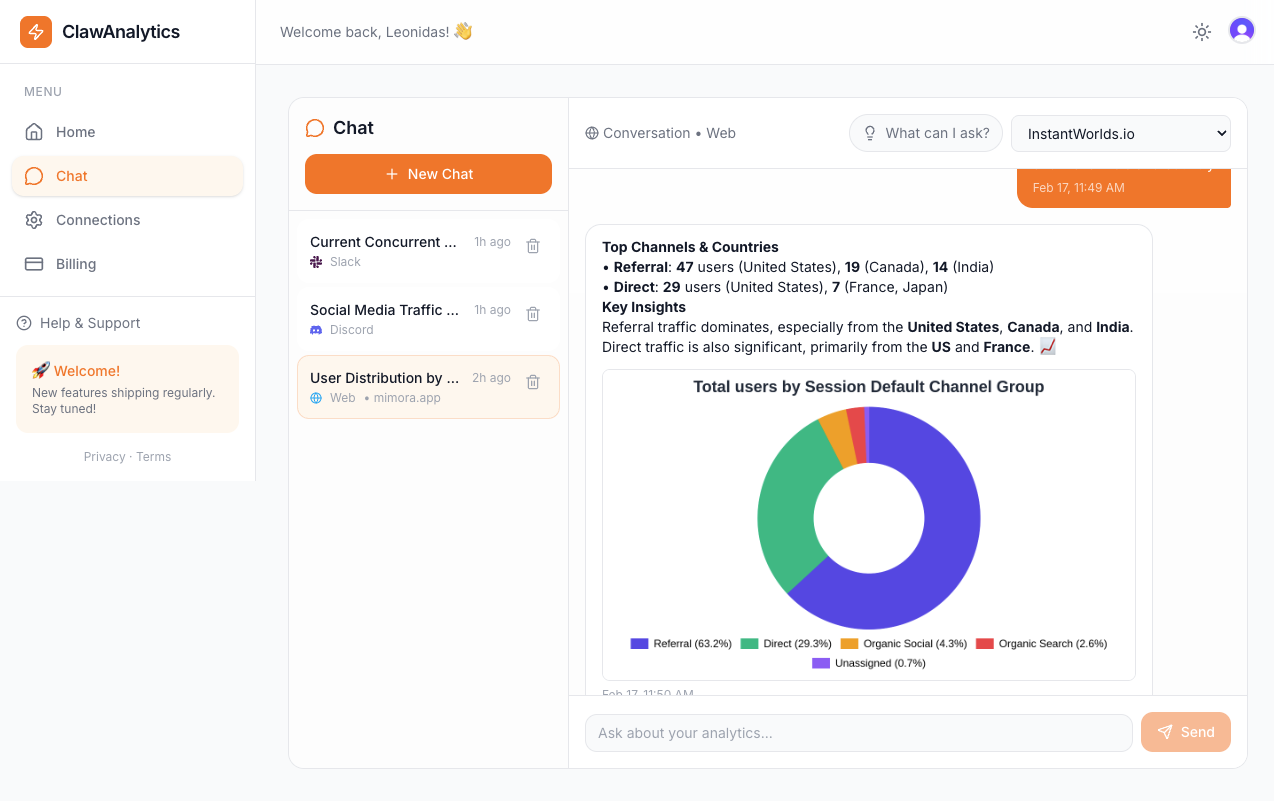
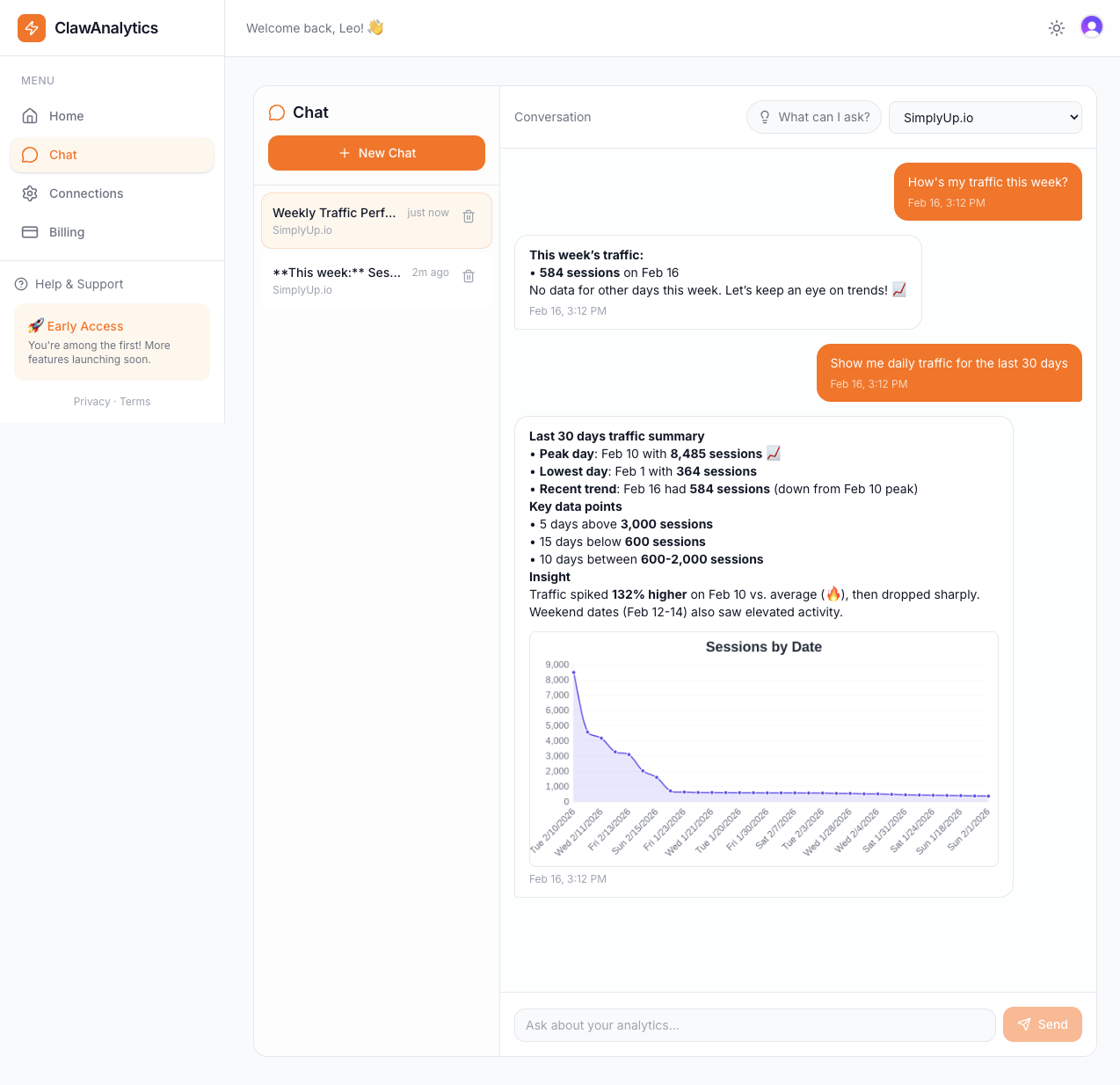
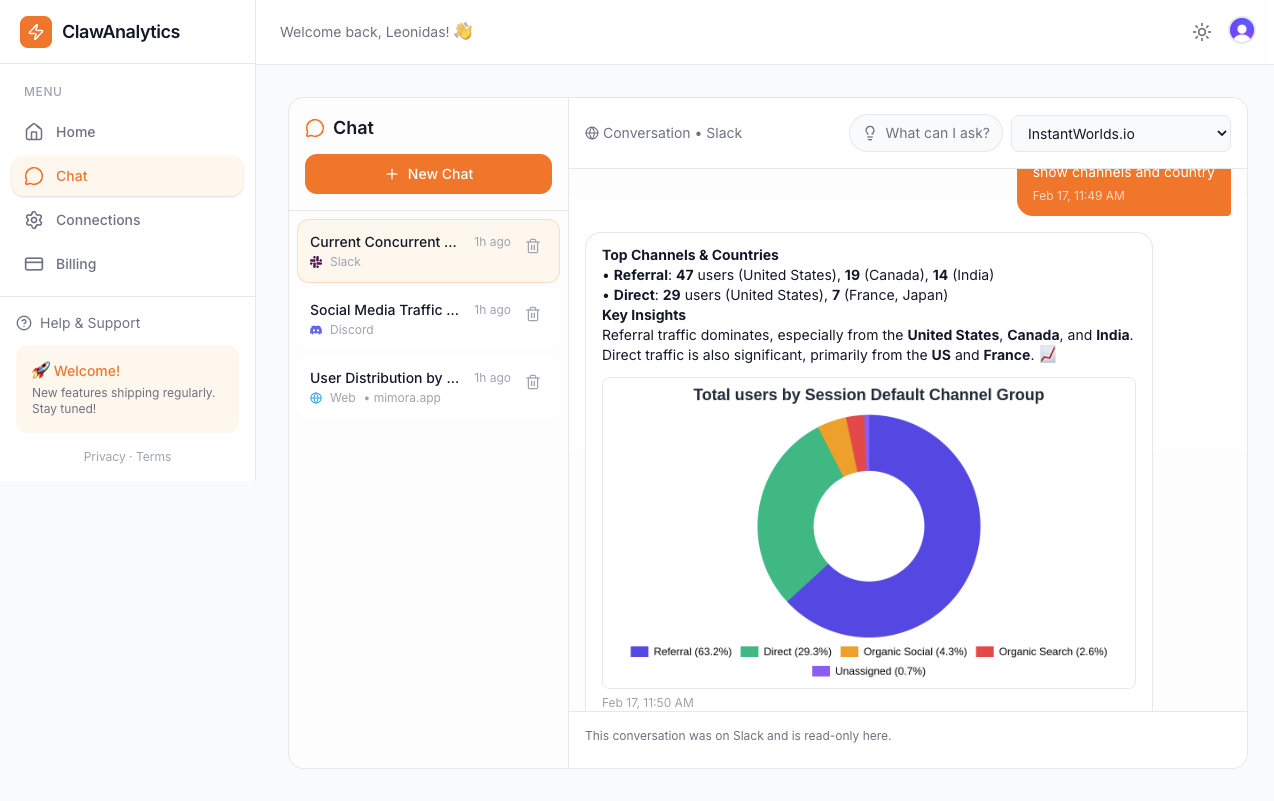
ClawAnalytics helps nonprofits understand their supporter geography:
The tool answers: Where do our most generous donors live? Which neighborhoods engage with our content but don’t know about our programs? Should we expand our service area or deepen our current reach?
ClawAnalytics tracks donation conversion by location, showing which regions produce supporters who give financially versus those who just consume content.
For nonprofits with multiple chapters or locations, the tool can show which geographic areas have the most active supporter bases.
For example, ClawAnalytics might reveal that while most website traffic comes from downtown, donations actually come from suburban areas. This insight changes where you focus community outreach.
Quick Wins
Connect Google Nonprofit Program. This improves local visibility in search results.
Create location-specific content. Blog about issues in your community to attract local visitors.
Host local events. Geographic data helps plan events where supporters actually live.
Use local keywords. Include neighborhood and city names in your content.
Partner with local organizations. Cross-promotion drives traffic from areas you want to reach.
Start by checking what percentage of donations come from your service area. If there’s a gap between awareness and support, focus on connecting with that audience.