What Is a Good Geographic Traffic for Restaurants?
You run an Italian restaurant in San Francisco. Your website looks great and ranks for Italian restaurant searches. But when you check your analytics, most visitors come from New York, Los Angeles, and even London. These visitors aren’t booking tables in San Francisco. Your website attracts the curious, not hungry locals. Geographic traffic analysis reveals if you’re reaching actual potential customers.
Why Geographic Traffic Matters for Restaurants
Restaurant success depends on nearby customers:
People prefer nearby options. Most diners choose restaurants within 10-15 minutes of their location. Traffic from distant areas won’t convert to visits.
Local SEO drives real customers. When someone searches for restaurants near them, your website needs to appear.
Delivery radius limits apply. If you offer delivery, only nearby customers can order from you.
Brand awareness builds locally. Regulars come from the neighborhood. Tourist traffic is nice but unreliable.
For restaurants, 60-80% of website traffic should come from your city or immediate surrounding areas. The remaining traffic might be from travelers, former residents, or curious browsers.
How to Check in GA4
Analyzing geographic traffic for a restaurant website takes these steps:
- Open GA4 > Reports > Acquisition > User acquisition
- Add comparison for City and enter your city name
- Track online ordering and reservation conversions by city
- Look at the Geo map to visualize where visitors come from
- Compare conversion rates between local and non-local traffic
The key insight is conversion rate by geography. If local visitors convert to orders at 5% but non-local visitors convert at 0.1%, your marketing is working for locals but not for others.
Create a segment for online ordering customers. See if their geographic distribution matches your delivery radius.
The Easier Way
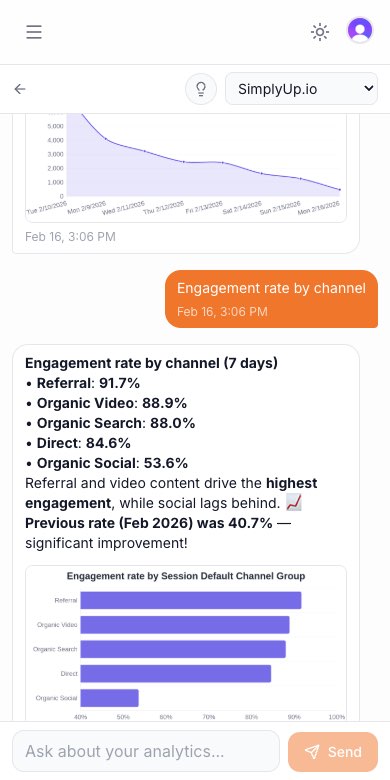
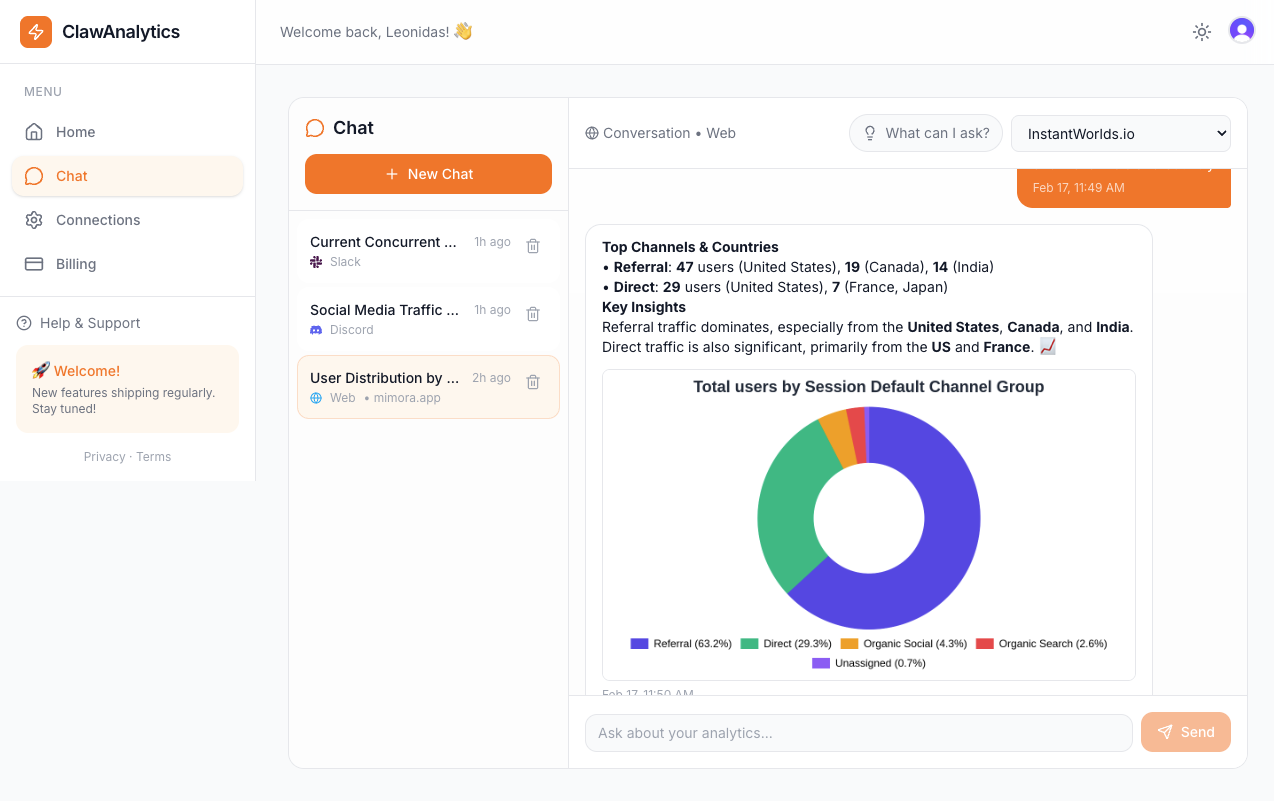
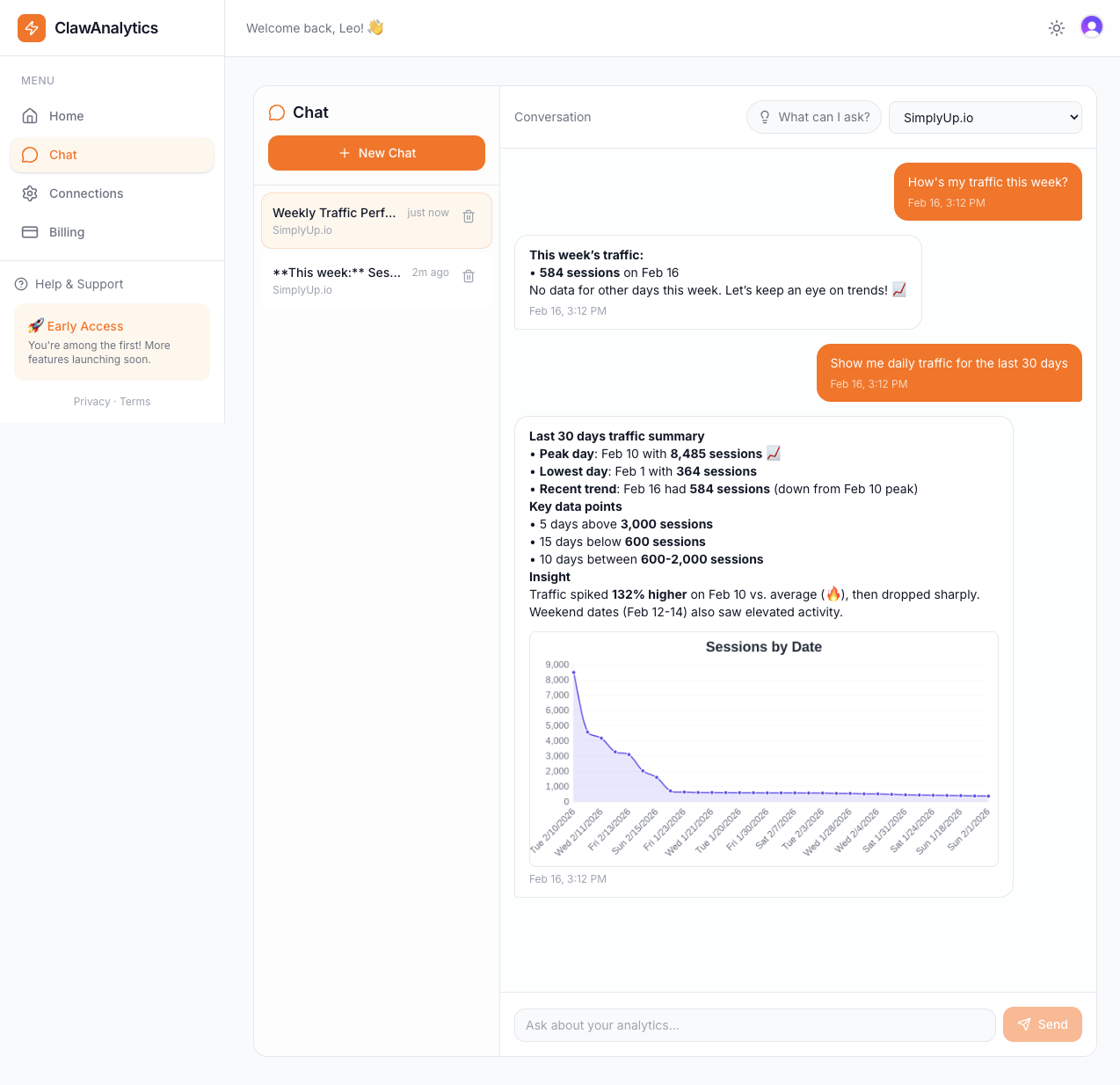
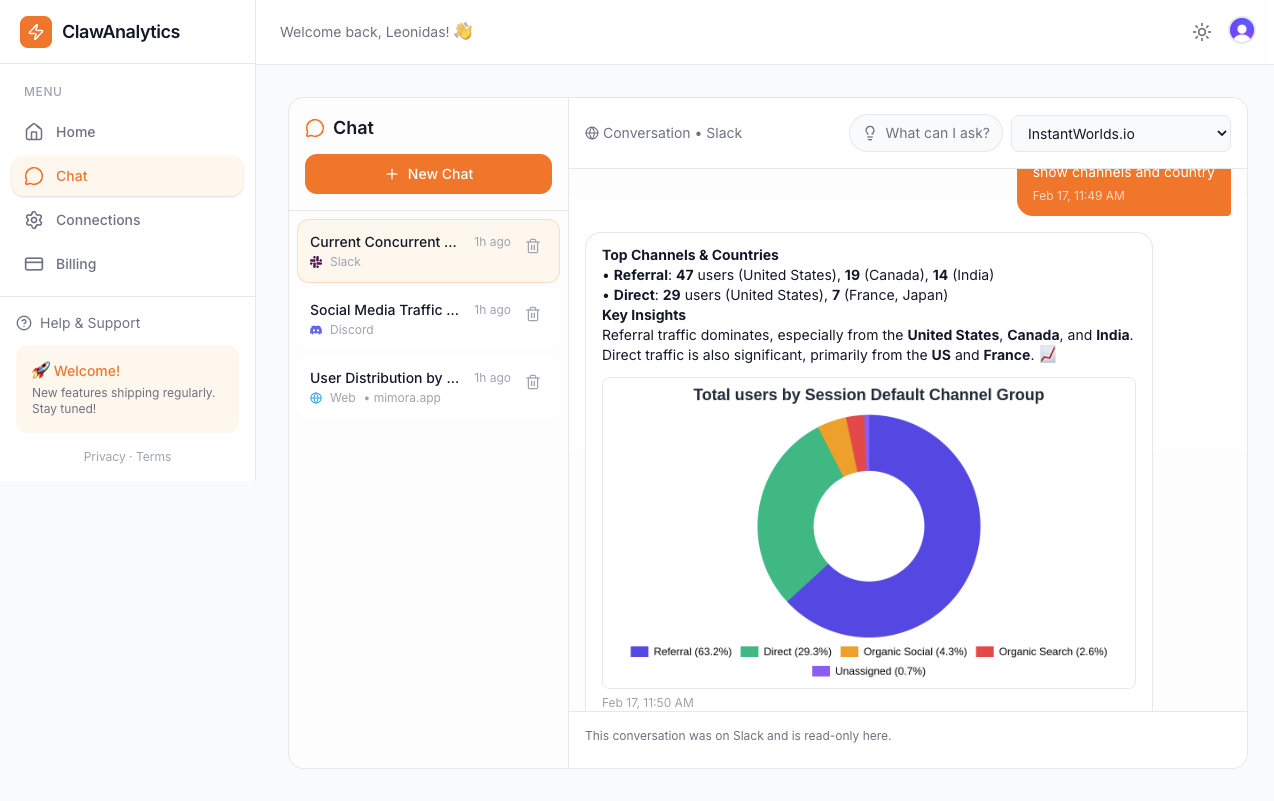
ClawAnalytics gives restaurants practical geographic insights:
It answers: Which neighborhoods send the most online orders? Are we getting traffic from areas we don’t deliver to? Why did Thursday traffic from the financial district drop?
The tool tracks order conversion by location, helping you understand which areas produce revenue versus just page views.
Real-time alerts notify you of traffic changes. If a local event drives unexpected traffic, you’ll know if it’s converting.
For example, ClawAnalytics might reveal that while downtown office workers visit during lunch hours, suburban families visit on weekends. This helps you optimize menu promotions and marketing for each audience.
Quick Wins
Claim and optimize Google Business Profile. This is the most important local SEO tool for restaurants.
Use local keywords on your website. Include your neighborhood and city in titles and content.
Encourage reviews on Google. Local reviews improve local search ranking.
Create location-specific landing pages. If you have multiple locations, each gets its own page.
Track phone calls by location. Use call tracking numbers to understand which areas generate reservations.
Start by checking what percentage of your online orders come from within your delivery radius. If it’s low, your website might be reaching people too far away to become customers.