What Is a Good Geographic Traffic for Travel?
You manage tourism marketing for Hawaii. Your website gets 50,000 visitors monthly. That’s fantastic. But 40,000 come from within Hawaii itself. These are residents, not tourists. They won’t book hotels, tours, or flights. Your marketing is reaching locals who already live there. Your real prospects in Los Angeles, Tokyo, and Sydney are getting lost in the noise. This is why geographic traffic matters for travel.
Why Geographic Traffic Matters for Travel
Travel marketing is fundamentally about matching visitors with destinations. Here’s why geography drives everything:
- Market targeting: Airlines, hotels, and tour operators need to know which source markets to target. Geographic data reveals this.
- Seasonal planning: Different regions book travel at different times. Understanding where your visitors come from helps predict demand.
- Language and content: A visitor from Brazil needs Portuguese content. Someone from Japan needs Japanese. Geographic data tells you what languages to prioritize.
- Campaign optimization: If most visitors come from Los Angeles, spending money on Tokyo ads doesn’t make sense.
The best travel websites see 40-60% of traffic from key source markets outside their destination. The rest might be locals, returning visitors, or accidental traffic.
How to Check in GA4
Here’s your step-by-step process:
- Open GA4
- Navigate to Reports
- Click User
- Select Geo
- Choose Country or City
Focus on countries outside your destination. These are your actual market. If domestic traffic dominates, your marketing is too local.
The Easier Way
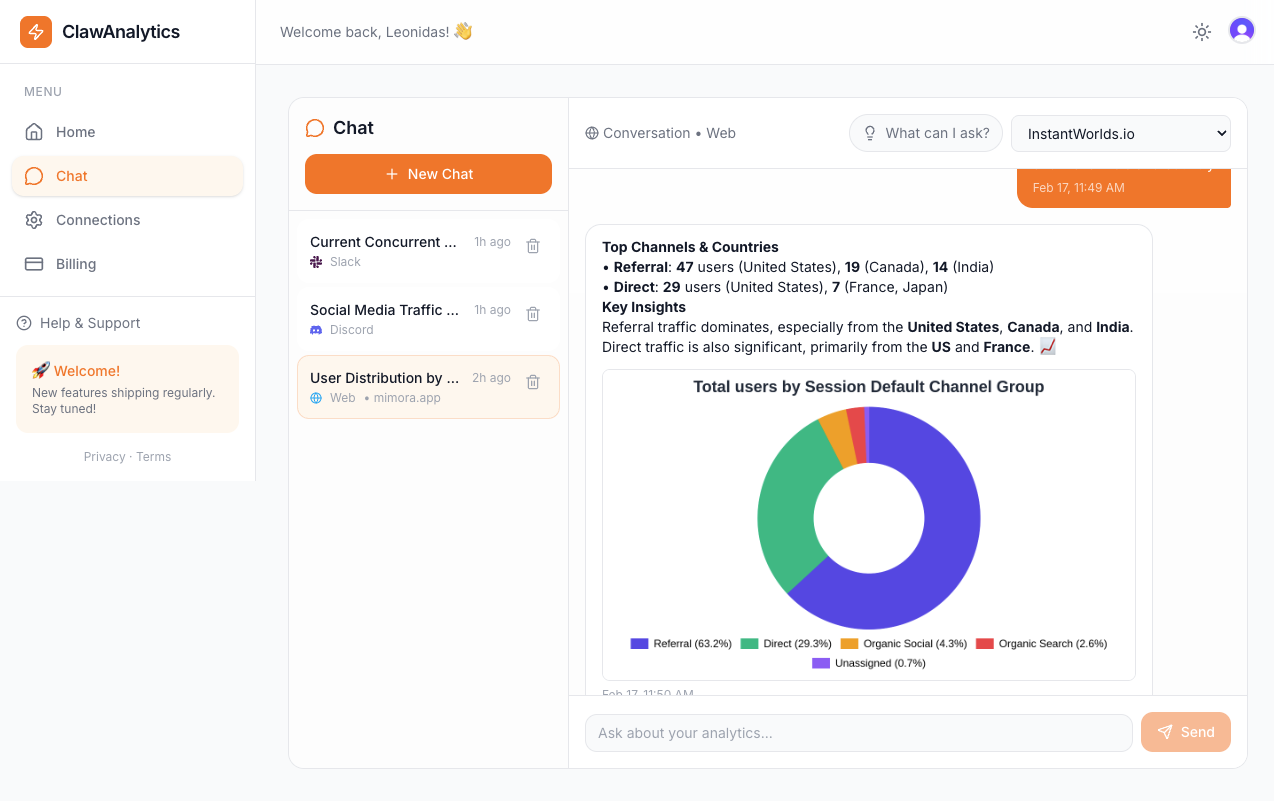
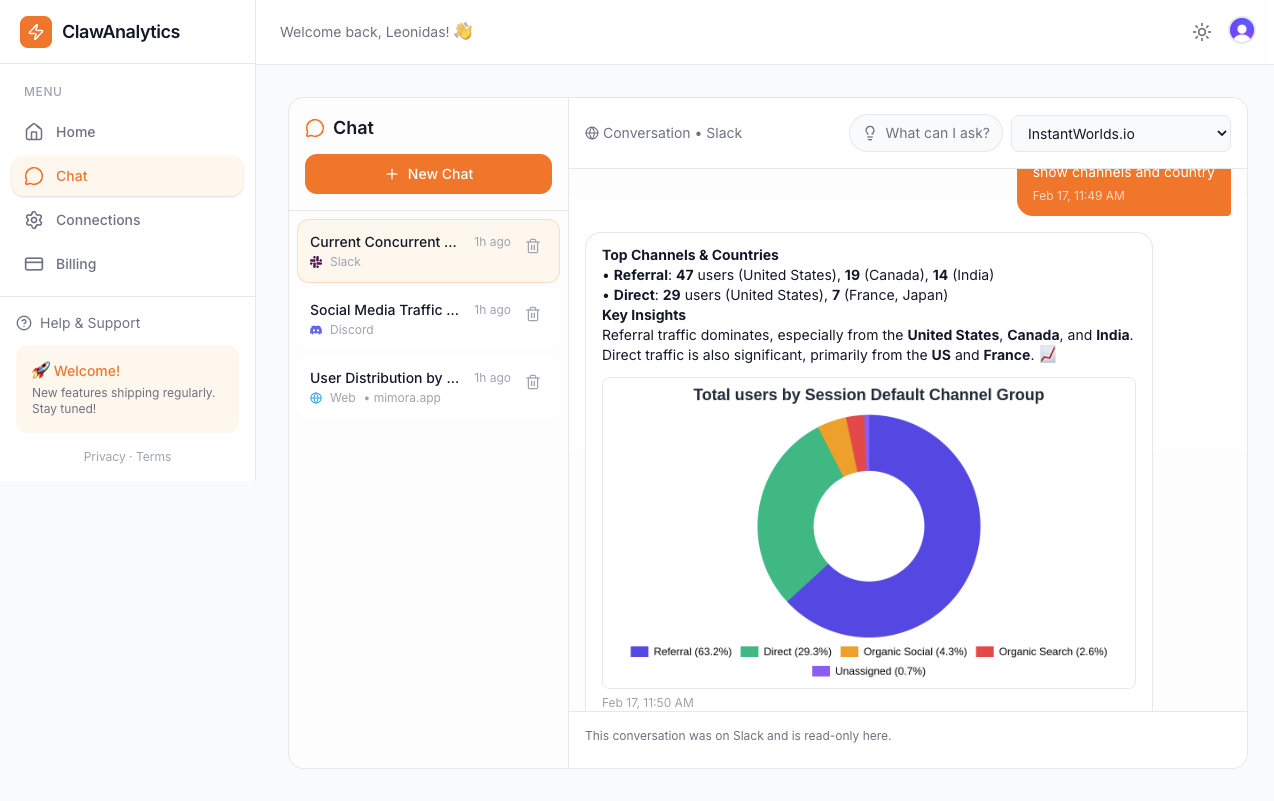
ClawAnalytics gives you a clear map of where your visitors originate. You instantly see which countries drive the most interest in your destination. This helps you allocate marketing budgets to the right markets.
You might find that your Instagram presence attracts Europeans, but your search ads pull in Americans. ClawAnalytics separates these so you can optimize each channel.
Common questions become clear: Which markets are growing? Should we launch campaigns in a new country? Are we overspending on domestic ads?
Quick Wins
- Create market-specific landing pages: Build pages in different languages for your top source countries.
- Set country-specific ad campaigns: Target ads at specific countries rather than globally.
- Analyze seasonal patterns: Look at geographic data month-over-month to identify seasonal markets.
- Partner with regional influencers: If a specific country drives traffic, work with influencers from that region.