What Is a Good New Vs Returning Users for Healthcare?
A patient finds your clinic online, visits once, and never returns. Meanwhile, your competitor down the street has patients booking follow-ups automatically. The difference is understanding new vs returning users.
Why New Vs Returning Users Matters for Healthcare
Patient loyalty drives revenue. One returning patient is worth 5-10 new ones. They refer friends, book multiple services, and trust your advice.
Content performance matters for health education. If your blog posts on diabetes management or nutrition bring people back, that content is valuable.
Campaign effectiveness is measurable. Are your Google Ads reaching new patients? Are your email newsletters bringing existing patients back? This metric separates the two.
Service line growth depends on retention. Expanding cardiology? Check if existing patients are booking those appointments. If not, you know where to focus.
How to Check in GA4
- Open GA4 and navigate to Reports
- Select User > User engagement
- Add “New vs Returning” as a dimension
- Set your date range to 30 or 90 days
- Segment by traffic source to see acquisition quality
Look for returning user percentages above 35%. Anything lower suggests your site isn’t giving patients reasons to come back.
The Easier Way
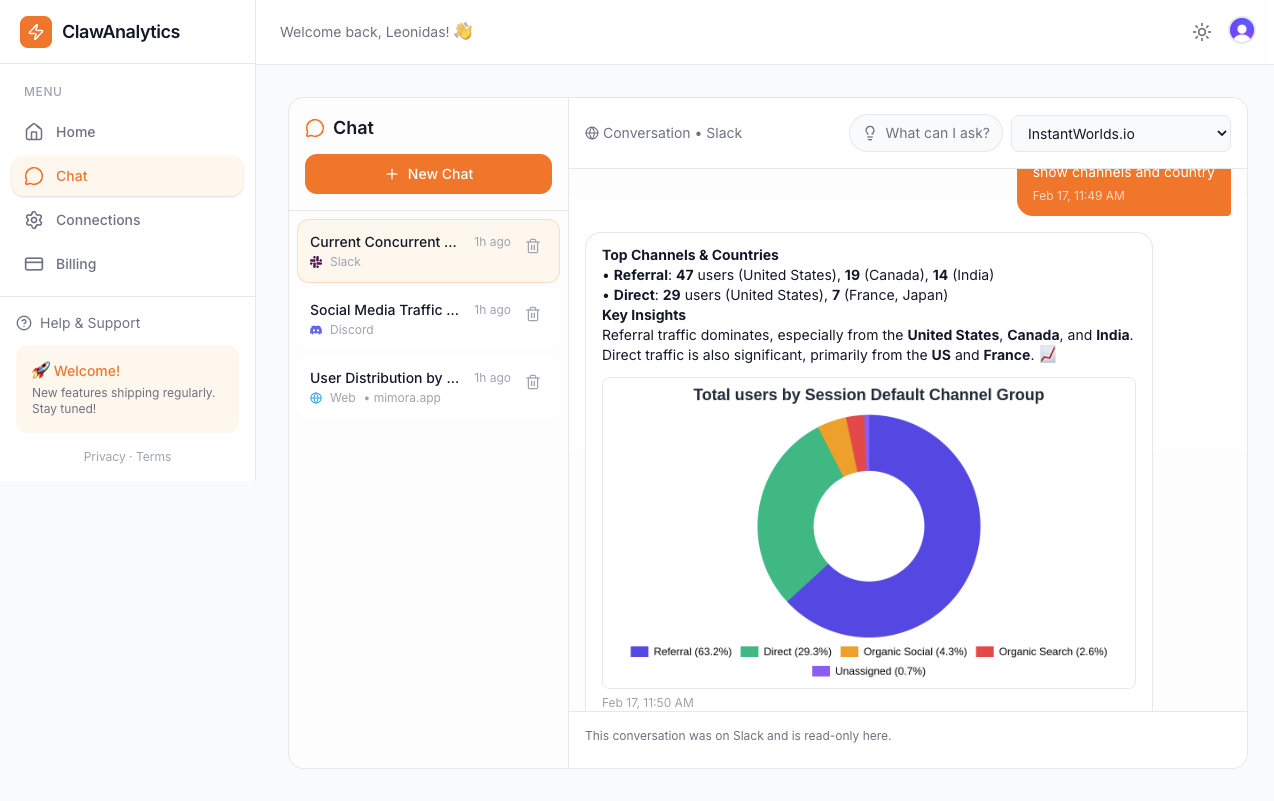
ClawAnalytics makes healthcare analytics simple. Instead of digging through GA4 reports, you see at a glance which doctors, services, and content pieces are driving patient loyalty. Set up alerts for when returning visitor rates drop so you can act fast.
Questions ClawAnalytics answers for healthcare:
- Which physicians have the most loyal patient followings online?
- Are patients using the patient portal returning more often?
- What blog topics generate the most repeat visits?
Quick Wins
- Launch a patient portal. Secure messaging and test results keep patients logging in.
- Post seasonal health content. Flu prevention in winter, allergy tips in spring.
- Send appointment reminders. Email and SMS bring patients back for checkups.
- Add health risk assessments. Interactive tools that users return to use.
- Create condition-specific guides. Diabetes management, heart health, and similar resources.
Your patients trust you with their health. A strong new vs returning users ratio shows they’re trusting your website too.