What Is a Good Organic Traffic for Agencies?
Your marketing agency has 3,000 monthly website visitors. Only 600 came from Google searches. Is that enough? For agencies, organic traffic should make up at least 30% of total visitors. If potential clients find you through search, it signals authority and builds trust before you even talk.
Why Organic Traffic Matters for Agencies
Organic leads have higher conversion rates. Someone searching “best SEO agency in Austin” likely needs a service now. They convert better than cold outreach leads.
Content showcases expertise. Case studies and guides prove you know your stuff. They attract clients who research before hiring.
SEO builds long-term authority. Ranking for industry keywords positions your agency as a leader, not just another option.
Referral traffic grows naturally. Great content gets shared and linked to, expanding your reach without ongoing ad spend.
How to Check in GA4
- Open GA4 and go to Reports
- Navigate to Acquisition
- Select Traffic Acquisition
- Filter for “Organic Search” channel
- Set comparison period to see growth trends
- Create a segment for “Contact Form Submissions” to track conversions
Look at which service pages get the most organic traffic and which convert best.
The Easier Way
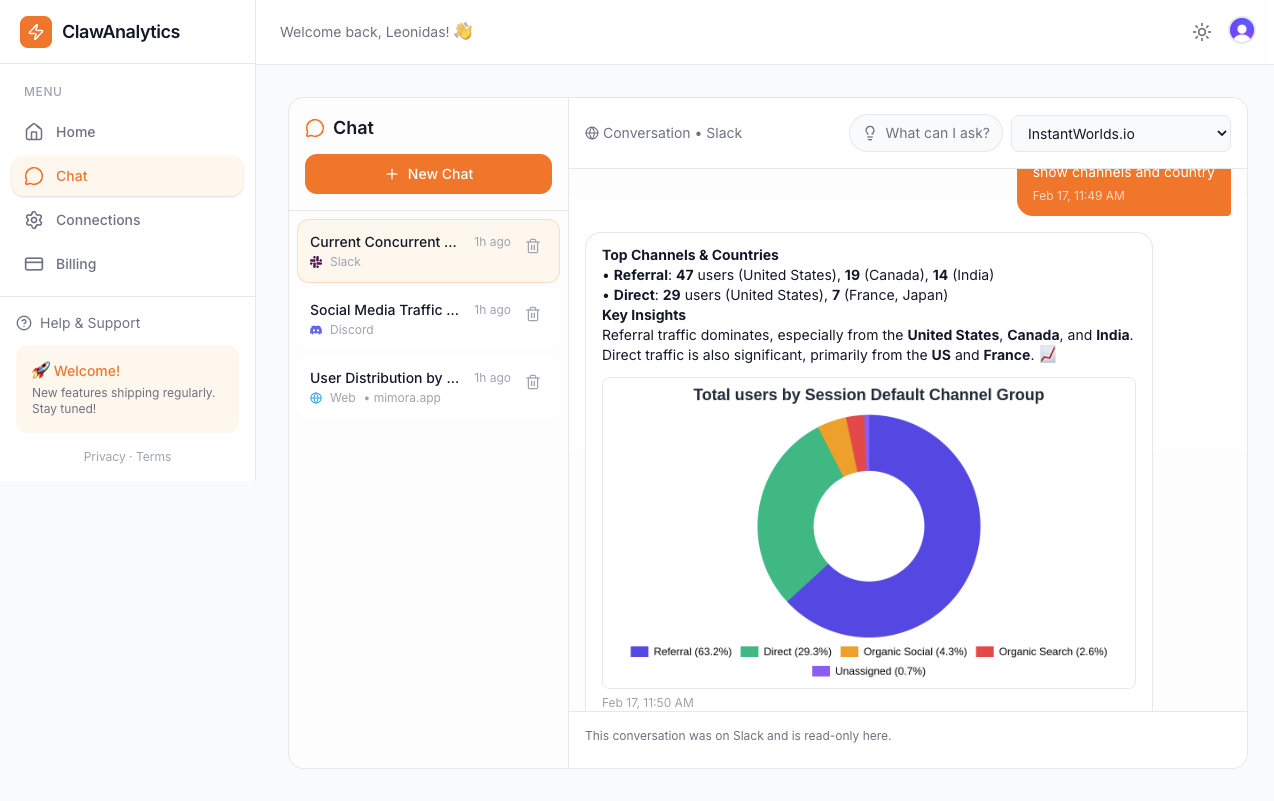
ClawAnalytics helps agencies understand which content actually brings clients.
Questions like: Which case studies generate the most leads? What do prospects search for before contacting us? Which service pages need SEO love? These become clear.
Instead of guessing, you see what makes potential clients convert. The platform helps you focus on content that builds your client base.
Quick Wins
Create service-specific landing pages. Separate pages for “SEO services,” “PPC management,” and “content marketing” each target different keywords.
Publish case studies regularly. Show real results with numbers. Case studies attract leads researching their options.
Optimize for local SEO. Claim your Google Business Profile and get reviews. Many clients search for agencies “near me.”
Build thought leadership content. Write about industry trends. This attracts links and positions your team as experts.
Develop lead magnets. Offer free audits, templates, or guides in exchange for email addresses. Capture traffic and nurture leads.