What Is a Good Organic Traffic for Ecommerce?
You’re running an online store selling handmade jewelry. You check your analytics and see 1,000 visitors yesterday. Only 200 came from Google. Is that good? It depends on your goals. For most ecommerce sites, organic search should drive at least 30% of your traffic. If it’s lower, you’re likely spending too much on paid ads.
Why Organic Traffic Matters for Ecommerce
Organic visitors have higher purchase intent. Someone searching “best silver earrings under $50” is ready to buy. They found you through search, not an ad they scrolled past.
SEO traffic compounds over time. Unlike paid ads that stop when you stop paying, good content keeps ranking and bringing visitors for months or years.
Your cost per acquisition drops significantly. When organic traffic drives sales, you stop depending on expensive ad campaigns that eat into margins.
Trust increases with search visibility. Customers trust Google results. If they find your store ranking naturally, they perceive your brand as established and reliable.
How to Check in GA4
- Open GA4 and navigate to Reports
- Click on Acquisition then User Acquisition
- Look at the “Sessions by Default channel group”
- Find “Organic Search” in the list
- Click on it to see detailed breakdown by source
- Set a comparison to see trends over time
Your goal: organic search should represent 30-50% of total sessions. If it’s below 20%, your SEO strategy needs work.
The Easier Way
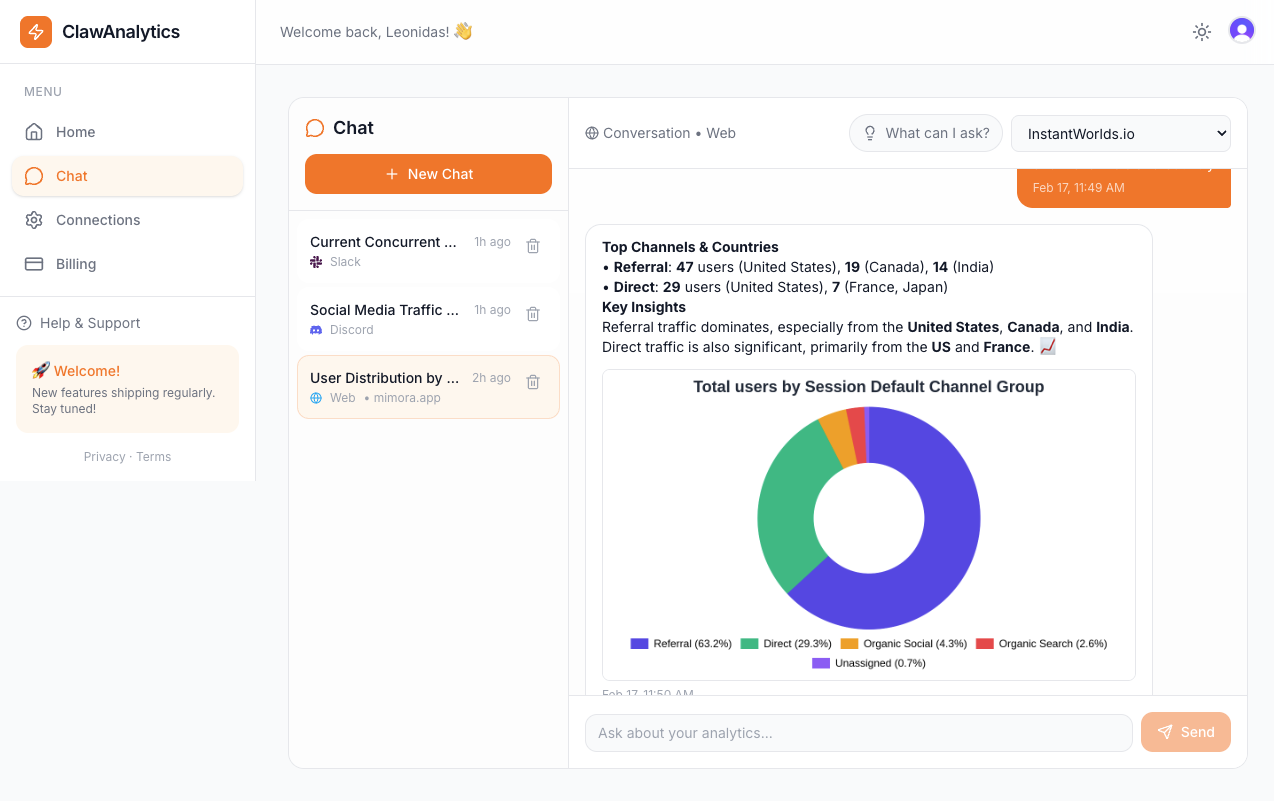
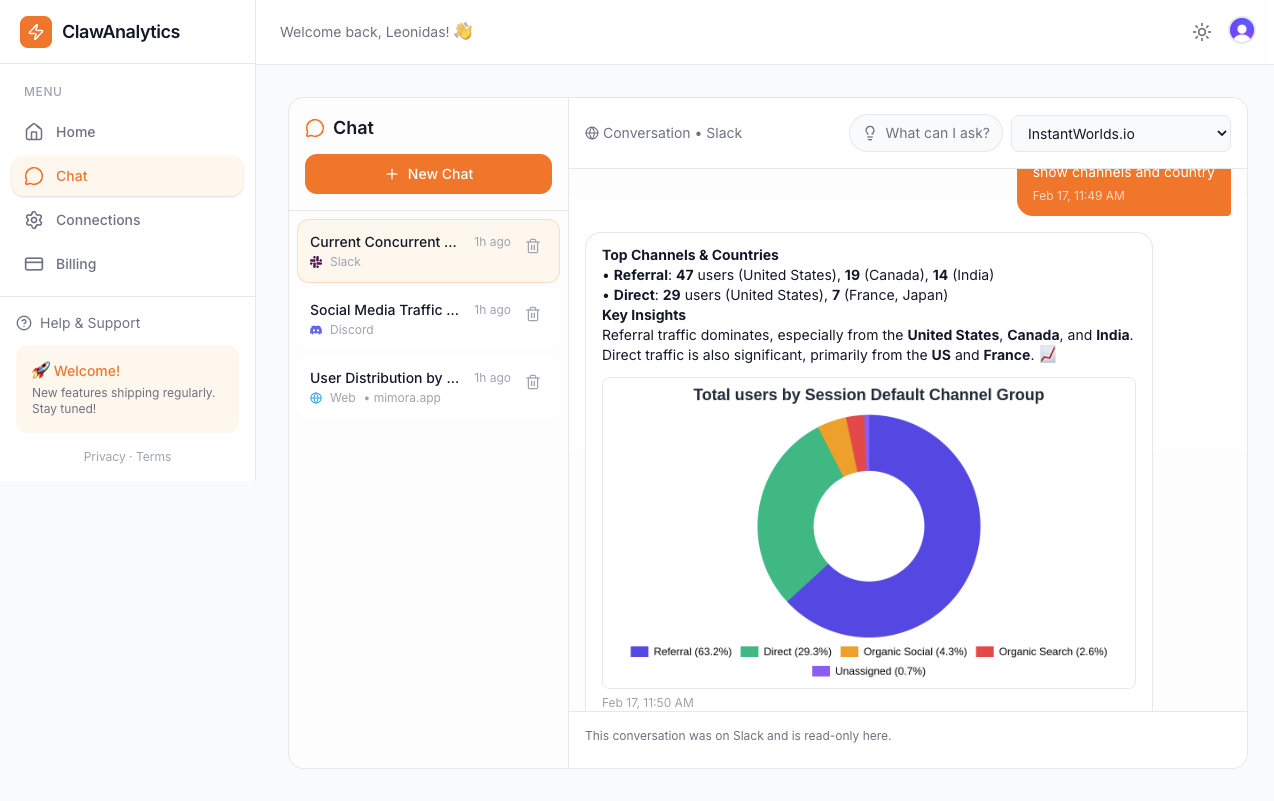
GA4 shows you numbers, but not what to do with them. ClawAnalytics makes SEO actionable for ecommerce.
Questions like: Which product pages need SEO improvements? What search terms bring buyers but low conversions? Which category pages should I prioritize? These become clear.
Instead of guessing which content works, you see exactly what drives traffic and sales. You learn which products people search for but can’t find on your site. The insights help you create content that actually sells.
Quick Wins
Optimize product titles and descriptions. Include common search terms naturally in your product copy.
Start a blog with buyer guides. “How to choose the right size” or “Best gifts for photographers” bring in traffic at the top of the funnel.
Earn product reviews. Reviews create fresh content and build backlinks from review sites.
Fix technical SEO issues. Check for broken links, slow loading pages, and missing meta descriptions across your site.
Build internal links. Link from your blog posts to relevant product pages to pass authority and guide visitors to purchase.