Legal

What Is a Good Organic Traffic for Legal?

Discover organic traffic benchmarks for law firm websites and learn how to attract more clients through search.

Someone facing a DUI charge searches desperately for help. A business owner needs a contracts attorney. These people don’t browse. They search with urgent needs and significant budgets. When your law firm appears in those searches, you’re not just getting a visitor. You’re reaching someone actively seeking legal representation. For law firms, organic traffic means leads that convert at remarkable rates. These prospects already decided they need a lawyer. Your job is to be found first.

High-value clients. A personal injury case might be worth tens of thousands in fees. A business contract could mean millions. One well-converting organic lead often outweighes dozens of other marketing sources.

Trust is everything. People hiring lawyers are scared and vulnerable. Showing up in search results builds initial trust. Ranking for educational terms establishes your expertise before they even call.

Local searches dominate. Someone searching “divorce lawyer Chicago” wants a Chicago lawyer. Local SEO directly connects you with nearby clients who can actually hire you.

Long-term compounding. Once a law firm builds authority in practice areas, traffic grows steadily. Unlike paid campaigns that stop when budget runs out, organic rankings keep delivering.

How to Check in GA4

  1. Access Google Analytics 4 for your law firm website.
  2. Navigate to Reports > Acquisition > Traffic acquisition.
  3. Focus on Organic Search channel and individual landing pages.
  4. Set up goals for “Contact form submit” and “Phone call click.”
  5. Create segments for different practice areas to compare traffic quality.
  6. Look at conversion rates by page to find your best content.

Track consultation request sources carefully. Some pages attract casual browsers while others bring serious potential clients.

The Easier Way

ClawAnalytics gives law firms clear insights into client acquisition. You see which practice area pages generate the most inquiries. You track how visitors navigate from legal guides to contact forms. You discover seasonal patterns in legal needs.

You also understand which content builds trust. Blog posts about specific legal topics often attract future clients researching their situations.

Questions ClawAnalytics answers: Which practice areas bring the most traffic? How do visitors find your firm? What legal questions do people search most?

Quick Wins

Build comprehensive practice area pages. Don’t just list services. Explain processes, common questions, and what clients should expect. This content ranks and converts.

Create legal guides addressing common questions in your practice areas. “How to choose a divorce attorney” or “What to do after a car accident” attract motivated prospects.

Claim and optimize your Google Business Profile. Reviews dramatically impact local search rankings for law firms.

Earn backlinks from local businesses, news outlets, and legal directories. Each link signals authority to search engines.

Ensure your site loads fast and works perfectly on mobile. Many people contact lawyers from their phones, especially after accidents or emergencies.
Check your analytics from anywhere

On your morning commute. At a coffee shop. In a meeting. Pull up your analytics on any device and get instant answers.

  • Web dashboard on desktop & mobile
  • Discord bot for team channels
  • Slack integration for your workspace
  • MCP server for AI agents (Claude, Cursor)
See your traffic in 60 seconds →
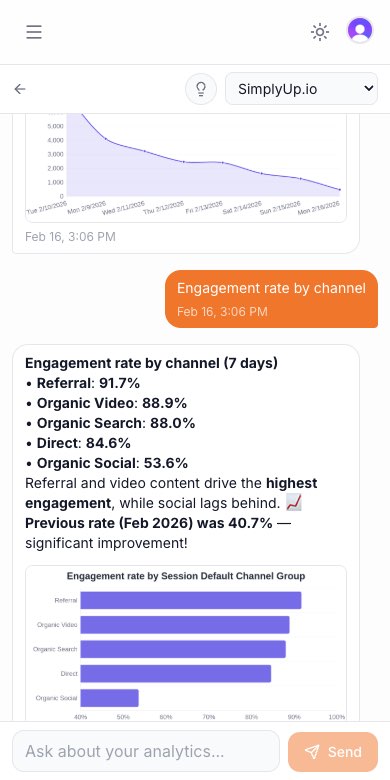
ClawAnalytics mobile chat showing engagement rate breakdown with charts

How ClawAnalytics helps

Skip the dashboards. Get answers in seconds.

🔗
1

Connect GA4

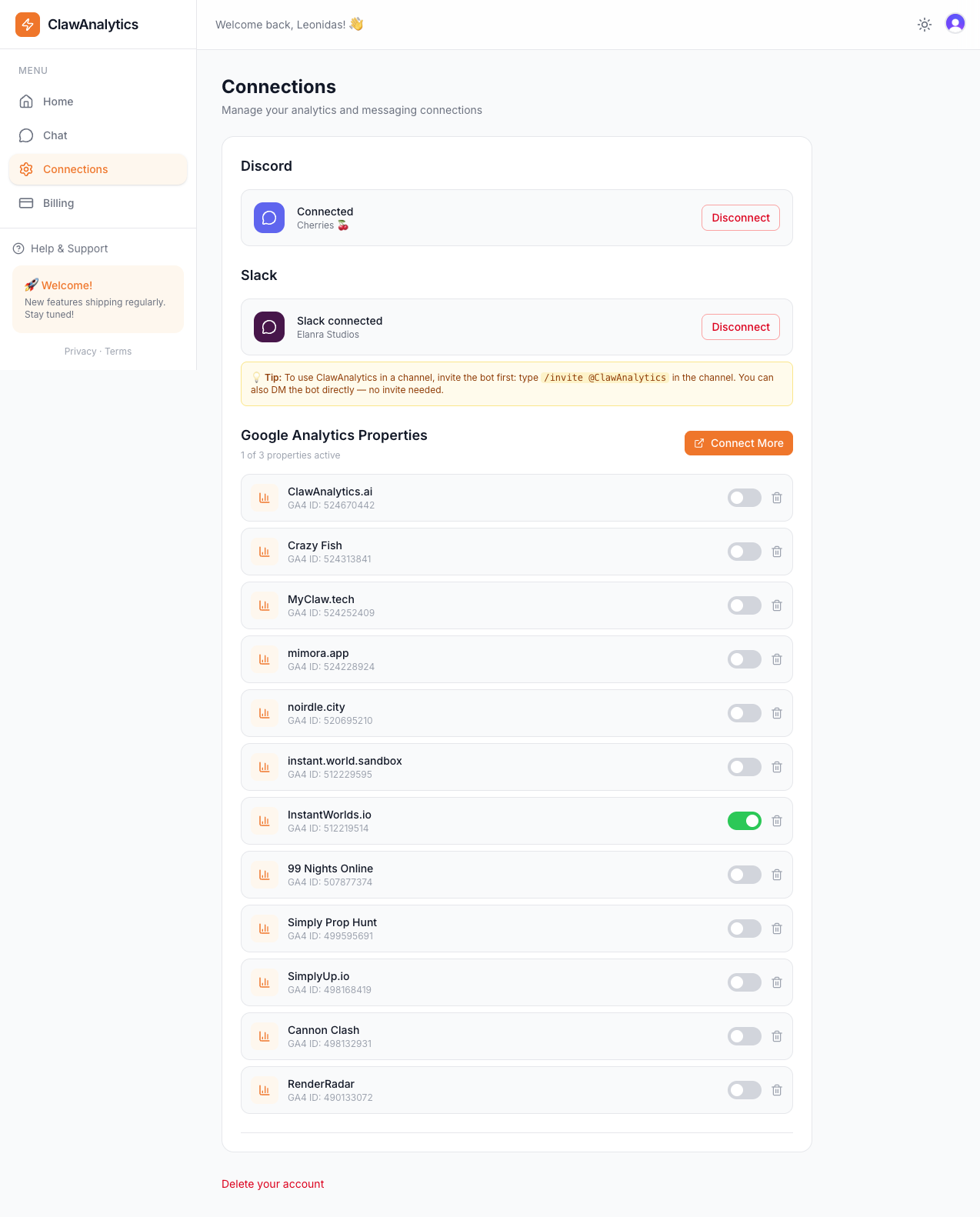
One-click OAuth. Read-only access. Takes 30 seconds to link your Google Analytics property.

ClawAnalytics connections page showing Google Analytics properties linked
💬
2

Ask questions

Type in plain English. No query language, no filters, no date pickers. Just ask what you want to know.

ClawAnalytics chat interface with natural language query
📊
3

Get answers with charts

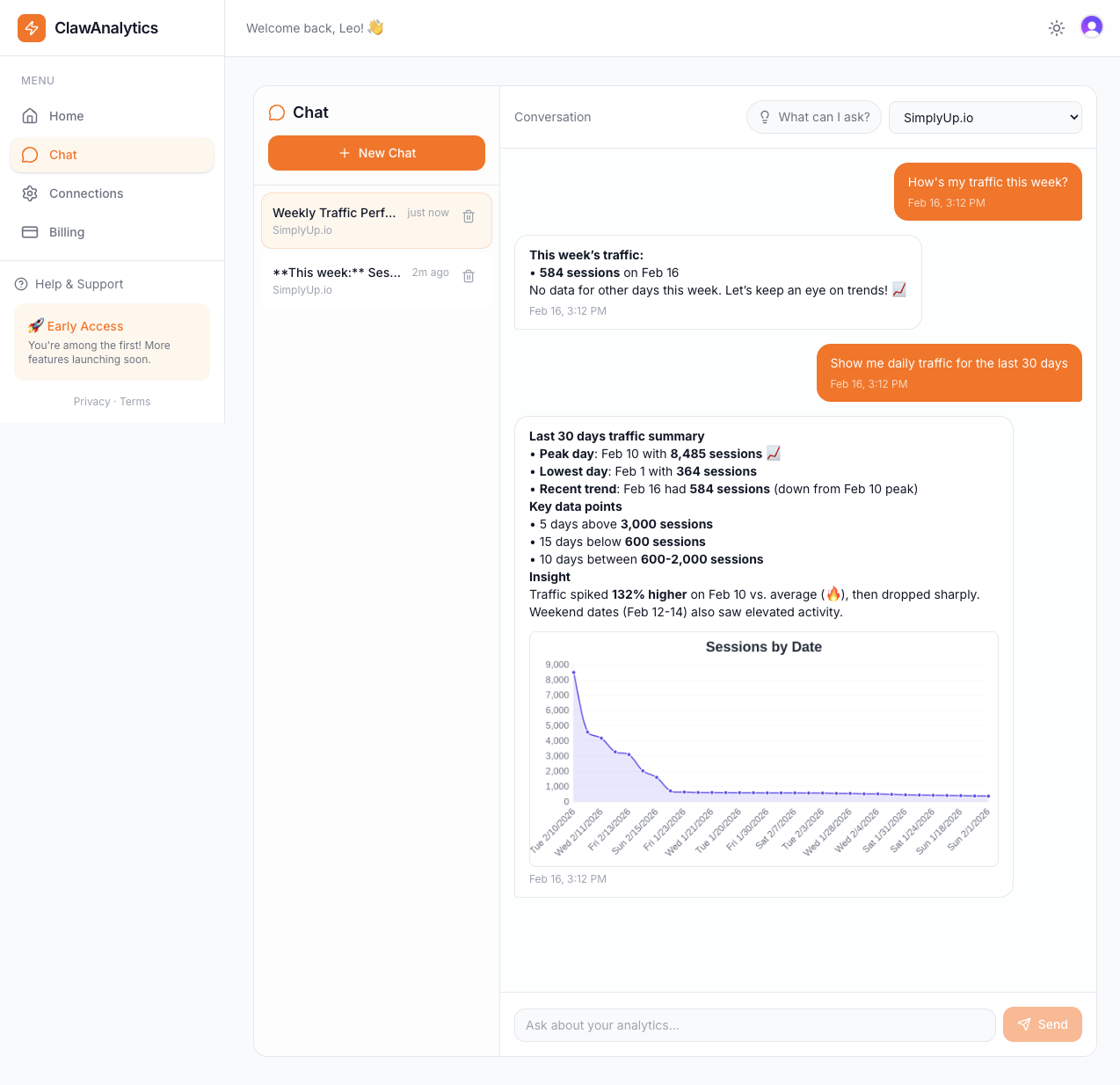
Instant responses with visualizations. Share charts with your team or export the data.

ClawAnalytics showing chart response to analytics query

See it in action

Ask a question. Get a chart. That simple.

ClawAnalytics Chat
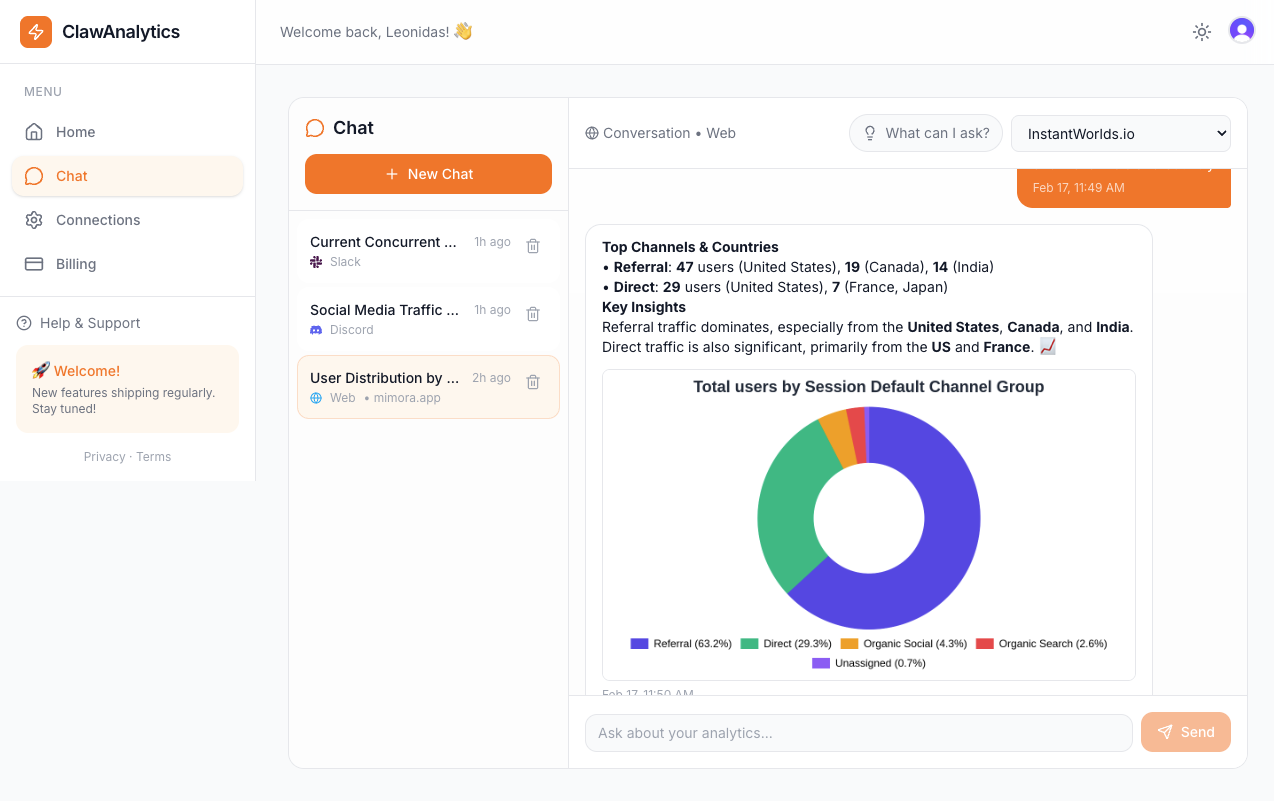
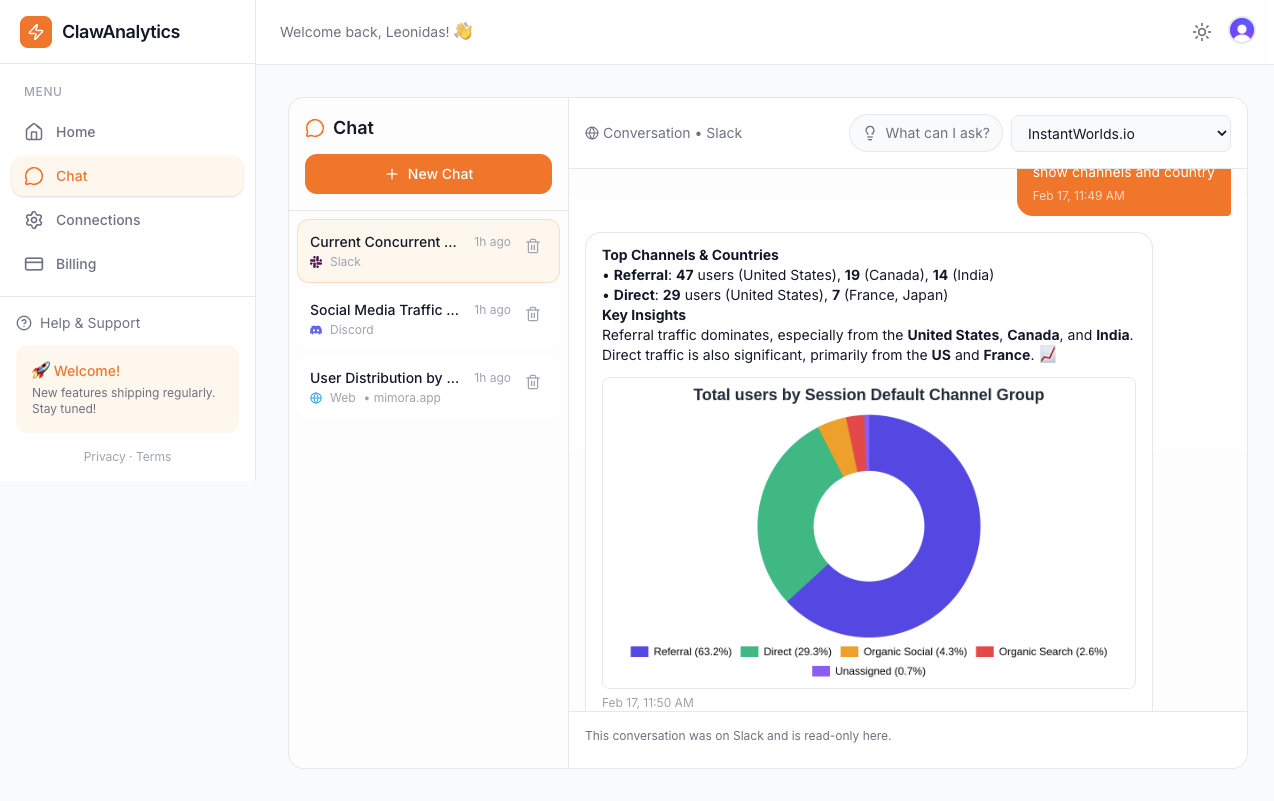
ClawAnalytics chat interface showing a natural language analytics query with chart response

Works on web, Discord, and Slack. Also available as an MCP server for AI agents.

Leonidas Maliokas
"I used to open Google Analytics 5 times a day and still miss things. Now I get a summary every morning and ask follow-ups when something looks off. Takes 10 seconds instead of 10 minutes."

Leonidas Maliokas

Founder, Elanra Studios

🎮 5 games monitored 💼 3 businesses

Simple, honest pricing

Start free. Upgrade when you're ready.

Free

Try it out

$0 /month
  • 5 websites
  • 30 questions/month
  • Web dashboard
  • No credit card
Start Free

Website

For small businesses

$9 /month
  • 5 websites connected
  • 100 questions/month
  • Daily morning summary
  • Web dashboard + Discord
Get Started

Business

For agencies and portfolios

$79 /month
  • Unlimited websites
  • 2,000 questions/month
  • Everything in Pro
  • ✅ API access
  • ✅ MCP integration
  • ⭐ Priority support
Get Started

Stop opening dashboards.
Start asking.

Connect Google Analytics in 30 seconds. Get answers from the dashboard or Discord. Start free — no credit card needed.

Try it free — ask your first question
30-second setup Free plan available Cancel anytime

Got questions?

What is a good organic traffic number for a law firm website?
Law firm websites should aim for 3,000 to 20,000 monthly organic visits, with larger firms in competitive markets targeting higher numbers.
How can law firms increase organic traffic?
Create practice area pages, publish legal guides, earn backlinks, optimize for local legal searches, and build a strong Google Business Profile.
How does ClawAnalytics help law firms?
ClawAnalytics reveals which practice areas attract the most leads, tracks consultation requests, and identifies content that converts visitors to clients.

Related guides

More resources to help you get the most from your analytics.