Imagine you just released a new video or blog post. A thousand people land on your page, but most leave after reading just one article. You are losing potential ad revenue, email subscribers, and sponsorships with every bounce. Tracking pages per session tells you exactly how deep visitors go into your content.
Why Pages Per Session Matters for Content Creators
Your income depends on engagement. More page views mean more ad impressions, longer watch times, and stronger case studies for sponsors.
Platform algorithms notice. YouTube and Medium both reward content that keeps people on the page longer. High pages per session signals quality to these algorithms.
Email list growth slows with low engagement. When visitors read multiple articles, they are more likely to subscribe to your newsletter or download your freebies.
Sponsors want proof. A potential sponsor checking your site sees visitors exploring multiple pieces of content. That builds trust and justifies higher rates.
How to Check in GA4
Open your GA4 property and go to Reports. Click on Engagement, then Pages and screens. Look for the metric called Sessions with more than one pageview. You can also create a custom exploration report that shows average pages per session by content category.
Sort your content by pages per session to find your top performers. Compare your video landing pages against your blog posts. Check how different traffic sources affect session depth.
The Easier Way
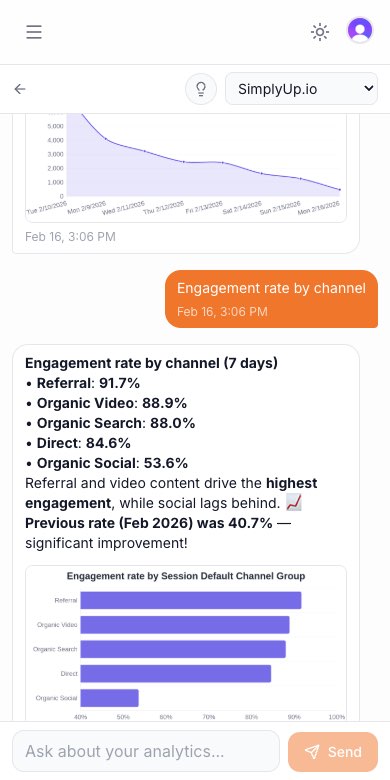
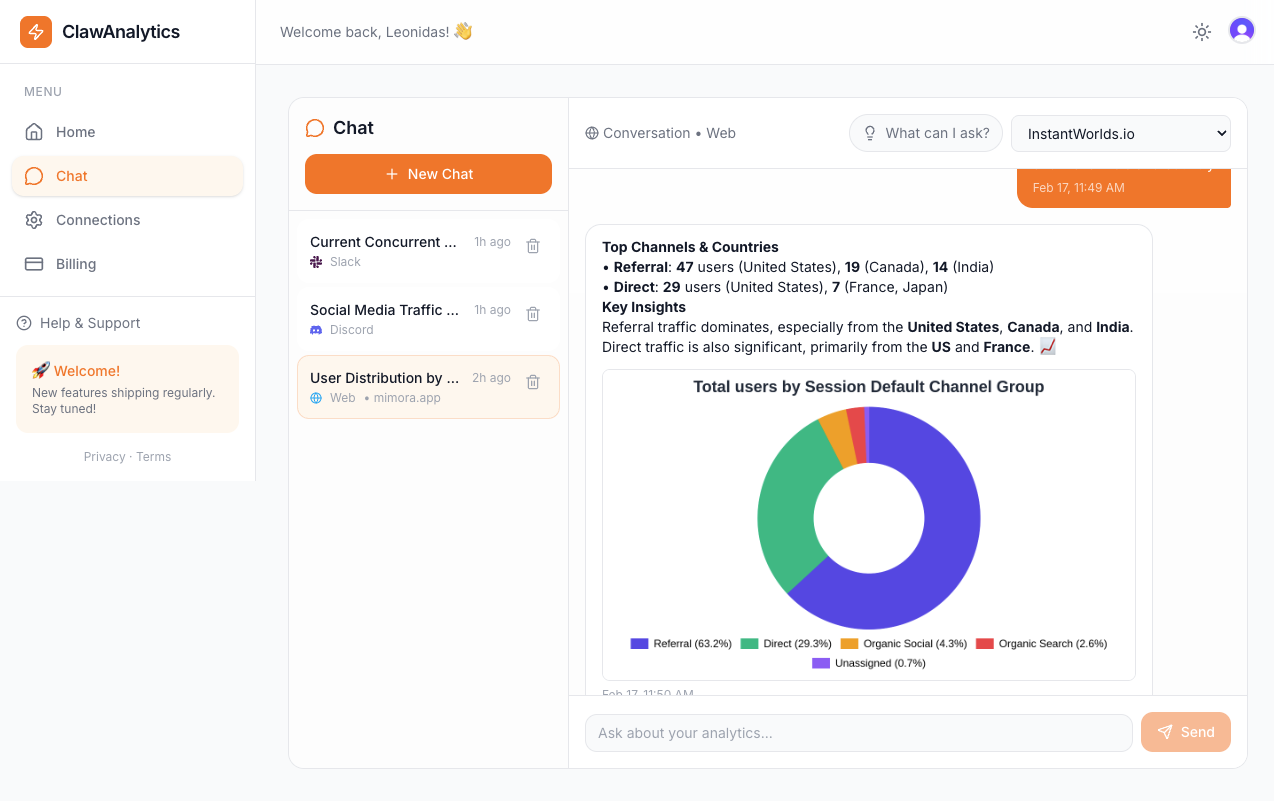
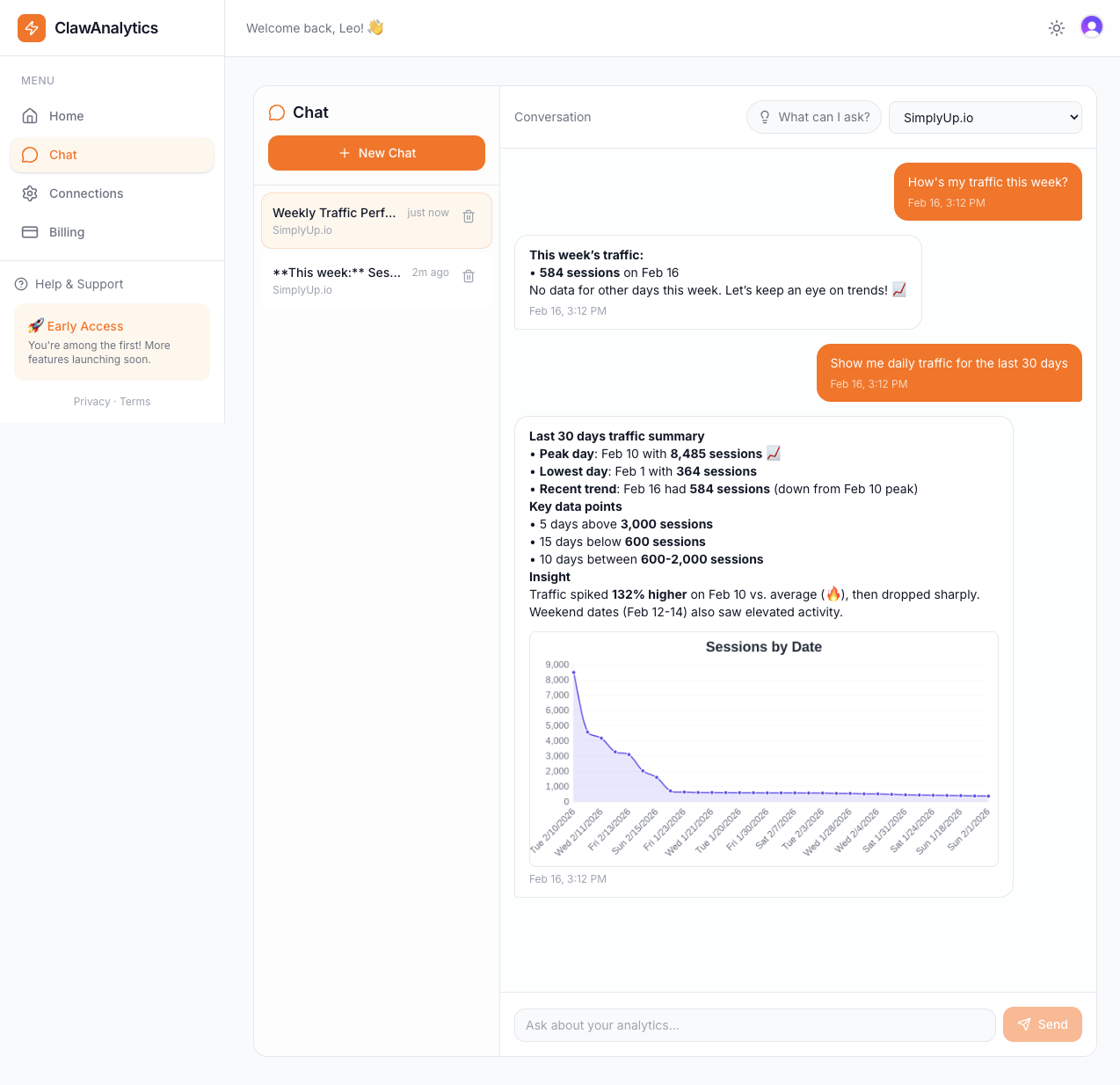
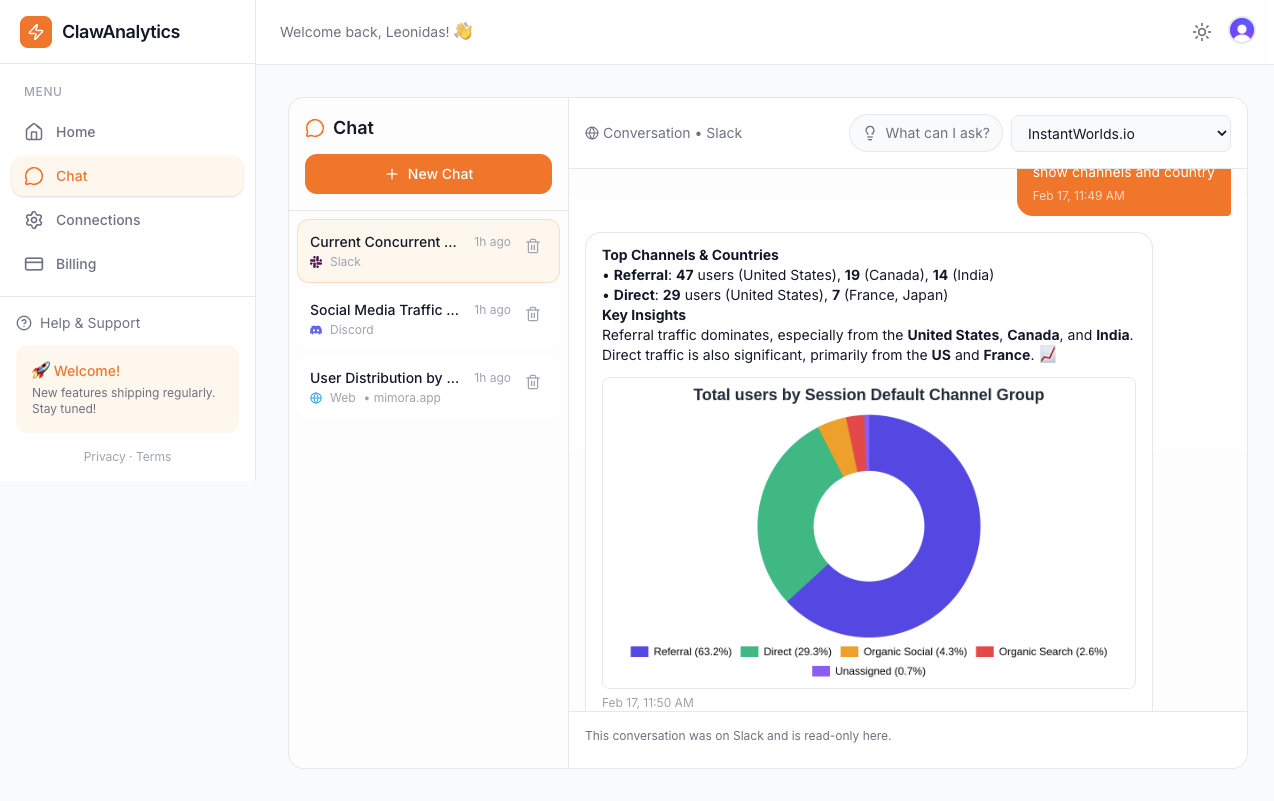
ClawAnalytics simplifies this process for creators who want clear answers without building complex reports. You can see which of your articles lead to the most exploration and which ones cause visitors to leave early.
For example, if you run a travel blog, ClawAnalytics might reveal that your destination guides generate 3.2 pages per session while your gear reviews only get 1.1. You can ask questions like which blog posts should I update to increase engagement or which topics should I cover more to keep visitors on site. This kind of insight helps you focus your effort on content that actually grows your audience.
Quick Wins
Add related posts cards at the bottom of every article. Link to your older content within your new posts. Create topic clusters that guide readers from one piece to the next.
Use a content table of contents for longer articles so readers can jump to sections that interest them. Make sure your navigation menu is visible on every page. Test internal linking in your first paragraph to direct readers to your best performing content.