You sent your portfolio link to a potential client. They opened it, saw your homepage, and closed the tab within three seconds. That lost opportunity did not have to happen. Pages per session tells you whether visitors are actually looking at your work or bouncing immediately.
Why Pages Per Session Matters for Freelancers
Clients need to see proof. A visitor who views only your homepage has limited evidence you can deliver results. Multiple page views show deeper engagement with your case studies and service pages.
Your rates depend on credibility. When prospects explore your portfolio, testimonials, and blog, they build trust. That trust translates into higher project acceptance rates.
Referrals start with exploration. Someone who reads multiple pages is more likely to share your content or refer you to their network.
SEO favors engaged users. Search engines notice when people stay on your site and visit multiple pages. This improves your rankings for client-relevant keywords.
How to Check in GA4
Log into GA4 and navigate to Engagement then Pages and screens. Find the average pages per session metric near the top of the report. Create a custom report that segments by landing page to see which entry points perform best.
Check which service pages keep visitors longest. Compare pages per session between your portfolio items and your blog posts. Look for patterns in your highest performing content.
The Easier Way
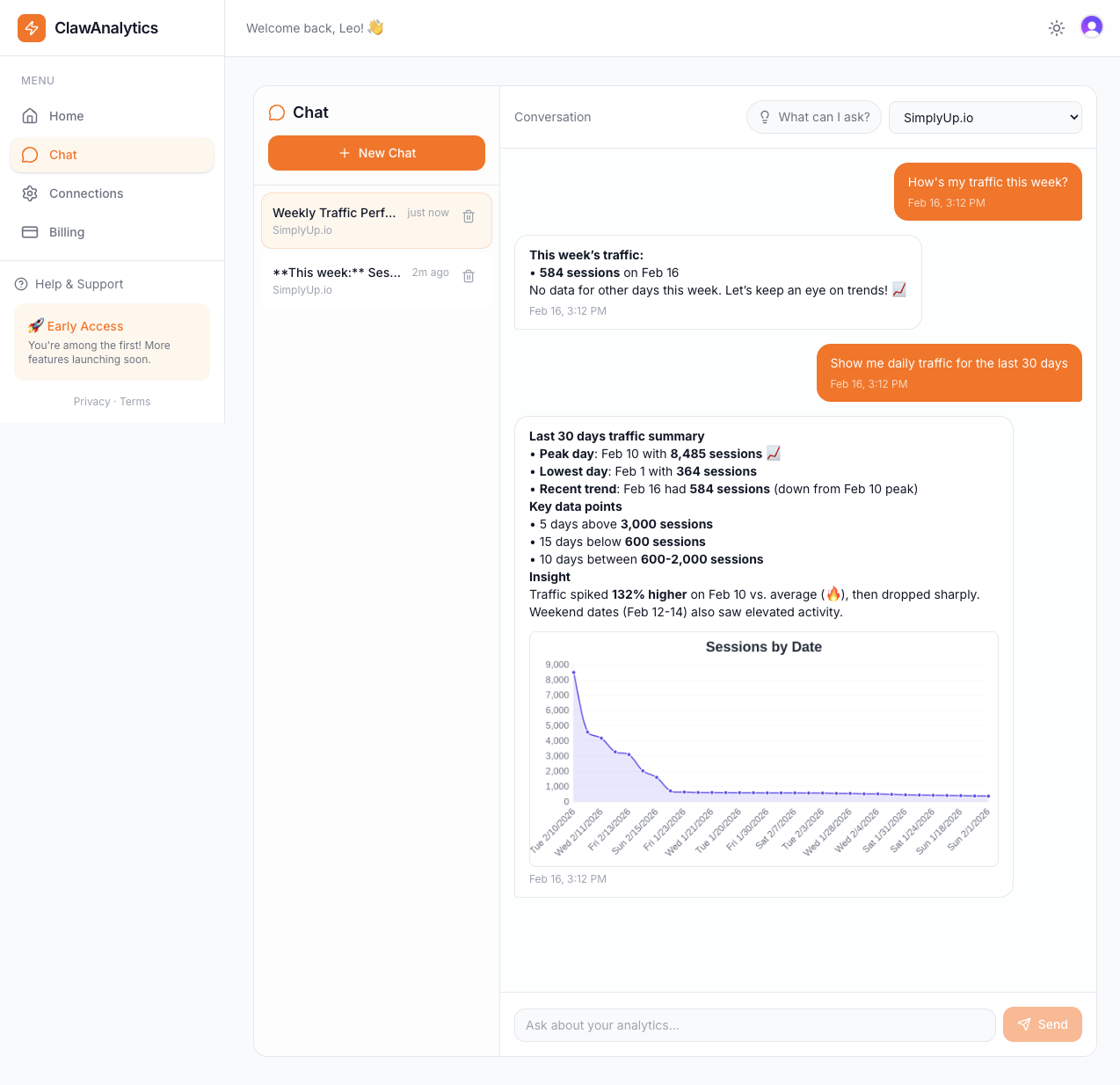
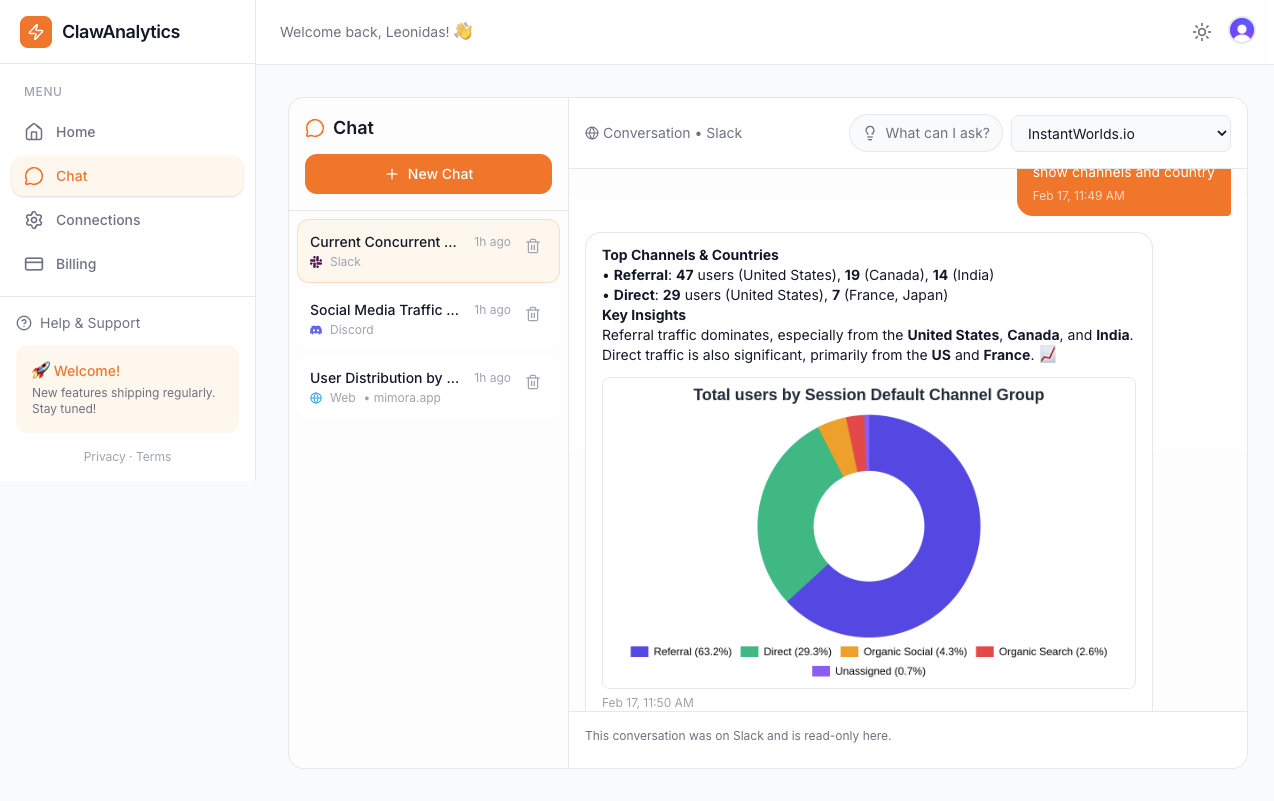
ClawAnalytics gives freelancers a simple dashboard that shows which portfolio pieces generate the most client interest. You might discover that your web design case studies get 4.1 pages per session while your writing samples only get 1.3.
With this insight, you can ask questions like which service pages should I prioritize on my homepage or which portfolio pieces need better links from my about page. This helps you optimize your site to guide visitors toward hiring you.
Quick Wins
Add clickable thumbnails of related projects at the bottom of each case study. Include inline calls to action on every page. Link your about page to specific portfolio items that match each service you offer.
Create a resources or tips section that links to your service pages. Make sure every page has a clear next step. Use sticky navigation so clients can find contact information anywhere on your site.