Imagine a potential client lands on your law firm homepage after a car accident. They need a lawyer quickly. If they only see one page and leave, you lost a client. But if they browse your practice areas, read client testimonials, and check your attorney profiles, they are much more likely to call. Your Pages Per Session metric tells you which scenario is happening.
Why Pages Per Session Matters for Legal
People searching for legal help often have urgent needs. They want to know you handle their specific case type, that you are experienced, and that others trusted you with their cases. When they view multiple pages, they are doing serious research before making the most important decision.
Key reasons to track this metric:
- Trust building: Multiple page views show potential clients are digging into your credentials and case history
- Service clarity: Low rates often mean clients cannot quickly understand what practice areas you cover
- Conversion readiness: Visitors who view 3+ pages are significantly more likely to contact your firm
- Content effectiveness: Blog posts and guides that generate page views are successfully establishing your expertise
How to Check in GA4
Checking your Pages Per Session in Google Analytics 4 is straightforward. Go to GA4, select Reports, then Engagement and Sessions. Look for the Average Sessions dimension. You can also segment by traffic source to see if organic search visitors behave differently from paid ad visitors. Create a custom exploration to compare pages per session before and after website changes.
For more detail, check which pages people visit most in the Pages and Screens report and where they typically exit.
The Easier Way
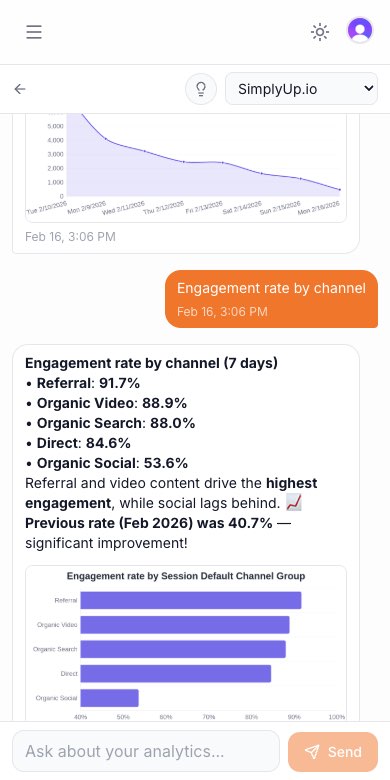
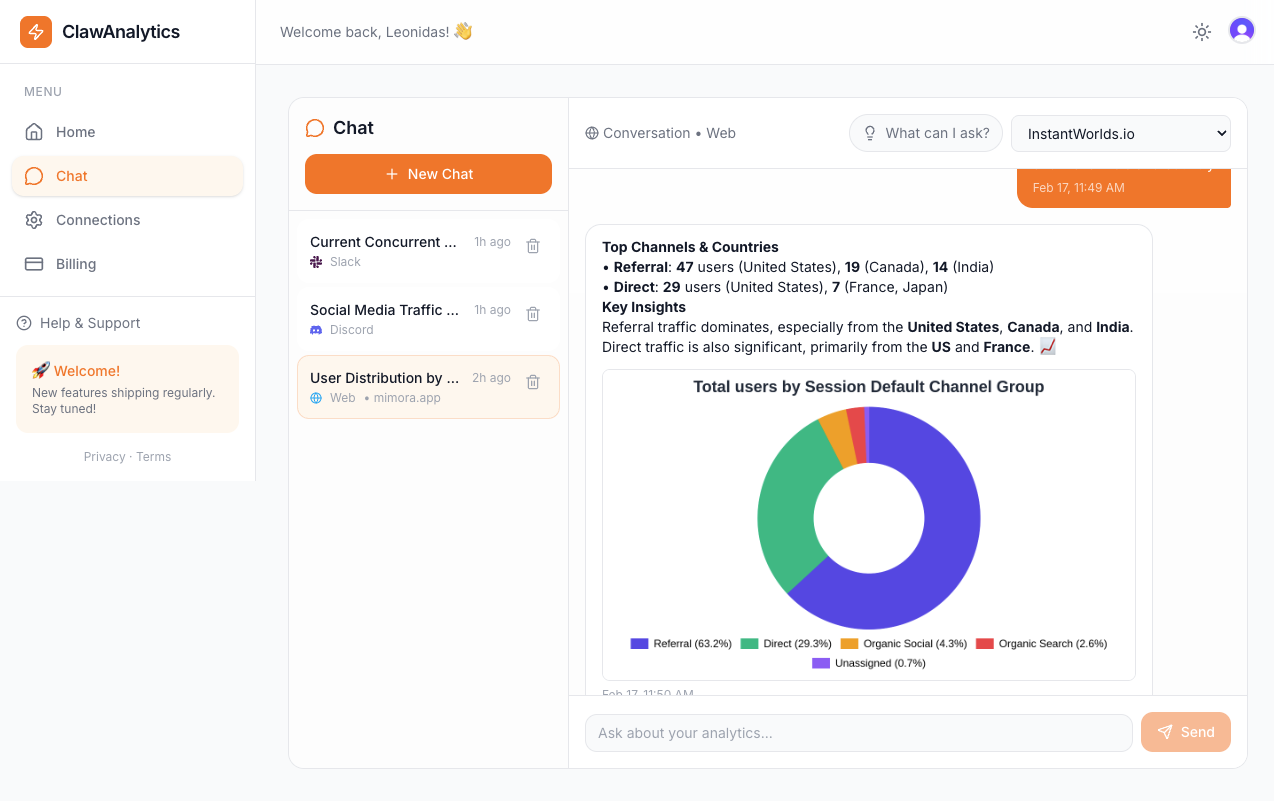
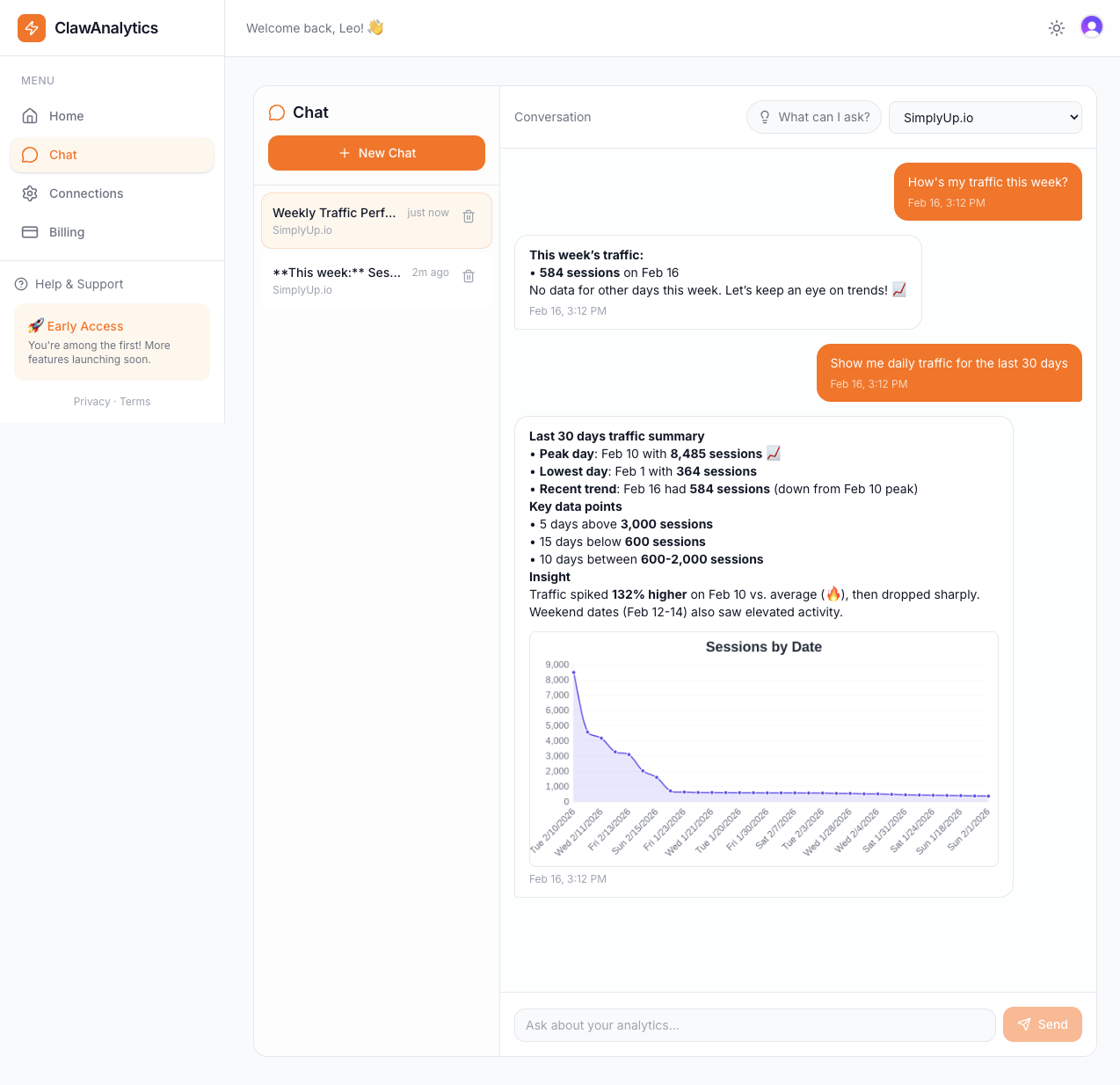
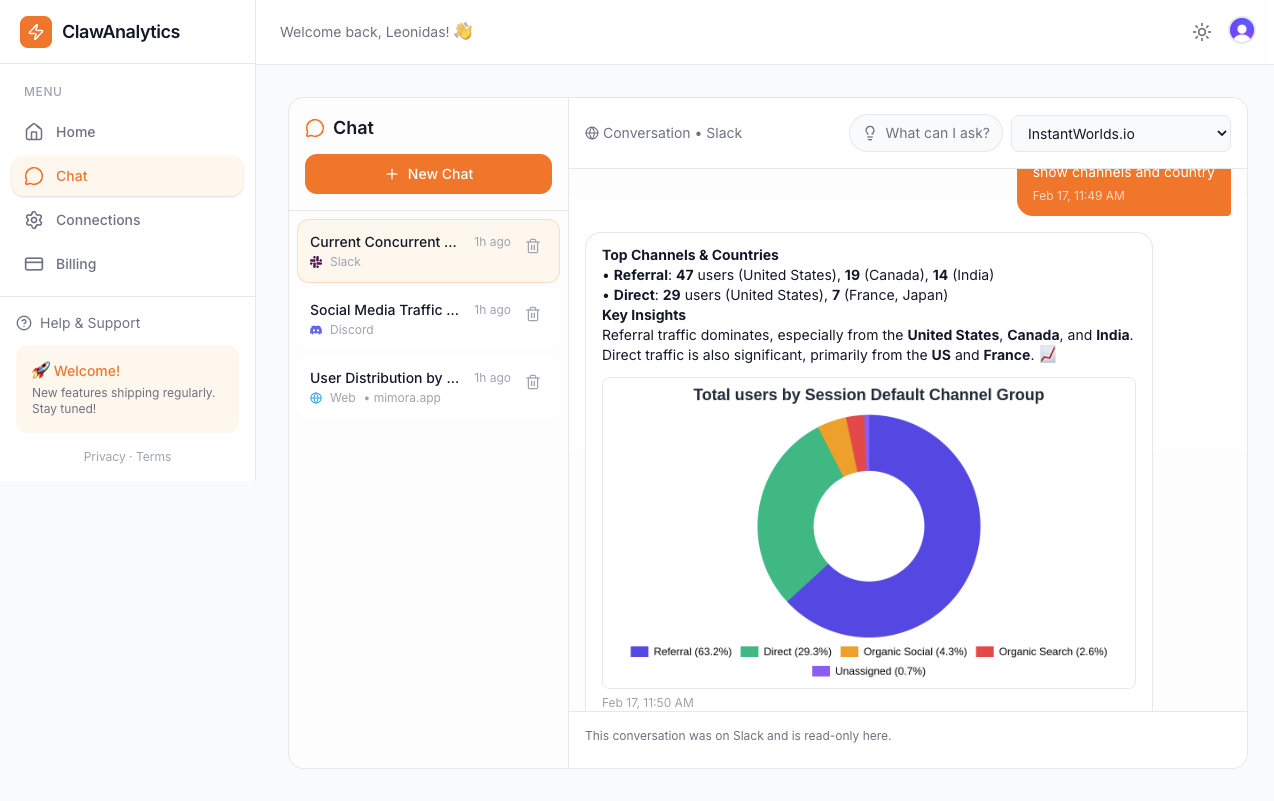
ClawAnalytics makes understanding legal website engagement simple. You can ask “Are potential clients reading our practice area pages?” or “Where do visitors drop off most often?” and get immediate answers. The tool also tracks which attorney profiles generate the most interest, helping firms understand which lawyers attract the most web leads.
For instance, you might find that personal injury pages drive 3.5 pages per session while estate planning only gets 1.4, indicating you should improve navigation to your planning services.
Quick Wins
Add clear calls to action on every page with links to consultation booking. Include “Related Practice Areas” sections that link between related legal services. Add attorney bio links within relevant blog posts. These changes help potential clients move naturally from learning about one area to discovering your full range of services.
Also ensure your contact information appears on every page, preferably with a click-to-call button for mobile users searching on their phones.