What Is a Good Return On Ad Spend for Affiliate Marketing?
You spend $1,000 on ads, promote an affiliate product with 30% commission, and generate $4,000 in sales. Your commission is $1,200, giving you a 1.2:1 ROAS. You need to optimize or you are losing money.
Why Return On Ad Spend Matters for Affiliate Marketing
Your margin is the commission rate. Unlike selling your own product, your upside is capped, so ROAS targets must reflect that reality.
Traffic quality determines conversion. Not all clicks convert equally, so tracking ROAS by source is essential.
Competition is fierce. High-commission niches attract more affiliates, driving up ad costs.
Testing is your competitive advantage. Fast ROAS analysis lets you find profitable angles before competitors copy them.
How to Check in GA4
Set up goal completions for affiliate link clicks. Create a destination goal for your tracking URL.
Track conversions through your affiliate network. Use postback URLs or integrate directly if your network supports it.
Segment by traffic source. Compare ROAS across Facebook, Google, TikTok, and organic traffic.
Calculate true commission value. Multiply conversions by your actual commission amount, not sale price.
The Easier Way
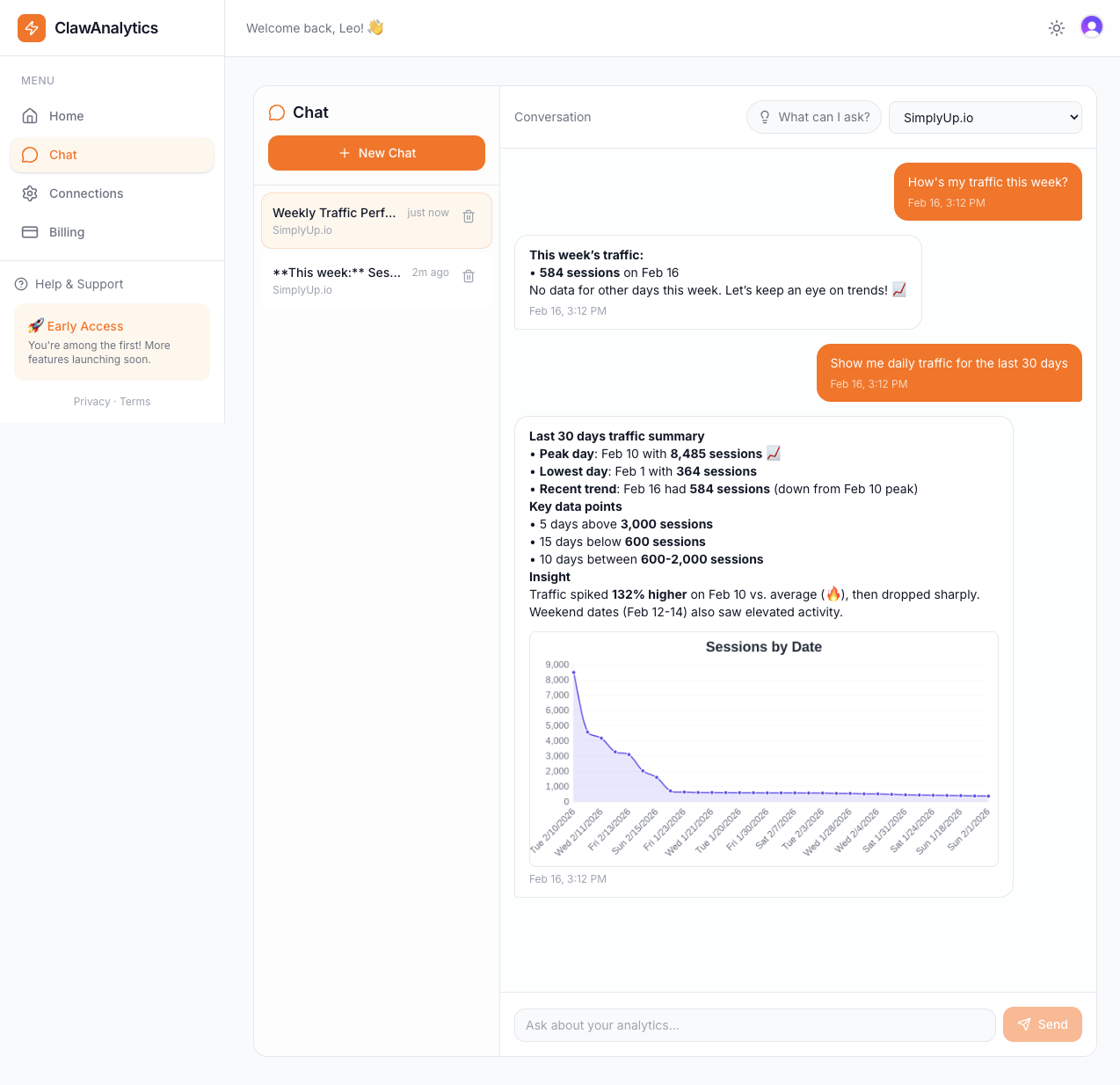
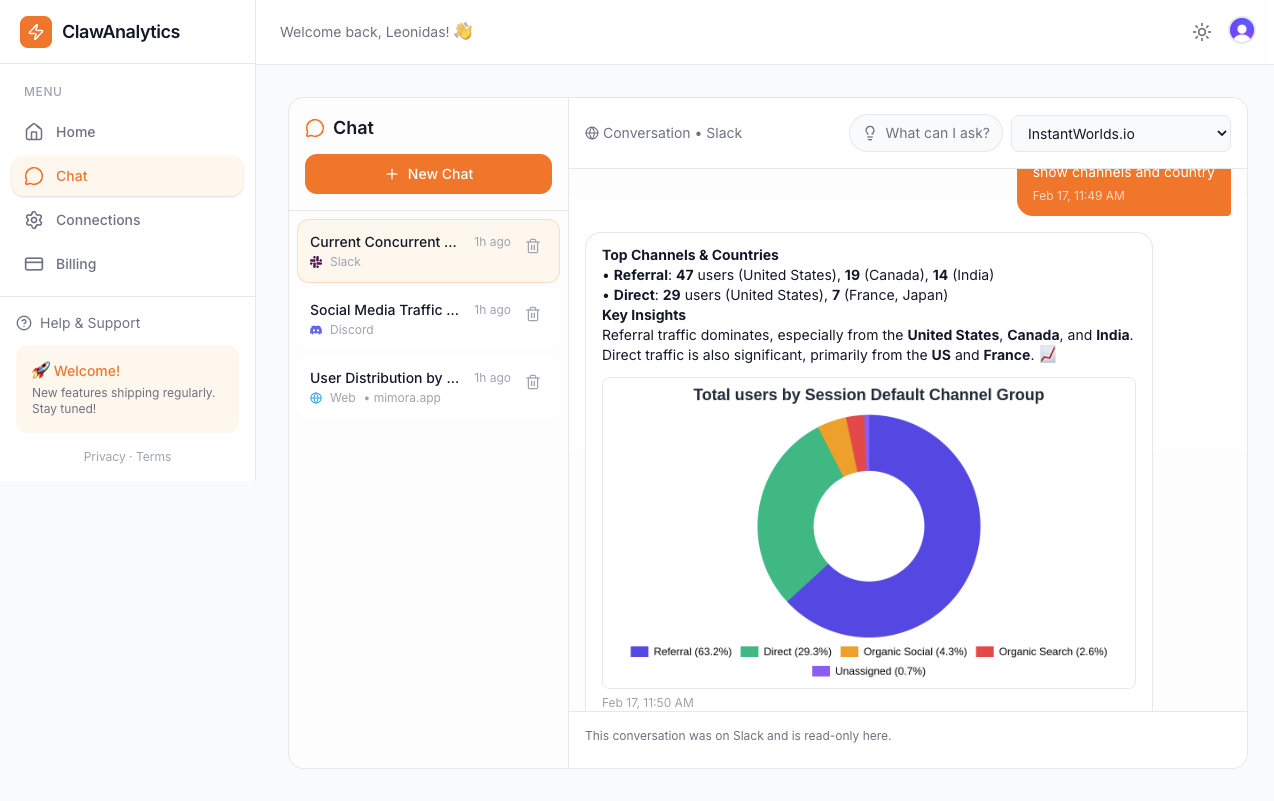
Affiliate marketers juggle multiple offers and traffic sources. ClawAnalytics brings everything together in one clear view.
For instance, you could ask: Which affiliate offer gives me the best ROAS? Or: Should I promote Product A or Product B? Or: Is my email list better traffic than paid ads?
ClawAnalytics makes affiliate decisions data-driven.
Quick Wins
Target at least 3:1 ROAS for most niches. Adjust up for low-commission niches.
Track every step of the funnel. Not just clicks and sales, but also email opt-ins and video views.
Build in evergreen content. Organic traffic reduces your dependence on paid ads.
Test products before scaling. Run small tests to find winners before spending big.
Diversify across networks. Do not rely on one affiliate program for all your revenue.