What Is a Good Return On Ad Spend for Saas?
Imagine spending $5,000 on Google Ads and getting back $25,000 in subscriptions. That is a 5:1 return on ad spend, and it could be yours with the right tracking in place.
Why Return On Ad Spend Matters for Saas
Lifetime value justifies higher acquisition costs. SaaS products typically have recurring revenue, so a customer worth $10,000 over two years makes $2,000 acquisition acceptable where an e-commerce brand would lose money.
Paid channels often drive the best SaaS customers. Organic traffic is great, but paid ads let you scale faster. The key is knowing which campaigns actually profit.
Cash flow stays healthy when you track ROAS. SaaS bills monthly, but your ad bills are immediate. Knowing your true ROAS prevents cash flow surprises.
Campaign optimization becomes data-driven. Without ROAS, you are guessing. With it, you double down on what works and kill what does not.
How to Check in GA4
First, set up conversion events for subscription signups and paid conversions in your GA4 property. Go to Configure > Events and mark your key events as conversions.
Next, link your ad accounts. In GA4, go to Admin > Property > Product Links and connect Google Ads, Meta, and other platforms.
Then, create a custom report. Use Explore > Free Form and add Return On Ad Spend as a metric if your data is imported, or calculate it manually using revenue divided by ad spend.
Finally, compare time periods. Look at weekly and monthly ROAS trends to spot seasonal shifts or campaign fatigue.
The Easier Way
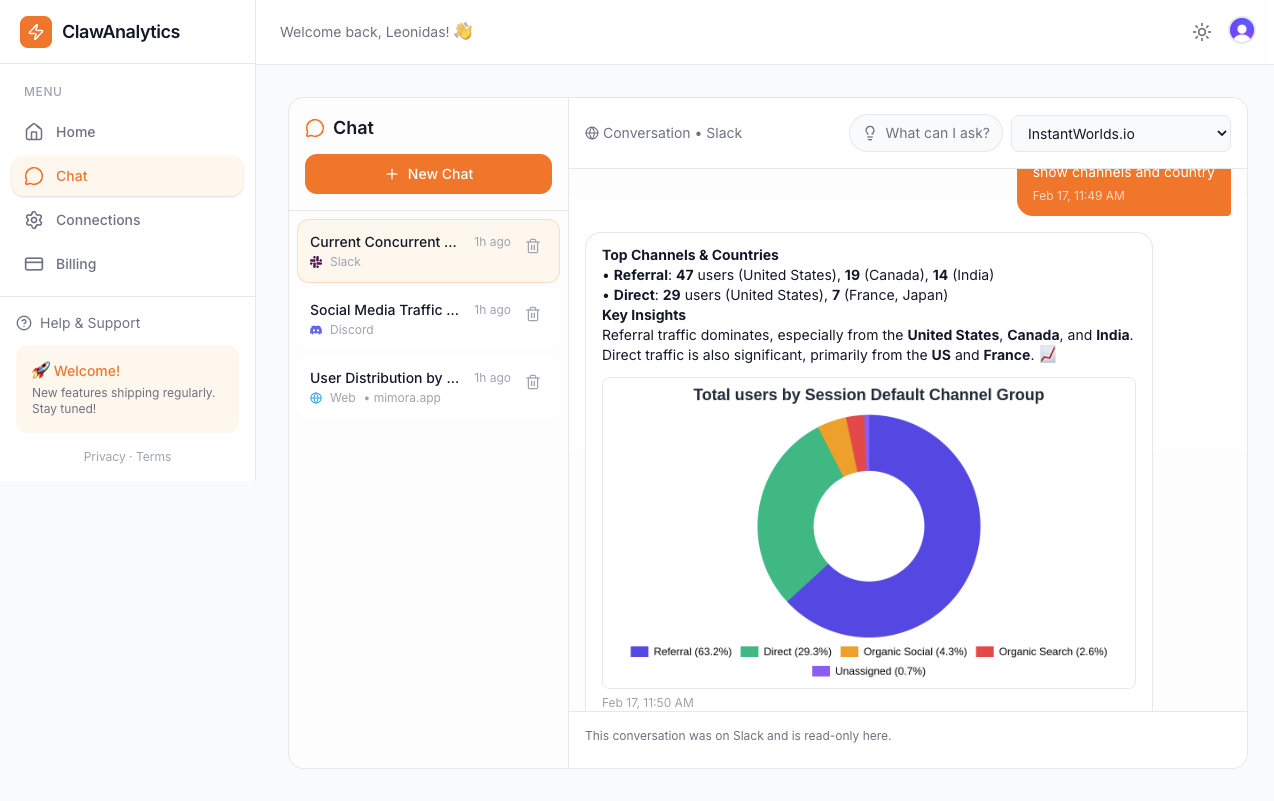
Most SaaS founders do not have time to build custom GA4 reports. ClawAnalytics connects to all your ad platforms and automatically shows your ROAS in one dashboard.
For example, you could ask: Which Google Ads campaign brings the highest-value SaaS customers? Or: Are my LinkedIn ads generating better leads than Meta? Or: What is my true ROAS after accounting for free trial conversions?
ClawAnalytics answers these questions in seconds, not hours.
Quick Wins
Start with a 3:1 ROAS target. This gives you breathing room for unexpected costs and ensures profitability.
Separate new customer ROAS from trial conversions. A trial might not convert, so including it skews your numbers.
Track revenue at 12-month and lifetime horizons. Short-term ROAS looks different from long-term customer value.
Use UTM parameters consistently. Every ad link needs proper tagging or your attribution will be useless.
Review ROAS weekly during active campaigns. Early detection of underperforming ads saves budget.