Every Monday, a marketing manager opens GA4, clicks through four different reports, exports three CSVs, pastes them into a spreadsheet, builds a pivot table, and emails it to her team. The whole ritual takes 45 minutes. The frustrating part? She needs the same data every single week but GA4 does not show it the way she needs it out of the box.
Custom reports exist to solve exactly this problem. Build it once, use it forever.
Why This Matters
Default reports answer default questions. GA4 ships with reports designed for the average website. Your business is not average. You have specific questions about specific segments, and the default views almost never show exactly what you need.
Explorations reveal what standard reports hide. Want to see the path users take from your blog to your pricing page? Want to compare conversion rates between first-time and returning visitors across different countries? Standard reports cannot do this. Explorations can.
Saved reports reduce decision latency. When the data you need is one click away instead of a five-minute scavenger hunt, you check it more often. More frequent checks mean faster reactions to problems and opportunities.
They make you look competent. Sharing a polished, focused report with stakeholders is infinitely more professional than screen-sharing your GA4 dashboard and squinting at numbers during a meeting.
How to Do It
Step 1: Start with a question, not a report.
Write down exactly what you want to know. “Which blog posts drive the most signups, broken down by traffic source?” is a question. “I need a custom report” is not. The question determines which dimensions, metrics, and filters you need.
Step 2: Customize a standard report (quick wins).
For simple changes, edit an existing report:
- Go to Reports and open any report (like Traffic Acquisition)
- Click the pencil icon in the top right to enter edit mode
- Add or remove metrics and dimensions using the right panel
- Click Save (save as a new report to keep the original intact)
- Drag the new report into your report navigation under Library
This is ideal for reports you check regularly with minor adjustments.
Step 3: Build an Exploration (advanced analysis).
For deeper analysis, go to Explore and click “Blank”:
- Variables panel (left): Add your dimensions (page path, source, country), metrics (sessions, conversions, revenue), and segments (mobile users, new visitors)
- Tab Settings (middle): Choose a technique (Free Form for tables, Funnel for step analysis, Path for user journeys)
- Rows: Drag dimensions here
- Values: Drag metrics here
- Filters: Narrow the data (like “only organic traffic” or “only US visitors”)
Example: To find your highest-converting blog posts:
- Rows:
Page path - Values:
Sessions,Conversions,Session conversion rate - Filter: Page path contains
/blog/ - Sort by: Session conversion rate, descending
Step 4: Use segments to compare groups.
Segments are one of the most powerful features in Explorations. Create segments for:
- New vs returning users
- Mobile vs desktop
- Organic vs paid traffic
- Users who converted vs those who did not
Drag two segments into the comparison area and instantly see how they differ across every metric.
Step 5: Save and share.
Name your Exploration clearly (like “Blog Post Conversions by Source” not “Untitled Exploration 3”). Share it with team members by clicking the share icon. Note that shared Explorations are read-only for others by default.
The Easier Way
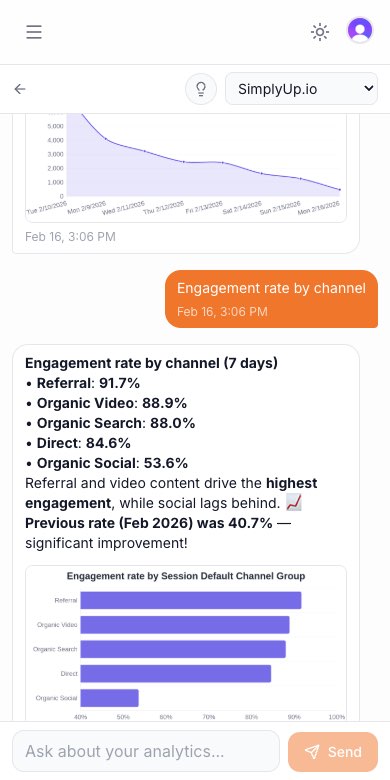
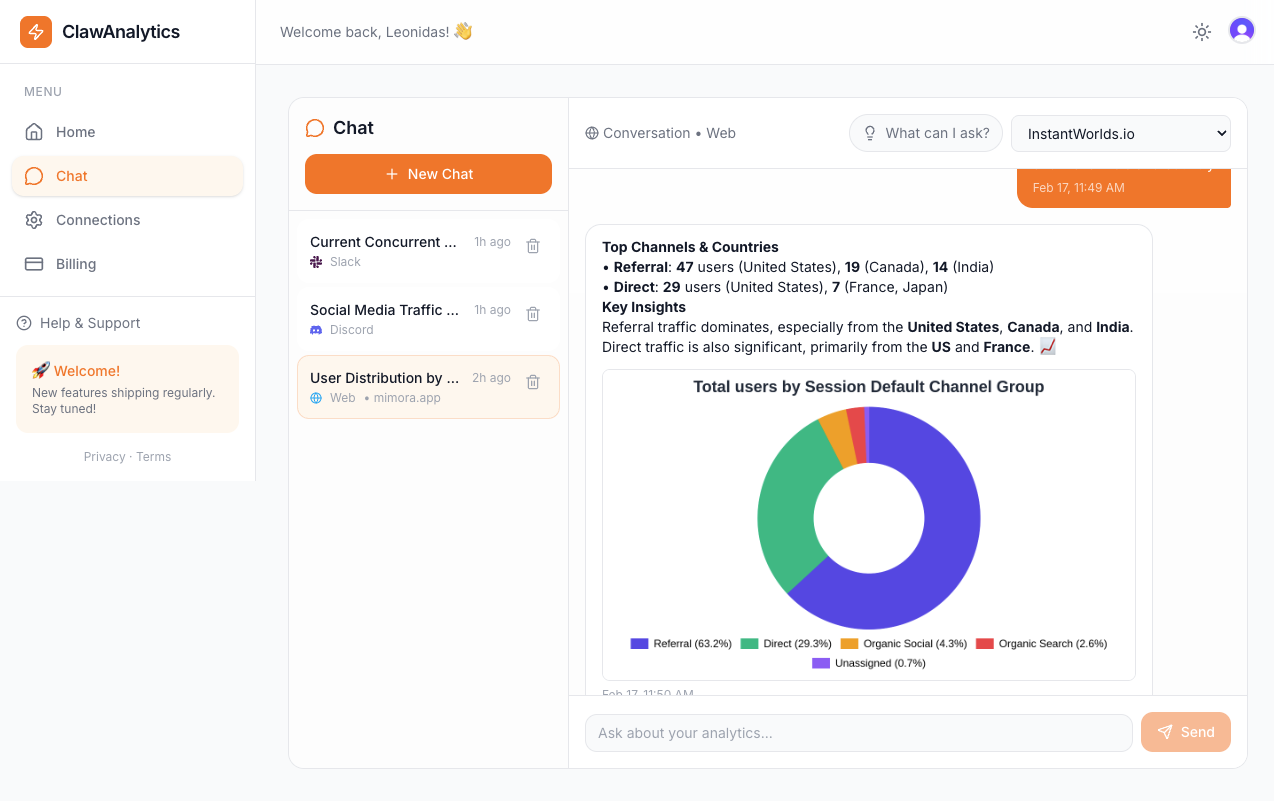
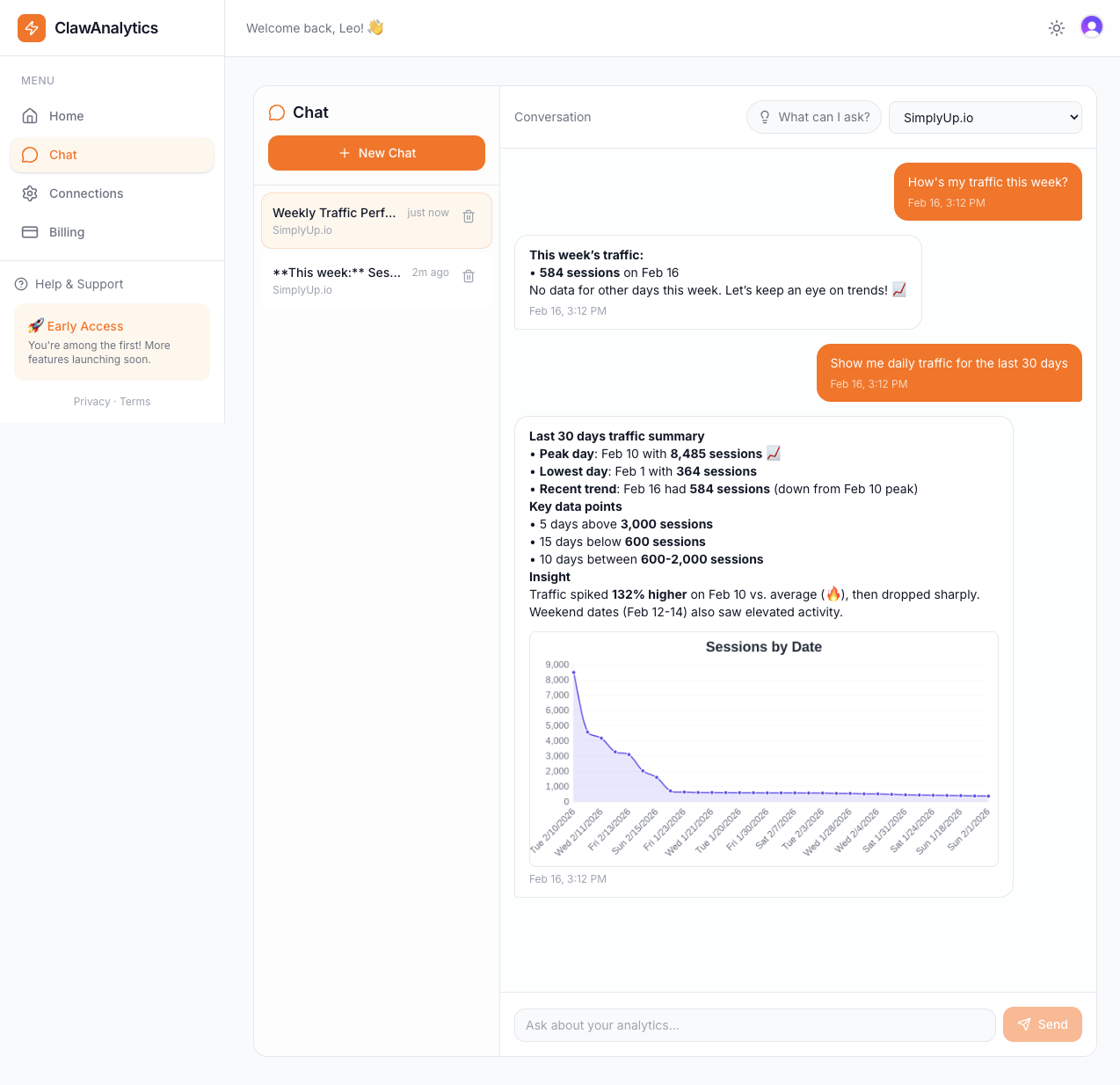
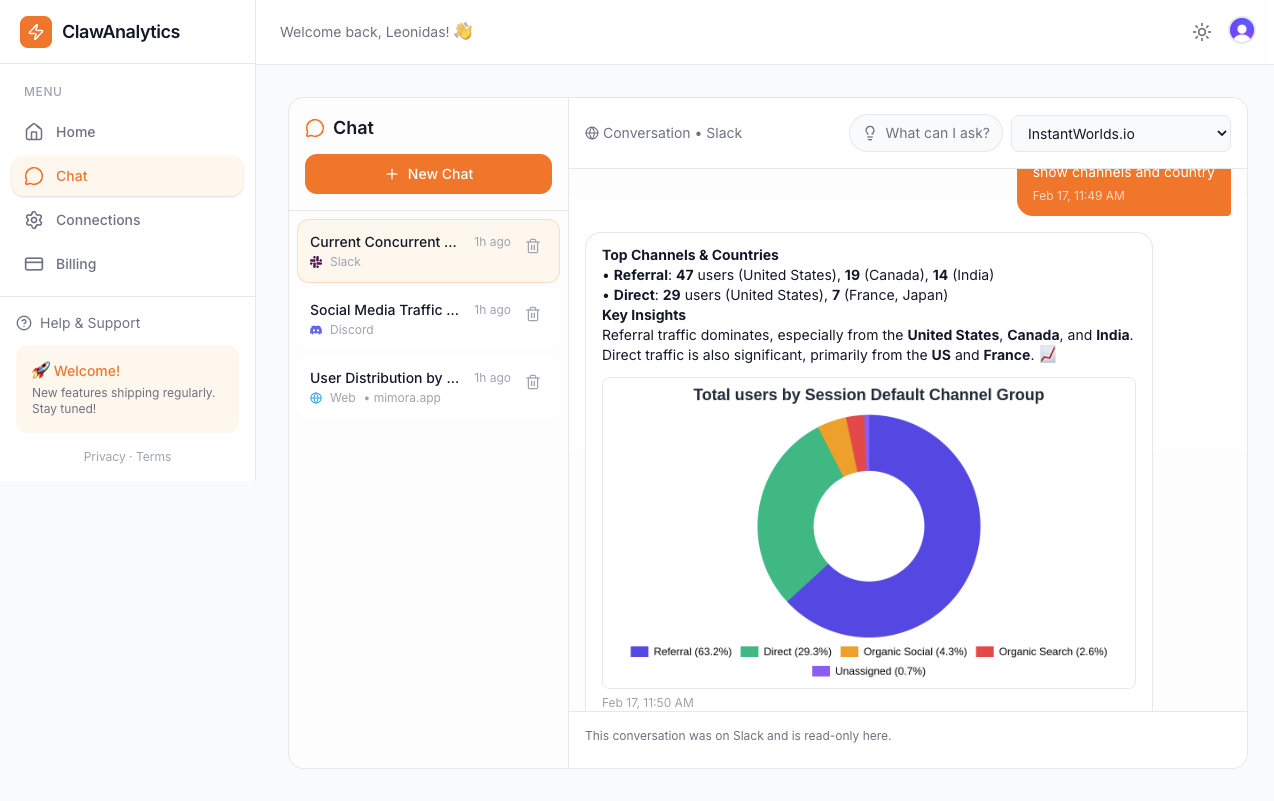
Custom reports are powerful but time-consuming to build. For ad-hoc questions you need answered once, ClawAnalytics offers a faster path. Instead of configuring an Exploration, ask directly:
- “What are my top 10 landing pages by conversion rate this month?”
- “Break down traffic by device type and show bounce rate for each”
- “Which countries have the most users but the lowest conversion rate?”
Save Explorations for recurring reports you will revisit weekly. Use conversational analytics for the one-off questions that pop up in meetings and Slack threads.
Quick Wins
- Create a “Weekly Overview” Exploration. Include sessions, users, conversions, and revenue by week. Sort by date. This becomes your Monday morning check.
- Use the Library to organize reports. Go to Reports, then Library, and arrange your custom reports into collections. Remove reports you never use from the navigation.
- Name things descriptively. “Q1 Campaign Performance by Channel” tells you what is inside. “Report 7” does not.
- Duplicate before editing. Always duplicate an Exploration before making major changes. There is no version history, and it is easy to accidentally break a report you rely on.
- Export to Sheets for collaboration. When others need to manipulate the data, export to Google Sheets rather than sharing the Exploration. Not everyone on your team has GA4 access.