Your team is debating analytics tools again. The marketing folks swear by Google Analytics. The product team wants Mixpanel. Everyone has opinions but nobody has a clear answer. Here is the thing: they solve different problems, and picking the wrong one means you are collecting data you will never actually use.
Where Each Tool Excels
Google Analytics is built for understanding how people find your website and what happens during their visit. It tracks traffic sources, landing page performance, conversion funnels, and campaign ROI. If your main question is “where are my visitors coming from and are they converting,” GA4 is your tool.
Mixpanel is built for understanding what users do inside your product. It tracks events, user flows, feature adoption, and retention cohorts. If your main question is “are users finding value in my product and coming back,” Mixpanel is your tool.
Google Analytics strengths:
- Free for most businesses
- Deep integration with Google Ads and Search Console
- Strong traffic source and campaign tracking
- Built-in ecommerce reporting
- Massive community and documentation
Mixpanel strengths:
- Superior event-based analytics and user flows
- Better retention and cohort analysis
- Easier to set up custom event tracking
- More intuitive interface for product questions
- Real-time data without sampling
Where Each Tool Falls Short
GA4 struggles with product analytics. While it added event-based tracking, building complex user flow analyses or retention cohorts feels clunky compared to Mixpanel. The Exploration interface is powerful but has a steep learning curve.
Mixpanel struggles with marketing analytics. It does not natively integrate with Google Ads or Search Console. Understanding which marketing channels drive signups is harder because Mixpanel focuses on what happens after users arrive, not how they got there.
The cost question matters too. GA4 is free for most businesses. Mixpanel offers a free tier but caps at 20 million events per month on its paid plans, and pricing scales with usage. For high-traffic sites, Mixpanel gets expensive fast.
How to Decide
Ask yourself these three questions:
-
What is your primary product? If you run a content site, ecommerce store, or lead generation site, GA4 is probably enough. If you run a SaaS app or mobile app where in-product behavior drives growth, Mixpanel adds real value.
-
What questions do you ask most? Write down the five analytics questions your team asks every week. If they are mostly about traffic and conversions, go with GA4. If they are about feature usage and retention, choose Mixpanel.
-
What is your budget? GA4 is free. Mixpanel costs money at scale. If budget is tight, start with GA4 and add Mixpanel later when your product analytics needs outgrow what GA4 can do.
A Simpler Starting Point
Both tools share a common frustration: getting answers requires knowing where to look and how to build the right report. GA4 buries insights behind Explorations. Mixpanel requires careful event taxonomy planning.
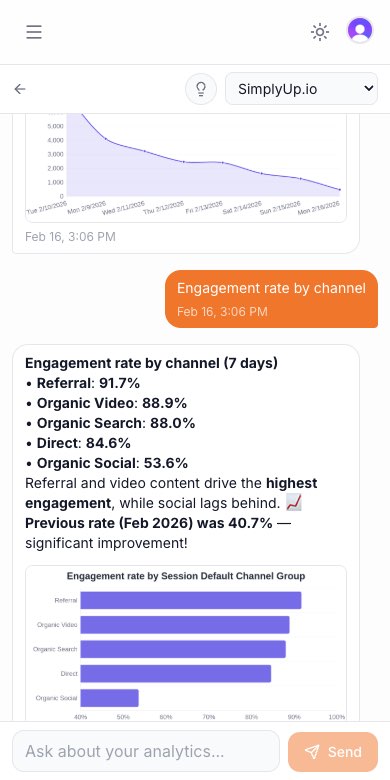
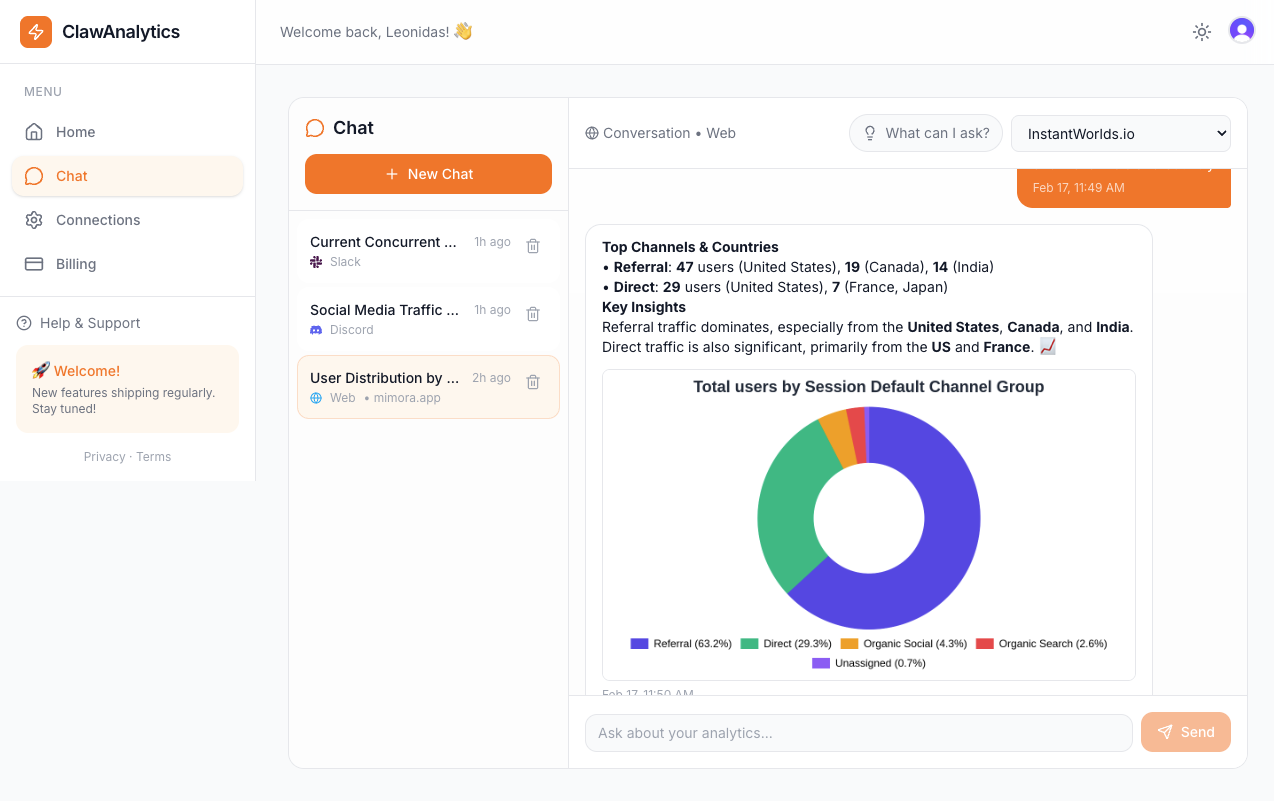
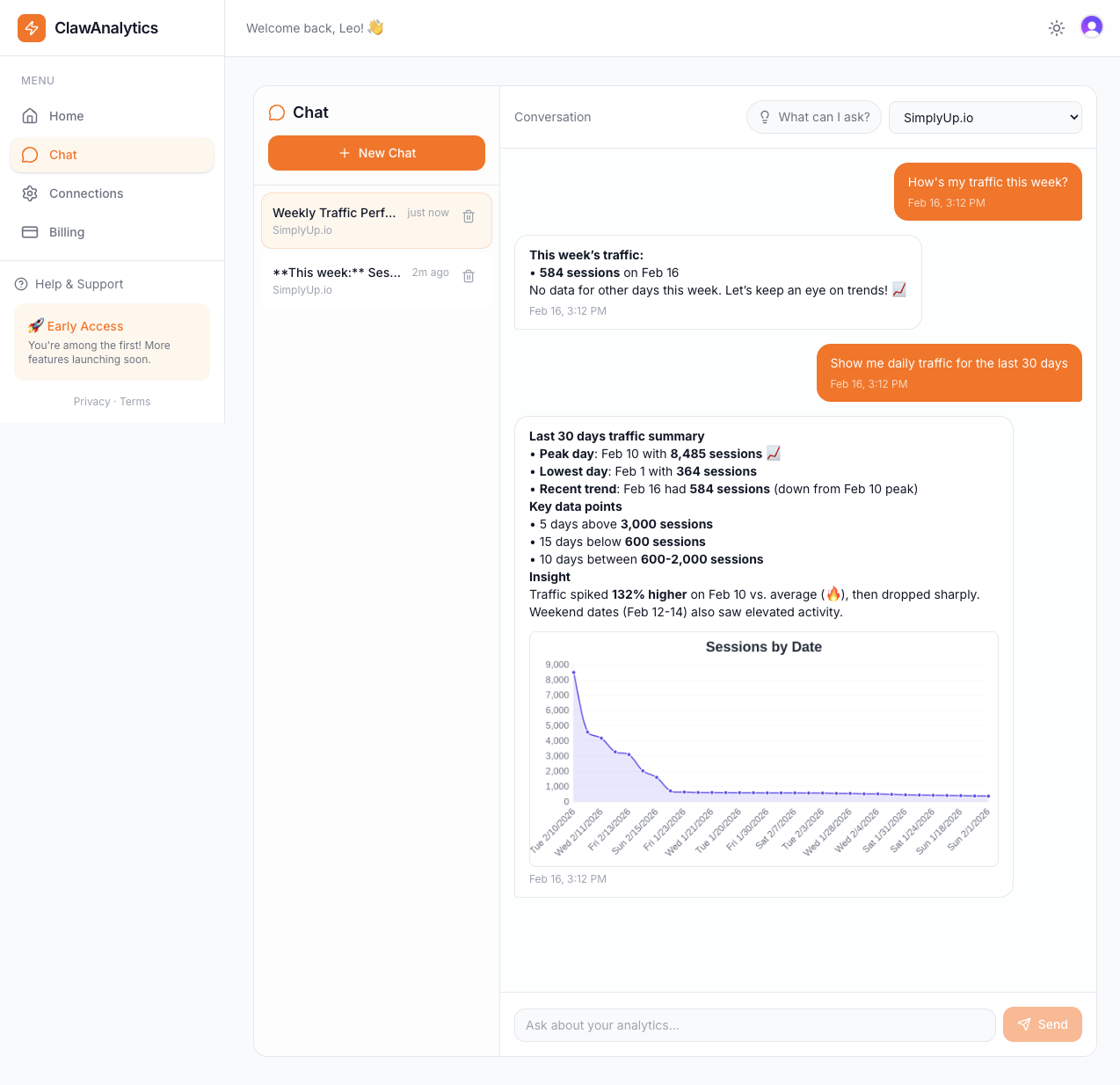
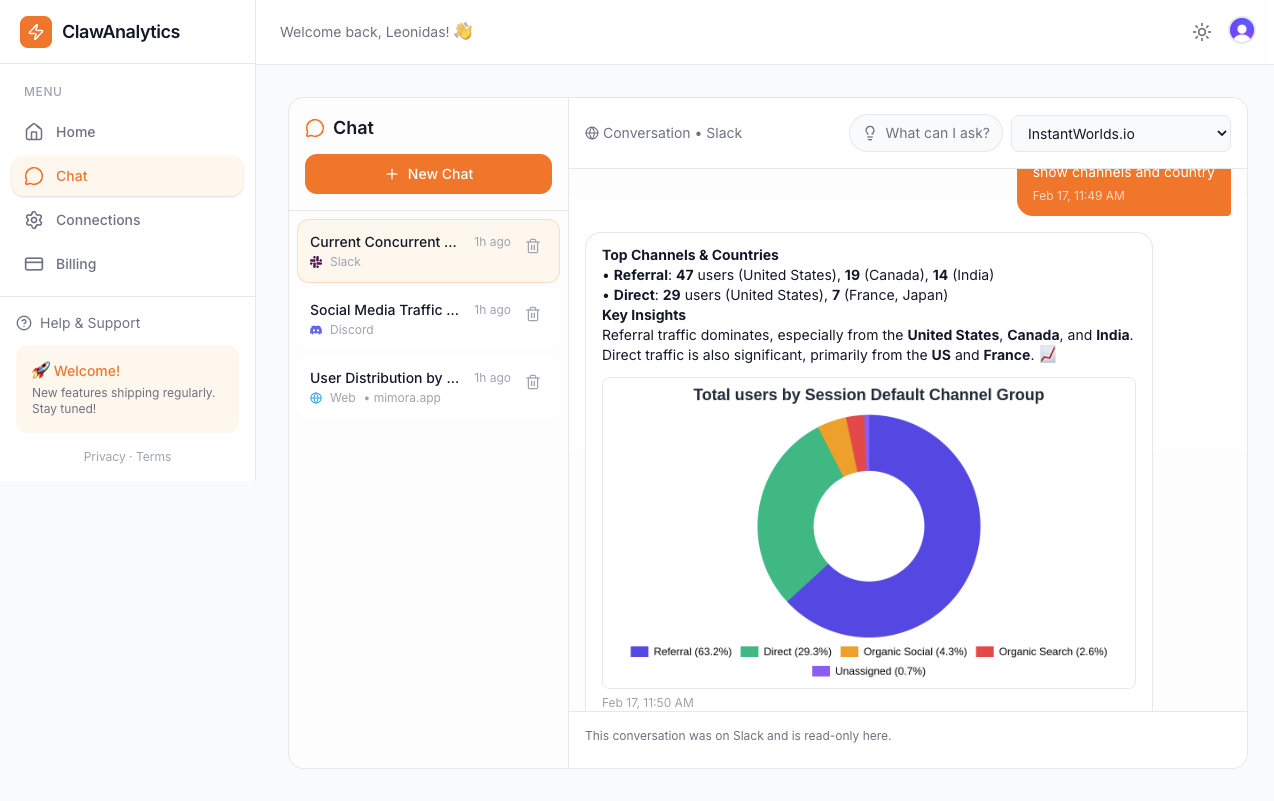
ClawAnalytics sits on top of your Google Analytics data and lets you ask questions in plain language. Instead of building funnels manually, you type “what is my retention rate for users who signed up from organic search” and get an answer. For many teams, this covers the product analytics gap without adding a second tool.
Quick Wins
-
Audit your actual questions first. Before choosing a tool, track what your team actually asks about data for two weeks. The pattern will make the choice obvious.
-
Start with GA4 if undecided. It is free, covers acquisition well, and the event-based model handles basic product analytics. You can always add Mixpanel later.
-
Do not run both without a plan. If you use both, define clearly which tool answers which questions. Otherwise your team will check both and trust neither.
-
Consider your team size. Mixpanel requires someone who understands event taxonomy and can maintain it. If you do not have that person, GA4 with a simpler setup is more practical.