Your educational content takes hours to create. You write tutorials, course materials, and study guides. Yet when ad revenue hits your account, you have no idea which pieces actually earned that money.
Why Ad Revenue Matters for Education
Educational websites face unique challenges. Unlike entertainment sites, your visitors come with specific learning goals. They might be students, teachers, or lifelong learners. Understanding which content attracts valuable audiences helps you serve them better while growing revenue.
Here’s why tracking matters:
Your course pages might earn more than your blog posts, or vice versa. Without data, you’re guessing. Educational content about exam prep, certification, or career development often commands higher advertiser rates because these visitors are actively making purchasing decisions.
Advertisers in the education space target people ready to invest in their growth. They know your visitors are motivated learners. This makes your audience valuable, but only if you understand which content attracts them.
Seasonal patterns matter enormously in education. Students search for help during exam periods. Teachers prepare lessons before semesters. Parents look for resources during school breaks. Tracking ad revenue reveals these patterns so you can prepare content in advance.
How to Check in GA4
GA4 provides detailed ad revenue reporting for educational sites:
- Navigate to Monetization in your GA4 dashboard
- Choose Ad revenue by page or screen
- Compare your course pages against blog content
- Check Ad revenue by user cohort to understand lifetime value
Focus on pages per session and ad revenue together. A page with high views but low revenue might need better ad placement or different content to attract higher-value advertisers.
Look at the User acquisition report to see which channels bring visitors who generate the most ad revenue. Your email list might drive sales, but perhaps your YouTube traffic earns more from ads.
The Easier Way
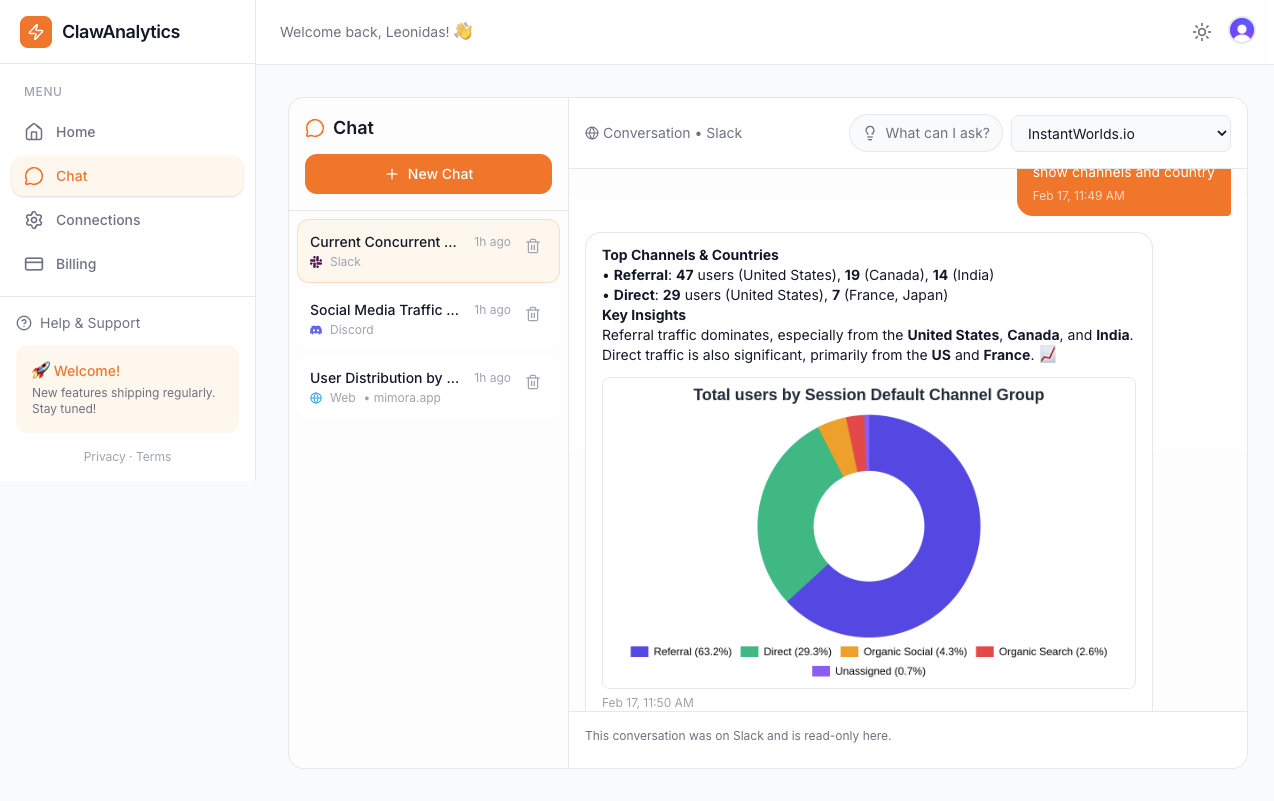
ClawAnalytics gives education creators a simplified view of their ad performance. Instead of wrestling with complex GA4 configurations, you see exactly what’s working.
For education sites, this means understanding which topics and formats generate revenue. You might find that your “how-to” guides outperform your “what is” articles significantly.
Quick questions ClawAnalytics answers:
Which subjects should I create more content about? The platform breaks down revenue by topic, showing exactly what your audience pays attention to.
Are my free resources driving revenue? Track how free guides and resources lead to ad revenue from engaged visitors.
How do I compare to competitors? ClawAnalytics benchmarks help you understand if your education site is performing well within your niche.
Quick Wins
Build content clusters around high-performers. If your Python programming tutorial earns well, create related content about other programming languages and development tools.
Optimize for student search behavior. Students search specifically: “how to write an essay,” “math formulas,” “study tips for exams.” Create content matching these exact queries.
Add resources to existing pages. Comprehensive resource lists keep visitors on your page longer, increasing ad impressions and revenue.
Refresh seasonal content. Update your exam preparation materials before each testing season. Fresh content ranks better and earns more from advertisers targeting stressed students.
Build Email Lists From Day One
Every educational site should capture visitor emails. These subscribers become your most valuable audience. They visit regularly, trust your recommendations, and provide a direct communication channel that no algorithm can affect.