You wrote an amazing blog post. It took you 4 hours. Someone clicked through from Google, read the first paragraph, and left. That is a bounce, and it is hurting your blog more than you think.
Bounce rate is the percentage of visitors who leave after viewing only one page. For bloggers, every bounce means lost ad revenue, missed email subscribers, and weaker SEO. But the good news? Bounce rate is fixable.
Why Bounce Rate Matters for Bloggers
Bloggers rely on pages per session and time on site. High bounce rates hurt all of these.
Ad revenue impact. Most bloggers monetize through ads. Visitors who bounce never see enough pages to generate meaningful ad revenue. Low bounce rates mean more pageviews and more money.
Email list building. Bloggers grow their audience through email. Visitors who bounce never see your opt-in forms. They never join your list.
SEO implications. Google watches how users interact with your site. High bounce rates can signal low-quality content, which hurts your rankings over time.
Reader relationships. Blogging is about building an audience. Visitors who bounce once might never return. Keeping them engaged builds loyal readers.
How to Check in GA4
GA4 tracks bounce rate, though it focuses on engagement metrics.
In GA4, go to Reports and select Engagement. Look at Pages and Screens to see bounce rate by blog post. Find your worst performers.
Check bounce rate by traffic source. Go to Traffic Acquisition and sort by bounce rate. Some sources naturally have higher bounces than others.
Compare bounce rate to average session duration. A visitor might bounce but spend 3 minutes reading. That is actually okay. Look for pages with both high bounces and low time on page.
One important note: GA4 measures engagement differently. A reader who scrolls through your whole post might count as engaged even if they do not visit another page. Always check time on page alongside bounce rate.
The Easier Way
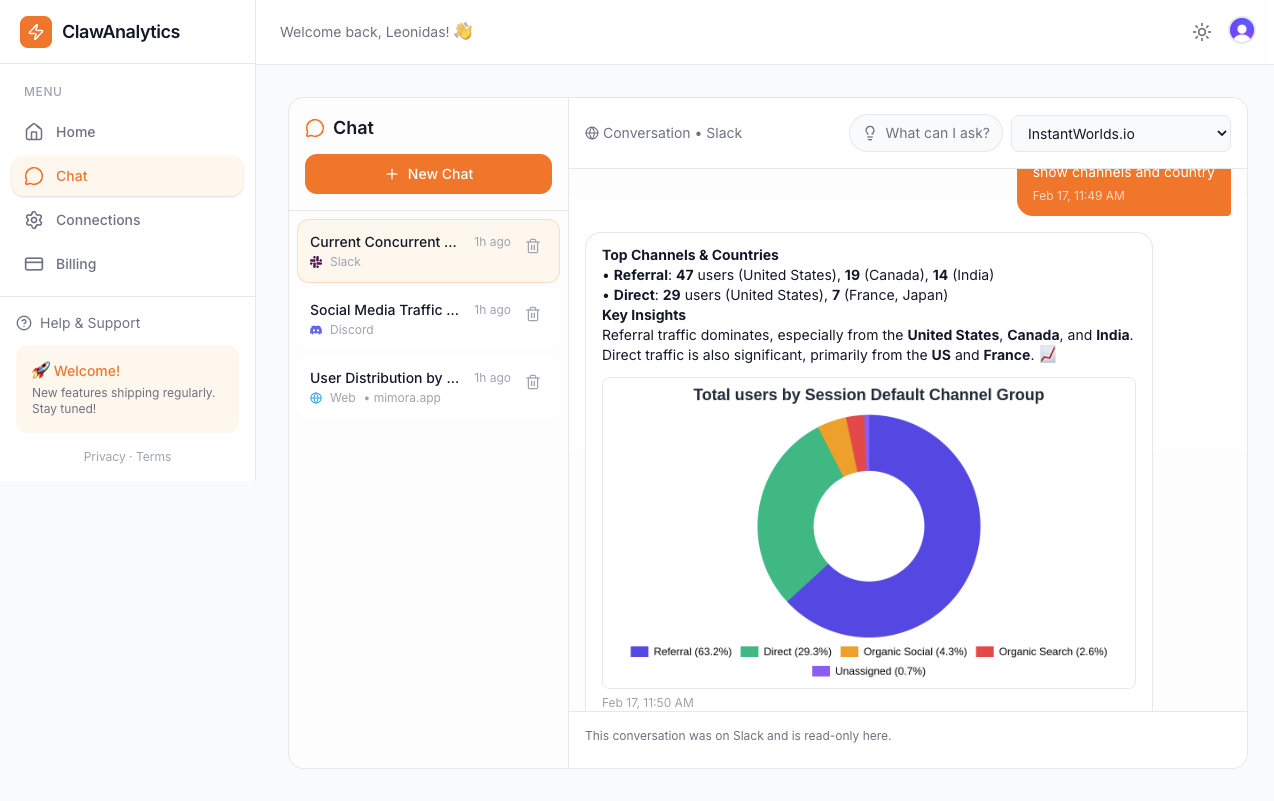
ClawAnalytics helps bloggers understand and reduce bounce rate.
You connect your blog analytics. ClawAnalytics automatically shows which posts have bounce problems and suggests improvements based on what works for successful blogs.
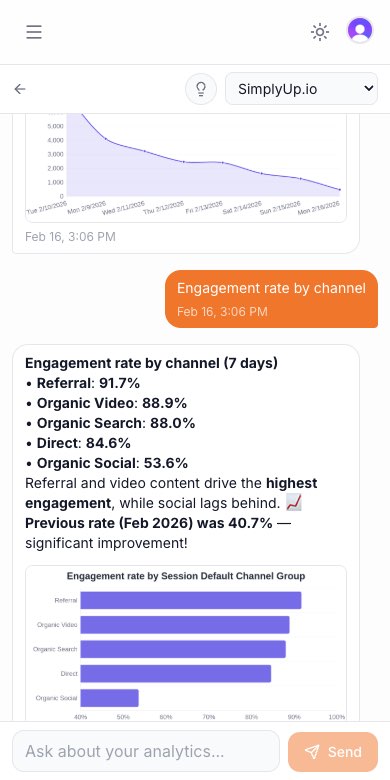
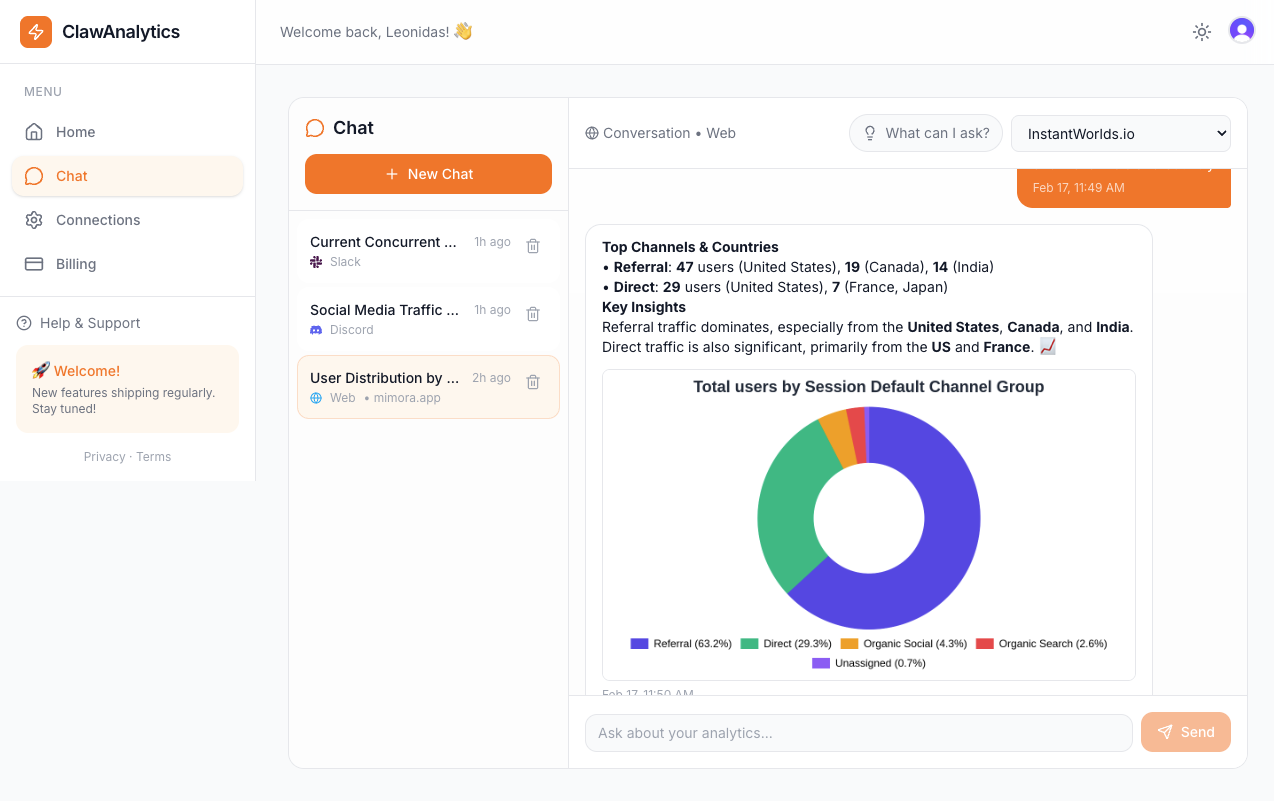
You might ask: “Which blog posts have the highest bounce rate?” ClawAnalytics shows you exactly. Or wonder: “Are mobile readers bouncing more?” The tool breaks down bounce by device and source.
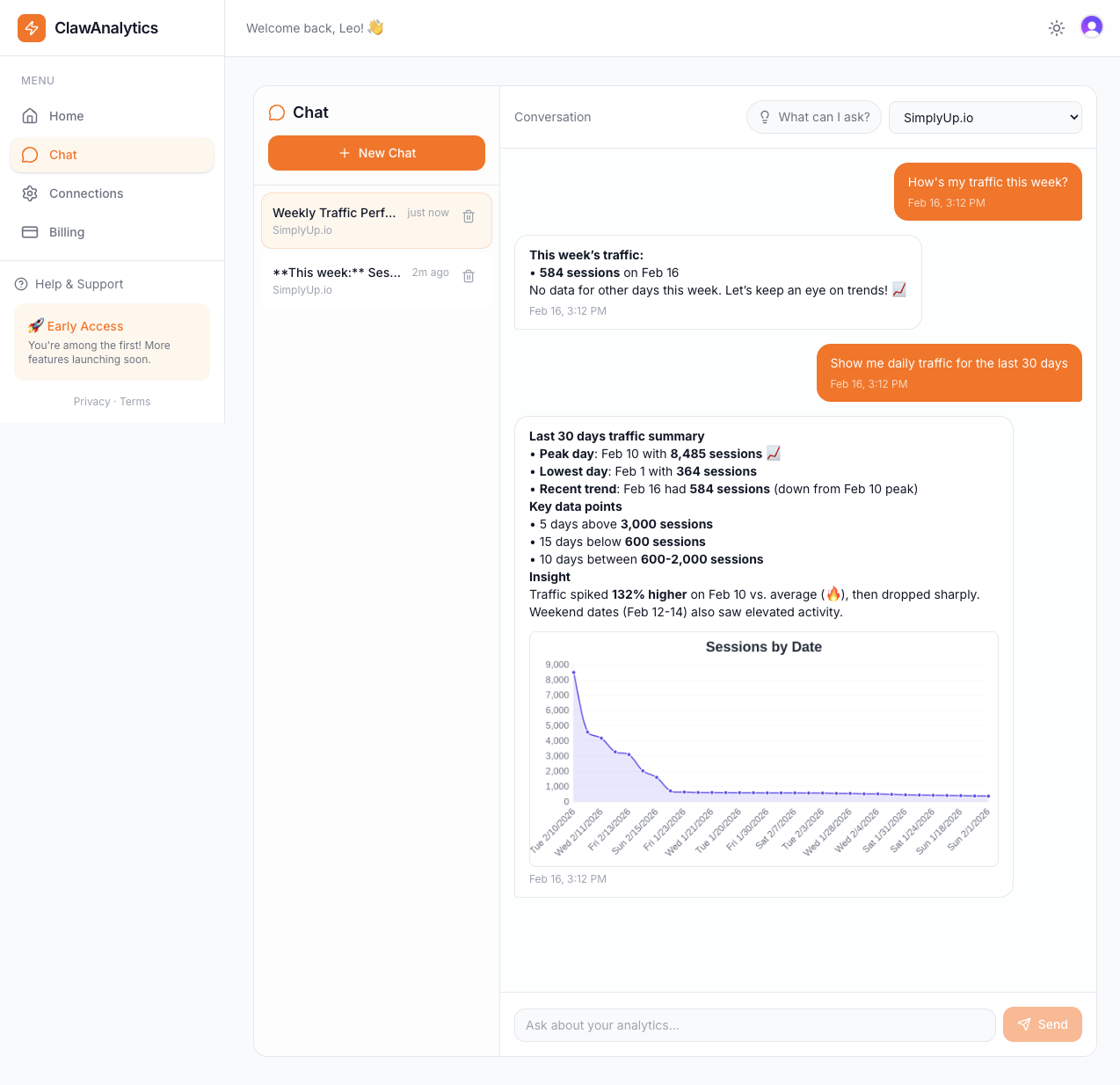
For bloggers who hate analytics, ClawAnalytics sends weekly insights. You learn what content keeps readers and what makes them leave.
Quick Wins
Hook readers in the first paragraph. If your introduction does not grab attention immediately, readers leave. Make it compelling and relevant.
Add internal links. Link to other relevant posts throughout your content. This gives readers somewhere to go next, reducing bounces.
Use images and formatting. Long blocks of text scare readers away. Break up content with images, subheadings, bullet points, and short paragraphs.
Add a table of contents. For long posts, a clickable TOC helps readers navigate. They find what they need and stay longer.
Include related posts. At the end of every post, show readers 3 other articles they might enjoy. This keeps them on your site.
Optimize for mobile. Most blog traffic is mobile. If your site is hard to read on phones, readers bounce. Use a responsive design.
Speed up your blog. Slow loading times cause bounces. Compress images, use caching, and consider a content delivery network.