How to Improve Bounce Rate for Education
A parent researches schools, clicks on your website, struggles to find information about programs or admissions, and leaves. That bounce just became an enrollment at a competitor. In education, where decisions are high-stakes and long-term, your website must guide visitors through every stage of the decision journey.
Why Bounce Rate Matters for Education
Education purchases are among the most significant financial decisions families make. Whether it is kindergarten or graduate school, parents and students invest enormous time and money. Your website must build confidence at every touchpoint.
Multiple audiences mean multiple needs. Prospective students, current parents, alumni, and donors all visit your site. Each group needs different information. If your site does not quickly direct visitors to their relevant content, they bounce.
Trust is the currency of education. Parents entrust children to schools. Your website must project credibility through accreditations, outcomes, faculty credentials, and safety information. Missing these elements drives visitors away.
Information depth varies by stage. Some visitors are early in research, just browsing. Others are ready to apply. Your site must serve both stages without overwhelming early-stage visitors or underwhelming ready applicants.
Seasonal spikes create challenges. Enrollment periods bring intense traffic spikes. If your site cannot handle the load or fails to answer peak-season questions, you miss an entire year’s potential students.
How to Check in GA4
In GA4, examine your Pages and screens report. Focus on program pages, admissions information, and financial aid content. These are the critical conversion areas.
Check the user journey. Are visitors moving from program pages to admissions, or bouncing at each stage? Understanding the flow reveals where you lose prospective students.
Compare bounce rates between programs. If your STEM programs have significantly higher engagement than arts programs, investigate why. Content, outcomes data, or career placement might explain the difference.
Monitor traffic from specific campaigns. Visitors arriving at program pages from targeted ads should have lower bounce rates than general traffic. If not, your landing pages need adjustment.
The Easier Way
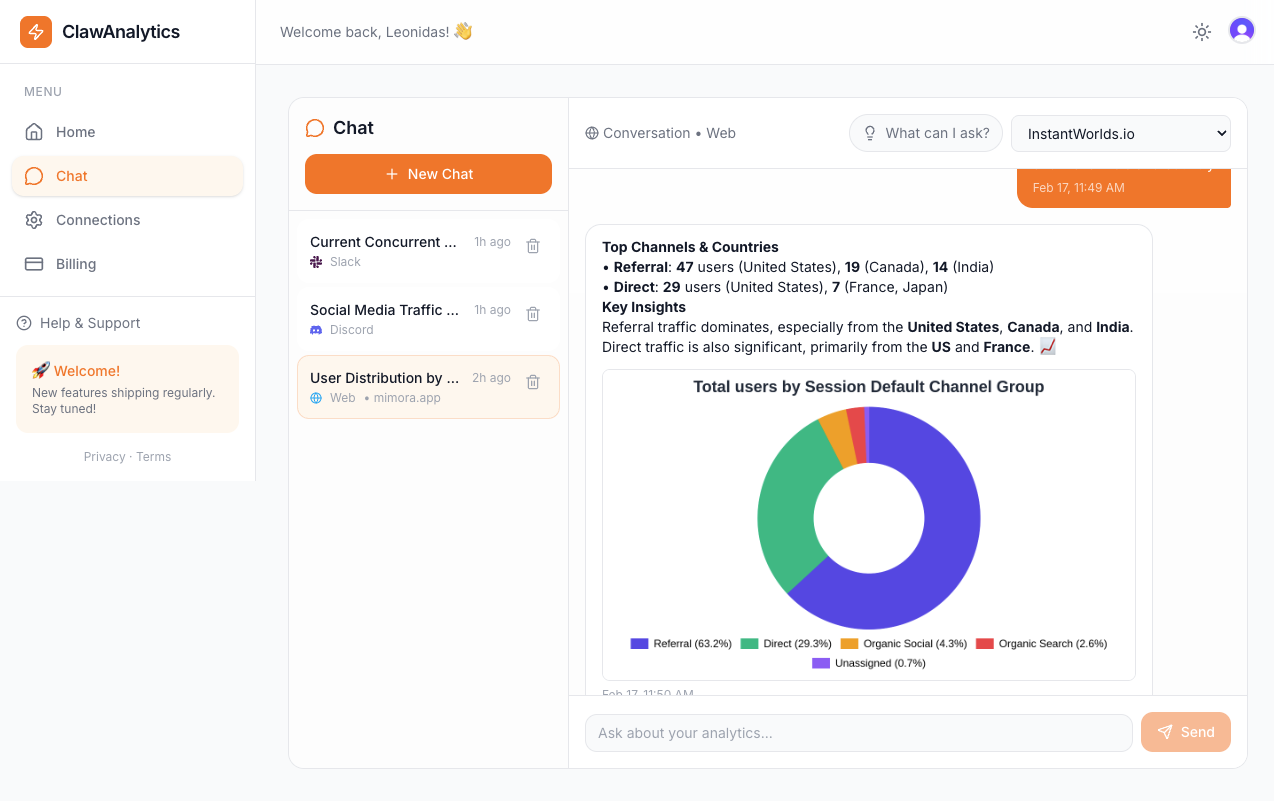
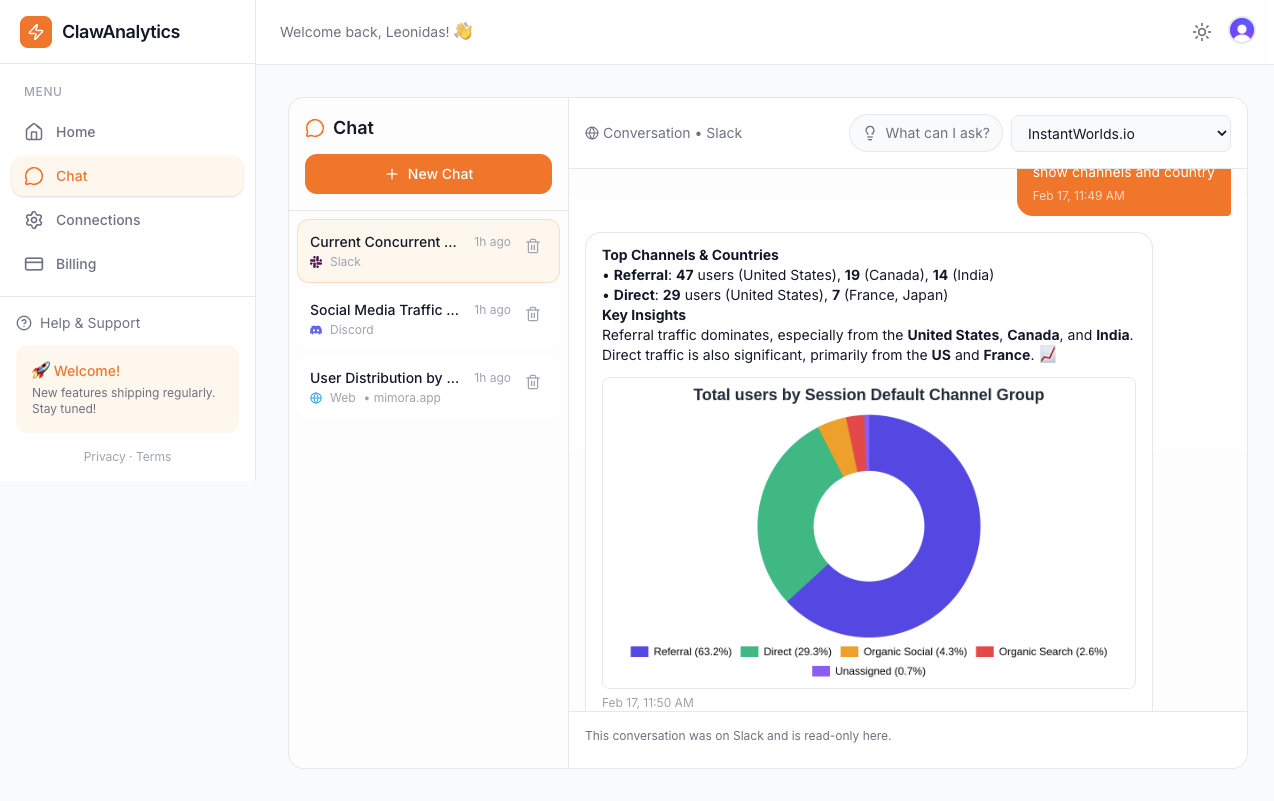
ClawAnalytics takes the complexity out of education website analytics. You might receive an insight like: “Parents visiting from mobile devices bounce 45% higher on your admissions page. Consider simplifying form fields for mobile.”
This specific feedback helps you prioritize improvements. Rather than guessing what needs work, you know exactly where to focus.
ClawAnalytics also helps you understand seasonal patterns. If enrollment season brings higher bounce rates, you might need FAQ content for common questions or faster page loads during peak periods.
The tool helps answer: “Which program pages keep visitors engaged longest?” This data shapes marketing budgets and content creation priorities.
You can also track whether international student pages need different improvements than domestic student pages, helping you serve each audience better.
Quick Wins
Apply these changes to reduce education website bounce rates:
Lead with outcomes. Students and parents want to know results. Display graduation rates, job placement statistics, and alumni success stories prominently.
Show student life. Campus photos, student quotes, and activity highlights help visitors imagine themselves in your community.
Simplify admissions information. Application requirements, deadlines, and financial aid details should be easy to find. Overcomplicated processes drive away busy parents.
Feature faculty expertise. Professors are a major draw for many students. Showcase their credentials, research, and teaching philosophy.
Add clear calls to action. Whether it is “Schedule a Tour,” “Request Information,” or “Apply Now,” make the next step obvious on every page.
Optimize for mobile parents. Many parents research schools on phones during commutes or after bedtime. Mobile experience must be seamless.
Track changes over time. Each improvement in bounce rate represents more families considering your institution.