How to Improve Bounce Rate for Real Estate
You listed a beautiful property, created a stunning landing page, and waited for leads to pour in. Instead, visitors landed on your site, glanced around, and left within seconds. That is the bounce rate problem, and in real estate, every lost visitor could be a lost commission.
Why Bounce Rate Matters for Real Estate
Real estate transactions are high-value and high-effort. When someone bounces from your website, you are not just losing a casual browser. You might be losing a buyer who would have fallen in love with the right property.
Listings must captivate immediately. Real estate is visual. If your listing photos are low quality, missing, or排列 poorly, visitors have no reason to stay. They will click to the next agent who presents properties better.
Buyers do extensive research before contacting agents. A high bounce rate might indicate your site does not provide enough information. Visitors want neighborhood details, school ratings, commute times, and price comparisons. Without this, they move on.
Lead generation depends on engagement. Whether you want visitors to schedule showings, sign up for alerts, or request information, they must first spend time on your site. High bounce rates mean zero engagement and zero leads.
Competition is fierce online. Buyers have dozens of options with a single search. If your website feels outdated or unhelpful compared to Zillow or Redfin, you lose before the conversation starts.
How to Check in GA4
Open Google Analytics 4 and head to the Engagement section. Select Pages and screens to see how individual listing pages perform. Look for the engagement rate rather than traditional bounce rate, since GA4 measures engaged sessions differently.
Check your landing pages specifically. Which ones bring in traffic from Google, social media, or paid ads? Compare their performance. If certain neighborhoods or property types consistently bounce more, that is valuable data for your marketing strategy.
Also monitor your traffic sources. Visitors from organic search might behave differently than those from Instagram or email campaigns. Understanding these patterns helps you optimize each channel.
The Easier Way
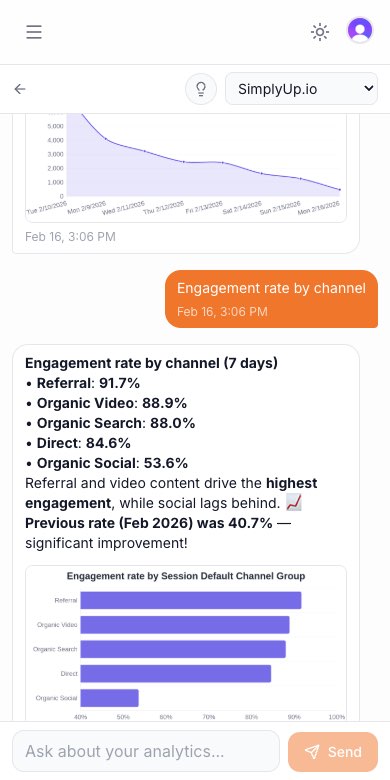
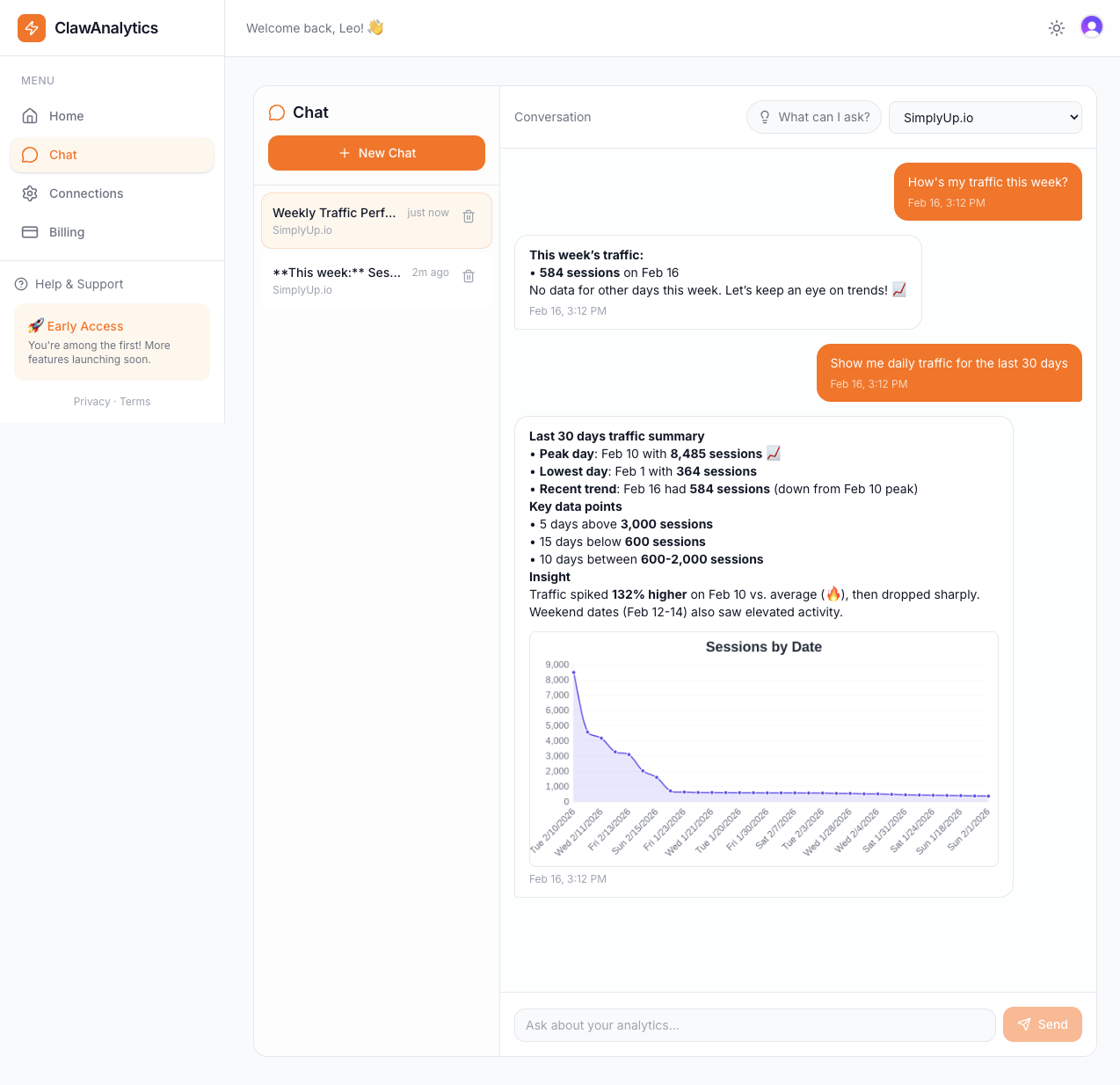
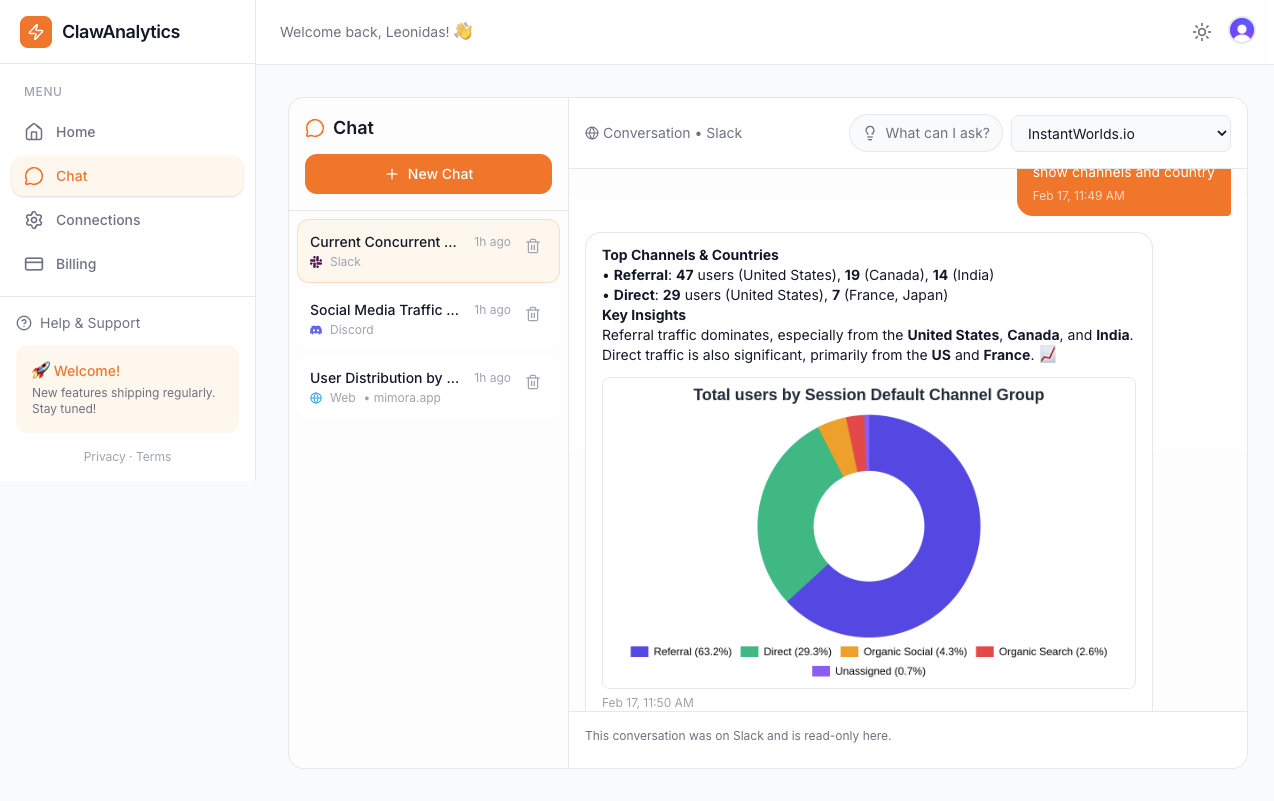
ClawAnalytics takes the manual work out of monitoring real estate bounce rates. Instead of digging through GA4 reports, you get alerts like: “Your condo listings are bouncing 65% higher than your single-family homes.”
This insight helps you understand whether the problem is property type, pricing, or presentation. You can then test changes specifically where they matter most.
ClawAnalytics also helps you answer questions like: “Are mobile visitors bouncing more than desktop users?” In real estate, mobile searches are common, so if your mobile experience is lacking, you are bleeding leads.
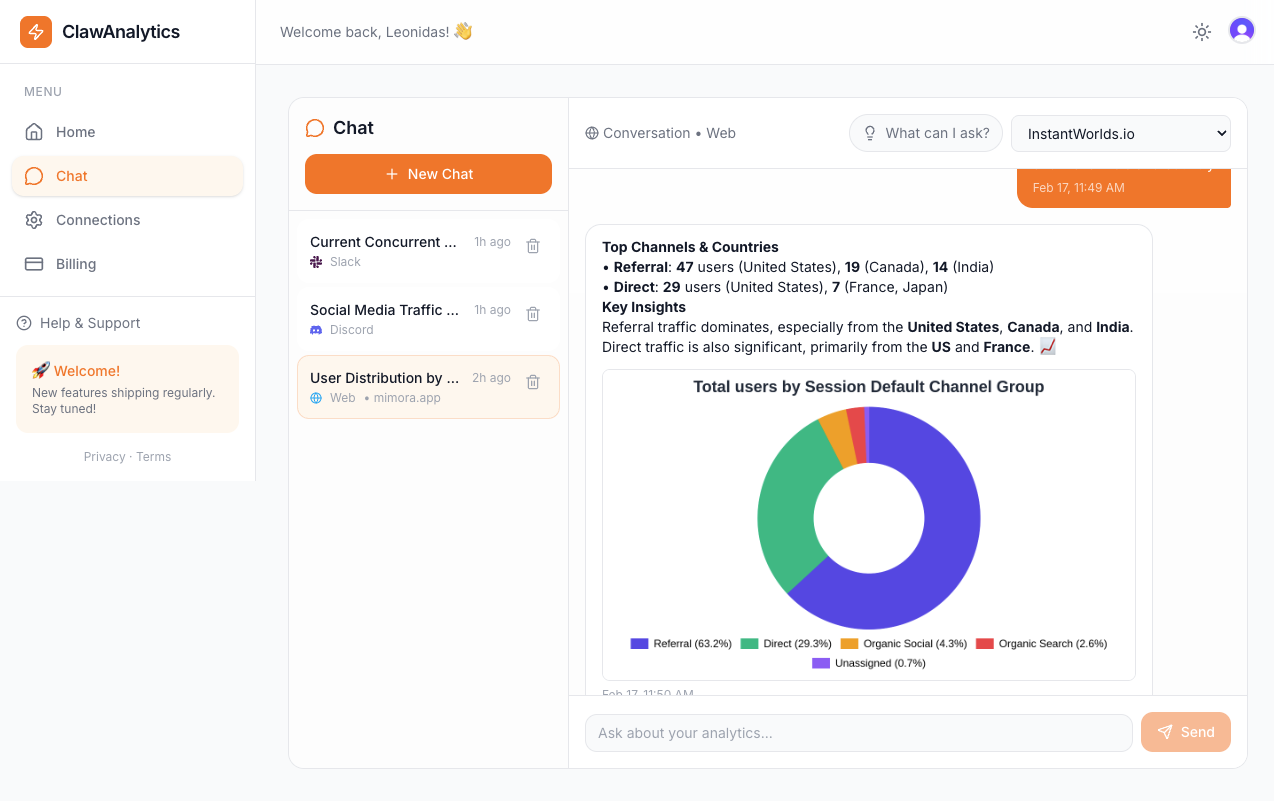
The tool makes it simple to see which marketing channels bring the most engaged visitors, so you can invest your advertising budget wisely.
Quick Wins
Make these changes to keep potential buyers on your real estate website:
Invest in professional photography. High-quality images are non-negotiable in real estate. Blurry or dark photos drive visitors away fast.
Add neighborhood information. Buyers want more than house details. Include nearby restaurants, parks, schools, and commute times.
Include a mortgage calculator. This keeps visitors engaged and helps them understand affordability, increasing the likelihood they will reach out.
Make contact options obvious. Place your phone number, email form, and scheduling tool where they are impossible to miss.
Create neighborhood landing pages. These pages rank well for local search and provide the detailed information buyers want, keeping them on your site longer.
Track your bounce rate weekly after making changes. Small improvements compound into significant lead generation over time.