A potential buyer drives past a house with your sign. They pull out their phone to check the listing details. The property page loads slowly, the photos are hard to view, and they move on. That lead is gone.
Device breakdown reveals how home buyers and sellers interact with your online presence. Real estate is unique because the journey spans multiple devices and stages.
Why Device Breakdown Matters for Real Estate
Real estate decisions happen across devices. Buyers start on mobile, casually browsing neighborhoods and prices. They switch to desktop for serious comparison shopping. They might use tablets to share listings with family.
Mobile searches often happen in the moment. Someone walks past a house and wants instant information. They expect fast-loading pages with key details visible immediately.
Desktop users typically do deeper research. They compare neighborhoods, calculate mortgages, and explore school districts. They spend more time per listing and save more properties.
Tablet usage in real estate is interesting. These users often browse casually but convert at higher rates than mobile. They’re engaged but not yet ready to commit.
How to Check in GA4
Open GA4 and go to the Tech reports. Click on Devices to see your traffic breakdown. Note the percentages and how they change over time.
Create segments for each device type. Compare how users behave differently. Do mobile users view fewer properties? Do desktop users request more information?
Check your lead generation metrics by device. How many leads come from mobile forms versus desktop? Which device generates the most valuable leads?
Look at specific pages. Property detail pages, neighborhood pages, and your contact form all behave differently across devices.
The Easier Way
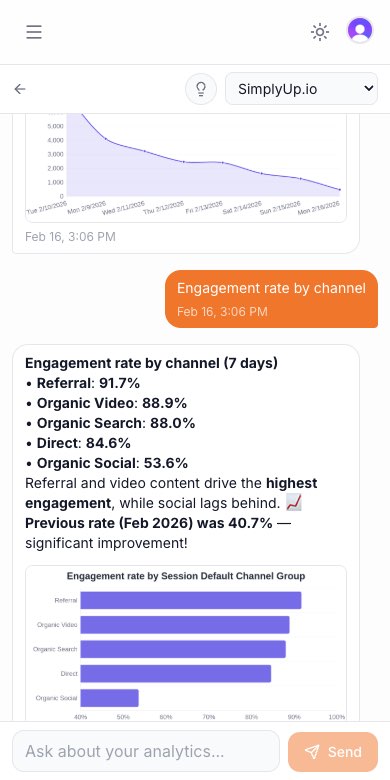
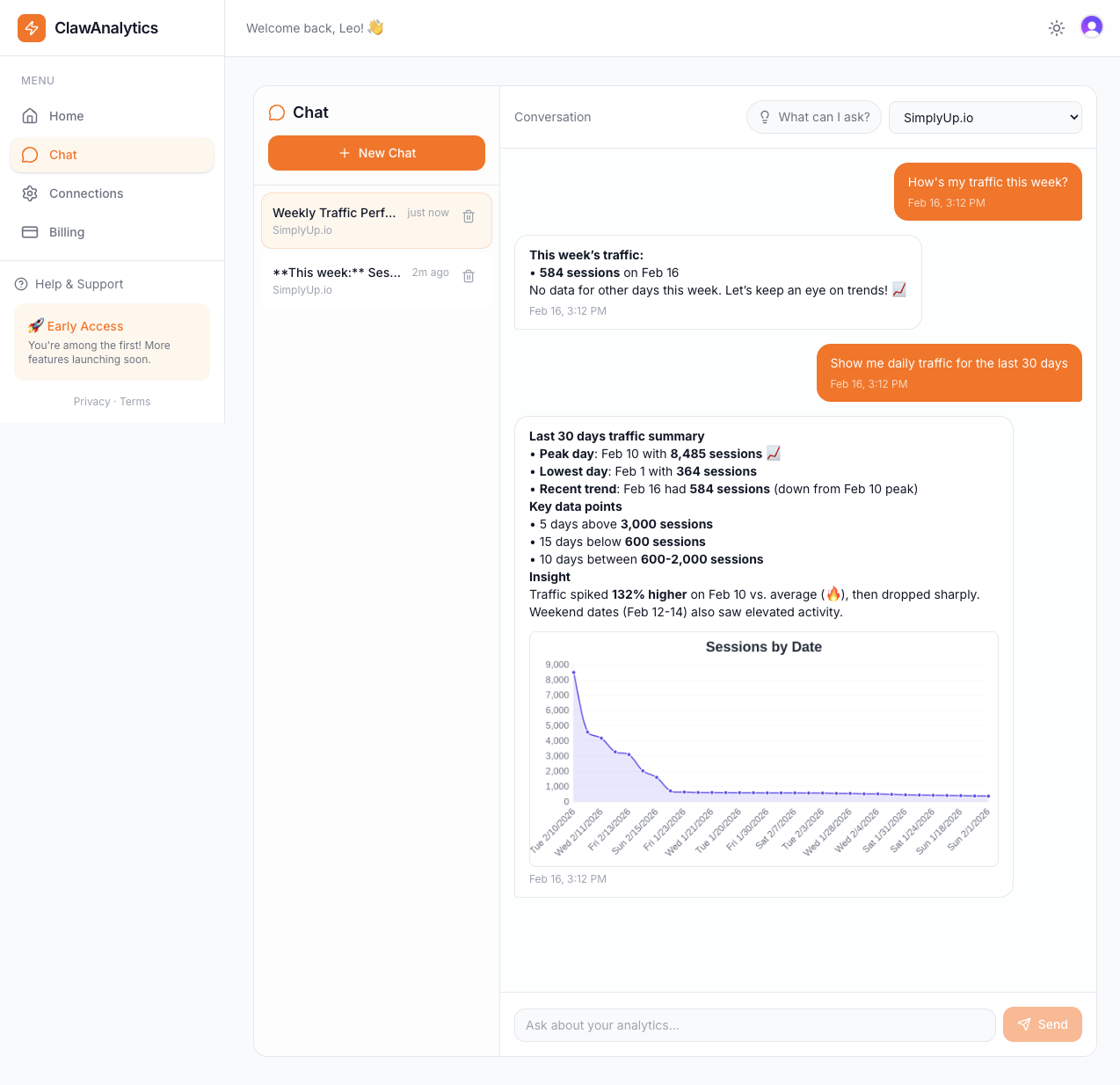
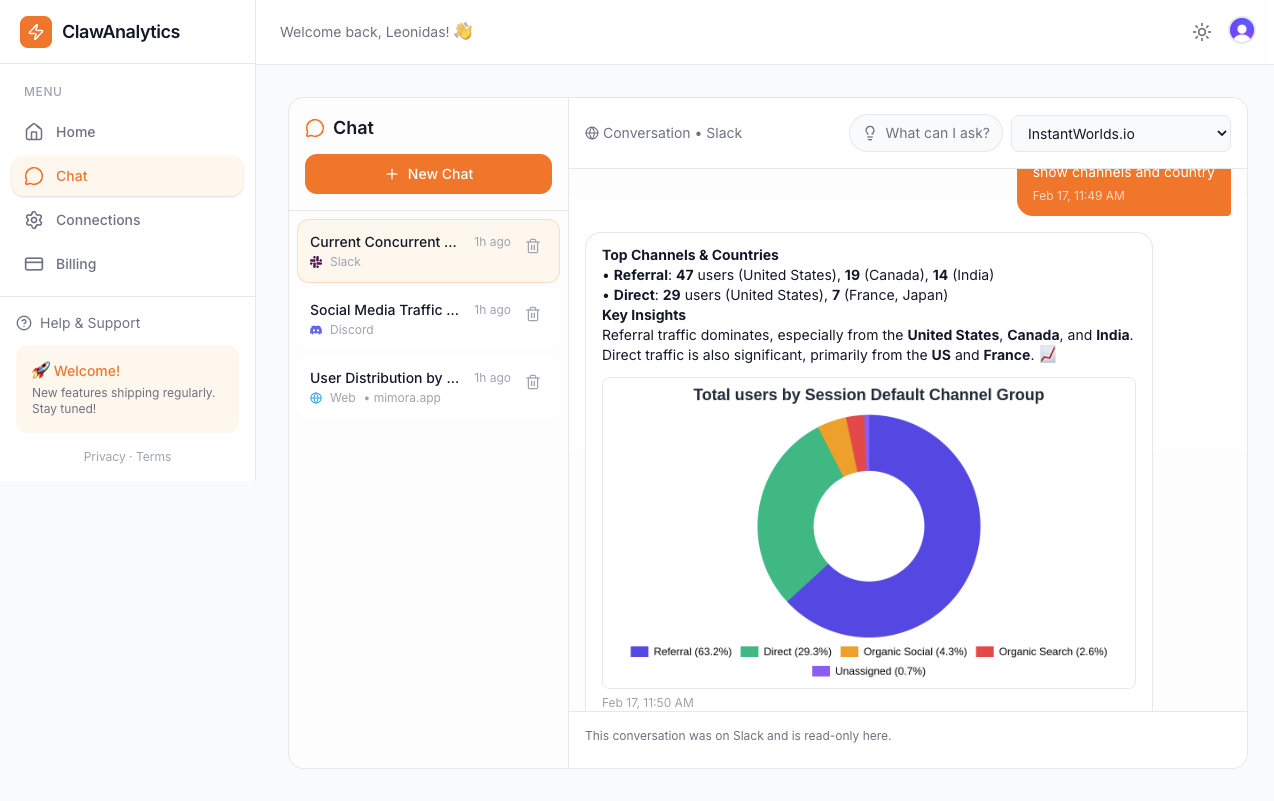
ClawAnalytics answers real estate questions instantly. You could ask “Which device generates the most lead conversions?” or “At what point do mobile property viewers drop off?”
Real estate professionals using ClawAnalytics save hours on reporting. Instead of building custom GA4 reports, they just ask questions and get answers.
The tool helps identify opportunities. You might discover that mobile users rarely complete your contact form. That signals a need for a better mobile experience. Or you might find desktop users convert better for certain property types.
Quick Wins
Make sure your property listings load in under three seconds on mobile. Speed matters because mobile users have less patience and weaker connections.
Use large, high-quality photos that display well on phone screens. Most browsing happens on mobile. Your images must look great in both portrait and landscape orientations.
Ensure your contact forms work perfectly on mobile. Include click-to-call buttons. Make form fields easy to tap. Every friction point loses leads.
Create property alerts that work across devices. Let users save searches and get notifications. This keeps them engaged no matter which device they use next.