Travel planning happens everywhere. Someone might browse hotel options on their phone during lunch, show photos to friends on their tablet at dinner, then book the trip on their laptop late at night. Device breakdown tracking reveals these patterns and helps travel businesses meet travelers where they are.
Why Device Breakdown Matters for Travel
Mobile dominates travel research. People scroll through destination photos on Instagram, compare flight prices during breaks, and save interesting properties to wishlists. This mobile discovery phase drives the entire booking funnel, but mobile conversion rates often lag behind desktop.
Desktop remains the conversion champion for package tours and complex itineraries. Travelers spending $5,000 on a two-week European adventure want to compare dozens of options side by side. They need multiple tabs, detailed cancellation policies, and room to spread out. Desktop delivers this experience.
Tablets surprise many travel marketers with strong conversion rates for last-minute deals. Travelers relaxing by the pool might book an upgrade or add a tour using their tablet. The relaxed context and larger screen create booking-friendly conditions that mobile phones don’t replicate.
Device timing tells its own story. Mobile traffic peaks during commute hours and lunch breaks. Desktop traffic spikes in evenings and weekends. These patterns should shape when you run retargeting ads and send booking reminder emails.
How to Check in GA4
In GA4, go to Tech > Devices to see your baseline device split. Add the Device category dimension to your Conversion paths report to see how users move between devices before booking. Look for common sequences like mobile-to-desktop or tablet-to-mobile.
Create a custom exploration report comparing Average Order Value by device. Travel companies often find desktop bookings include more add-ons like insurance, upgrades, and bundled activities. This insight justifies mobile experience improvements that could capture more of this value.
Set up device-specific conversion events. Rather than just tracking Bookings, track when users initiate booking on mobile versus when they complete on desktop. This distinction reveals where to focus optimization efforts.
The Easier Way
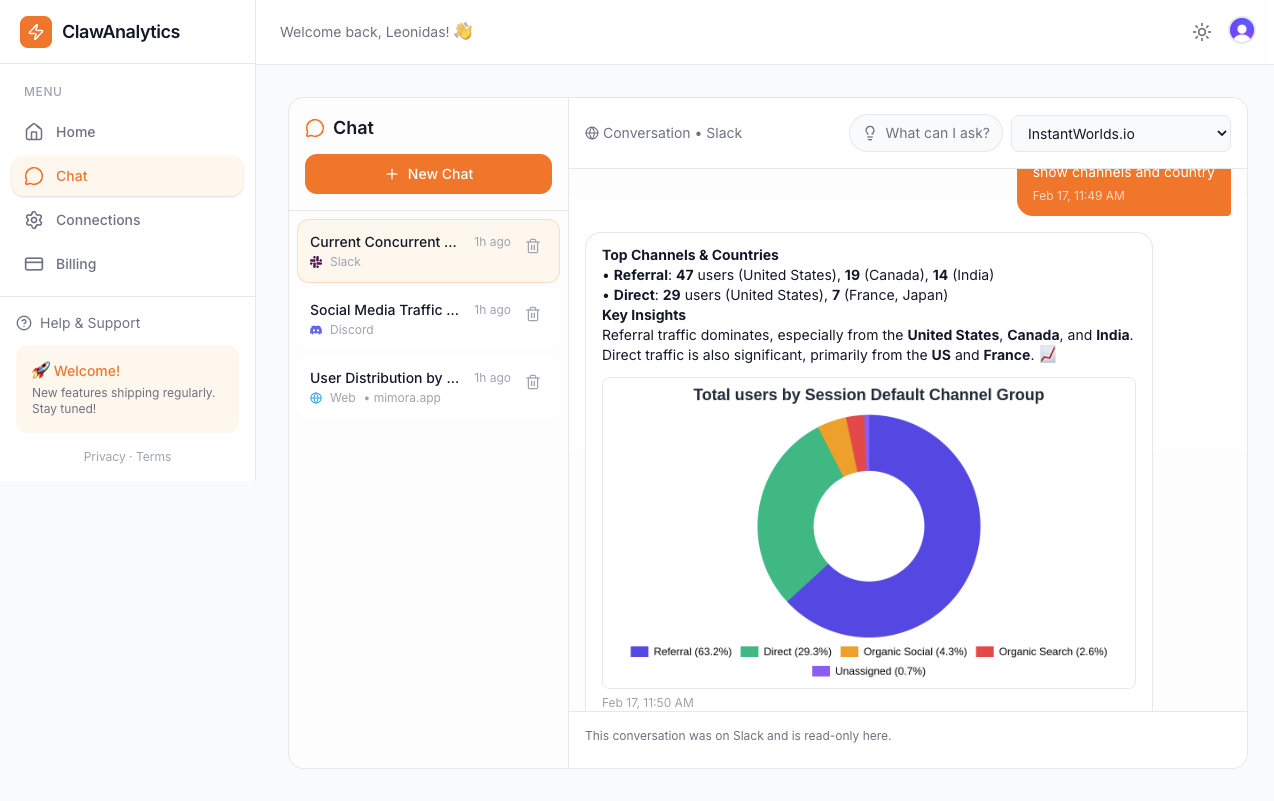
ClawAnalytics answers device questions without building custom reports. Simply ask: Which device brings our most valuable bookings? Are we losing mobile users at checkout? What’s our mobile-to-desktop conversion rate?
The platform highlights device-specific insights automatically. You might discover that mobile users frequently abandon at the payment step, suggesting a checkout redesign could increase revenue significantly. Or find that tablet users convert at higher rates than any other device, pointing to an underserved market worth investing in.
Cross-device journey tracking shows the complete traveler path from first inspiration to confirmed booking. Understanding this journey helps create cohesive marketing that reaches users across all their devices with relevant messages.
Quick Wins
Start with mobile checkout optimization. Travel bookings are high-value, so even small improvements in mobile conversion rates create significant revenue gains. Simplify forms, add Apple Pay and Google Pay, and ensure the booking flow works flawlessly on smaller screens.
Create device-specific landing pages. Mobile visitors landing on heavy desktop-optimized pages bounce at higher rates. Speed up mobile variants and ensure key information like prices and availability loads above the fold.
Use device data to time your marketing. Send retargeting ads when desktop users are likely at their computers in the evening. Reach mobile users during their browsing peaks with lighter content that doesn’t interrupt their day.