Bloggers

How to Improve Engagement Rate for Bloggers

Learn how bloggers can improve engagement rate to understand reader interest and grow their audience.

How to Improve Engagement Rate for Bloggers

Readers scan hundreds of blog posts daily, reading a few sentences before clicking away. They search for answers, skim for value, and rarely return to sites that waste their time. Engagement rate tells you exactly which posts capture attention and which ones lose readers instantly.

Why Engagement Rate Matters for Bloggers

It reveals content quality. High engagement means readers find your posts valuable enough to read fully, share with others, and bookmark for later. Low engagement signals topics that miss the mark or content that rambles.

It exposes reader preferences. Engagement data shows which topics, formats, and headlines attract the most attention. Are list posts outperforming how-to guides? This shapes your content calendar.

It drives ad revenue and sponsorships. Brands pay more for blogs with engaged audiences. High engagement rates mean more newsletter signups, social shares, and loyal readers.

It improves SEO rankings. Google rewards content that keeps readers on your site longer. Better engagement signals quality content that deserves higher search rankings.

How to Check in GA4

Google Analytics 4 provides detailed engagement tracking for blogs and content sites.

Create a free GA4 property at analytics.google.com and install the tracking code on your blog. Most blogging platforms like WordPress have simple GA4 integrations.

Once data flows, visit the Engagement section in GA4. The Overview displays your overall Engagement Rate, showing what percentage of readers interact meaningfully with your content.

Click into Pages and Screens to see engagement details for each blog post. Sort by average engagement time to find your strongest content. Look for posts with high views but short time on page.

Compare engagement across different traffic sources. Do readers from Google search engage more than social media visitors? This shapes your promotion strategy.

The Easier Way

ClawAnalytics makes GA4 simple for busy bloggers who would rather write posts than analyze data.

You get clear answers without navigating complicated dashboards. Questions like “Which blog posts keep readers on my site longest?” or “What topics should I write more about?” become instantly visible.

ClawAnalytics tracks which posts generate the most interest, where readers stop reading, and which content drives newsletter signups. The platform sends alerts when engagement patterns shift, helping you adjust quickly.

Quick Wins

Boost your engagement rate with these proven tactics. First, write compelling introductions that hook readers in the first sentence. Second, add subheadings, images, and bullet points that make content easy to scan. Third, end posts with questions that encourage comments and shares.

Add related post links at the end of articles to keep readers browsing. Create pillar posts that serve as hub pages for related topics. Reply to comments quickly to build community.
Check your analytics from anywhere

On your morning commute. At a coffee shop. In a meeting. Pull up your analytics on any device and get instant answers.

  • Web dashboard on desktop & mobile
  • Discord bot for team channels
  • Slack integration for your workspace
  • MCP server for AI agents (Claude, Cursor)
See your traffic in 60 seconds →
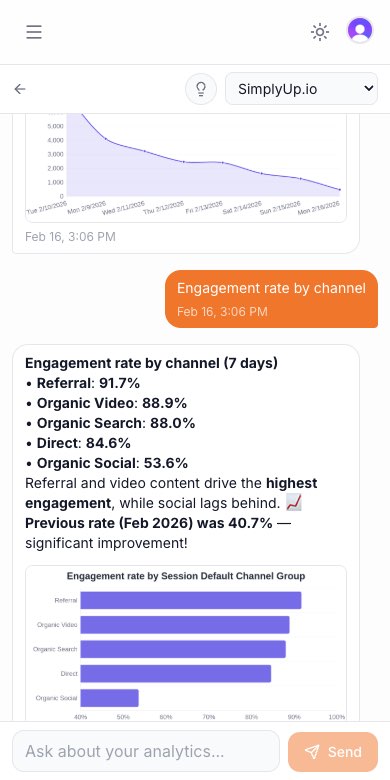
ClawAnalytics mobile chat showing engagement rate breakdown with charts

How ClawAnalytics helps

Skip the dashboards. Get answers in seconds.

🔗
1

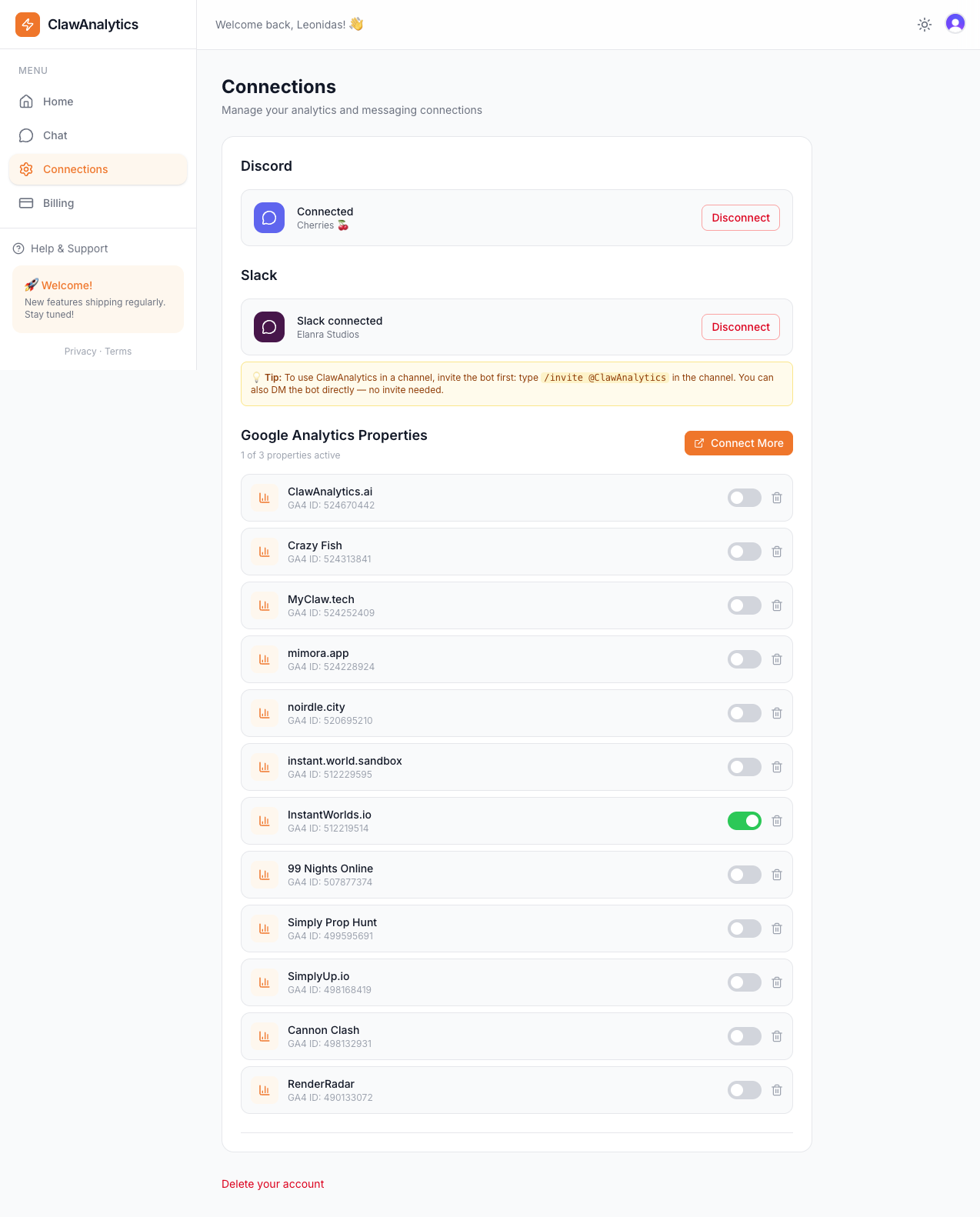
Connect GA4

One-click OAuth. Read-only access. Takes 30 seconds to link your Google Analytics property.

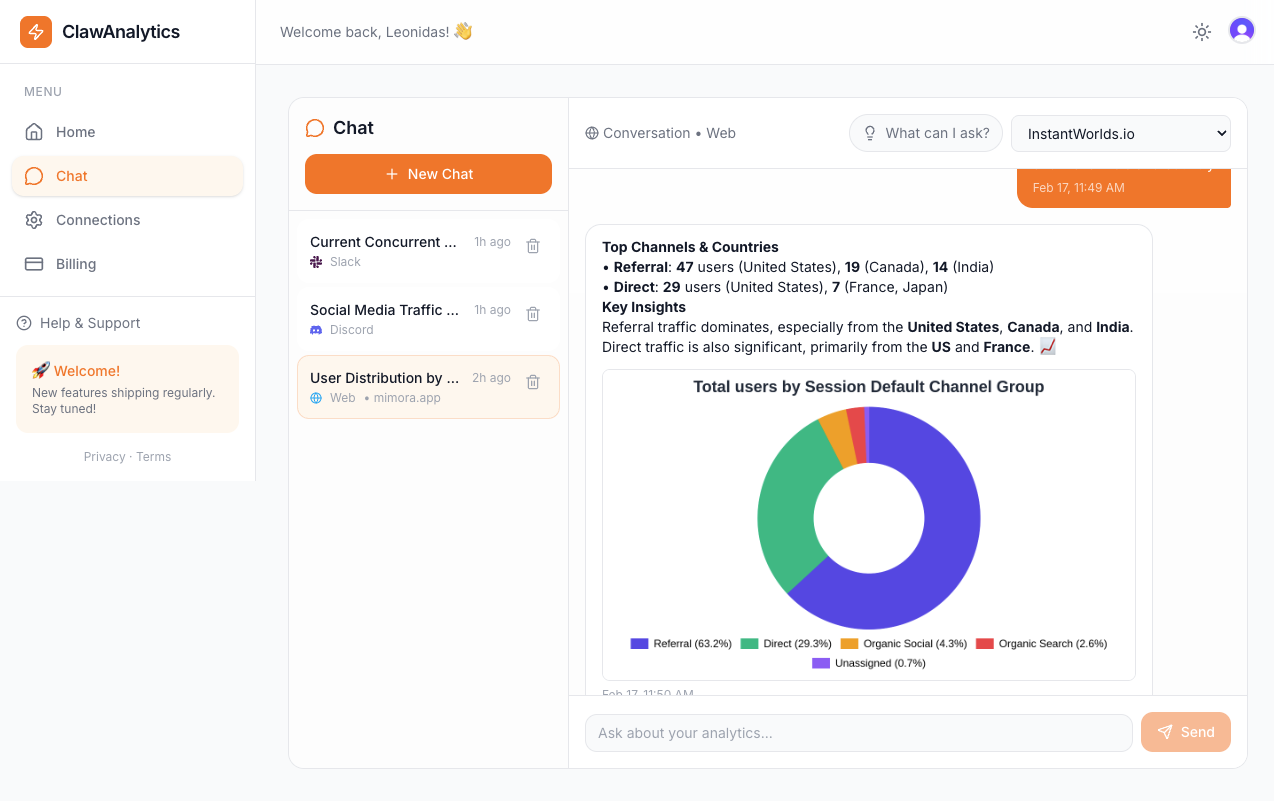
ClawAnalytics connections page showing Google Analytics properties linked
💬
2

Ask questions

Type in plain English. No query language, no filters, no date pickers. Just ask what you want to know.

ClawAnalytics chat interface with natural language query
📊
3

Get answers with charts

Instant responses with visualizations. Share charts with your team or export the data.

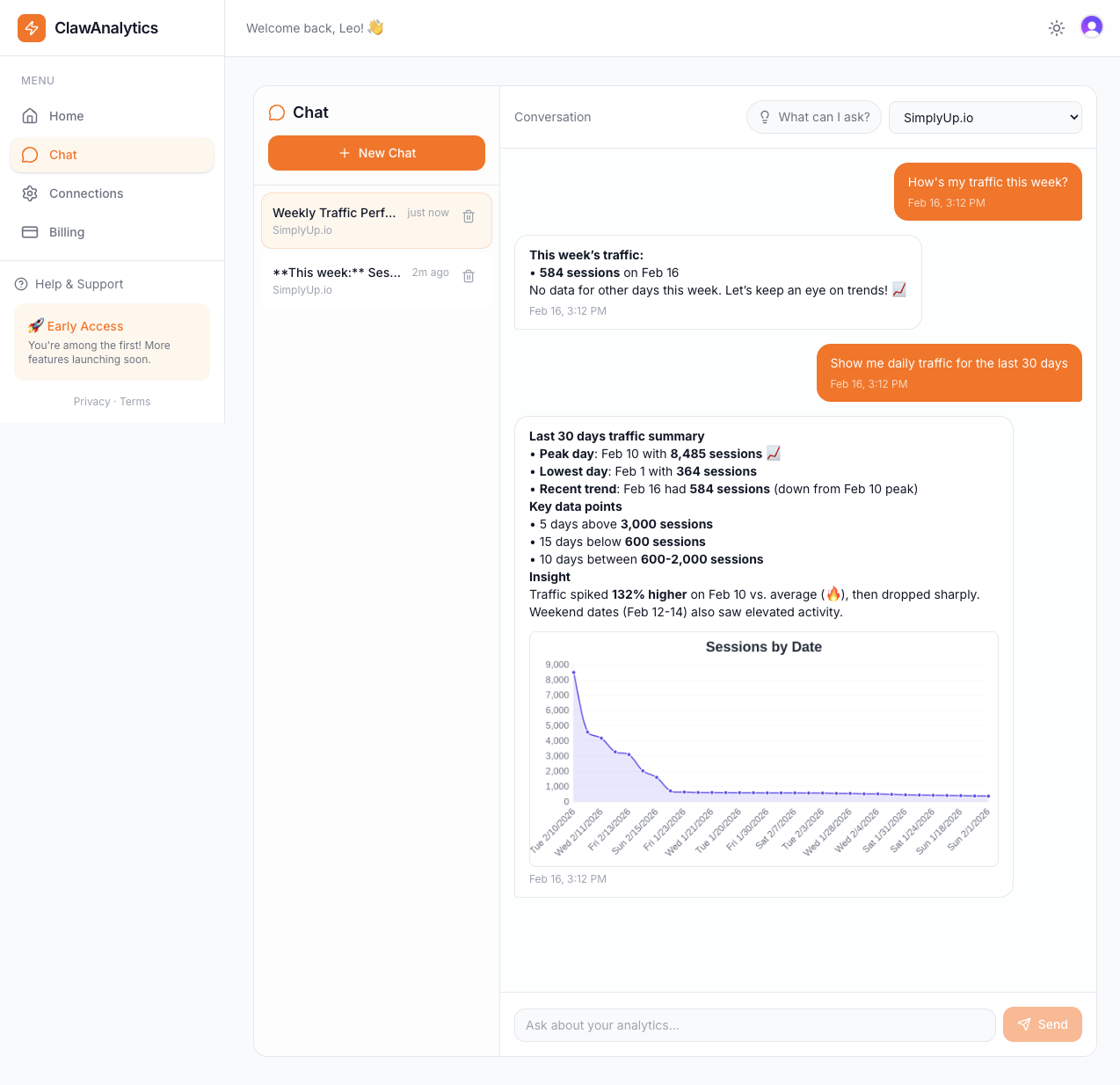
ClawAnalytics showing chart response to analytics query

See it in action

Ask a question. Get a chart. That simple.

ClawAnalytics Chat
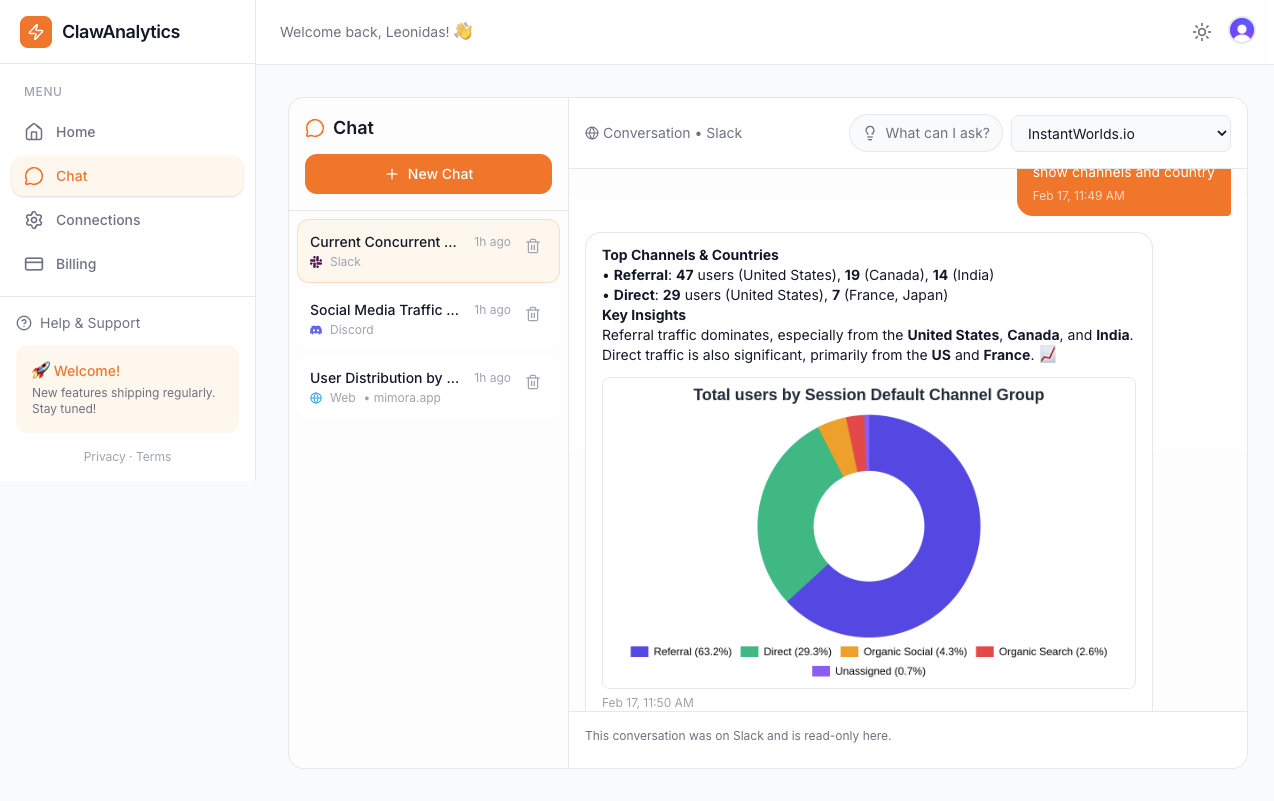
ClawAnalytics chat interface showing a natural language analytics query with chart response

Works on web, Discord, and Slack. Also available as an MCP server for AI agents.

Leonidas Maliokas
"I used to open Google Analytics 5 times a day and still miss things. Now I get a summary every morning and ask follow-ups when something looks off. Takes 10 seconds instead of 10 minutes."

Leonidas Maliokas

Founder, Elanra Studios

🎮 5 games monitored 💼 3 businesses

Simple, honest pricing

Start free. Upgrade when you're ready.

Free

Try it out

$0 /month
  • 5 websites
  • 30 questions/month
  • Web dashboard
  • No credit card
Start Free

Website

For small businesses

$9 /month
  • 5 websites connected
  • 100 questions/month
  • Daily morning summary
  • Web dashboard + Discord
Get Started

Business

For agencies and portfolios

$79 /month
  • Unlimited websites
  • 2,000 questions/month
  • Everything in Pro
  • ✅ API access
  • ✅ MCP integration
  • ⭐ Priority support
Get Started

Stop opening dashboards.
Start asking.

Connect Google Analytics in 30 seconds. Get answers from the dashboard or Discord. Start free — no credit card needed.

Try it free — ask your first question
30-second setup Free plan available Cancel anytime

Got questions?

Why does engagement rate matter for bloggers?
Engagement rate shows how many readers actually interact with your content, not just read headlines and leave. High engagement means readers are spending time on posts, sharing articles, and coming back for more.
How do I measure engagement in Google Analytics 4?
In GA4, go to Engagement > Overview to see your Engagement Rate. This shows what percentage of readers interact meaningfully with your blog. Check the Pages report to see which posts keep readers engaged longest.
What does ClawAnalytics tell bloggers about engagement?
ClawAnalytics helps bloggers understand which topics attract the most interest, where readers lose interest, and which content drives newsletter signups. It turns GA4 data into clear content ideas.

Related guides

More resources to help you get the most from your analytics.