How to Improve Engagement Rate for Dropshipping
Imagine spending $500 on Facebook ads but getting zero sales. Your engagement rate reveals why visitors leave before buying. This metric shows exactly how well your store connects with potential customers.
Why Engagement Rate Matters for Dropshipping
Dropshipping relies heavily on ad spend. Every visitor who bounces costs you money. Here’s why engagement rate matters:
-
Lower ad costs. Platforms reward high-engagement pages with cheaper clicks. When users stay longer, your cost per acquisition drops.
-
Better product selection. Low engagement on specific products tells you which items to remove from your store. Focus only on products that capture attention.
-
Improved customer trust. Engaged visitors read reviews, watch product videos, and add items to cart. This builds confidence before purchase.
-
Higher conversions. Engagement correlates directly with sales. Users who interact with your content are far more likely to buy.
How to Check in GA4
Google Analytics 4 tracks engagement rate automatically. Here’s how to find it:
- Open GA4 and select your property
- Go to Reports > Engagement
- Look at “Engaged sessions” vs “Sessions”
- Engagement rate = (Engaged Sessions / Total Sessions) x 100
You can break this down by page, traffic source, or device. Filter by “Dropshipping” landing pages to see which products perform best.
The Easier Way
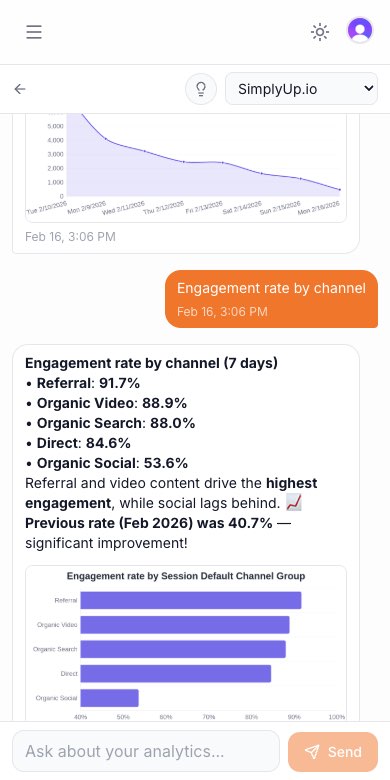
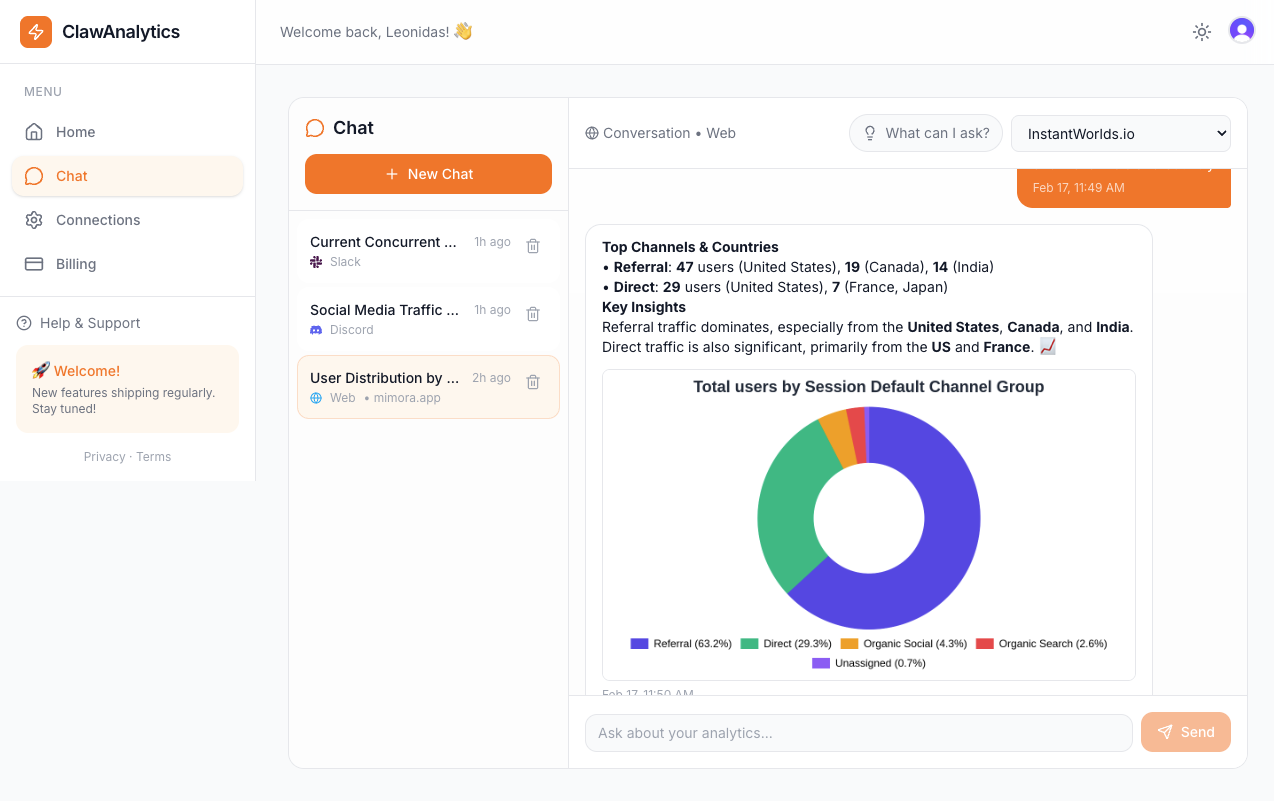
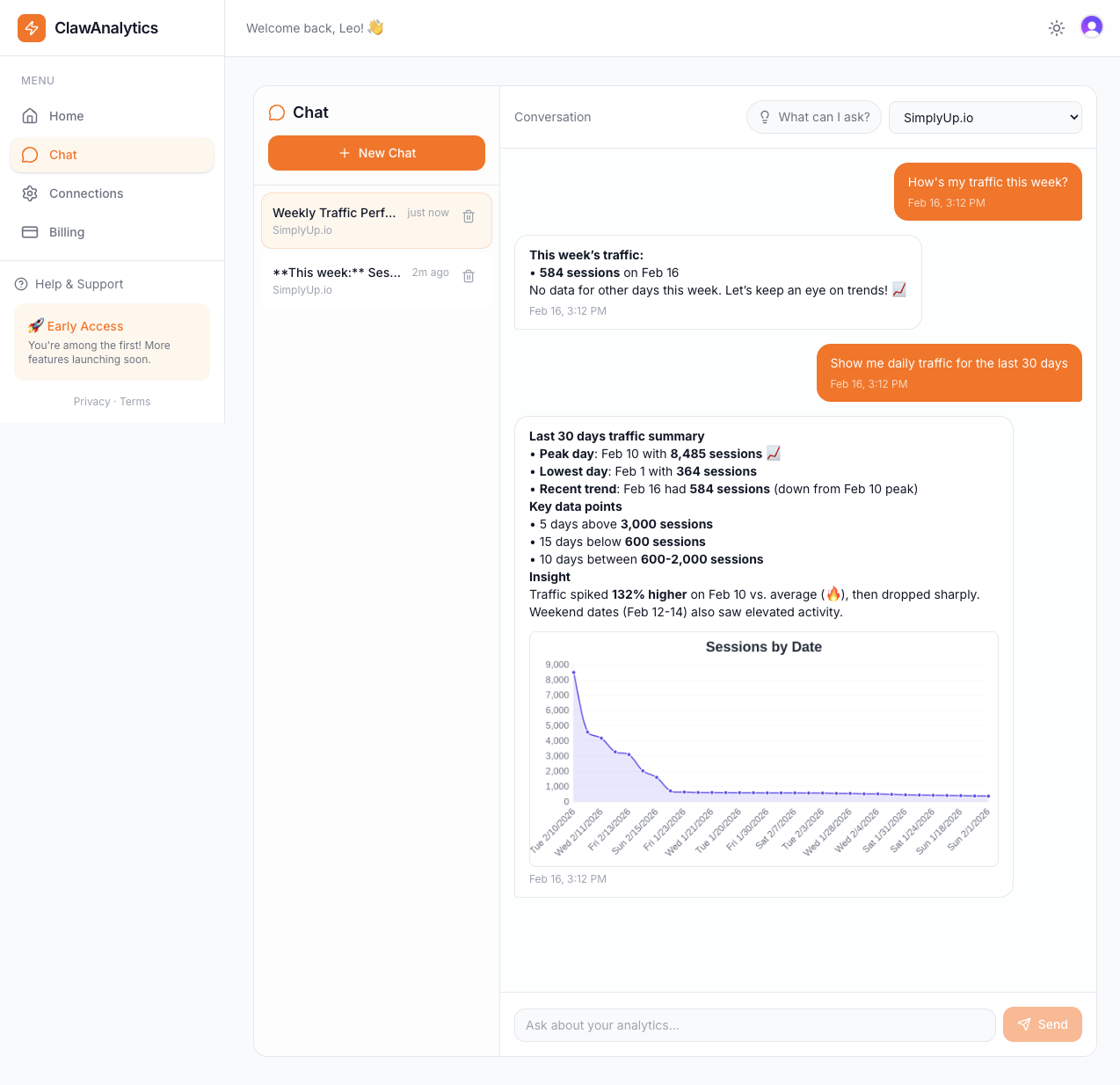
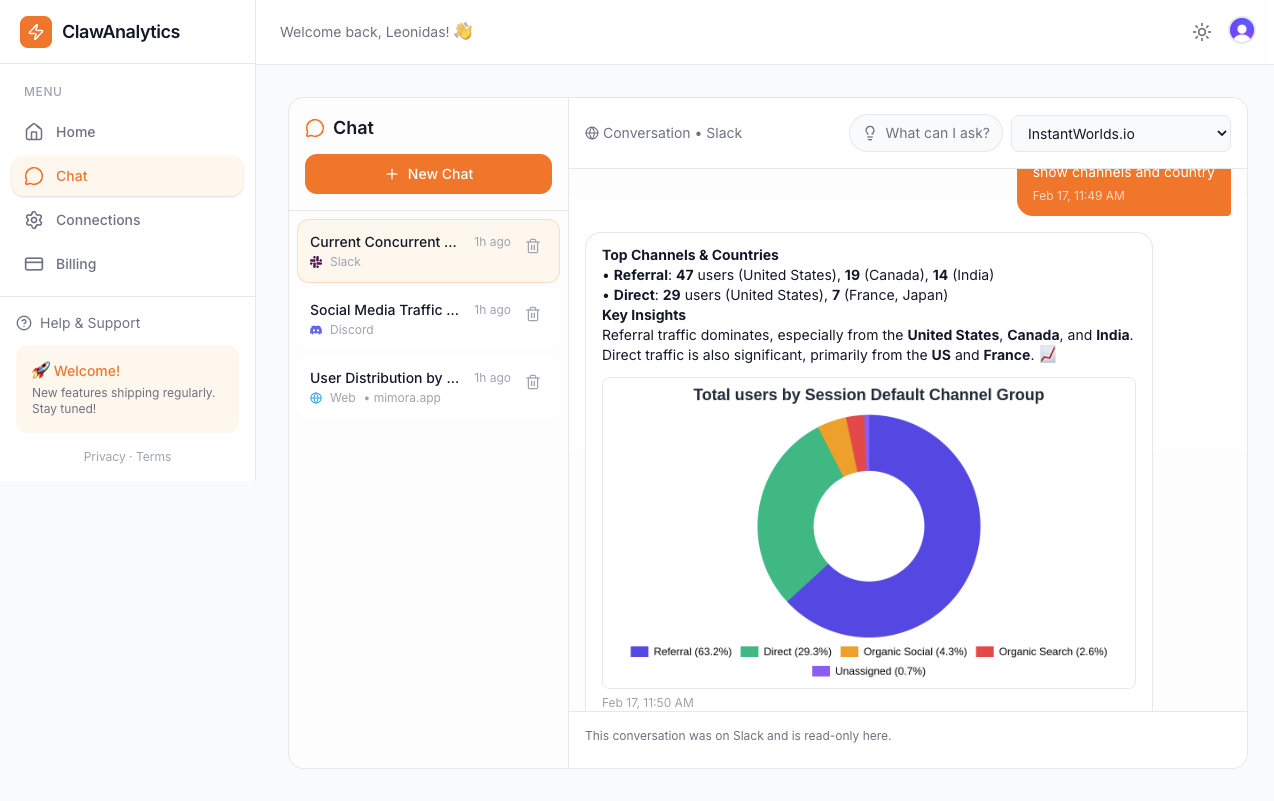
Reading GA4 reports takes time. ClawAnalytics pulls engagement data into one simple view.
Example questions ClawAnalytics answers instantly:
- Which product pages have the highest bounce rate?
- Are mobile visitors more engaged than desktop users?
- Which ad campaign brings the most engaged traffic?
Instead of building custom GA4 reports, you see actionable insights the moment you log in.
Quick Wins
Start improving your engagement rate today:
- Add product videos. Videos keep visitors on page longer and increase purchase likelihood.
- Simplify navigation. Fewer clicks to checkout reduce abandonment.
- Use social proof. Display reviews and testimonials near add-to-cart buttons.
- Optimize for mobile. Most dropshipping traffic comes from phones. Test your store on actual devices.
- Speed up loading. Compress images and use lazy loading. Slow sites kill engagement.
Track these metrics weekly. Small improvements compound into significantly better results over time.