A boutique travel agency in Denver specialized in European river cruises. Their website had beautiful photos and compelling copy, yet bookings trickled in. Then they analyzed their organic traffic and found something surprising: their blog post about “Best Time to Visit Portugal” was getting 3,000 visits monthly from people planning trips. They’d been ignoring this audience entirely.
Once they started creating more destination guides, organic traffic doubled. More importantly, those visitors booked trips at twice the rate of their previous website visitors.
Why Organic Traffic Matters for Travel
Travel planning is inherently search-driven. Before anyone books a flight, hotel, or tour, they search. They look for “best time to visit Bali,” “family-friendly resorts in Cancun,” or “3 days in Paris itinerary.” If you’re not showing up for these searches, you’re invisible to travelers in the research phase.
Travel decisions happen over time. The average trip takes 61 days from first search to booking. That’s months of opportunity to build trust through helpful content. Each blog post, guide, or destination page is another touchpoint with a potential traveler.
High commercial intent. Someone searching “luxury resort in Maldives” is ready to spend money. They might not book today, but they’re far past the dreaming phase. Capturing this traffic means being visible when they’re comparing options.
Travel content ages well. A well-written guide to “Things to Do in Kyoto” can generate traffic for years. Unlike news or trends, destination information remains relevant, creating compounding returns on your content investment.
How to Check in GA4
GA4 provides detailed insights into how travelers find and use your site.
Begin with Traffic Acquisition and filter for Organic Search. This shows total organic sessions and how they’ve changed over time. Look at the comparison feature to see if recent content efforts are moving the needle.
Use User Acquisition reports to understand which content brings new visitors. Travel sites often have high returning visitor rates from people planning multiple trips. Sort by new users to find content that attracts fresh audiences.
Create a custom dimension for “Destination” or “Trip Type.” Tag your pages and content accordingly. Then you can see at a glance whether your Europe content outperforms your Asia content, or if adventure travel brings more qualified leads than relaxation getaways.
The Easier Way
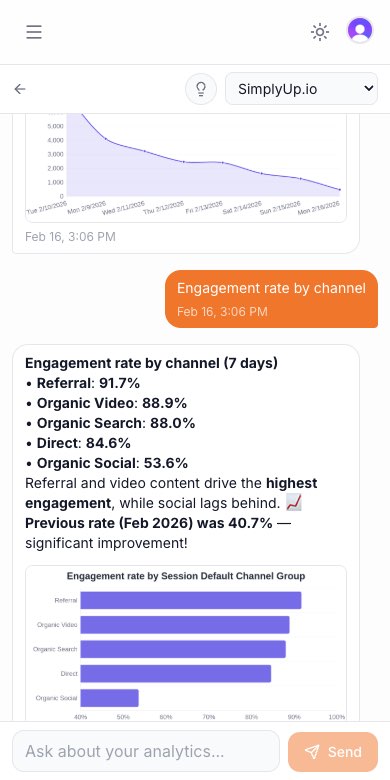
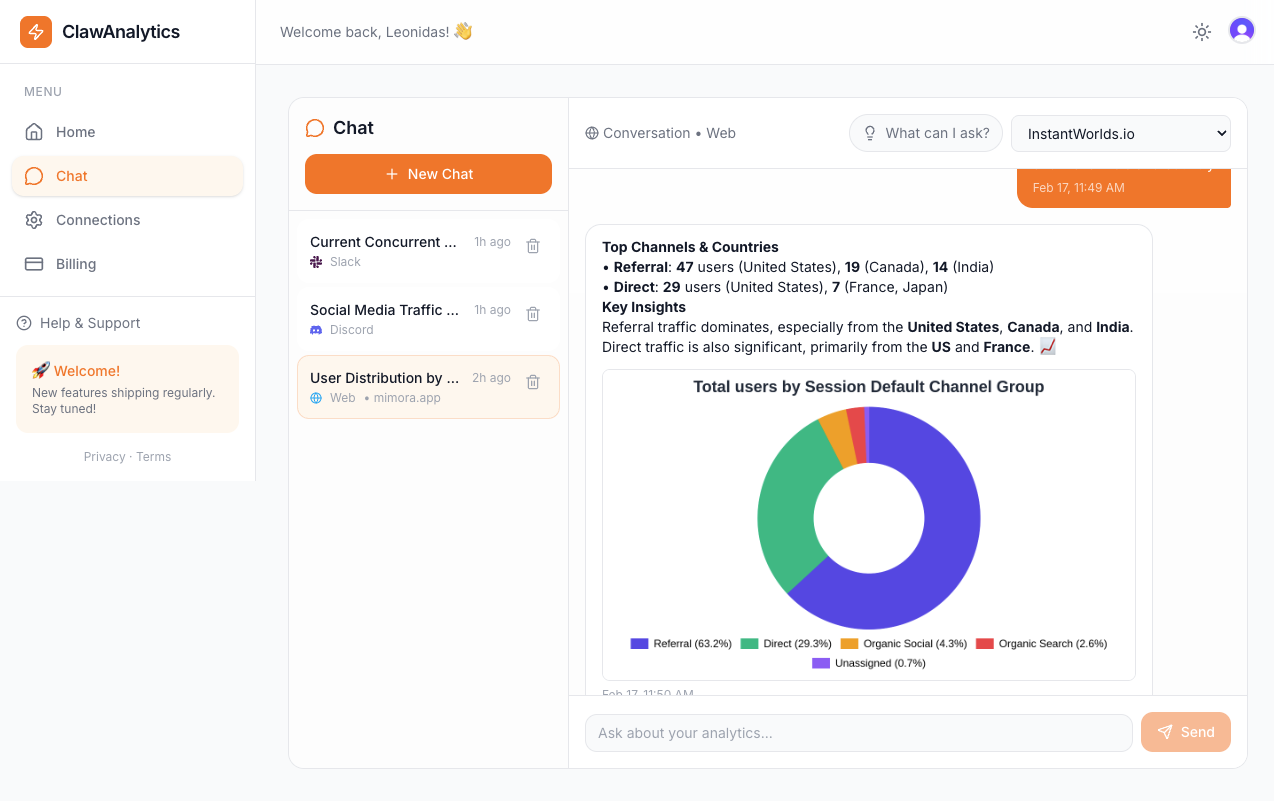
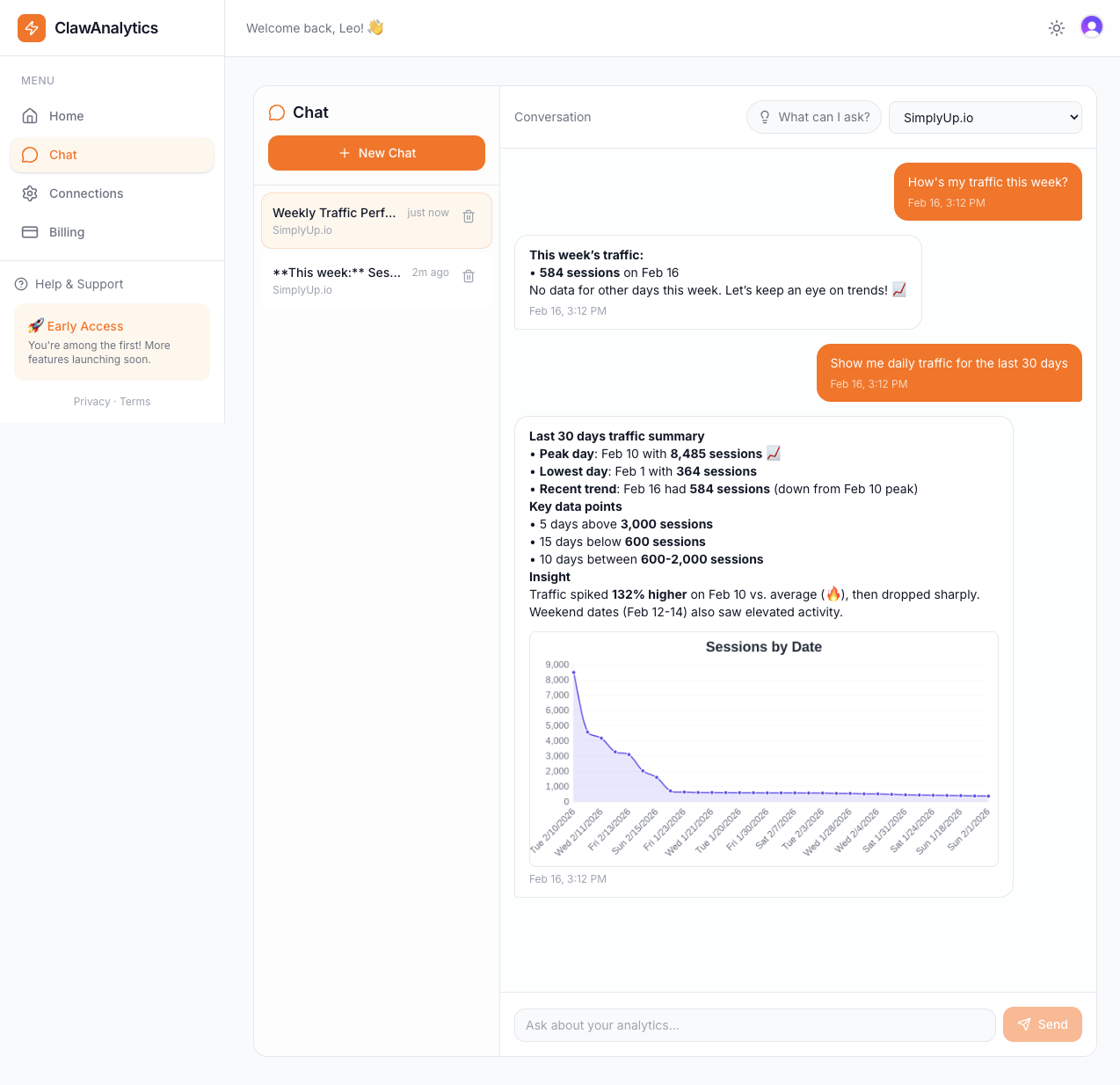
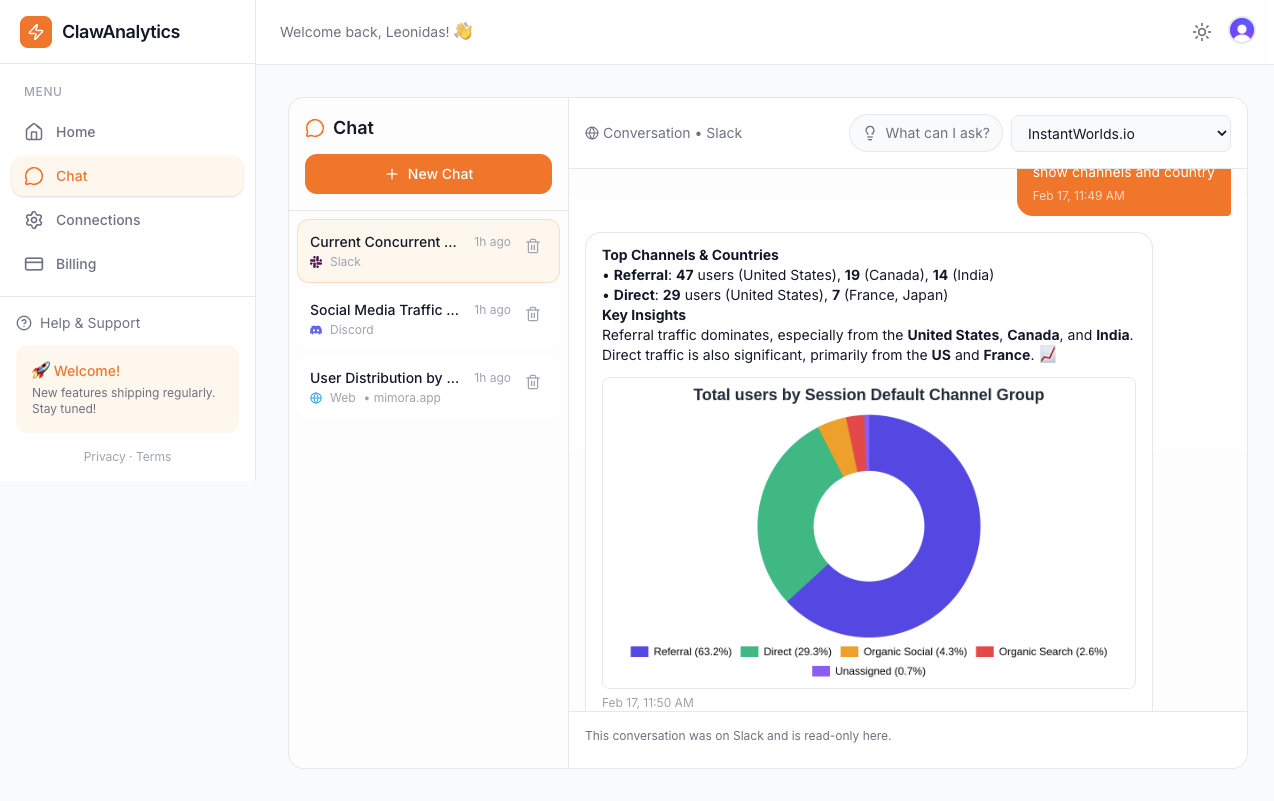
ClawAnalytics simplifies travel website tracking into actionable insights.
A tour operator might ask: “Which destination guides bring people who actually book tours?” The answer reveals that visitors from “Italy itinerary” content book at 4x the rate of general “travel tips” readers.
Hotels can discover that their “Wedding Venues” pages bring fewer views but far higher booking rates than their general room pages. This insight shifts content priorities immediately.
Real-time alerts matter in travel. When a destination features in trending news or a viral social post, you want to know immediately. ClawAnalytics can notify you when traffic spikes so you can capitalize on timely content opportunities.
Quick Wins
Map the traveler journey. Create content for each stage: dreaming (destination inspiration), planning (itineraries and tips), booking (packages and deals), and traveling (local guides). Each stage attracts different searches.
Own specific niches. Instead of competing broadly for “travel agency,” own narrow niches like “luxury safaris for families” or “eco-friendly Costa Rica tours.” Less competition, higher conversion.
Update seasonal content. Review your top-performing seasonal content each year. Update prices, add new attractions, refresh photos. Search engines favor current, accurate information.
Build internal linking. Link from your destination guides to your booking pages naturally. A reader planning their trip to Italy should find clear paths to booking tours or accommodations.
Track the journey, optimize the funnel, and watch bookings grow.