How to Improve Pages Per Session for Fitness
Someone searches for workout options nearby. They land on your gym’s homepage, see a generic photo of weights, and leave in seconds. Now picture them landing on a page about your HIIT classes, clicking through to see the schedule, reading trainer bios, and comparing membership tiers. Each page builds excitement and removes hesitation. That’s how pages per session becomes memberships in fitness.
Why Pages Per Session Matters for Fitness
Fitness decisions are emotional. People want to feel motivated, understood, and confident that your gym fits their goals. High pages per session means visitors are imagining themselves at your facility, exploring what makes it unique.
When someone views multiple classes or programs, they’re actively comparing options. They’re not just browsing. They’re deciding. The more they see, the more likely they are to choose you over a competitor.
For gym owners, this metric reveals which programs generate interest. If yoga pages have high engagement but membership conversions are low, maybe the pricing page needs work. The data tells you where to focus.
How to Check in GA4
Open GA4 and navigate to Engagement. Find the Pages and Screens report and add Pages Per Session as a metric. Create a segment for new visitors versus returning members to understand different behaviors. Fitness enthusiasts often return to check schedules, while new visitors explore offerings.
Compare pages per session across traffic sources. Social media traffic might browse more classes, while search traffic may want specific information quickly.
The Easier Way
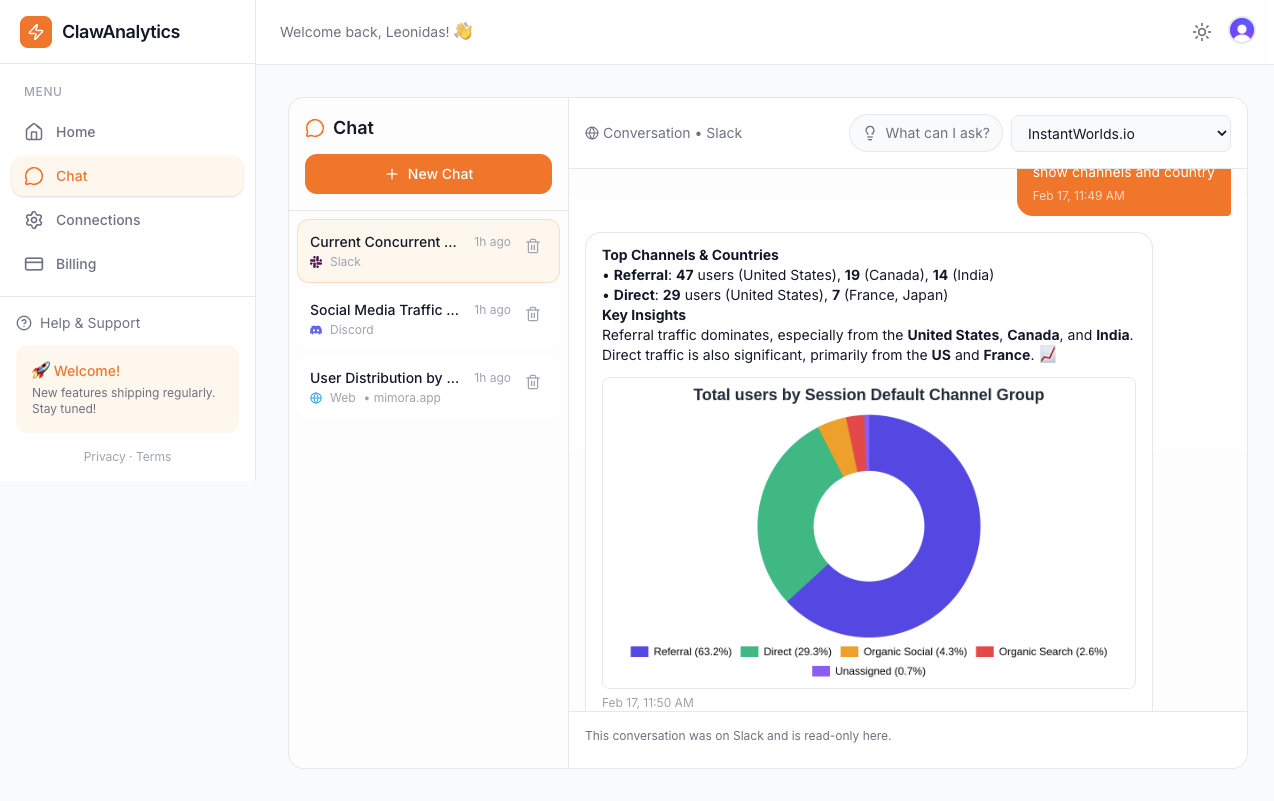
ClawAnalytics gives fitness businesses clear insights without the GA4 learning curve. You see which classes generate the most exploration and where potential members get stuck.
For example, ClawAnalytics might show that visitors who view trainer profiles are twice as likely to sign up. That insight justifies investing more in trainer content. The platform answers questions like which programs need better descriptions automatically.
Quick Wins
First, create dedicated pages for each class type or program. A spin class page, a strength training page, a personal training page. Each becomes a landing opportunity.
Second, add trainer profile pages with photos, certifications, and specialties. Members want to know who they’ll train with.
Third, showcase facility amenities across multiple pages. Show the equipment room, the cardio area, the locker rooms, the smoothie bar. Each image tells part of the story.
Fourth, include success story pages with member transformations. These motivate visitors and provide additional content to explore.
Fifth, make class schedules accessible from every page. Visitors who can quickly check availability stay engaged longer.