How to Improve Referral Traffic for Travel
Imagine running a boutique travel agency and noticing you get lots of visitors from a popular travel blog, but almost none of them book. Meanwhile, a smaller tourism board site sends fewer visitors but nearly half book trips. Without tracking referral traffic, you’d never know which partnerships actually pay off.
Why Referral Traffic Matters for Travel
High intent, high competition. The travel industry is brutal. Everyone is fighting for attention. Referral traffic from trusted sources cuts through the noise because visitors arrive with built-in credibility.
Partnership validation. Travel businesses rely heavily on partnerships with airlines, hotels, tourism boards, and influencers. Referral tracking tells you which relationships actually move the needle.
Seasonal optimization. Travel has peaks and valleys. Understanding which referral sources drive bookings in off-season helps you maintain steady revenue.
Destination credibility. When a respected travel publication links to your tours or hotels, it signals trustworthiness to potential customers researching their trips.
How to Check in GA4
- Open GA4 and go to Reports
- Click Acquisition then Traffic Acquisition
- Find “Referral” under Session default channel
- Click to expand and see individual referring domains
- Add “Transactions” or “Revenue” as a secondary dimension
- Compare conversion rates across different referral sources
- Set up a custom report tracking referral-to-booking conversion over time
The Easier Way
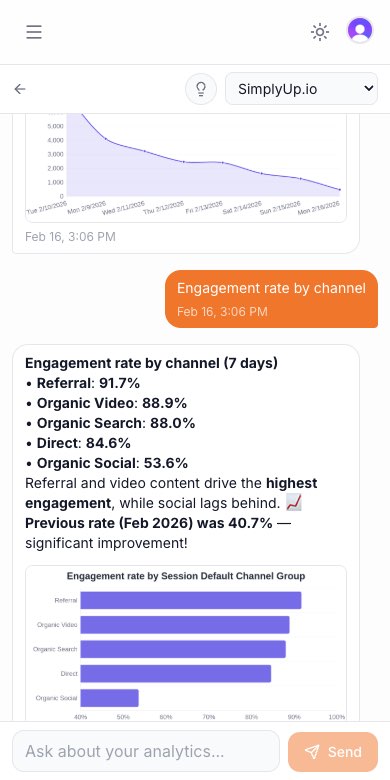
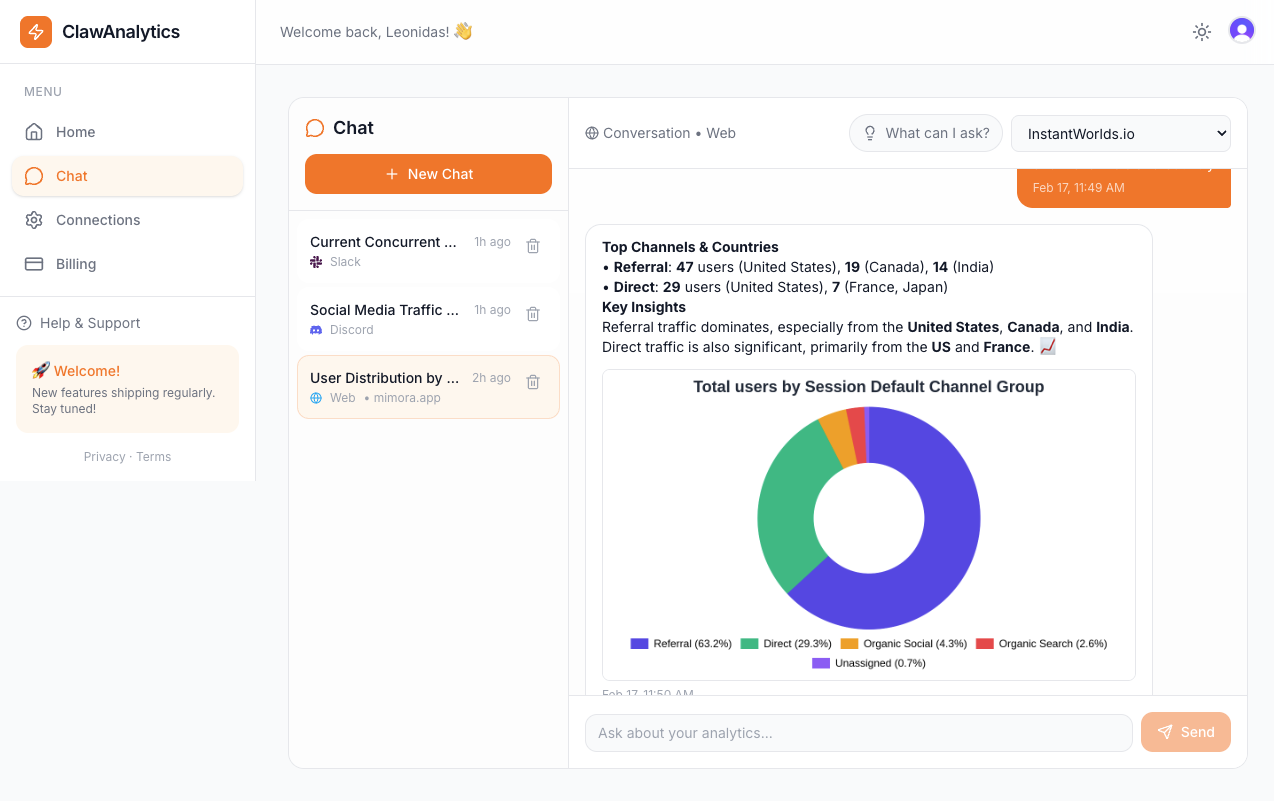
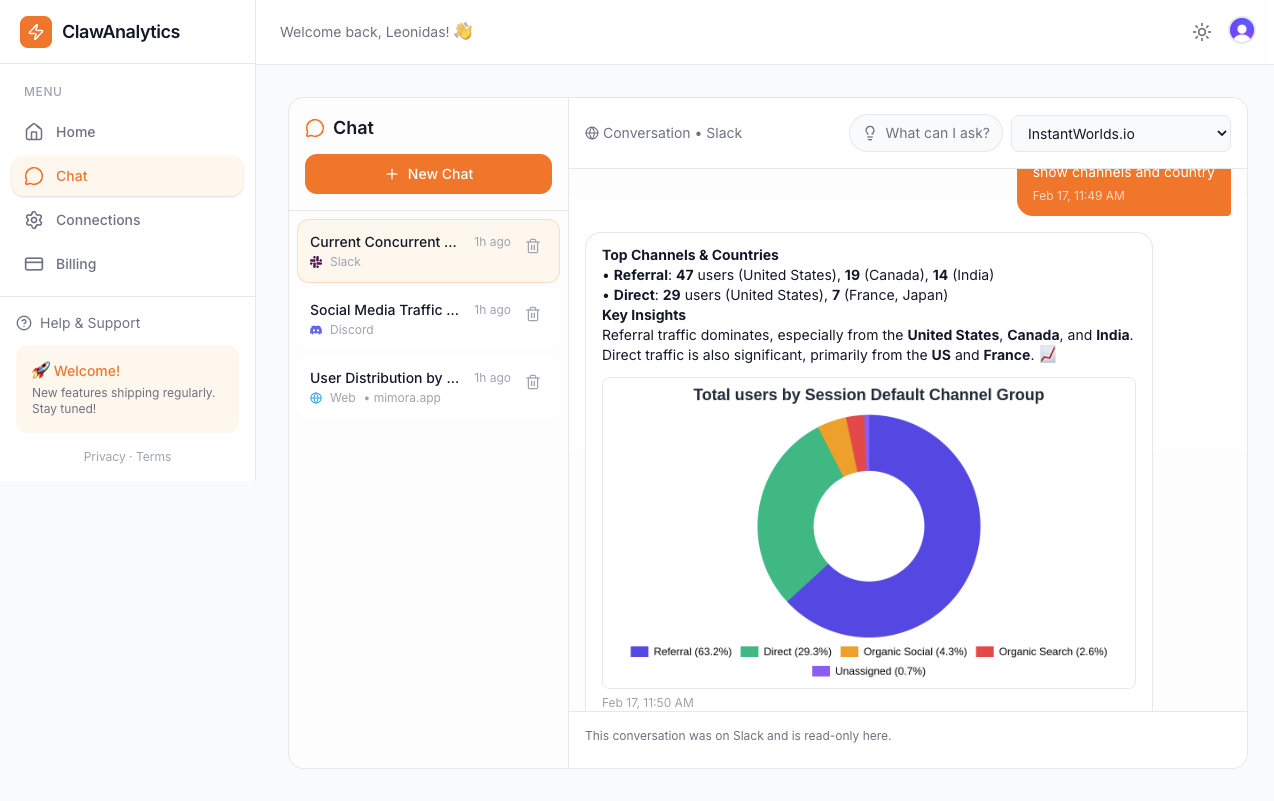
ClawAnalytics makes it simple to see which referral partners actually deliver bookings. Instead of exporting data and building spreadsheets, you can ask directly: “Which travel blogs send us guests who book?” or “Are our social media referrals converting better this quarter?”
Travel businesses often want to know: Is our partnership with that OTA worth续? Which travel influencers drive actual bookings? Are tourism board links helping or just adding exposure?
Quick Wins
- Partner with micro-influencers in your destination. They often have higher engagement and trust than big accounts.
- Optimize for travel bloggers by creating press kits and affiliate tools they can actually use.
- Build relationships with tourism boards for co-marketing opportunities and backlinks.
- Track every partnership link with unique UTM parameters to measure ROI accurately.
- Test content collaborations before scaling. A small pilot with one travel publication teaches you a lot.