You spend hours crafting the perfect blog post. Visitors arrive, read the first paragraph, and leave. Where do they drop off? Scroll depth tells you exactly that.
Why Scroll Depth Matters for Bloggers
Blogging is a content business. Here’s why scroll depth is crucial:
- Ad placement: Most display ad revenue comes from the middle and bottom of posts. Low scroll depth kills your RPM.
- Affiliate earnings: Product recommendations and affiliate links usually sit in the middle or end of articles.
- Reader retention: When readers scroll through your entire post, they’re more likely to return for more.
- Internal links: Related posts and newsletter signups at the bottom drive long-term growth.
How to Check in GA4
- Open GA4 and go to Engagement
- Look for Scroll or create a custom scroll report
- Analyze by post category to see which content types perform best
- Compare mobile vs desktop scroll behavior
- Track how scroll depth changes over time as you update content
Scroll events require setup through GA4’s custom events or Google Tag Manager.
The Easier Way
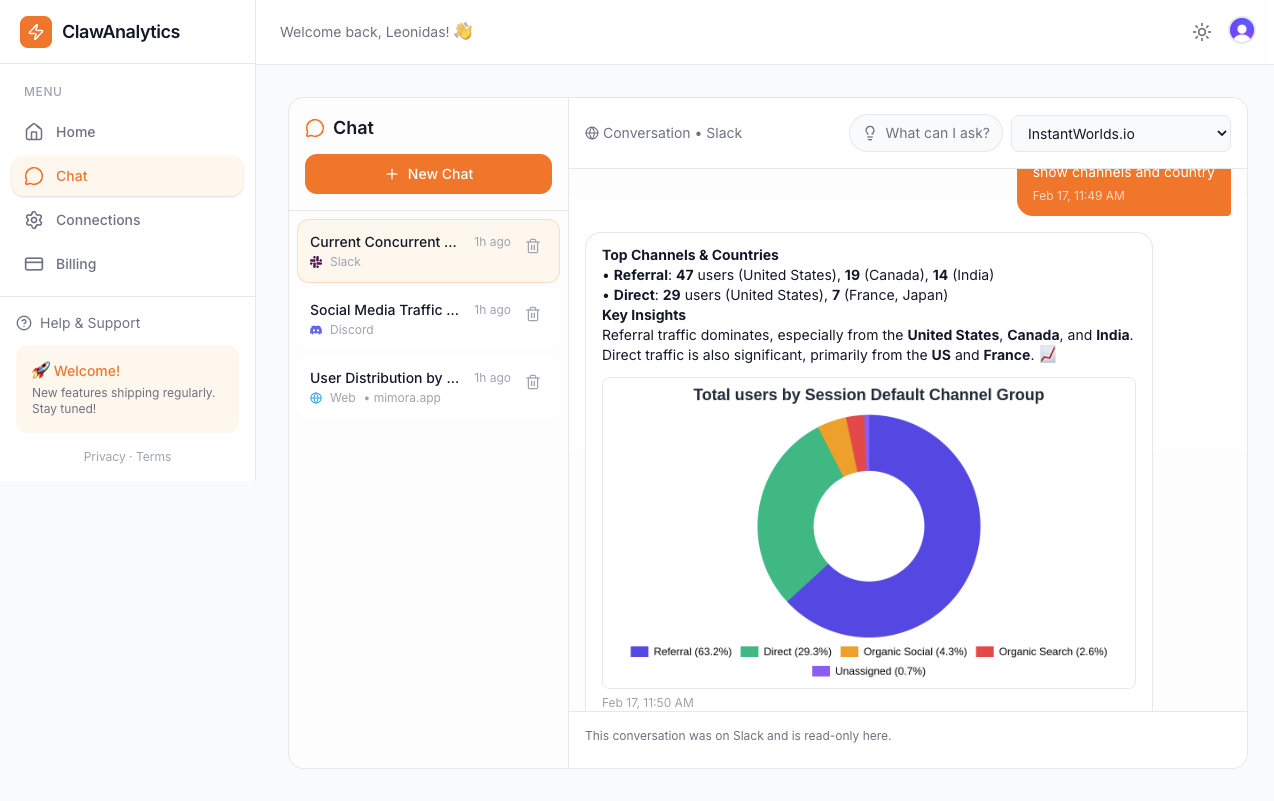
ClawAnalytics gives bloggers clear scroll insights without the technical setup. You see:
- Average scroll depth by post and category
- Where readers drop off on your most popular articles
- How content length affects completion rates
Example questions ClawAnalytics answers: Which blog posts have the highest reader completion? Do shorter posts perform better than long ones? Where should I place my newsletter signup for maximum visibility?
Quick Wins
- Hook readers in the first 100 words: Get to the point quickly or lose them.
- Add images throughout: Break up text with visuals to encourage continued scrolling.
- Write compelling conclusions: Give readers a reason to reach the end.
- Use affiliate links strategically: Place key recommendations higher if scroll depth is low.
- Test post length: Some topics need depth; others work better as quick reads.
Your best content deserves to be read. Optimize for scroll depth and watch your engagement grow.