You just ran a Google Ads campaign for your plumbing business. 200 clicks, decent budget spent - but only 4 people called. The landing page looked fine to you. But here’s the thing: most of those visitors never scrolled far enough to see your phone number.
That’s a scroll depth problem. And it costs local businesses real money every week.
Why Scroll Depth Matters for Local Businesses
Local business websites have a specific job: get people to call, visit, or book. Everything critical - contact info, service areas, trust signals like reviews - usually lives in the middle or bottom of the page.
Here’s why scroll depth is worth tracking:
- Your CTA is probably below the fold. Most local service pages put the “Book Now” or phone number after some intro text. If 70% of visitors leave at 25% scroll, they never reached it.
- Mobile users scroll differently. On a small screen, your page is much longer. A desktop visitor might see your address at a glance, but a mobile visitor may need to scroll three times to find it.
- Paid traffic is expensive. When you’re paying per click for local search ads, even a small improvement in scroll depth can directly improve your cost per lead.
- It reveals layout problems before a redesign. Instead of guessing which section is the problem, scroll data tells you exactly where people give up.
How to Check in GA4
GA4 tracks scroll depth out of the box, but only at the 90% threshold by default. That’s not enough detail for most local business pages.
To get better data:
- Open GA4 and go to Configure > Events
- Check if
scrollevents are being collected (they should be by default) - Go to Explore > Free Form and add
Scroll Depthas a dimension - Filter by your most important pages: homepage, contact page, services page
- Look at what percentage of users hit 25%, 50%, 75%, and 90%
If most users are dropping off below 50%, the content above that point isn’t compelling enough to keep them reading.
The Easier Way
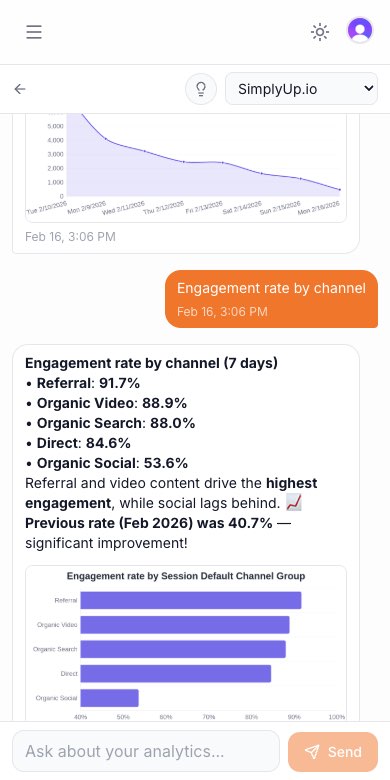
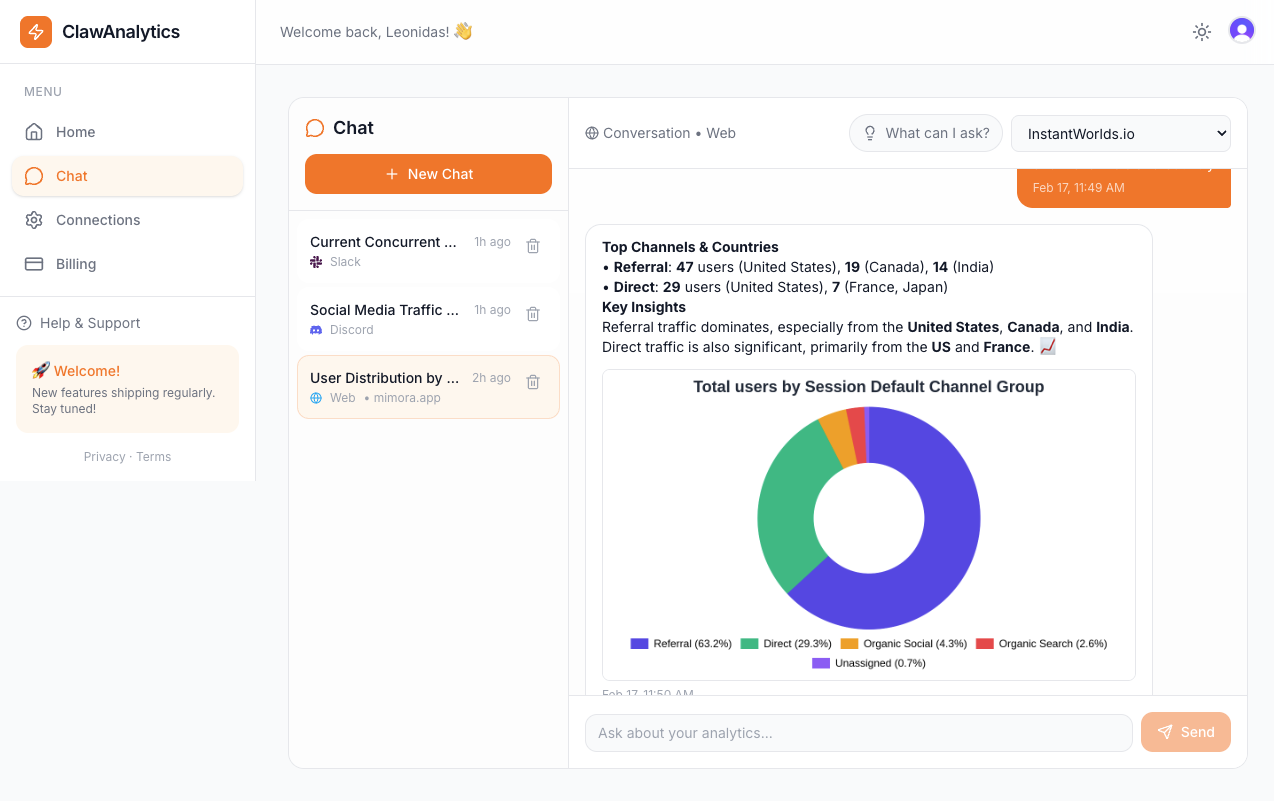
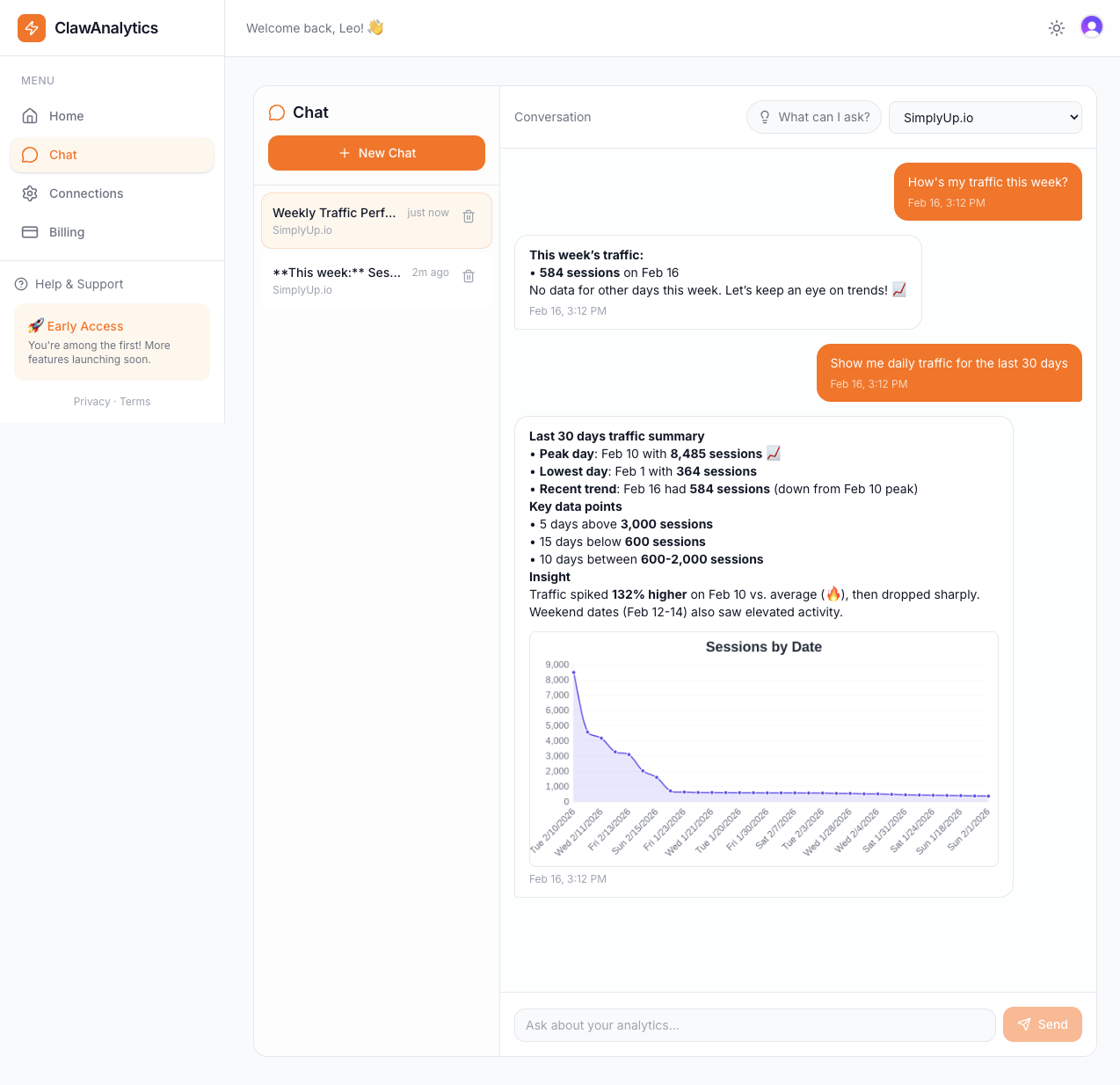
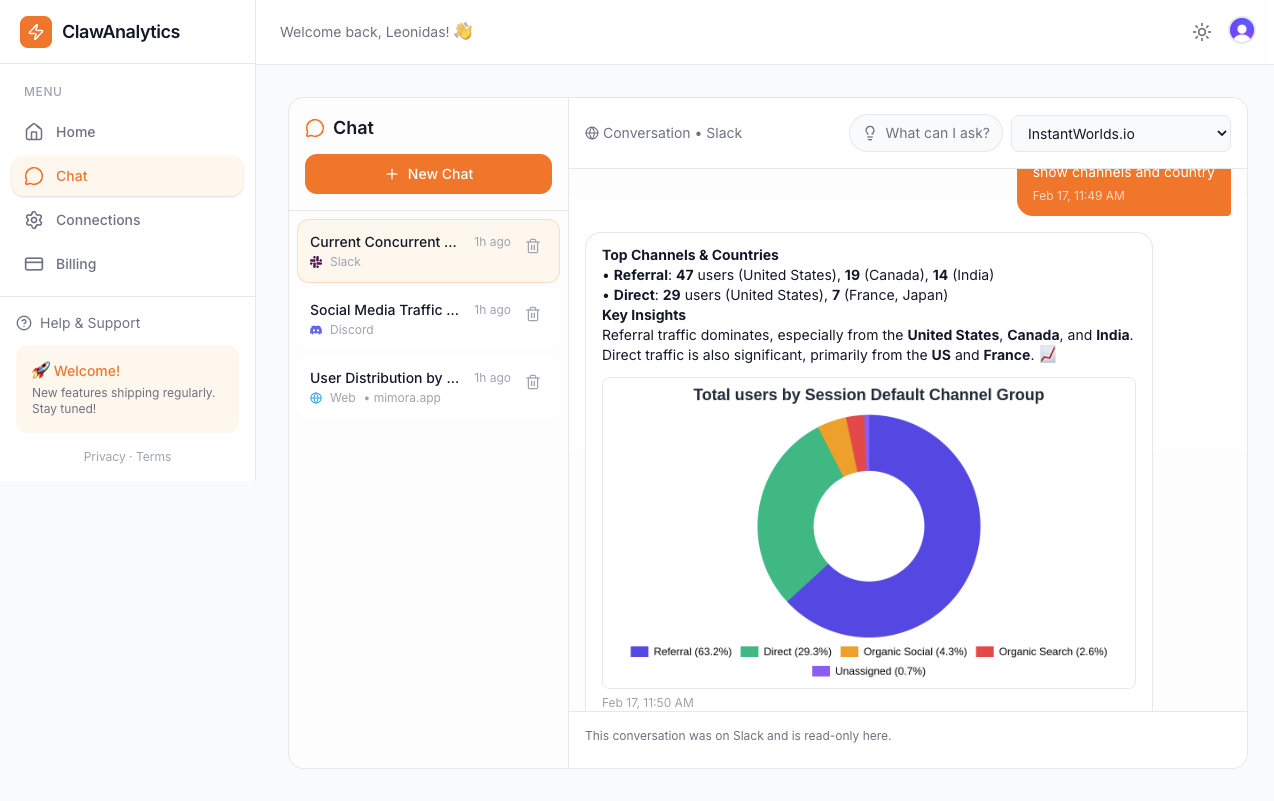
GA4’s scroll reports require some setup and a lot of clicking around. ClawAnalytics connects to your existing GA4 data and lets you ask questions directly.
For a local business, useful questions include:
- “What is the average scroll depth on my services page for mobile users?”
- “Which pages have the lowest scroll depth from Google Ads traffic?”
- “How does scroll depth compare between my homepage and contact page?”
Instead of building a custom exploration report each time, you type the question and get the answer. That means you spend time fixing the problem instead of finding it.
Quick Wins
Once you know where visitors drop off, here’s what actually moves the needle:
- Move your phone number higher. Put it in the header or within the first screen of content.
- Add a sticky CTA bar. A floating “Call Now” or “Get a Quote” button works for mobile users who are scrolling but not committed yet.
- Break up long text blocks. Local business pages often have walls of text. Bullet points, subheadings, and short paragraphs keep people moving.
- Put social proof early. Don’t bury your star rating and review count at the bottom. Move it above the fold.
- Test shorter pages. Sometimes the fix is removing content, not adding more. If users bail at 40%, everything below that point may not be worth keeping.
Scroll depth is one of the most actionable metrics a local business can track. You don’t need a big team or a complex setup - just the data and a willingness to test small changes.