A customer sees your Instagram ad on Monday. They Google your brand on Wednesday and read a blog post. On Friday, they click an email link and buy. Your analytics gives 100% credit to email. Meanwhile, your social media manager cannot prove their ads work and your content team looks invisible. This is the attribution problem.
Why Attribution Matters
Most businesses have multiple marketing channels running at the same time. Paid ads, organic search, email campaigns, social media, referral partnerships. Each one costs money and time. Attribution tells you which channels actually drive results.
The problem is that customer journeys are messy. People rarely see one ad and immediately buy. They discover you through one channel, research through another, and convert through a third. If you only credit the last touchpoint, you will cut funding to channels that are actually filling your pipeline.
What bad attribution looks like in practice:
- You cancel your display ads because they “never convert” (they were introducing new audiences)
- You double your email budget because it “drives all the revenue” (it was just the last click)
- Your social team cannot justify their budget despite growing your brand awareness
- You keep spending on branded search ads that would have converted organically anyway
How to Check Attribution in GA4
GA4 has built-in attribution reporting under the Advertising section in the left sidebar. Here is where to look:
Conversion paths: This report shows the actual sequence of channels users touch before converting. You will see things like “Organic Search, then Direct, then Email” and how many conversions each path generated.
Model comparison: GA4 lets you compare data-driven attribution against last-click to see how credit shifts between channels. This is eye-opening. Channels that look weak under last-click often look much stronger under data-driven.
To get the most from these reports:
- Go to Advertising in GA4
- Click Conversion paths to see actual user journeys
- Use the Model comparison tool to see how different models distribute credit
- Filter by specific conversion events to focus on what matters most (purchases, signups, leads)
Important: Data-driven attribution needs enough conversion data to work well. If you have fewer than 300 conversions per month, the model may not have enough signal to be reliable.
The Easier Way
GA4 attribution reports exist, but they are not exactly intuitive. The Advertising section is buried, the conversion path visualization is hard to read, and comparing models requires clicking through multiple screens.
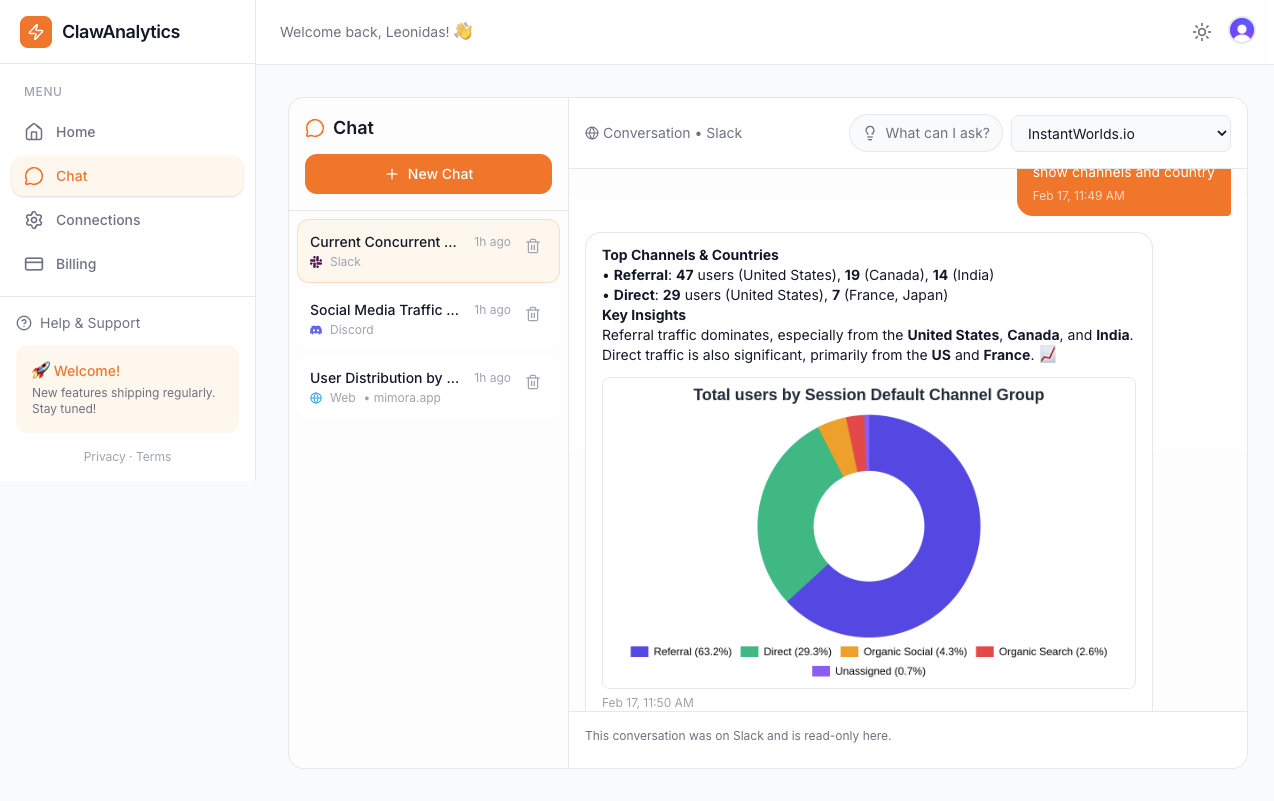
With ClawAnalytics, you can ask things like “which channels assist the most conversions” or “show me the most common paths to purchase” and get clear answers. You can also ask follow-up questions like “what happens to organic search credit when I switch from last-click to data-driven” without navigating away from your current view.
This makes attribution something you actually check regularly instead of something you look at once and forget about.
Quick Wins
-
Stop using last-click only. Switch your default GA4 attribution to data-driven. Go to Admin, then Attribution Settings, and select Data-driven. This change applies to all your reports going forward.
-
Check your top conversion paths. Look at the three most common paths users take before converting. You will probably discover a channel you have been undervaluing.
-
Compare assisted vs last-click conversions. A channel with high assisted conversions but low last-click conversions is an introducer. It brings people in even if it does not close the deal. Cutting it would hurt more than you think.
-
Tag your campaigns properly. Attribution only works if your UTM parameters are consistent. Create a naming convention for source, medium, and campaign and stick to it across every channel.
-
Review monthly, not yearly. Attribution patterns change with seasons, promotions, and new channels. A quarterly review minimum keeps you from making decisions on stale data.