How to Track New Vs Returning Users for Dentists
Imagine spending thousands on Google Ads for your dental practice only to discover that 80% of your website visitors are already existing patients checking their appointment times. This is exactly what happens when dentists ignore the new vs returning users metric.
Why New Vs Returning Users Matters for Dentists
Patient Acquisition Insight. Knowing how many new users find your dental practice helps you understand if your marketing is working. If you’re paying for ads but only getting returning patients, your advertising dollars are wasted on people who already know about you.
Retention Measurement. A healthy dental practice should see a balanced mix of new and returning visitors. If returning users drop significantly, it might signal that patients are unhappy with their experience or finding competitors.
Marketing ROI Clarity. When you track new vs returning, you can separate your marketing efforts. Your SEO and ads should target new patients. Your email newsletters and appointment reminders target returning patients.
Website Performance. Some pages attract new visitors (like your services or about page) while others serve returning patients (patient portal, booking confirmations). Understanding this helps optimize each page.
How to Check in GA4
Open Google Analytics 4 and navigate to the User acquisition report. Look for the User type dimension, which automatically categorizes visitors as New or Returning. The default view shows you the total users in each category.
For deeper analysis, use the Explore feature. Create a new exploration, add User type as the dimension, and add metrics like Sessions, Engaged sessions, and Conversions. This reveals not just who visits, but who actually books appointments.
Set up a comparison to see the difference. Compare new users against returning users to spot trends over time. Export this data weekly to track whether your patient acquisition is improving.
The Easier Way
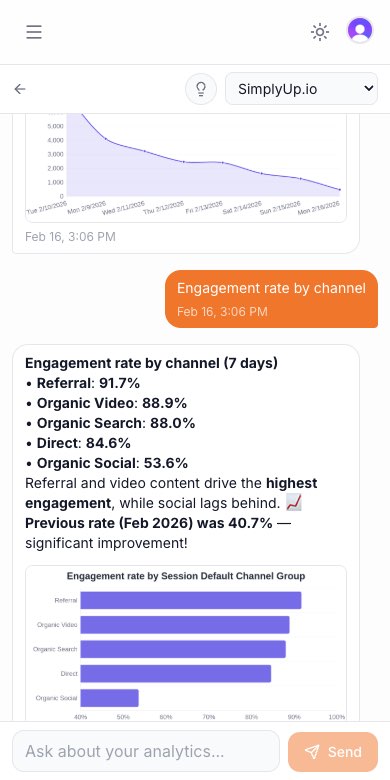
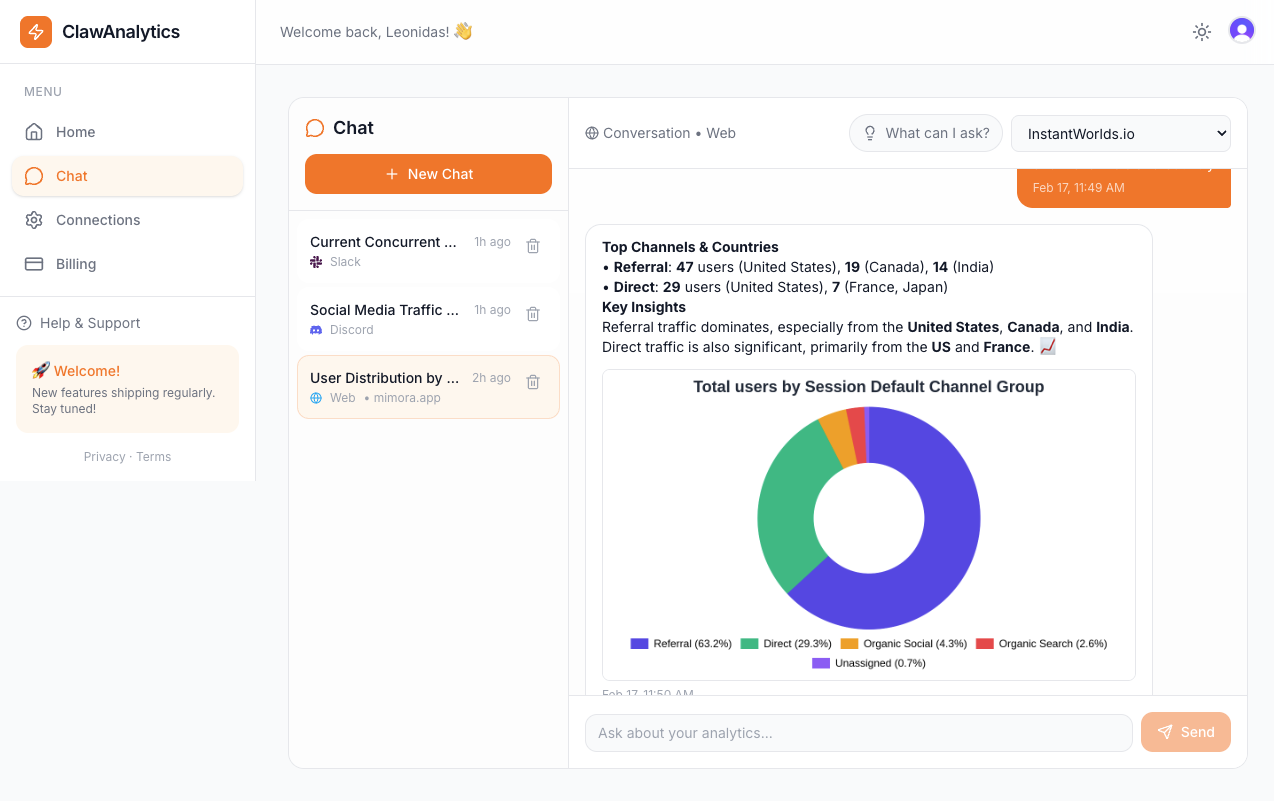
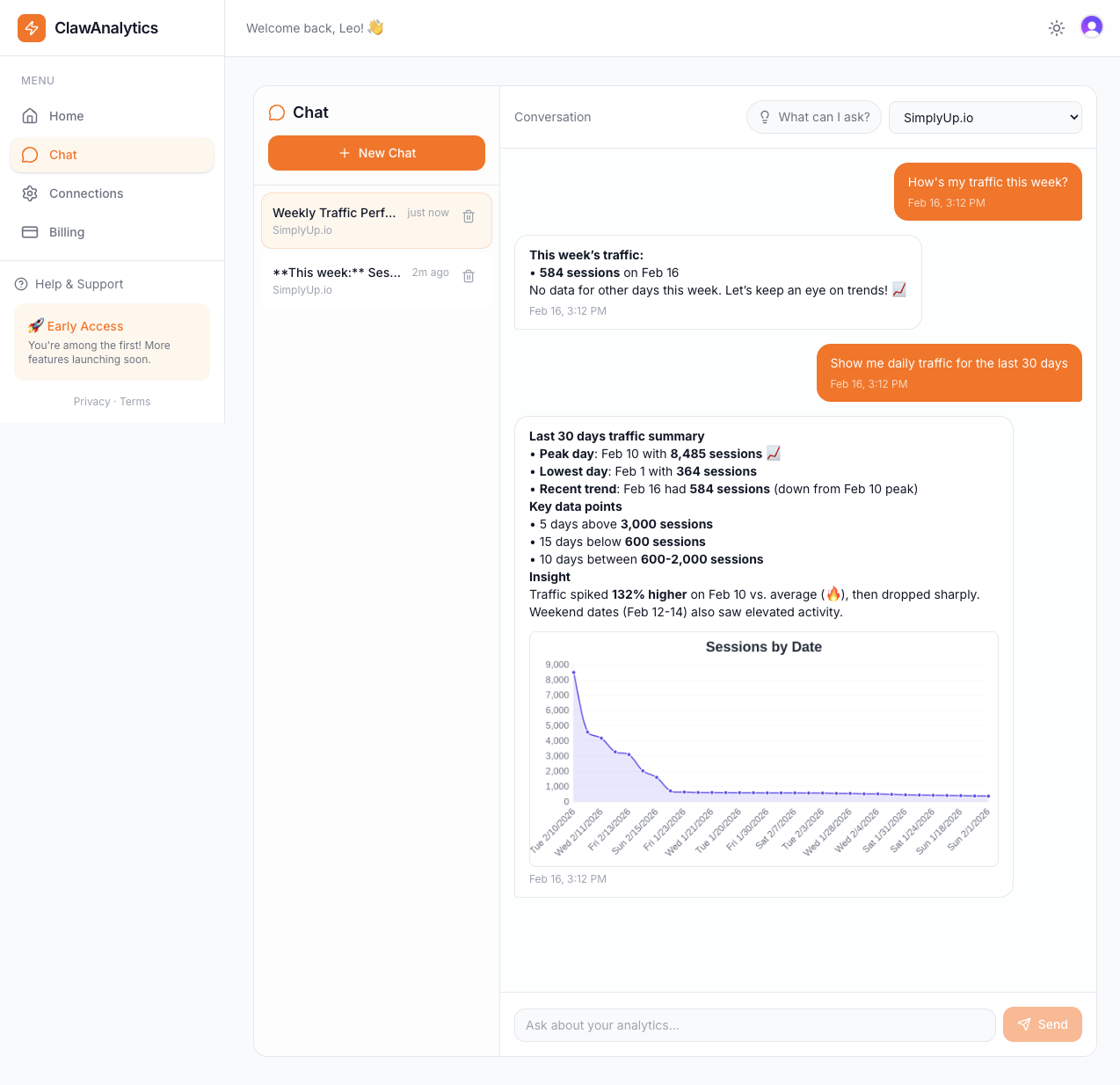
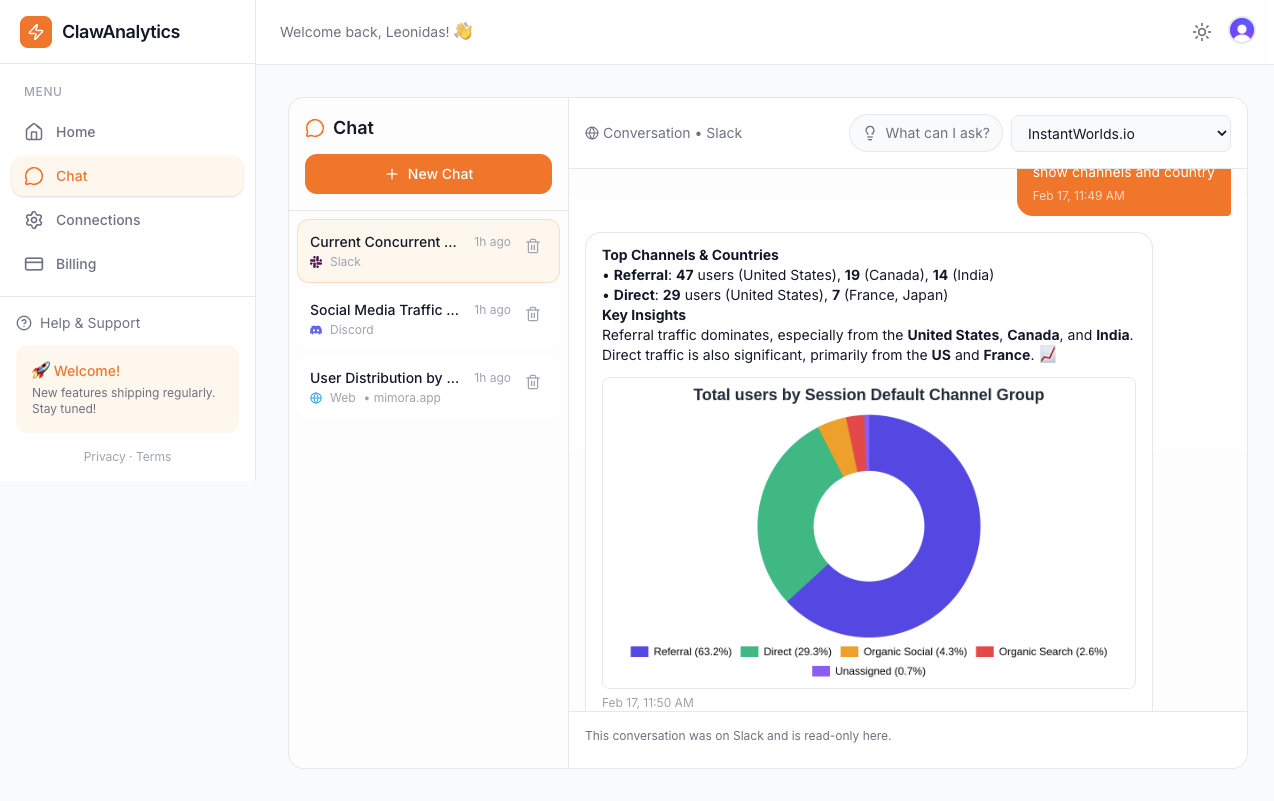
ClawAnalytics makes this simple for busy dentists. Instead of navigating complex dashboards, you can just ask: “How many new patients found my practice this month?” The platform answers in seconds.
Another useful question: “Are my Google Ads bringing in new patients?” This tells you instantly whether your advertising investment is actually acquiring new patients or just getting existing ones to book again.
You can also ask: “Which dental service pages bring in the most new visitors?” This helps you understand what services attract new patients and where to focus your marketing efforts.
Quick Wins
Split your marketing budgets. Allocate 70% of your advertising budget to attract new patients and 30% to retain existing ones. Track this split monthly.
Create specific landing pages. New patients need information about your practice, insurance, and first visits. Returning patients need appointment booking and reminders.
Monitor weekly. Check the new vs returning ratio every Monday. A sudden drop in new users signals a marketing problem. A drop in returning patients means your patient experience may be suffering.
Set goals. Aim for 40-50% new users if you’re actively marketing. If you’re established and focused on retention, 25-35% new users is healthy.