How to Track New Vs Returning Users for Education
Every university, online course platform, and coding bootcamp wants more students. But how do you know if your website is actually attracting new prospective students or just serving the same existing community? Without tracking new vs returning users, you’re guessing.
Why New Vs Returning Users Matters for Education
Educational institutions face unique challenges when it comes to website traffic. Prospective students visit once during their research phase, while current students, alumni, and parents return repeatedly for course schedules, grades, and resources. Understanding this traffic segmentation is essential for several reasons.
First, recruitment effectiveness depends on knowing how many new visitors you’re attracting. If your marketing campaigns bring thousands of new eyes but none apply, your messaging needs work. Second, resource allocation becomes clearer when you know whether your website serves prospective students or existing ones. You might need separate pages, separate content strategies, and separate calls to action for each group. Third, alumni and donor engagement relies on returning visitors. High return rates among alumni often correlate with stronger giving programs. Finally, online course platforms specifically need to track whether their marketing brings new learners or whether existing students are just returning to access materials.
How to Check in GA4
Google Analytics 4 makes this relatively straightforward. Start with the User acquisition report to see which channels bring new visitors. Look for the “User type” dimension to separate new from returning.
For more granular insights, create a custom report in the Explore section. Segment by program type, admission status, or user authentication. If you have a student portal, track separately which users are authenticated versus anonymous visitors. You can also set up conversions for key actions like application submissions or course enrollments, then segment those by user type.
The Easier Way
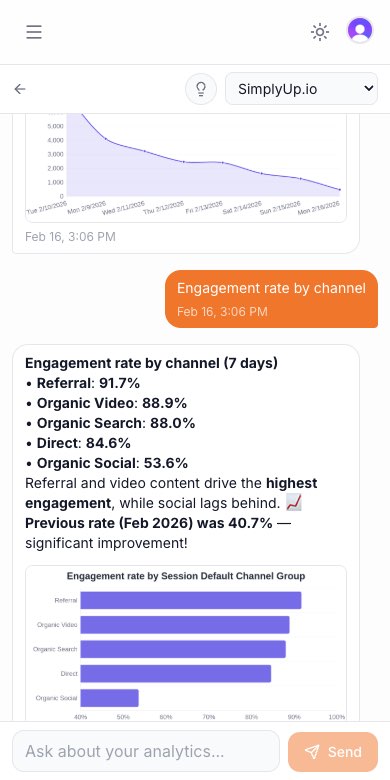
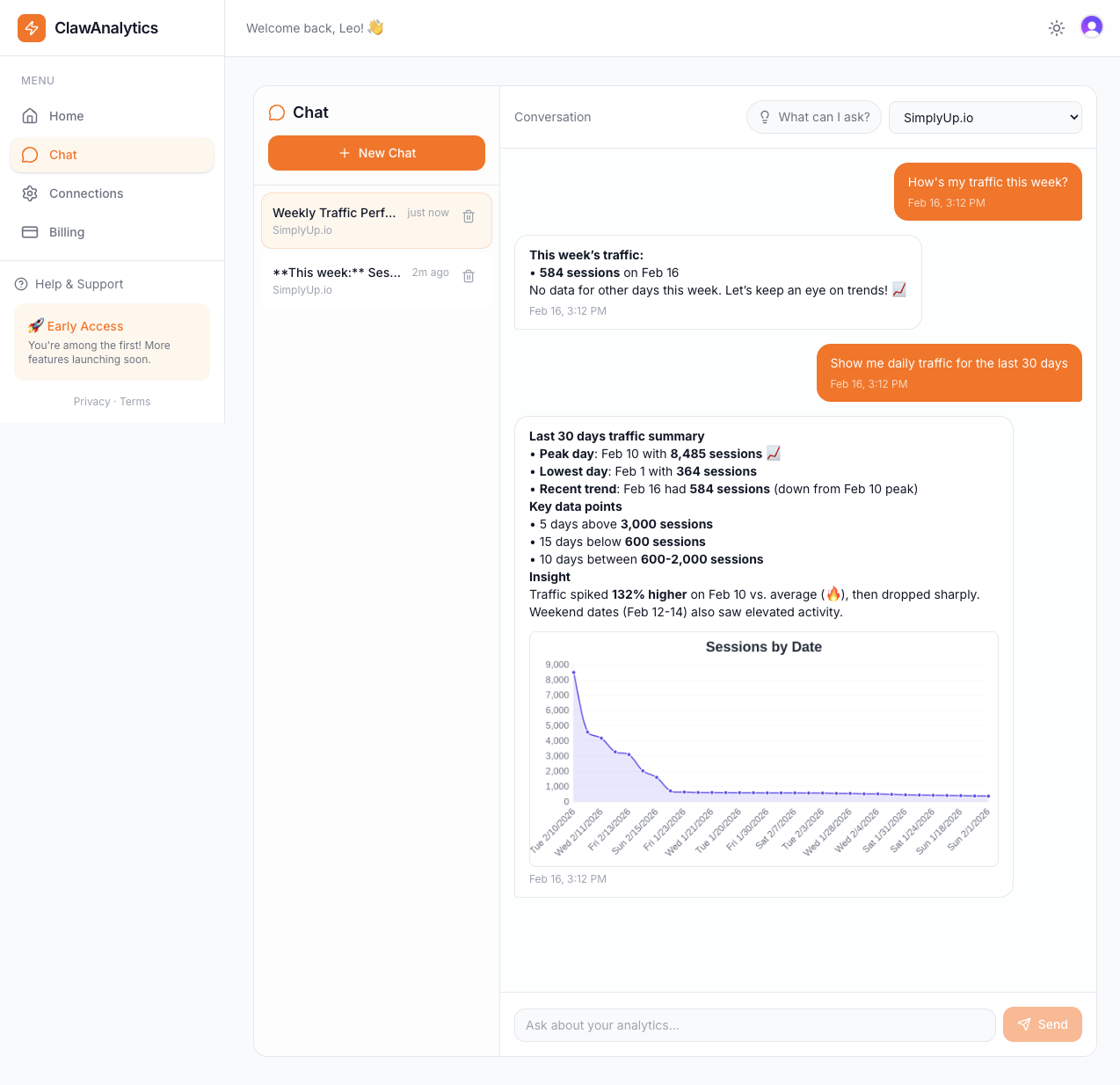
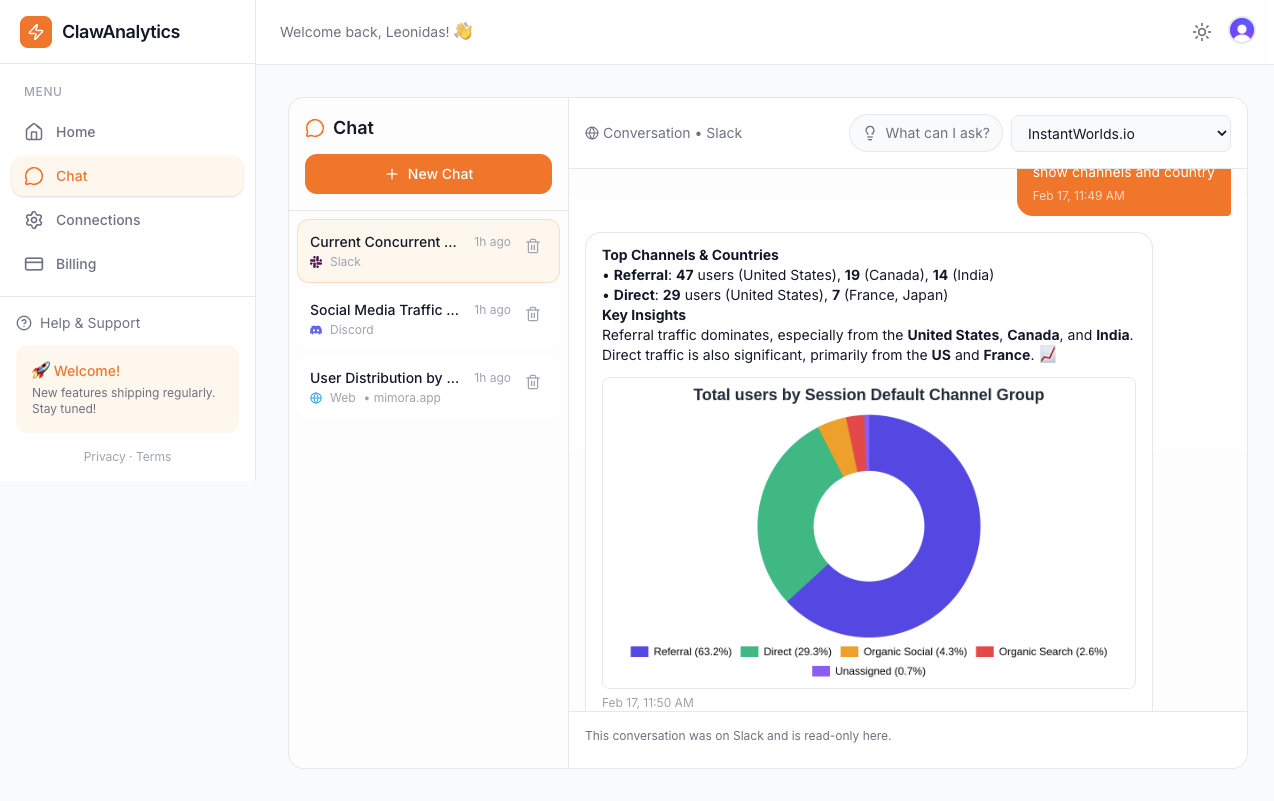
ClawAnalytics dramatically simplifies this process for education professionals. Instead of building complex reports, you can simply ask: “What’s our conversion rate from new visitors to application starts?” or “How many returning users access our student portal weekly?”
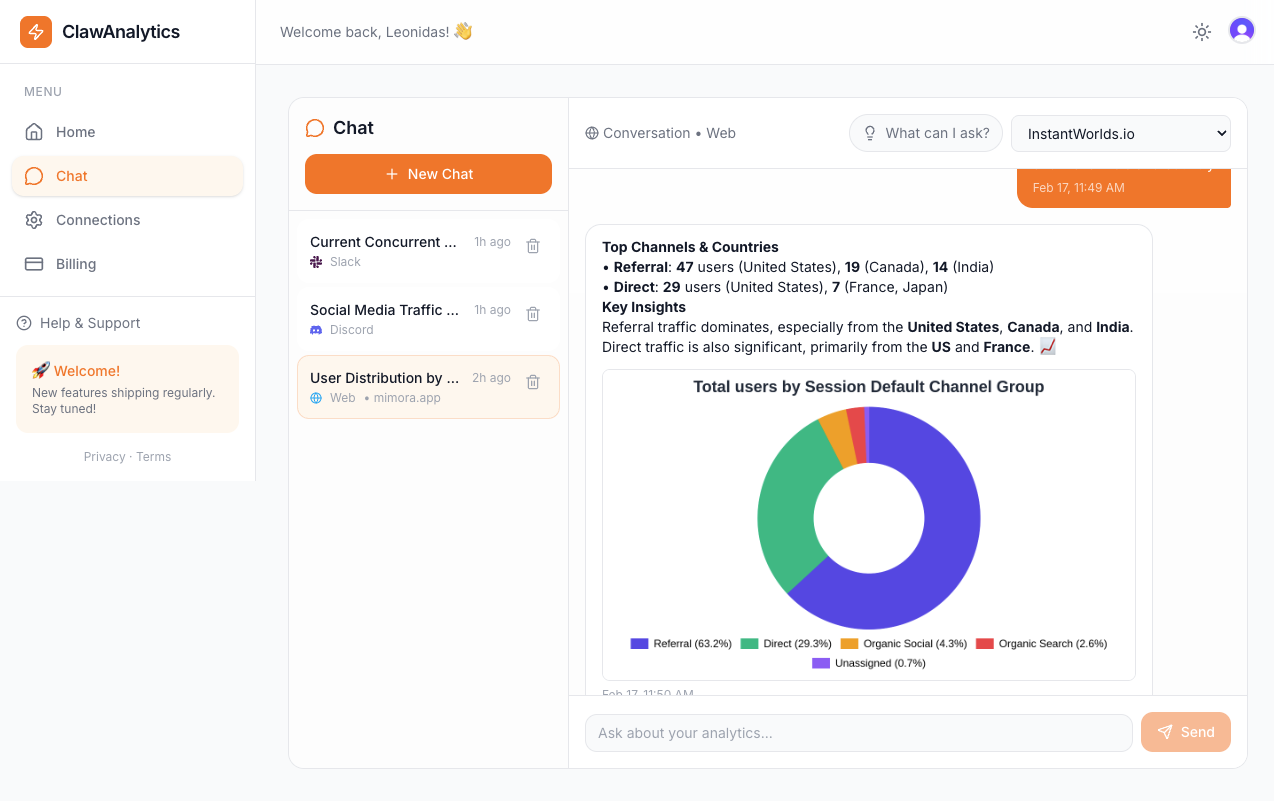
You might also ask: “Which channels drive the most prospective student traffic?” ClawAnalytics automatically tracks attribution so you know if your SEO efforts, social media, or email campaigns are working. For administrators preparing board reports or grant applications, having instant answers to these questions saves significant time.
Quick Wins
Take these three steps to improve your education website tracking. First, differentiate your audiences. Create separate content flows for prospective students versus current students. Each group needs different information and calls to action. Second, track application funnels. See how many new visitors progress from program pages to application forms to submissions. Identify where prospective students drop off. Third, measure recruitment ROI. Connect your marketing spend to new visitor traffic and application conversions. This helps justify budget requests and optimize campaign performance.
When you understand who visits your education website and why, you can build better recruitment strategies and serve your existing community more effectively.