How to Track New Vs Returning Users for Finance
Every bank, wealth management firm, and fintech startup wants to grow their customer base. But how do you know if your website is actually acquiring new customers or just serving existing ones who already bank with you? This distinction is fundamental to your growth strategy.
Why New Vs Returning Users Matters for Finance
The financial services industry operates on customer lifetime value and acquisition cost. Understanding your new vs returning user mix tells you whether your digital strategy is working. When you see high new visitor numbers but low account openings, your onboarding or value proposition needs work. When you see high returning rates but low engagement with new products, your cross-selling strategy might be missing the mark.
First, customer acquisition is expensive in finance. Whether you’re spending on Google Ads, content marketing, or branch marketing, you need to know if those efforts bring new customers. Second, digital banking adoption depends on returning users. If existing customers aren’t logging into your digital platforms, you’re losing efficiency gains and increasing service costs. Third, product cross-selling becomes measurable when you track returning users. Are your existing customers discovering new products through your website? Finally, regulatory compliance sometimes requires understanding your customer base demographics, which starts with knowing who’s visiting your digital properties.
How to Check in GA4
Google Analytics 4 provides several ways to analyze this. Start with the User acquisition report to see which channels bring new customers. Add a comparison for user type to see the split.
For more detailed analysis, use Explore to create custom reports. Segment by product pages, account application flows, or digital banking logins. Set up conversions for key actions like new account applications, and track those by new vs returning users. Create segments for authenticated vs anonymous visitors if you have a login system.
The Easier Way
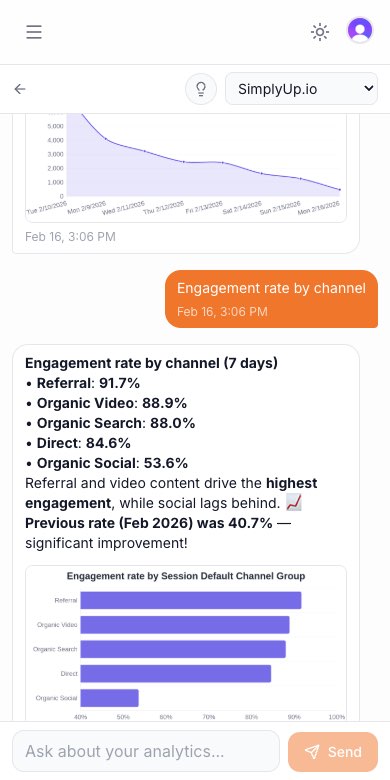
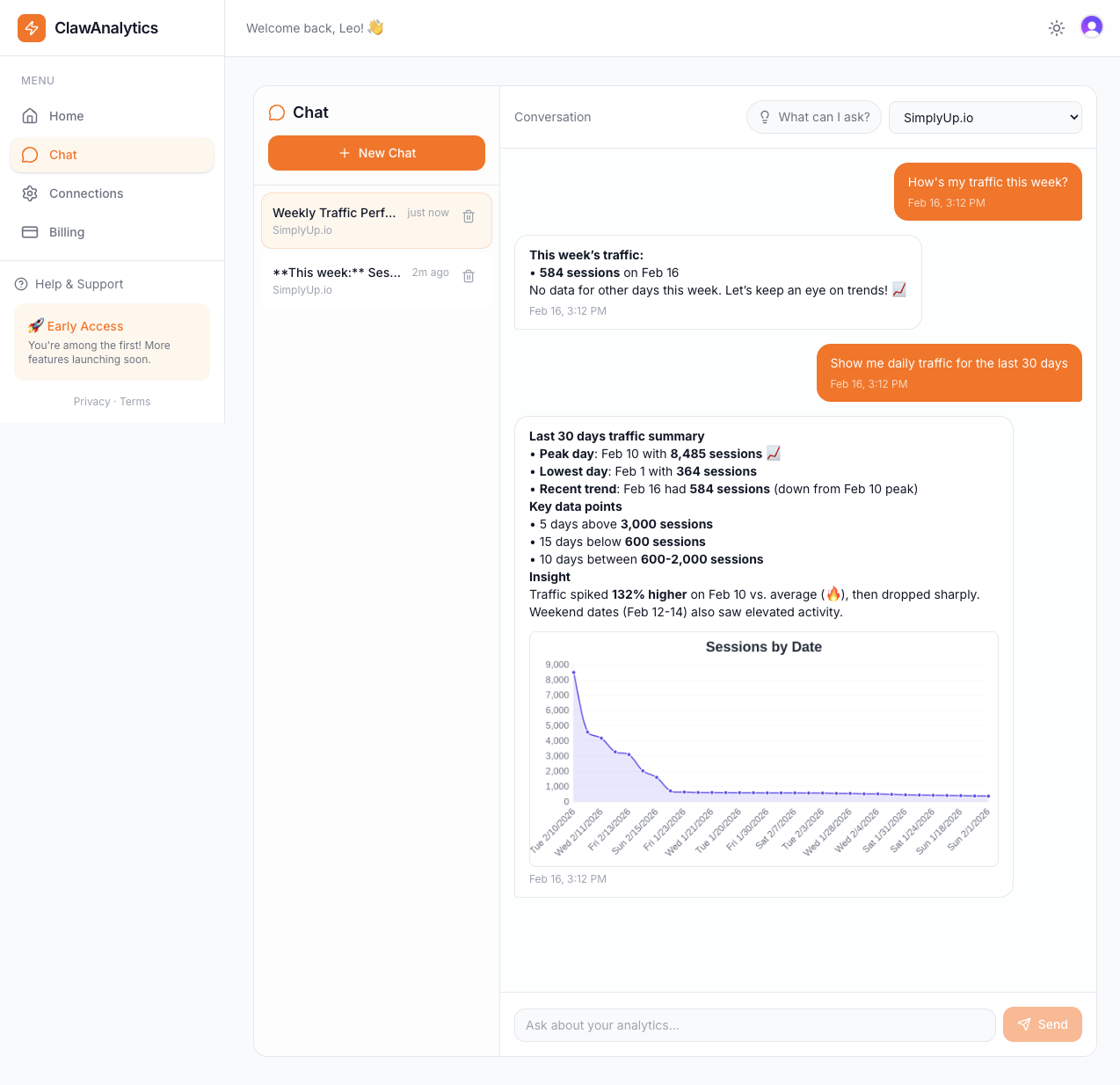
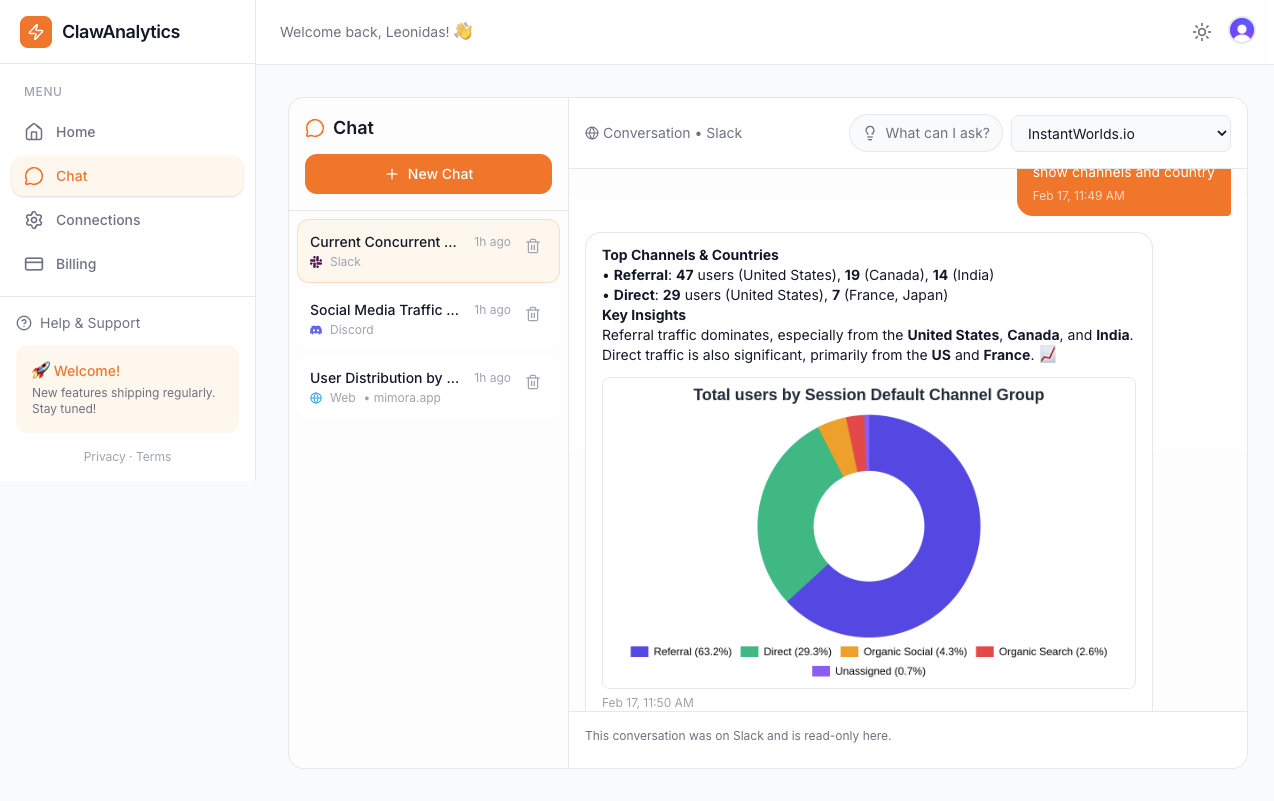
ClawAnalytics simplifies financial analytics significantly. You can ask: “What’s our new account application conversion rate from website visitors?” or “How many returning users access our investment platform weekly?”
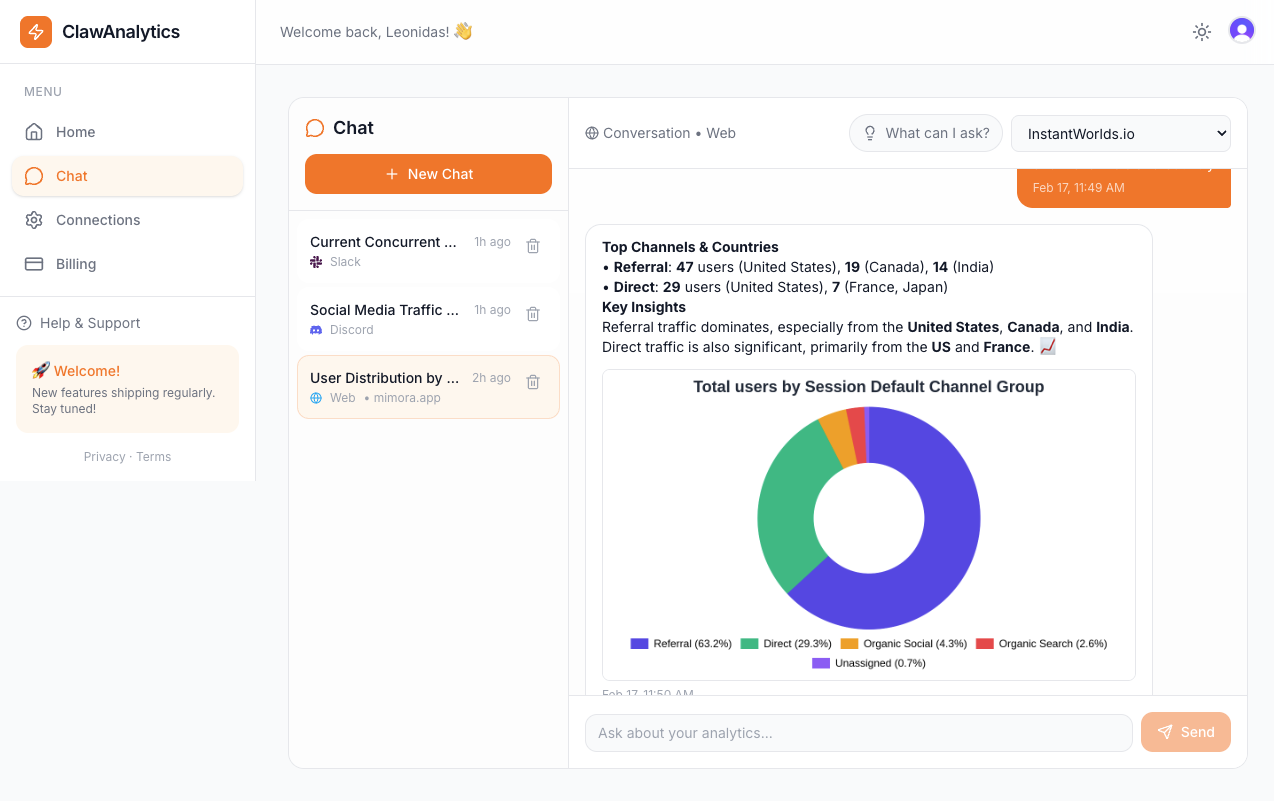
You might also ask: “Which marketing channels bring the most new customers?” ClawAnalytics automatically attributes traffic sources so you know if your digital campaigns are working. For finance executives preparing board presentations, having instant answers to these questions accelerates decision-making.
Quick Wins
Start with these three actions. First, measure your acquisition funnel. Track how many new visitors complete account applications versus how many returning customers use self-service features. Identify where prospects drop off. Second, optimize digital banking adoption. If returning customers aren’t using your digital platforms, investigate why. Poor user experience, lack of features, or security concerns might be the issue. Third, track cross-selling success. See which returning users discover new products through your website. This helps you understand if your product recommendations are effective.
When you understand your new vs returning user dynamics, you can build a more effective digital strategy that grows your customer base while deepening relationships with existing clients.