How to Track New Vs Returning Users for Fitness
Your fitness studio might have 1,000 people walk through the door every month, but how many of those are first-time visitors checking out your facility versus loyal members booking their next class? If you can’t answer that question, you’re missing crucial data about your business health.
Why New Vs Returning Users Matters for Fitness
The fitness industry lives and dies by two numbers: how many new members you sign up and how many existing members keep coming back. Tracking new vs returning users tells you exactly where your business stands. When you see high new visitor rates but low conversion, your onboarding process might need work. When you see high returning rates but declining class bookings, your programming might not be hitting the mark.
Additionally, fitness businesses typically spend heavily on marketing to attract new members. Facebook ads, local SEO, and referral bonuses all cost money. Without tracking whether those efforts bring new faces or just remind existing members about upcoming classes, you can’t calculate your true cost per acquisition. Retention is equally vital because the fitness industry has notoriously high churn. If your returning user rate is dropping, that’s an early warning sign that members are losing interest.
Finally, class capacity management depends on knowing your returning user base. If 80% of your website visitors are returning members booking classes, you can adjust your marketing budget to focus more on new member acquisition. If the ratio is reversed, you need to rethink your retention strategy.
How to Check in GA4
Open Google Analytics 4 and head to the Acquisition reports. The User acquisition section shows you which channels drive new users to your site. To see the breakdown, add “User type” as a dimension or create a comparison that segments by new vs returning.
For more detailed insights, use the Explore feature. Create a free form exploration, add “User type” as a row and “Sessions” as a metric. Filter by your booking page URLs to see how many new vs returning users actually attempt to book classes. You can also set up a custom segment for “Members” if you have a login system on your site.
The Easier Way
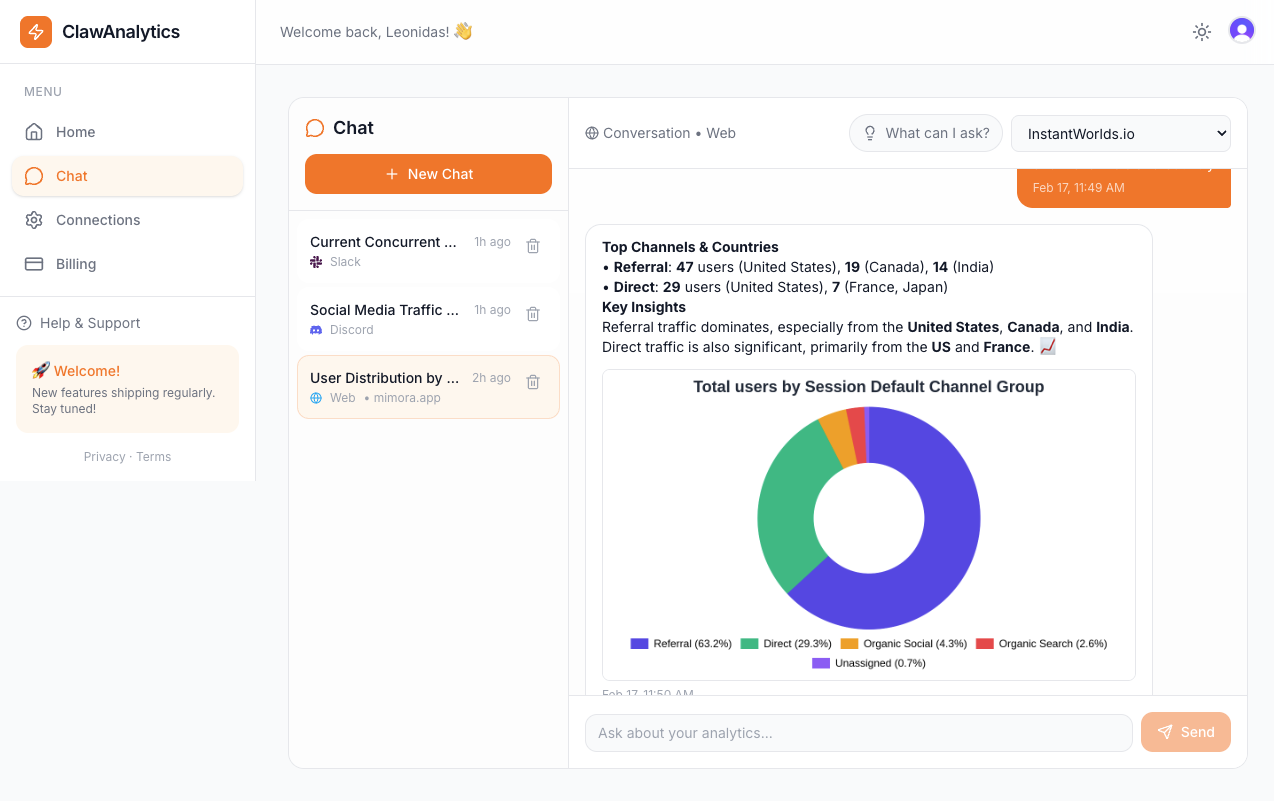
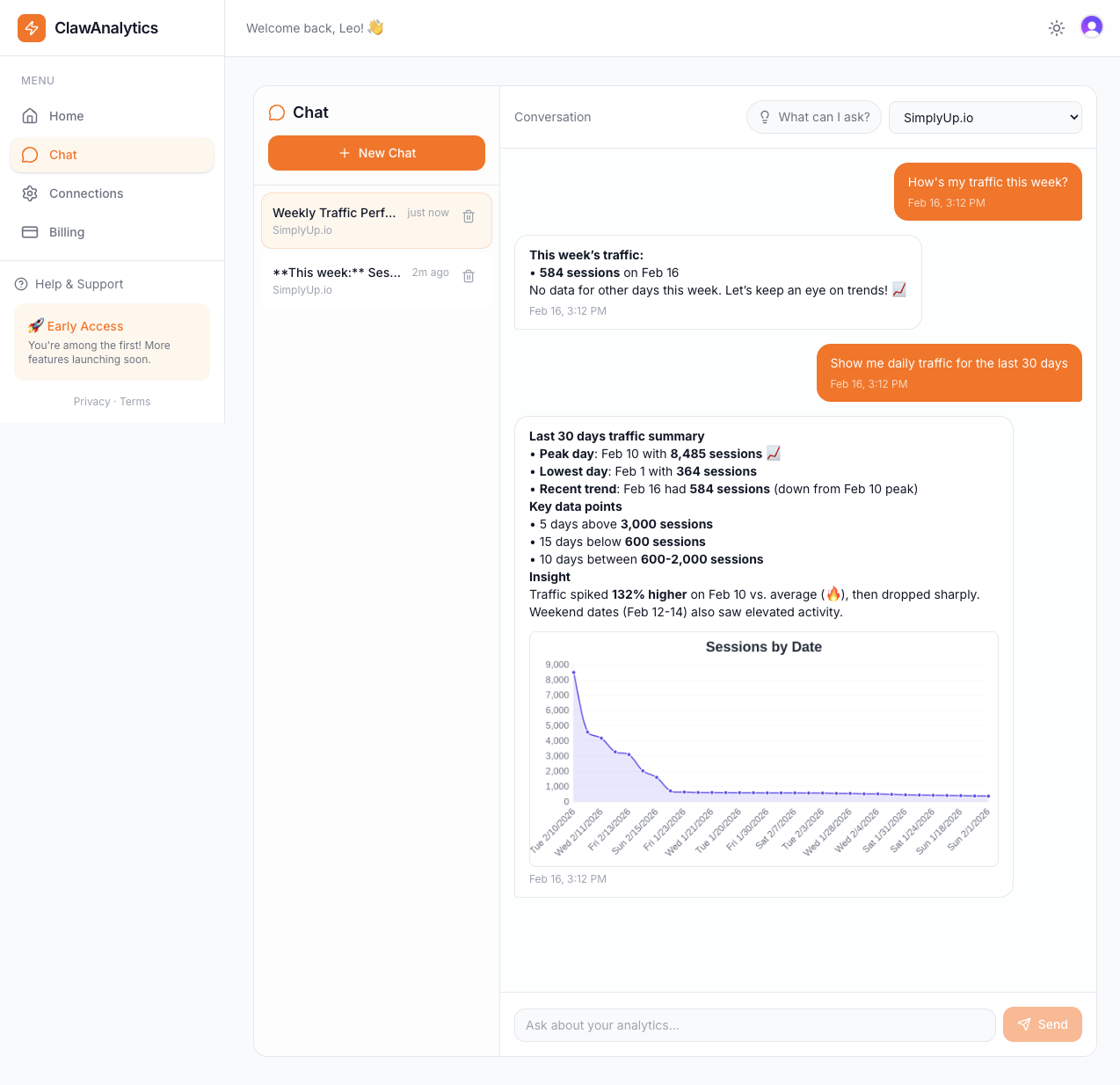
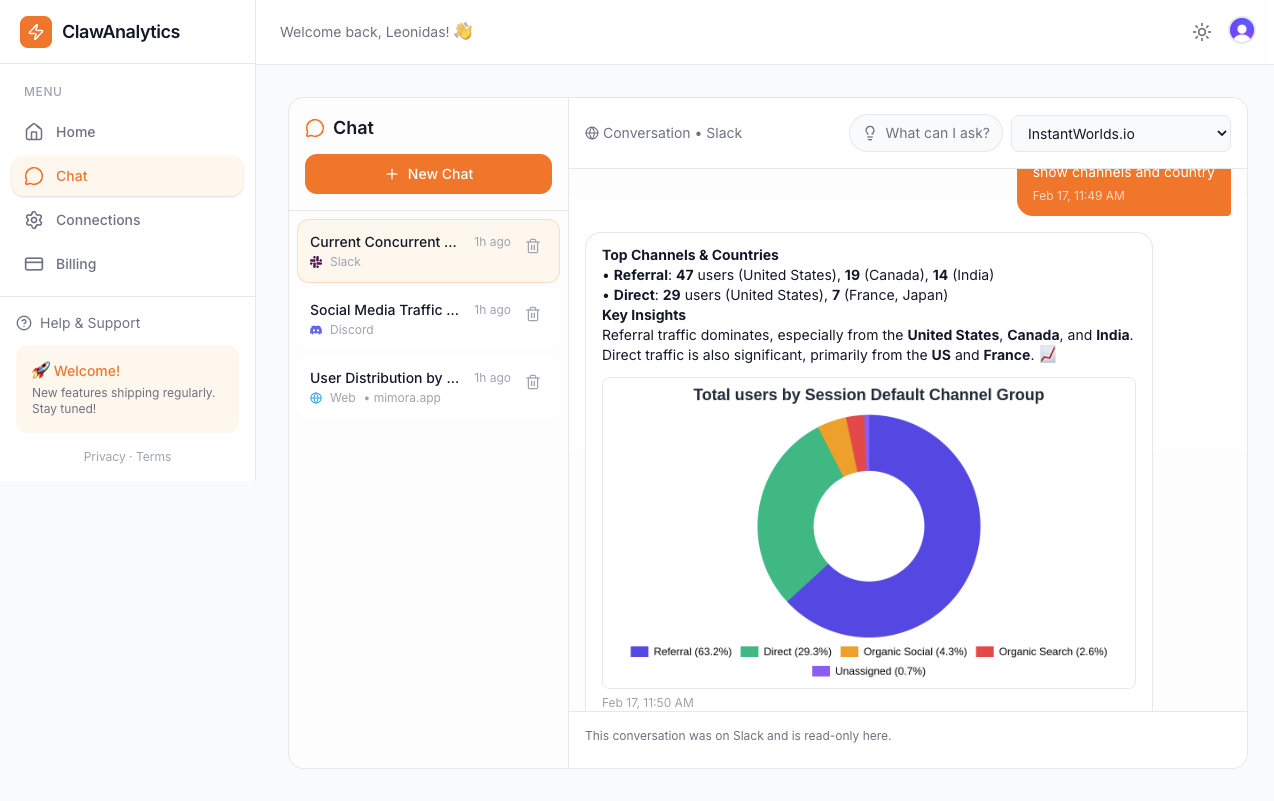
Instead of spending hours building custom reports in GA4, you can ask ClawAnalytics directly. Try questions like: “Are we getting more new visitors signing up for trials this month?” or “What’s the average number of class bookings per returning member?”
You could also ask: “Which marketing channel brings the most new fitness enthusiasts?” ClawAnalytics automatically attributes traffic sources so you know if your Instagram ads, Google search, or local partnerships are driving new member interest. For gym owners preparing monthly reports, this is infinitely faster than manually exporting and analyzing data.
Quick Wins
Start with these three actions. First, track your conversion funnel. See how many new visitors become trial members versus how many returning members book classes. Identify where people drop off. Second, monitor returning member engagement. If returning users are hitting your site but not booking, your class schedule or pricing might need adjustment. Third, connect web activity to revenue. Use ClawAnalytics to see which traffic sources bring members who actually convert to paid memberships, not just free trial users.
Understanding your new vs returning user split isn’t just data for data’s sake. It’s the foundation of a sustainable fitness business model.