How to Track Organic Traffic for Coaches
While you’re networking at events, your website could be quietly attracting clients searching for exactly the coaching you offer. That’s organic traffic in action.
Why Organic Traffic Matters for Coaches
Intent matches perfectly. Someone searching for “career coach” or “life coach near me” already wants a coach. You’re reaching people actively seeking what you provide.
Niche keywords work well. Specific phrases like “executive coach for attorneys” or “health coach for entrepreneurs” face less competition. Ranking here brings highly qualified leads.
Builds personal brand. Consistently appearing in search results positions you as an authority. This trust converts to consultation requests and referrals.
Works while you sleep. Unlike networking events or ads, organic content works around the clock. A well-ranked page brings leads continuously without ongoing effort.
How to Check in GA4
In GA4, visit Acquisition and find Organic Search. Click to see landing pages and understand which content attracts visitors.
Use the Source/Medium report to see which search engines bring traffic. Most organic traffic comes from Google, but Bing and others may matter depending on your audience.
Set up “book consultation” or “download guide” as conversions. Connect these to your booking system to see how organic traffic becomes clients.
The Easier Way
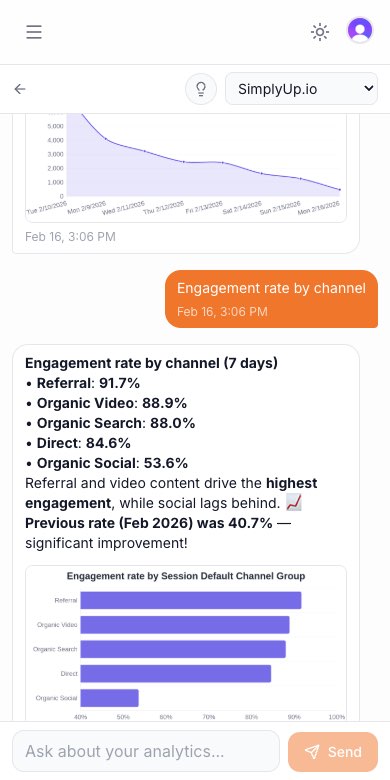
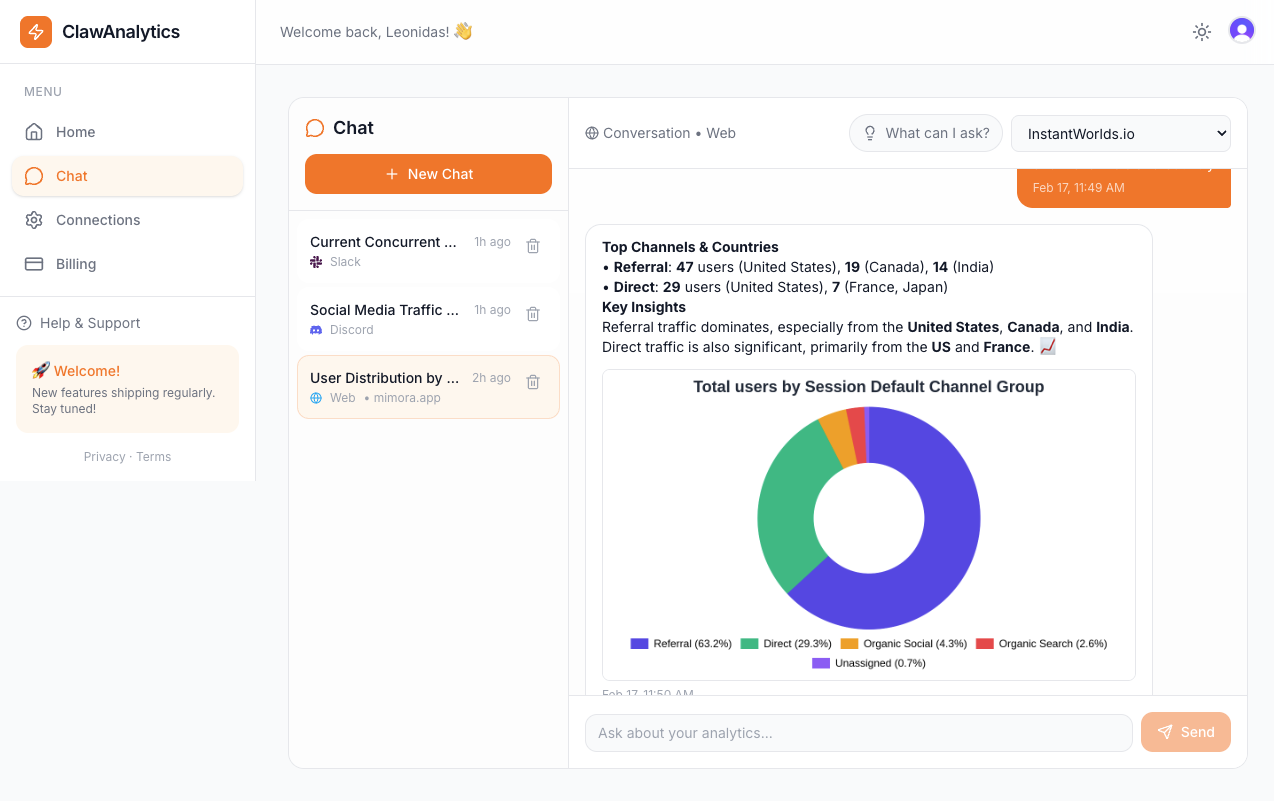
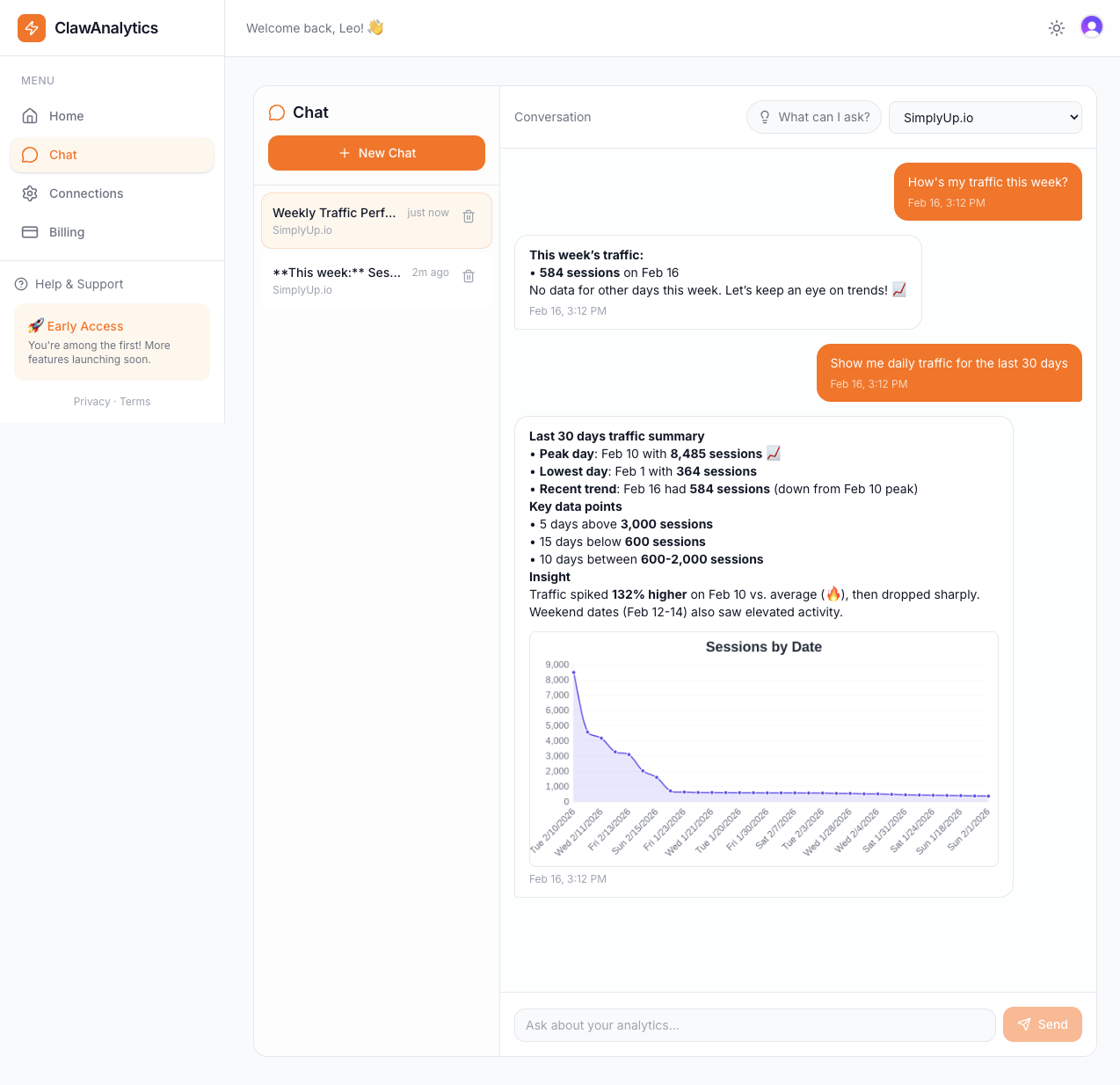
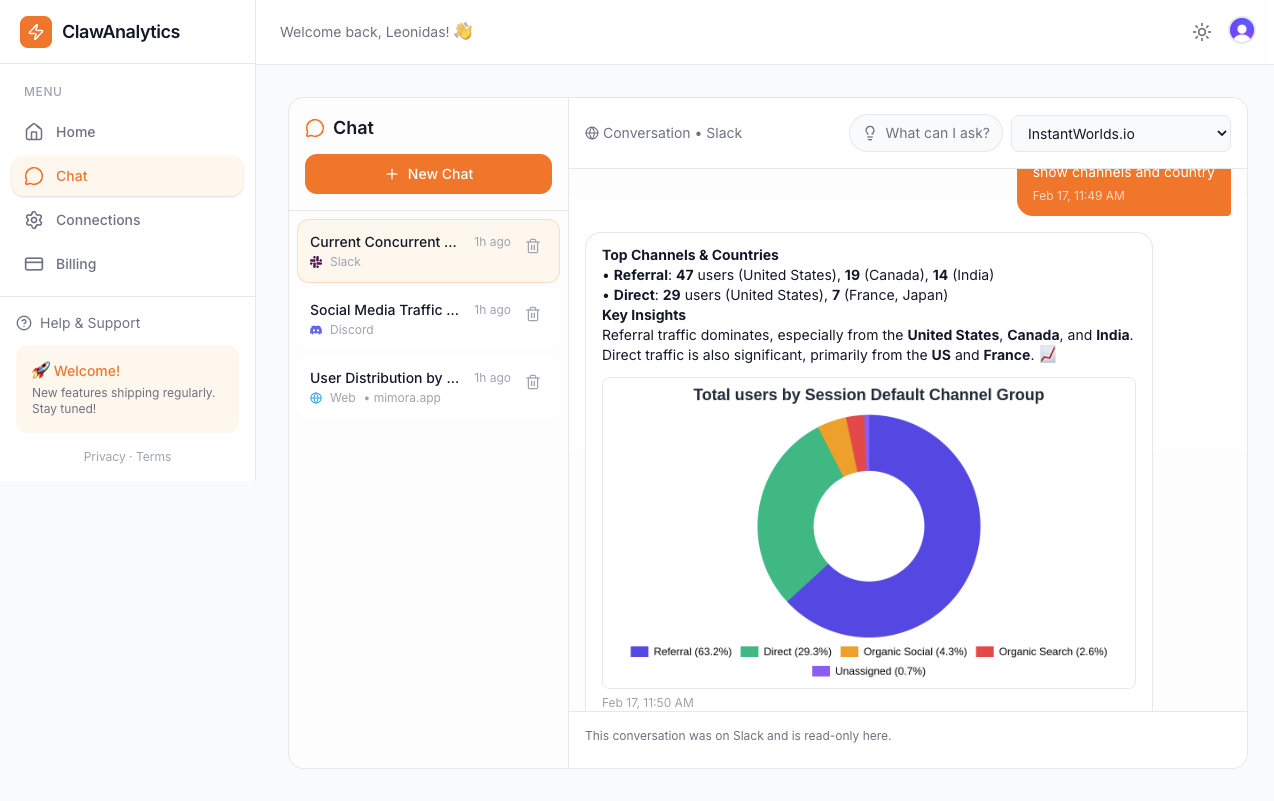
ClawAnalytics makes coaching analytics simple. You could ask: “Which coaching topics generate the most traffic?” The dashboard might show your “career transition” content outperforms other topics.
Or “What’s my website-to-client conversion rate?” You’d get clear numbers showing how many visitors become paying clients.
Quick Wins
Target specific niches. Instead of “life coach,” optimize for “career change coach for women” or “executive coach for tech leaders.” These specific terms convert better.
Create valuable lead magnets. Offer free guides, assessments, or worksheets in exchange for email. This captures visitors who aren’t ready to book yet.
Start a coaching blog. Share insights on topics your ideal clients care about. Answer questions they ask in consultations.
Collect testimonials. Success stories from past clients demonstrate results. Feature these prominently on your site and in content.