How to Track Organic Traffic for Insurance
Someone searches “life insurance for new parents” and finds your blog post explaining coverage options. They read it, appreciate your clear explanations, and click to request a quote. That lead came from organic traffic. You did not pay for the click. Your content did the work of attracting someone already thinking about insurance.
Why Organic Traffic Matters for Insurance
High-intent searches mean conversions. Someone searching for “car insurance quote” likely needs coverage soon. Unlike casual browsers, these searchers plan to buy.
Competitive advantage exists. Many insurance agents rely entirely on referrals and cold calling. Those who build organic presence stand out. They attract leads while competitors hustle for appointments.
Multiple policy opportunities. A family searching for auto insurance might also need home or life insurance. Organic traffic brings the first policy, and good service keeps them for more.
Local presence builds trust. “Insurance agent near me” searches bring people wanting face-to-face service. As a local agent, you can offer personalized service that online insurers cannot match.
How to Check in GA4
Install Google Analytics 4 on your agency website. Verify the tracking code works, then allow time for data collection.
Open GA4 and select Reports, then Traffic Acquisition. Look for “Organic Search” in the source table. Click to see detailed data.
Focus on Lead conversions. Set up conversion tracking for quote requests, phone calls, and contact form submissions. These show whether organic traffic generates actual business.
Also check User acquisition reports. See which campaigns or content bring new visitors. If blog posts about “how much life insurance do I need” attract traffic, create more educational content around common questions.
Pay attention to Device breakdown. If most traffic comes from mobile, ensure your site works flawlessly on phones. Many people request insurance quotes during commutes or breaks at work.
The Easier Way
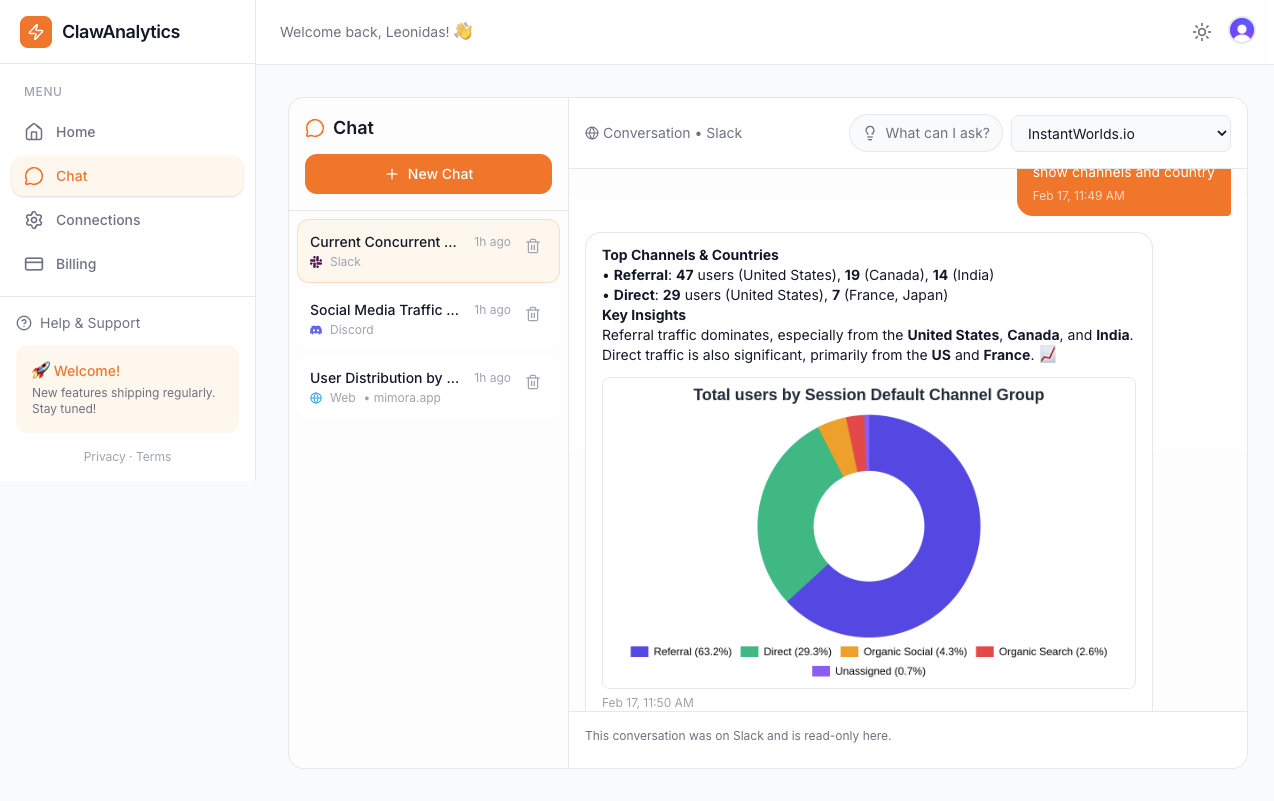
ClawAnalytics builds insurance-specific dashboards. You see which coverage types attract the most search traffic and which pages convert visitors into leads.
For example, you might discover that your “term life insurance” page brings more traffic than auto insurance pages, but auto insurance converts better. That tells you where to focus content efforts. Or you might find that blog posts about insurance for new parents bring highly qualified leads who request quotes at high rates.
ClawAnalytics also tracks geographic data. You see which neighborhoods or cities your organic traffic comes from. This helps prioritize local advertising and community involvement.
Quick Wins
Create coverage-specific pages. Separate pages for auto, home, life, and business insurance let you target more keywords. Each page should explain coverage options clearly.
Write educational blog posts. Answer common questions like “how much car insurance do I need” or “what does comprehensive coverage mean.” These posts attract searchers in research mode.
Collect and display client testimonials. Reviews build trust. Ask satisfied clients to share their experiences. Positive reviews appear in search results and convince uncertain prospects.
Optimize for local search. Include your city in page titles and content. Claim your Google Business Profile and keep it updated with current hours, address, and contact information.