Picture this: a homeowner searching for scandinavian living room ideas lands on your blog post, discovers your portfolio, and contacts you for a full redesign. This is organic traffic in action, and it costs nothing beyond the effort you put into optimization.
Why Organic Traffic Matters for Interior Designers
Clients research before hiring. Most homeowners spend weeks browsing Pinterest and Google before contacting a designer. If your content appears during this research phase, you become the trusted expert they call.
Showcase your style expertise. When you rank for specific design styles like minimalist interiors or bohemian bedroom ideas, you demonstrate depth in those areas. This attracts clients whose taste aligns with your strengths.
Build authority in your niche. Consistent organic visibility positions you as a go-to resource. Over time, this compounds into brand recognition that paid advertising cannot replicate as effectively.
Attract the right clients. Traffic from design-related searches converts better than random visitors. Someone searching for eco-friendly interior designer likely has budget and interest that matches your services.
How to Check in GA4
Setting up organic traffic tracking in Google Analytics 4 takes a few steps.
- Sign into analytics.google.com and select your property
- Click Acquisition in the left menu
- Select User acquisition or Traffic acquisition
- Find the table showing Session source/medium
- Locate rows where Medium shows organic
For deeper insights, go to Explore and create a new report. Add sessions as your metric, organic medium as a filter, and use page path as a dimension to see which content performs best.
The Easier Way
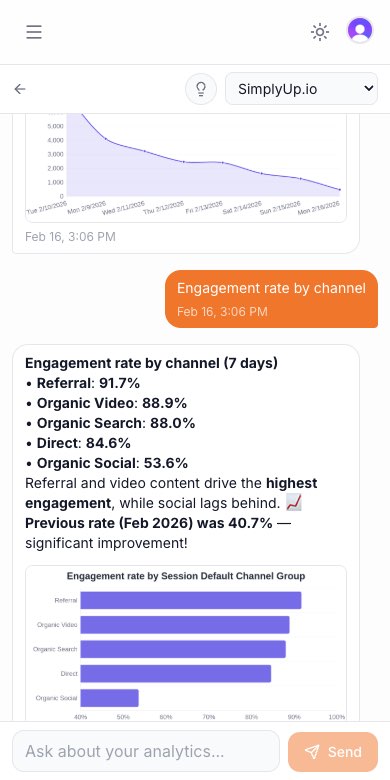
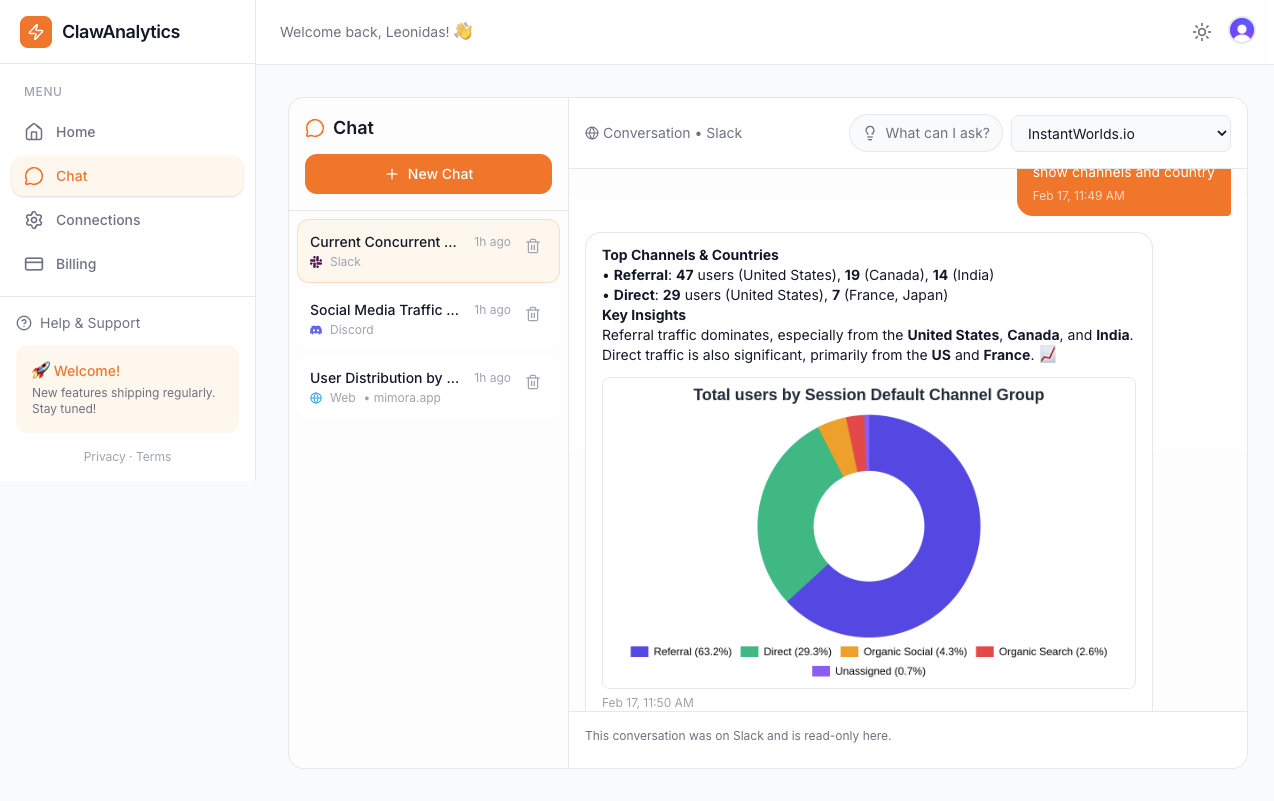
ClawAnalytics makes understanding your organic traffic straightforward.
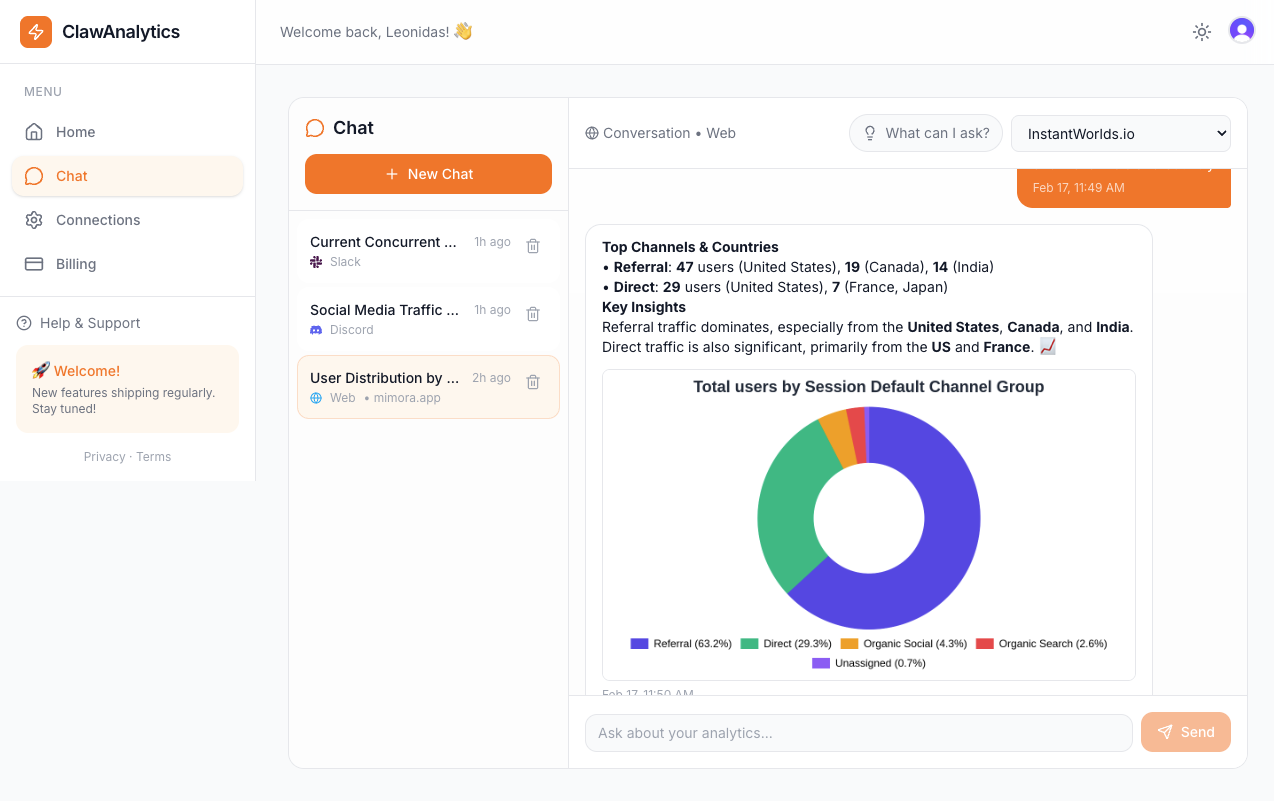
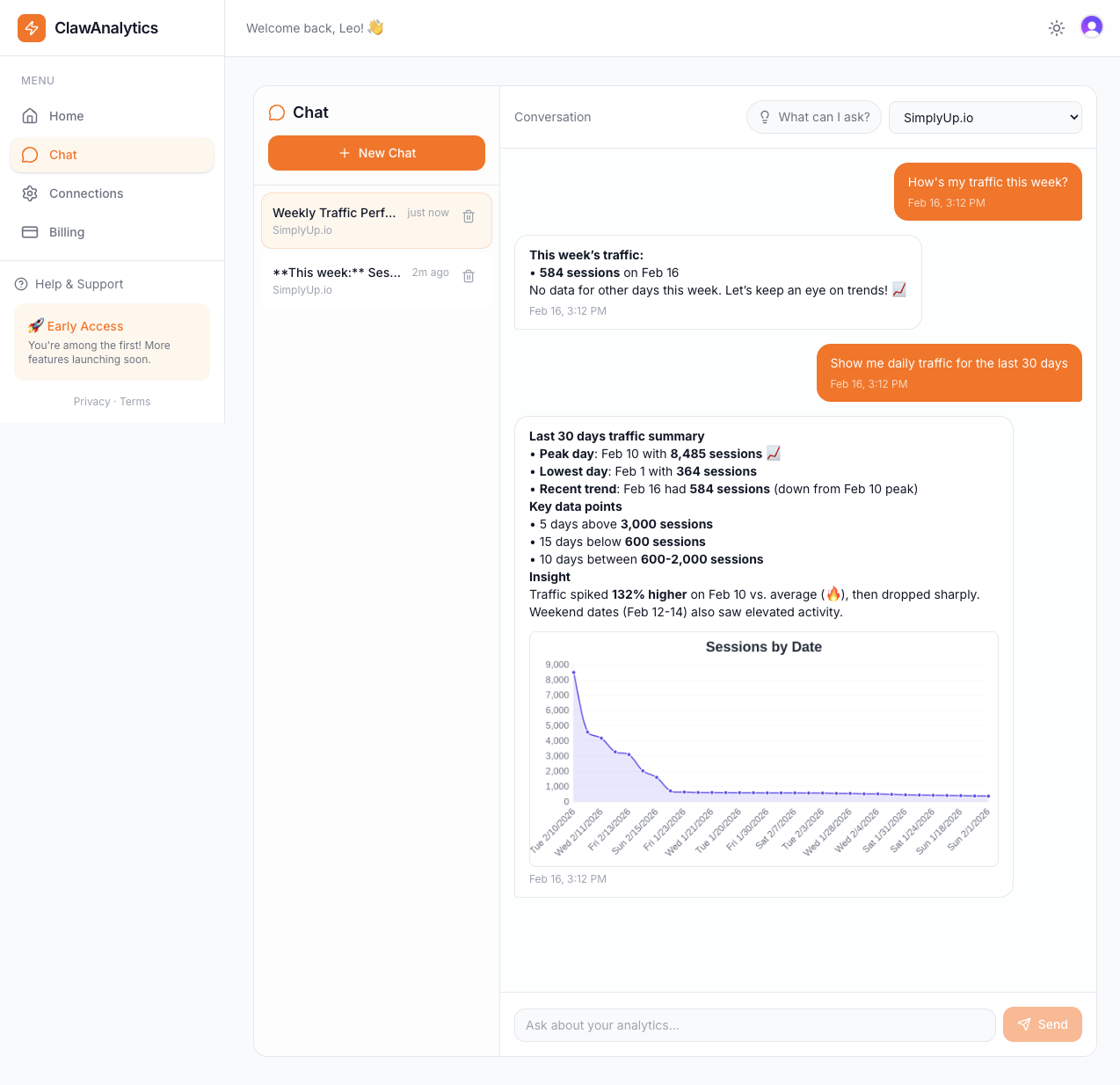
You might ask: are visitors looking for residential or commercial design? Or: which rooms are they most interested in? ClawAnalytics aggregates this data and presents it in weekly reports.
For instance, you could discover that bathroom renovation queries drive significant traffic, suggesting an opportunity to highlight that service. Or you might find that visitors from organic search spend more time on your portfolio than other sources.
The platform identifies trends automatically, so you notice opportunities before competitors do.
Quick Wins
Create style-specific content. Write about each design style you specialize in. A detailed guide on transitional interior design attracts both learning visitors and potential clients seeking that aesthetic.
Optimize image filenames. Search engines cannot see images, but they read filenames. Name your photos descriptively: modern-kitchen-island-white-cabinets.jpg works better than IMG_4829.jpg.
Use interior design keywords naturally. Include terms like space planning, color consultation, and room transformation in your website copy. These specific phrases match how clients search.
Encourage backlinks. When you contribute to design publications or collaborate with home decor brands, request a link back. Each quality link improves your domain authority and organic visibility.