How to Track Organic Traffic for Legal
Imagine spending thousands on advertising, only to discover that your organic blog posts are bringing in twice as many leads for free. That’s the power of understanding organic traffic for your law firm.
Why Organic Traffic Matters for Legal
Clients search before they call. When someone faces a legal issue, they Google their problem first. If your firm appears in those results, you’re there when decisions get made.
Organic leads cost less. Paid ads stop working when you stop paying. Organic traffic keeps flowing as long as your site ranks well. Over time, this dramatically lowers your cost per acquisition.
Legal is competitive. Keywords like “personal injury lawyer” or “divorce attorney” have high search volume. Tracking organic traffic shows where you stand against competitors and where opportunities exist.
Builds trust over time. People clicking through from search results often read multiple pages on your site. The more useful content they find, the more likely they’ll remember your firm when they need representation.
How to Check in GA4
Open Google Analytics 4 and head to the Acquisition section. Look for User Acquisition or Traffic Acquisition reports. Find “Google Search” under the default channel groups—this is your organic traffic from Google’s search results.
Filter by landing page to see which pages bring the most visitors. For a law firm, you might find that your “car accident lawyer” page ranks higher than your general “about us” page. Use this data to double down on what’s working.
Set up custom conversions to track form submissions or phone calls. Connect these to your organic traffic source to see which visitors actually become clients.
The Easier Way
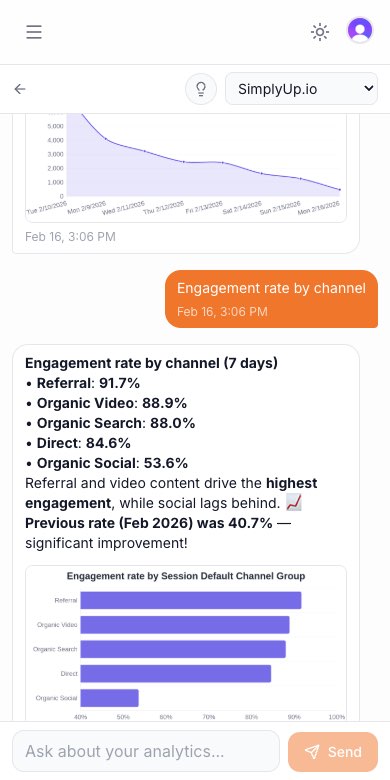
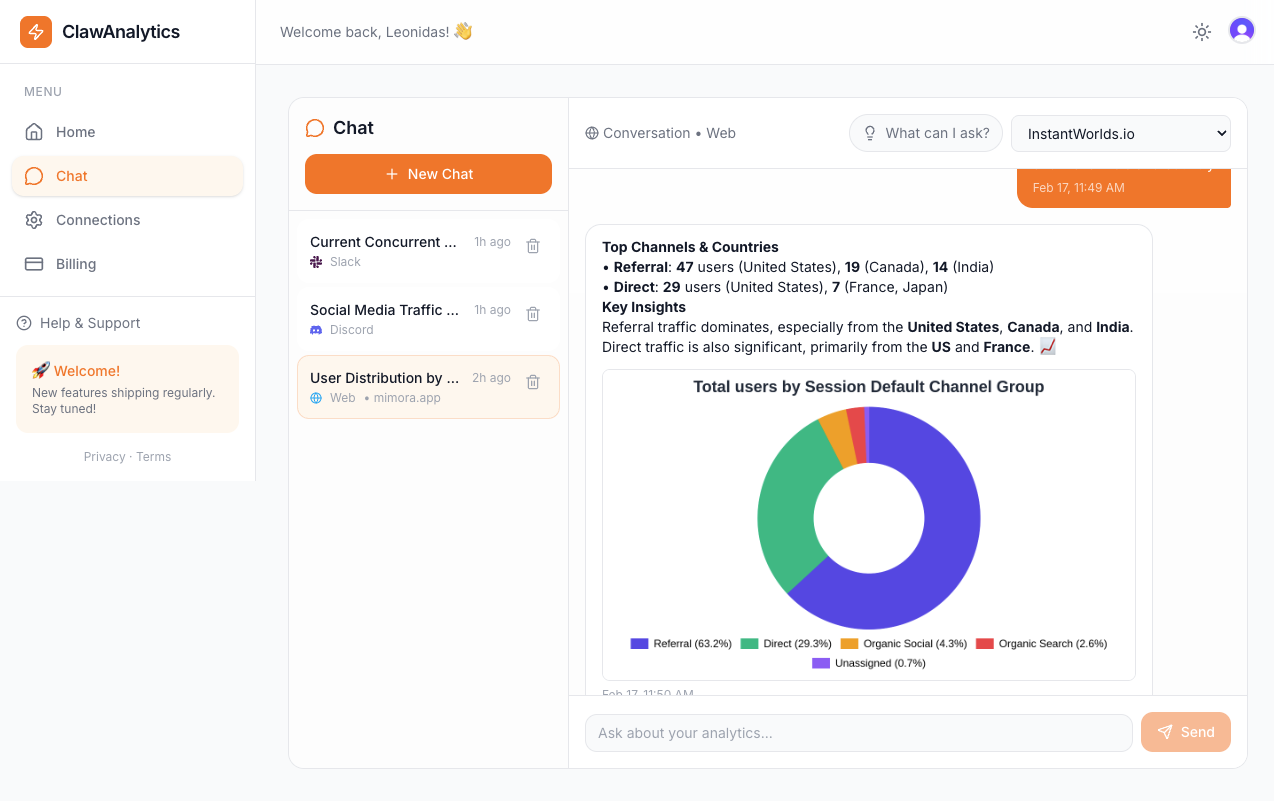
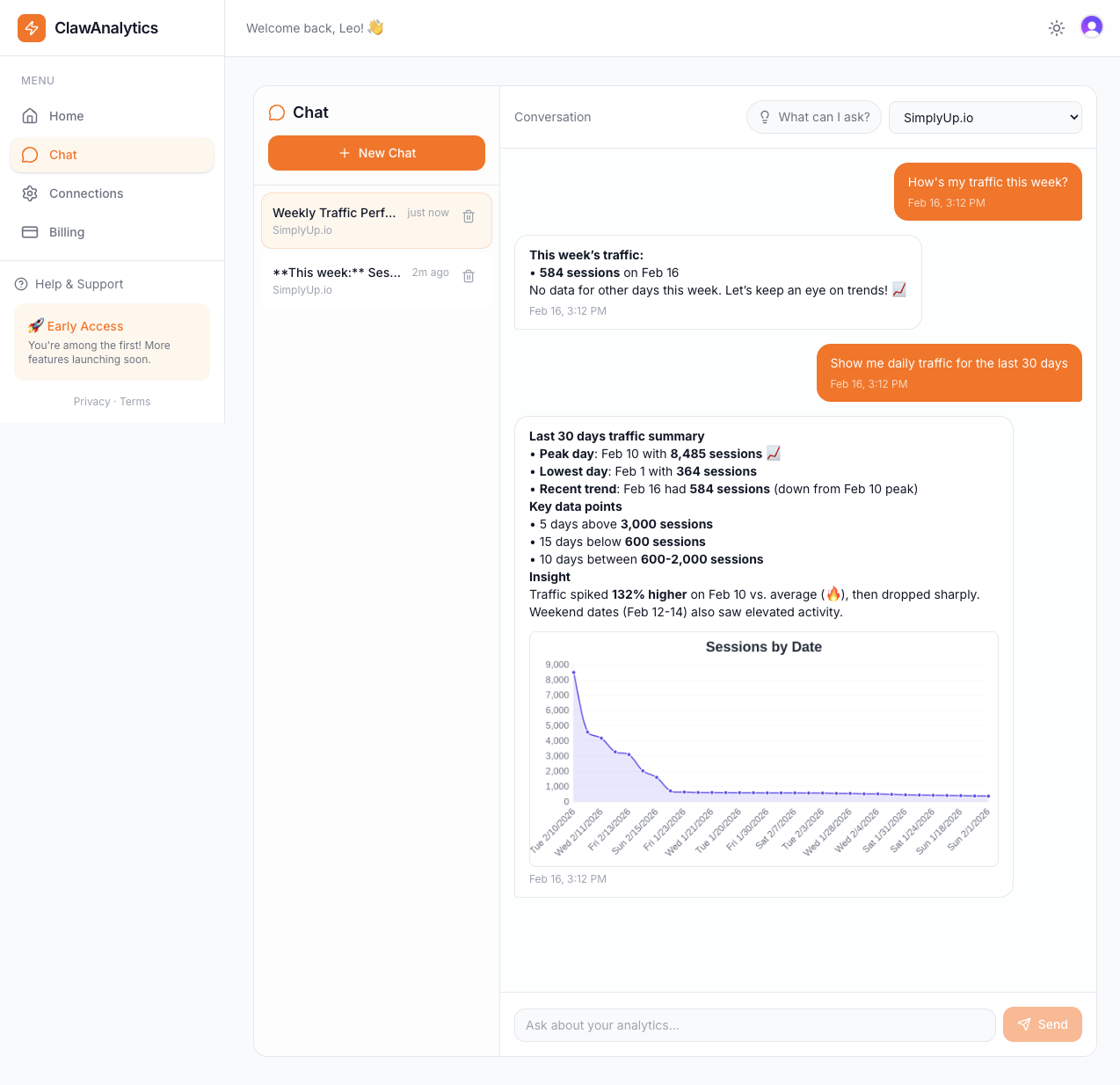
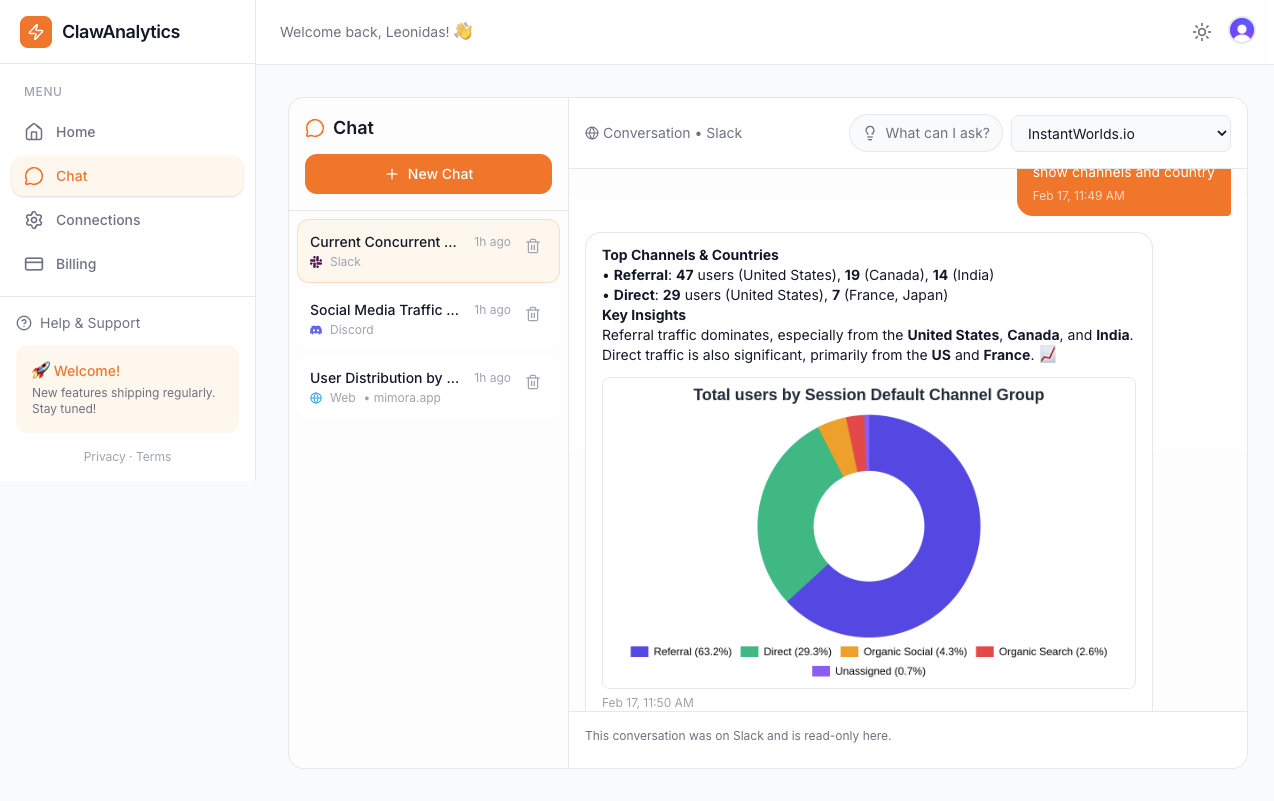
Most lawyers don’t have time to become GA4 experts. ClawAnalytics takes the complexity out of the equation by showing you exactly what matters.
For example, you could ask: “Which practice area pages get the most organic traffic?” ClawAnalytics would show you that your “slip and fall” content outperforms other pages by 40%. Or “Are blog posts driving client inquiries?” You’d see which articles generate the most contact form submissions.
This means less time guessing and more time focusing on cases.
Quick Wins
Claim your Google Business Profile. It appears in local search results and drives significant organic traffic for law firms. Make sure your address, phone, and practice areas are accurate.
Update your site regularly. Fresh content signals to Google that your firm is active. A monthly blog post on common legal questions keeps your site relevant.
Target long-tail keywords. Instead of competing for “lawyer,” aim for “workers compensation lawyer in [city].” These specific searches convert better.
Speed up your site. Slow-loading pages frustrate visitors and hurt your search rankings. Compress images and enable caching to keep your site fast.