How to Track Page Load Time for Agencies
Your agency creates stunning work for clients. Your portfolio showcases award-winning campaigns. But when prospects visit your website, they wait. And wait. Then they leave. You just lost a qualified lead to slow page loads. Here’s how to track and fix this hidden problem.
Why Page Load Time Matters for Agencies
Your website is your first portfolio piece. Prospective clients evaluate your work before contacting you. A slow website suggests your digital work might also be subpar. Fast sites signal professionalism and attention to detail.
High-value clients expect speed. Businesses paying premium agency fees operate efficiently. They notice slow websites and assume your work process is equally sluggish. Speed demonstrates you understand modern standards.
Portfolio pages are media-heavy. Agency sites load large images, videos, and interactive elements. Without careful optimization, these kill page speed. But when done right, they impress without sacrificing performance.
Lead generation depends on fast loads. Visitors fill out contact forms when interest peaks. Slow pages interrupt this momentum. Each second of delay reduces inquiry rates and ultimately, revenue.
How to Check in GA4
Access Core Web Vitals data through Reports > Engagement > Core Web Vitals. This shows metrics like Largest Contentful Paint (LCP) measuring how quickly your main content appears.
To analyze specific pages, go to Reports > Pages and Screens. Add “Average page load time” as a metric. Focus on your homepage, portfolio pages, and contact form.
Create a custom exploration. Click Explore > Blank. Add dimensions for “Page path” and “Campaign source” (to see if traffic from certain sources experiences different speeds). Add metrics for load time and conversion events.
Track form submissions by device. Set up events for contact form completions. Then analyze whether desktop vs mobile users convert at different rates, which often correlates with speed differences.
The Easier Way
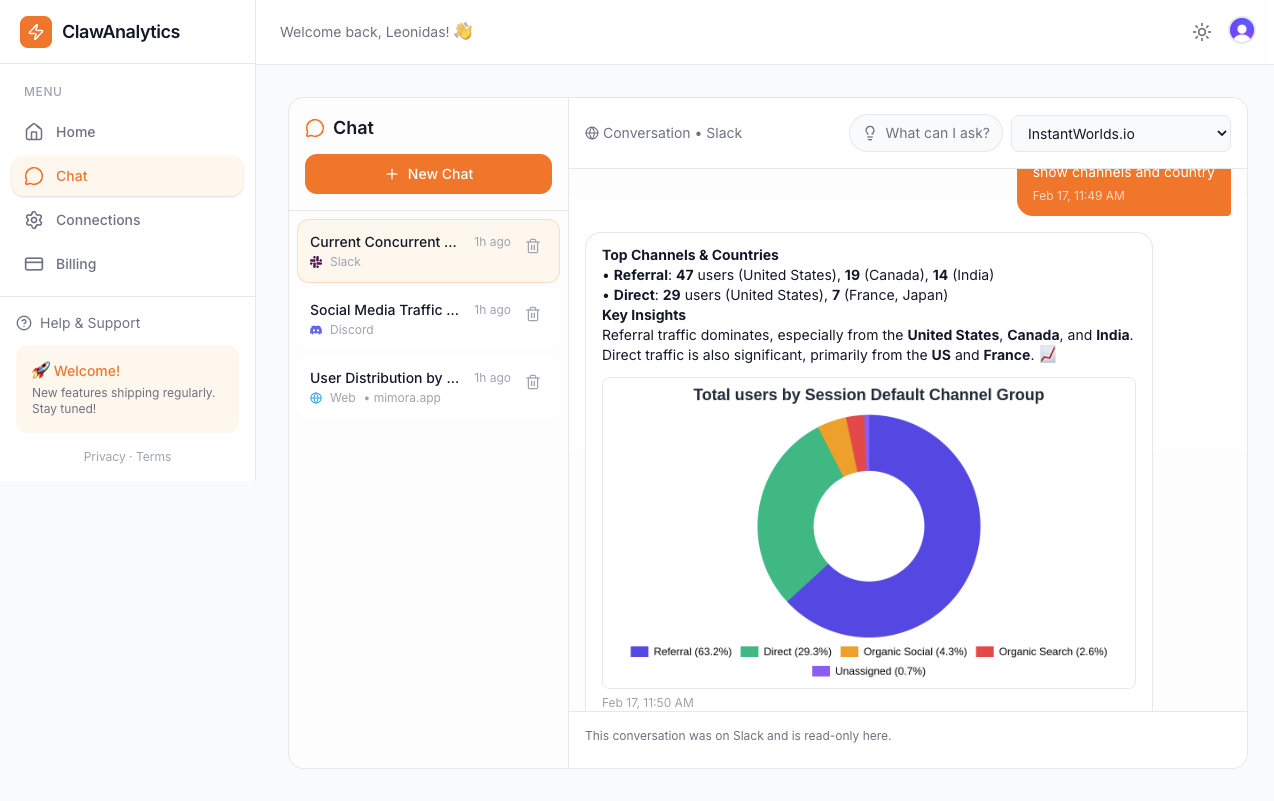
GA4 requires technical expertise to configure and interpret properly. ClawAnalytics makes agency page speed tracking effortless.
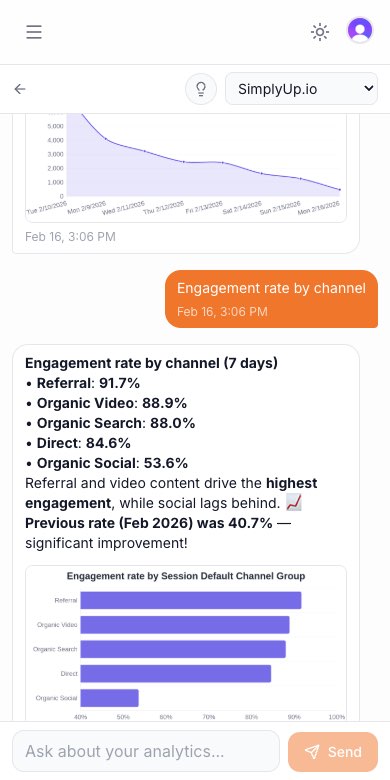
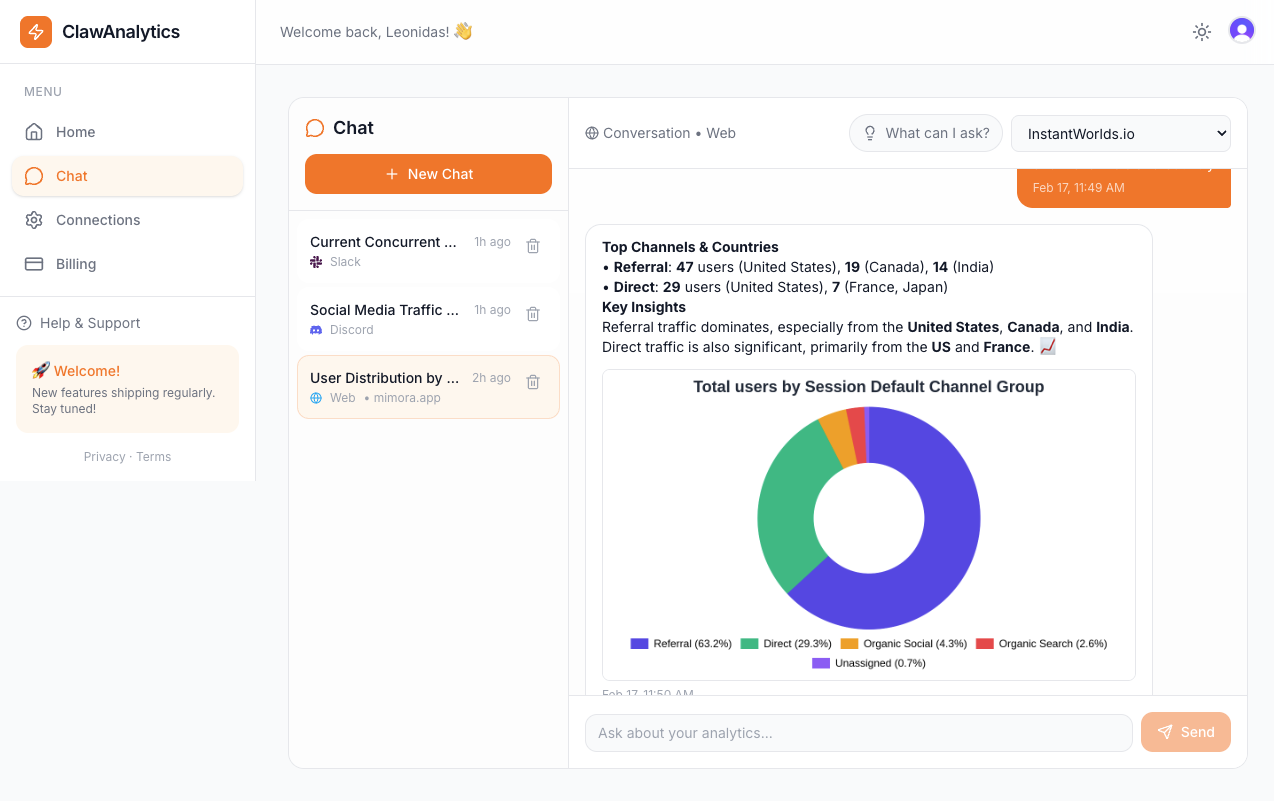
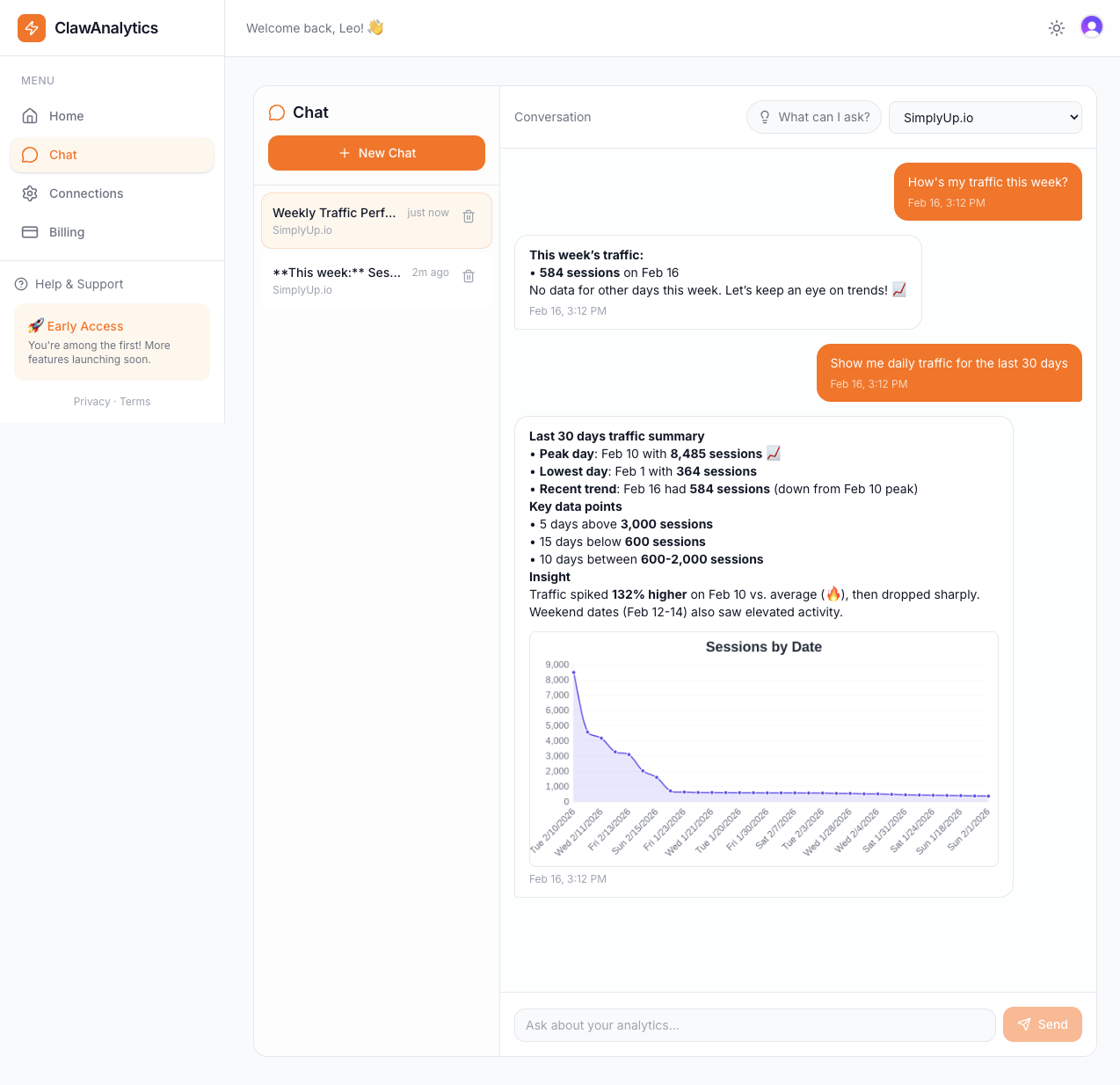
ClawAnalytics automatically monitors load times across your entire agency website. It shows you which portfolio pages need optimization and how speed affects lead generation.
Example questions ClawAnalytics answers instantly:
- Which portfolio case studies load slowest and need attention?
- Are mobile visitors to my site experiencing slower pages than desktop?
- Does page speed change throughout the day based on server load?
You get simple dashboards showing exactly what to fix and how it will impact your client conversions.
Quick Wins
Optimize portfolio images. Compress case study images to WebP format. Use responsive images that load smaller versions on mobile. High quality doesn’t require large file sizes.
Use lazy loading for videos. Embed videos with thumbnails that only load the actual video when clicked. This speeds up initial page render significantly.
Choose a CDN. Content delivery networks serve your assets from locations closer to visitors. This speeds up loads for clients viewing your site from different geographic regions.
Minimize third-party scripts. Analytics, chat widgets, and marketing tools all add load time. Audit these regularly and remove any not directly tied to conversions.