How to Track Page Load Time for Auto Repair
Someone’s check engine light just came on during their morning commute. They pull over, search “auto repair near me,” and click the first result that loads. Your site takes 4 seconds. The next shop loads in 2. They call the faster shop.
Page speed isn’t just a technical metric. It’s the difference between fixing someone’s car and watching them drive to your competitor.
Why Page Load Time Matters for Auto Repair
Urgent needs demand instant answers. When someone’s car breaks down, they don’t wait. They need to find help immediately. Your website must deliver information instantly or they move on.
Mobile users expect speed. Most “near me” searches happen on phones. Auto repair customers often search while stranded or at the roadside. Your mobile site must load in under 3 seconds.
Service pages drive calls. Your services and pricing pages are where customers decide to call. Slow load times here directly reduce phone calls and bookings.
Trust signals must load fast. Certifications, testimonials, and photos of your shop build trust. But heavy trust signals that slow your site backfire.
How to Check in GA4
Finding your page speed data takes moments:
- Open GA4 to Reports > Engagement > Pages and screens
- Click Add metric above the data table
- Select Average page load time (seconds)
- Analyze your most important pages
Prioritize your homepage, services list, and contact/booking pages. These pages should load in under 3 seconds.
Compare your speeds between mobile and desktop. Mobile performance typically lags and needs more attention.
The Easier Way
Checking page speeds manually wastes time you could spend fixing cars.
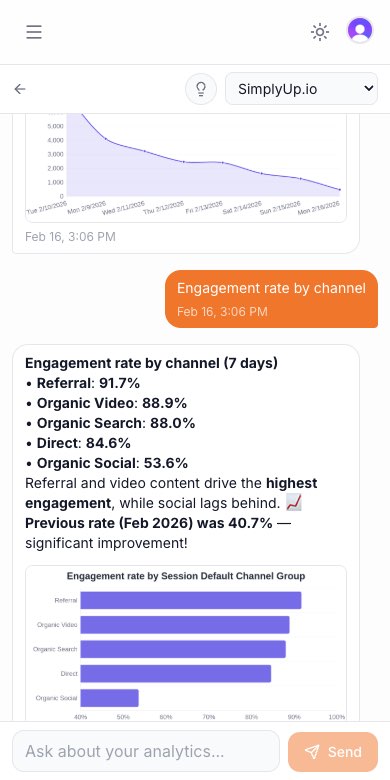
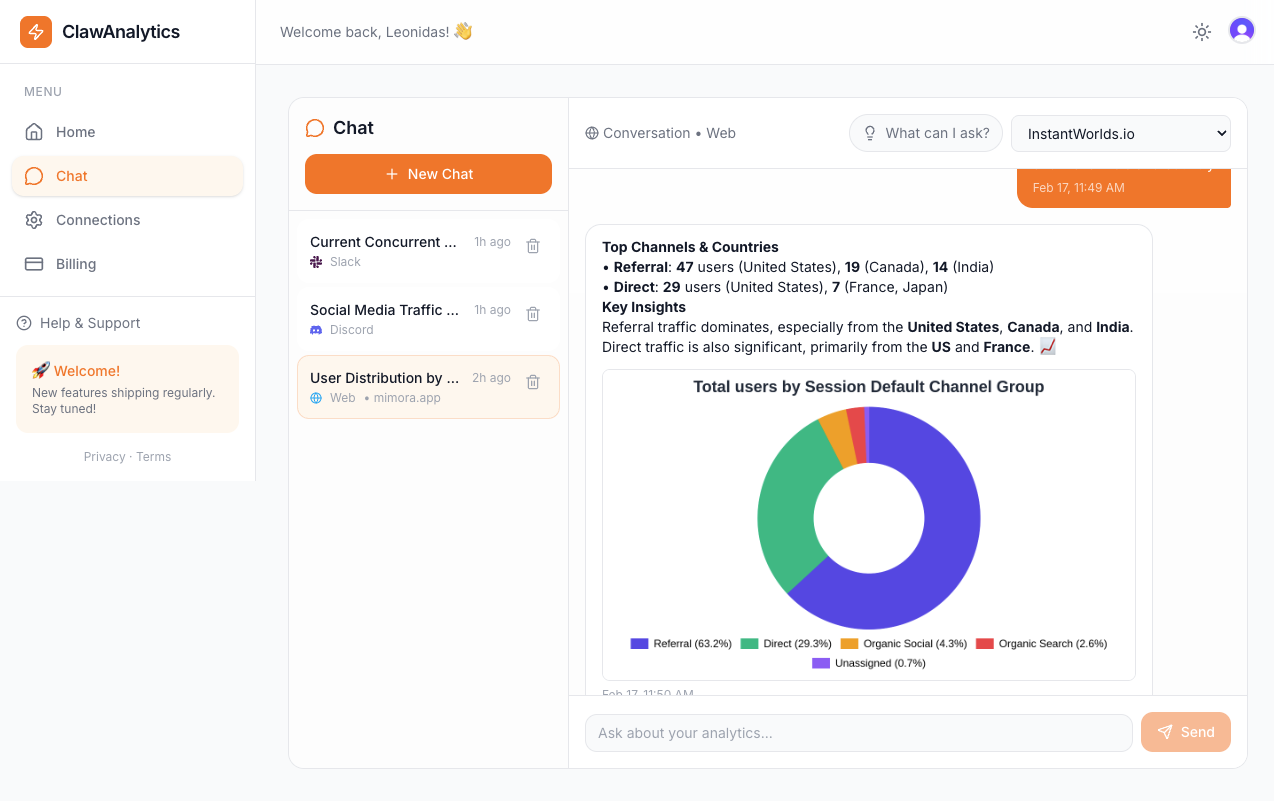
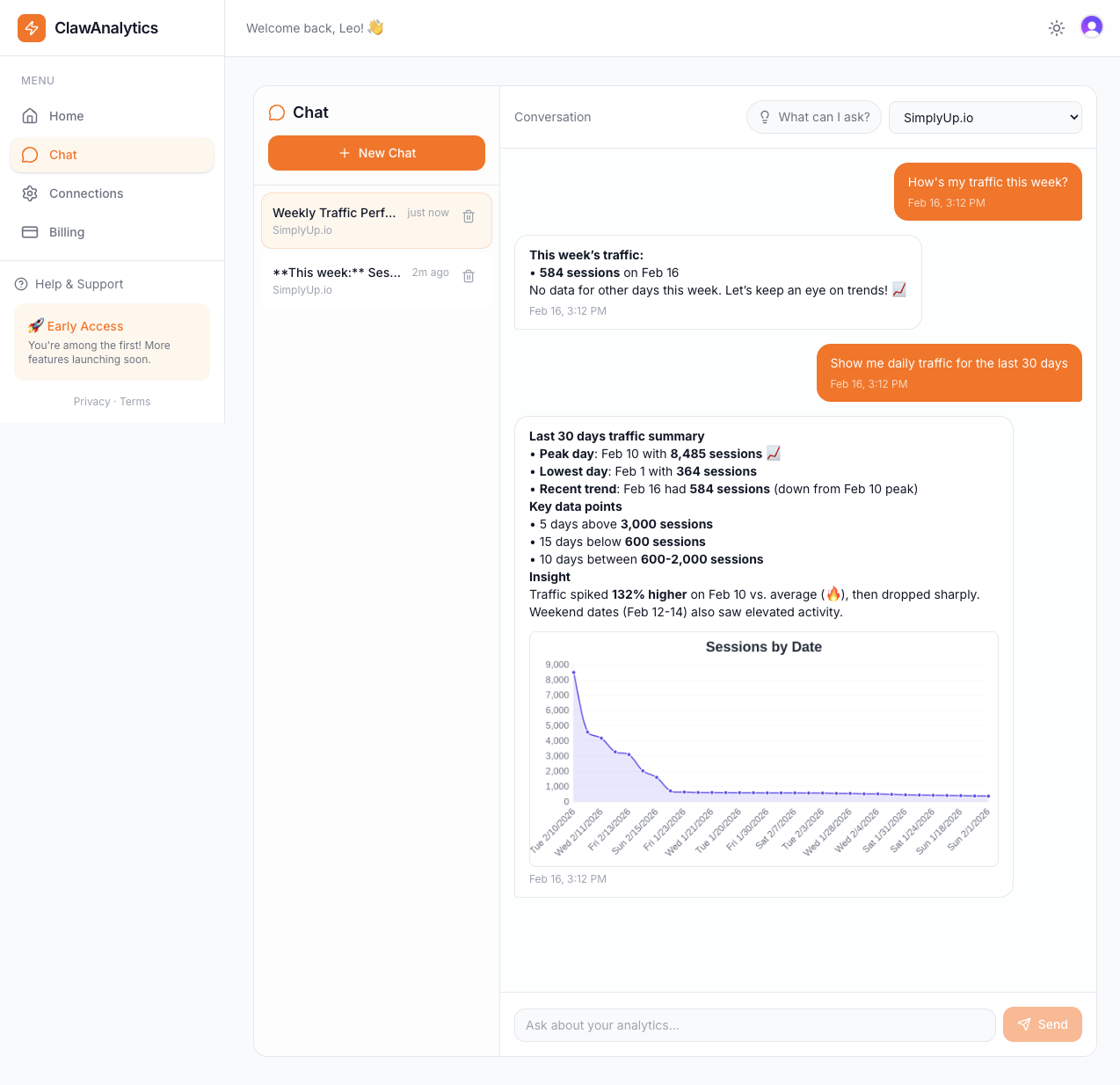
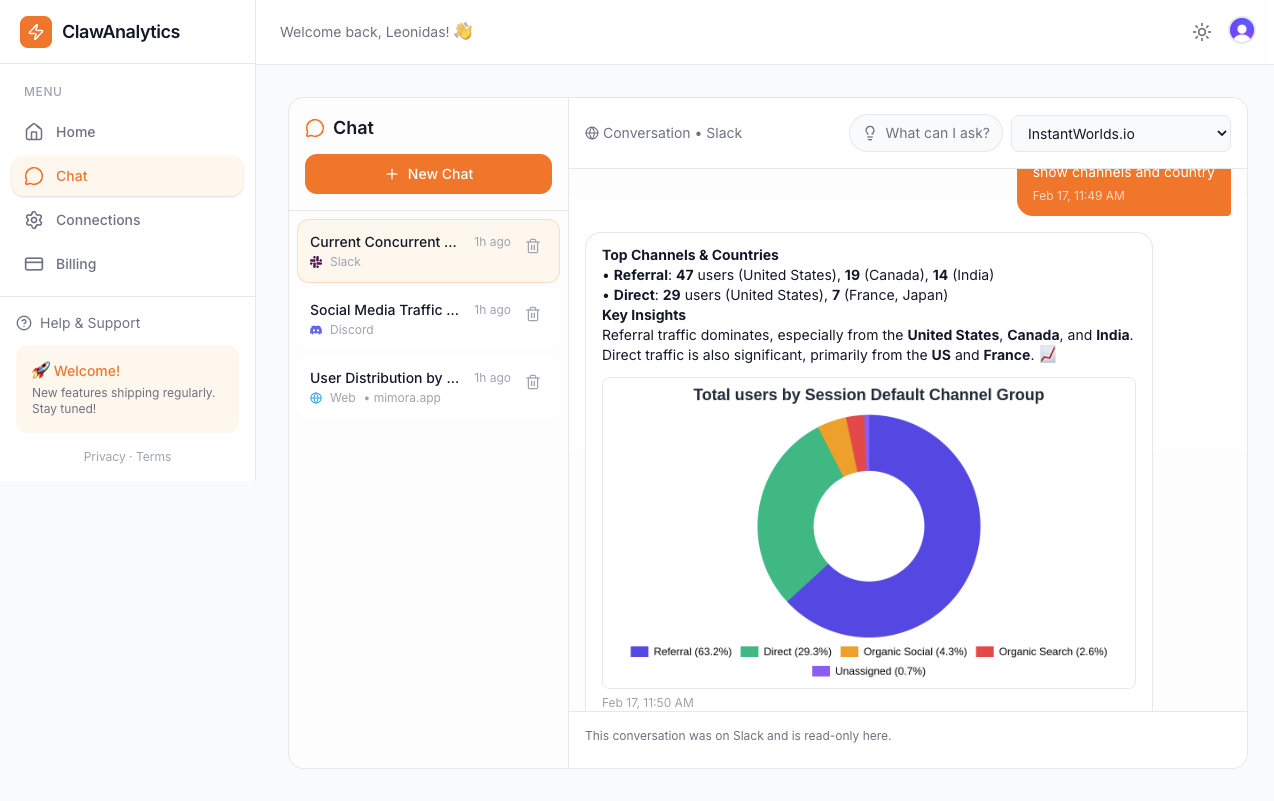
ClawAnalytics provides automated monitoring with questions like:
- “Which page on my auto repair site loads slowest?”
- “Has my mobile page speed improved this month?”
- “Alert me if any page exceeds 4 seconds load time”
This proactive monitoring means you’re always aware of performance issues without touching analytics tools. Fix problems before customers notice.
Quick Wins
Optimize your service menu images. Photos of completed repairs, your shop, and team members should be compressed and use modern formats.
Minimize third-party scripts. Chat widgets, review plugins, and excessive tracking slow your site. Keep only what delivers real value.
Enable browser caching. Return visitors should experience much faster loads through proper caching headers.
Compress text assets. Enable Gzip or Brotli compression on your server to reduce HTML, CSS, and JavaScript file sizes.
Prioritize above-the-fold content. Ensure your main headline, phone number, and key services load first. Users should see value within 1 second.
Test after each change. Small optimizations add up to significant speed improvements that convert more callers into customers.