How to Track Page Load Time for Dentists
Your dental practice website needs to load fast. When someone searches for an emergency dentist or a routine cleaning, a slow website means lost patients. They will click on the next result.
Page load time measures how many seconds it takes for your website to fully display. For dental practices, this directly impacts appointment bookings.
Why Page Load Time Matters for Dentists
-
Mobile patients expect speed: Most people search for dentists on phones, often during breaks or emergencies. A 2-second delay can cut conversions by 50%.
-
Appointment booking friction: Your contact page and booking forms must load instantly. If patients cannot book quickly, they will call your competitor instead.
-
Google rankings: Google prioritizes fast websites in local search results. Slow dental sites drop below competitors with faster load times.
-
Rebuilding trust: Modern patients expect a professional online experience. A slow website suggests an outdated practice, even if your equipment is state-of-the-art.
How to Check in GA4
- Open Google Analytics 4 and navigate to Reports > Engagement
- Click Web Vitals in the left sidebar
- Look for Largest Contentful Paint (LCP) which measures load time
- Filter by your dental service pages to see which convert slowest
- Set a custom alert when LCP exceeds 2.5 seconds
Check this data weekly. Most dental websites should aim for under 2 seconds.
The Easier Way
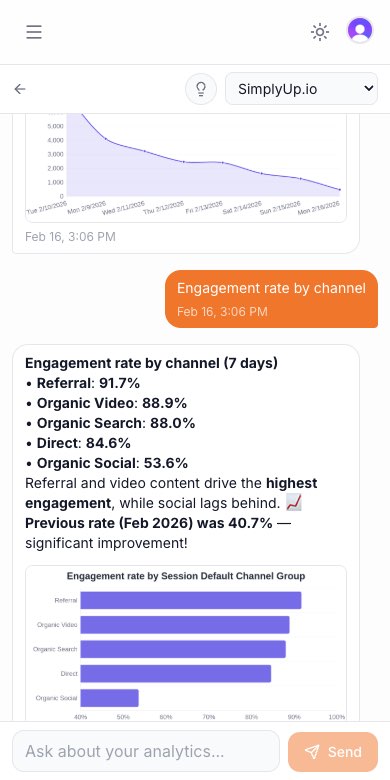
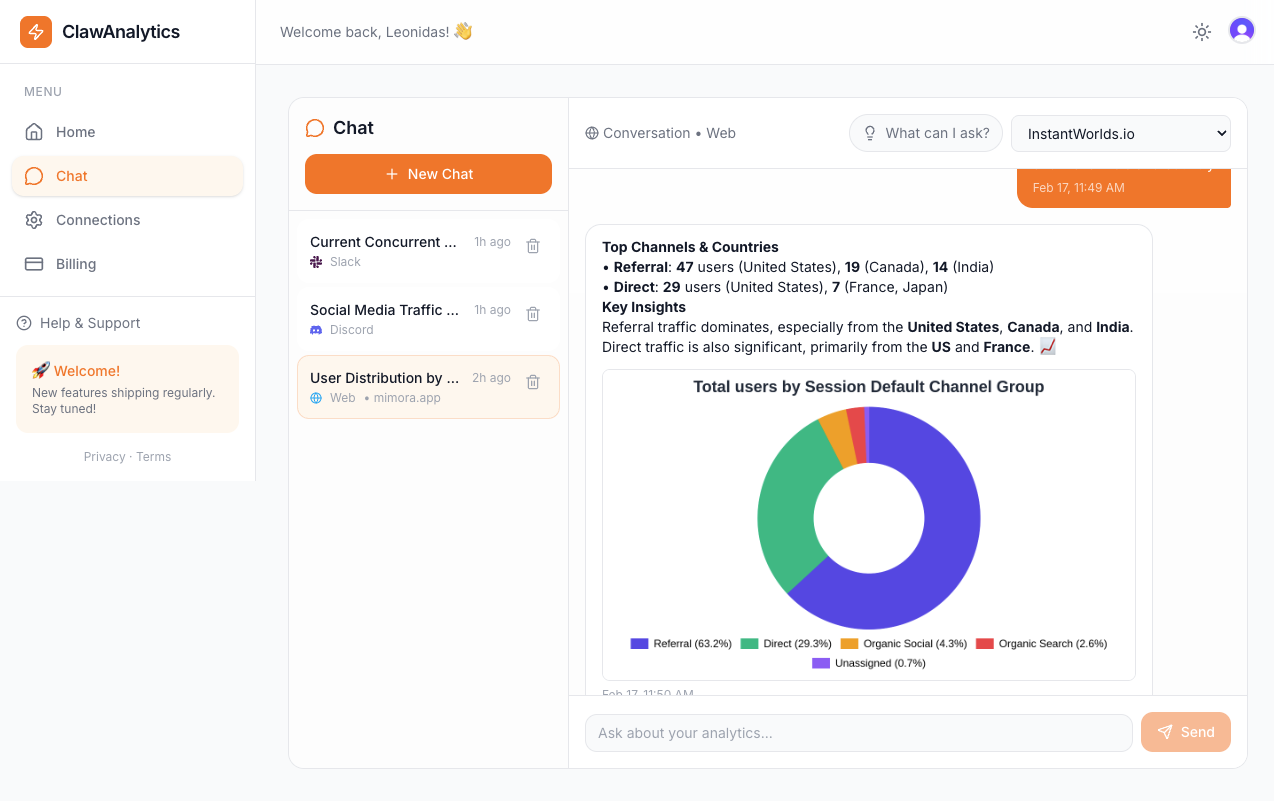
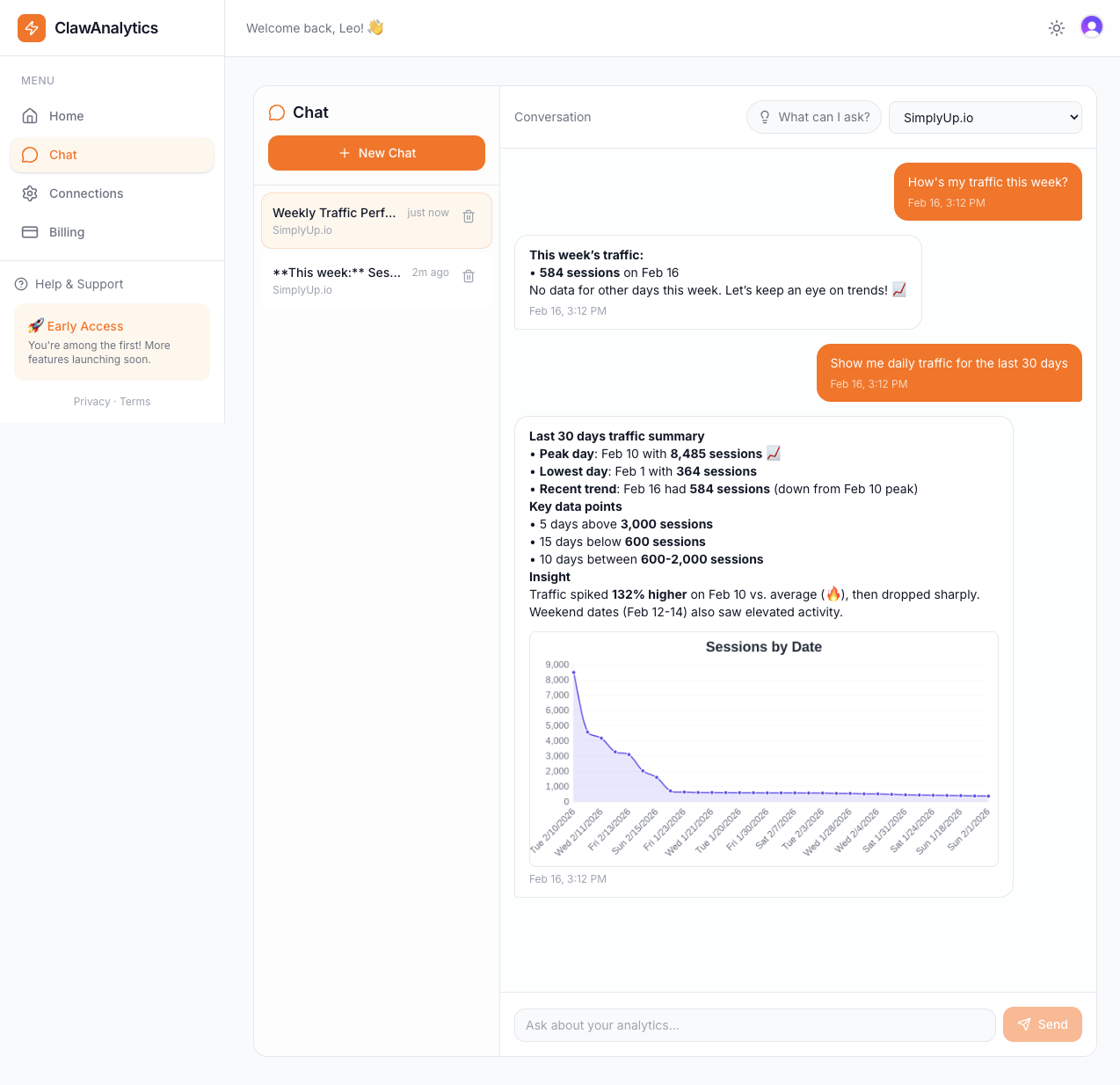
While GA4 gives you raw data, it takes time to configure and interpret. ClawAnalytics simplifies this for dental practices.
Example questions ClawAnalytics can answer:
- “Which page on my dental site is the slowest?” - Instantly see your problem pages ranked by load time.
- “Did my homepage speed improve after the last update?” - Track performance changes over time.
- “Are my procedure pages loading fast enough for mobile users?” - Get mobile-specific insights.
Instead of digging through GA4 dashboards, you get clear answers. This helps you prioritize fixes that actually impact patient bookings.
Quick Wins
- Compress images: Dental before/after photos are popular but heavy. Use WebP format to cut file sizes by 60%.
- Enable browser caching: This saves returning patients from reloading your entire site.
- Minimize plugins: Too many WordPress plugins slow down dental sites. Remove unused ones monthly.
- Use a CDN: Deliver your content from servers closer to patient locations.
Start tracking page load time today. Every second you shave off means more appointment bookings and happier patients.