Healthcare

How to Track Page Load Time for Healthcare

Learn how to track page load time for healthcare websites to improve patient experience and reduce bounce rates.

How to Track Page Load Time for Healthcare

Imagine a patient searching for an urgent care clinic at 11 PM. They click on your website, but it takes 8 seconds to load. They immediately hit back and find a competitor whose site loaded in 2 seconds. That lost patient could have been yours.

Why Page Load Time Matters for Healthcare

Patient trust starts with speed. When someone is already stressed about a health concern, the last thing they want is a slow website. A fast site signals professionalism and competence.

Mobile usage is dominant in healthcare. Most patients search for doctors, clinics, and health information on their phones. If your mobile site lags, you’re invisible to the majority of potential patients.

Healthcare searches are often urgent. Unlike e-commerce browsing, healthcare queries usually have immediate intent. Someone looking for “urgent care near me” needs answers now, not after a loading spinner.

Google favors fast healthcare sites. Page speed is a ranking factor, especially for local healthcare searches. Faster sites appear higher in search results, bringing more patients to your practice.

How to Check in GA4

Google Analytics 4 tracks page performance through its Web Vitals reports. Here’s how to find the data:

  1. Open GA4 and navigate to Reports > Engagement
  2. Click on Web Vitals in the left sidebar
  3. Look for Largest Contentful Paint (LCP) which measures page load time
  4. Set a date range comparing the last 30 days
  5. Filter by your healthcare pages to see which need optimization

The report shows what percentage of users experience good, needs improvement, or poor LCP scores. Aim for LCP under 2.5 seconds.

The Easier Way

While GA4 gives you data, it doesn’t tell you when things break. ClawAnalytics fills that gap with real-time monitoring and instant alerts.

Example questions ClawAnalytics can answer:

  • “Which page on our practice website loads slowest for mobile users?” ClawAnalytics breaks down load times by page and device type.
  • “Did our new patient intake form slow down after the latest update?” ClawAnalytics tracks performance changes over time.
  • “Which hospital department pages have the highest bounce rate due to slow loading?” ClawAnalytics correlates load time with user behavior.

Quick Wins

Compress medical images. Healthcare sites are image-heavy with doctor photos, facility tours, and medical illustrations. Use WebP format and compress everything.

Enable browser caching for patient forms. If patients frequently download intake paperwork, caching reduces repeated downloads.

Use a CDN for facility locations. Multiple clinic locations benefit from a content delivery network that serves from the nearest server.

Minimize third-party scripts. Analytics, chat widgets, and appointment booking tools all add load time. Keep only what you need.

Test regularly with mobile devices. Use Chrome DevTools to simulate mobile connections and identify bottlenecks.

A faster healthcare website means more patients finding you when they need you most.
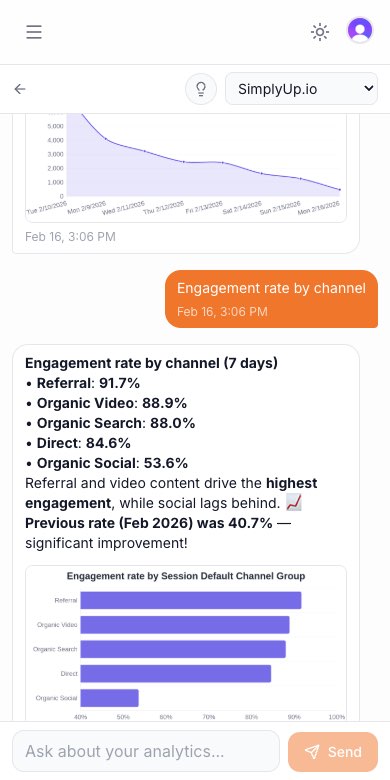
Check your analytics from anywhere

On your morning commute. At a coffee shop. In a meeting. Pull up your analytics on any device and get instant answers.

  • Web dashboard on desktop & mobile
  • Discord bot for team channels
  • Slack integration for your workspace
  • MCP server for AI agents (Claude, Cursor)
See your traffic in 60 seconds →
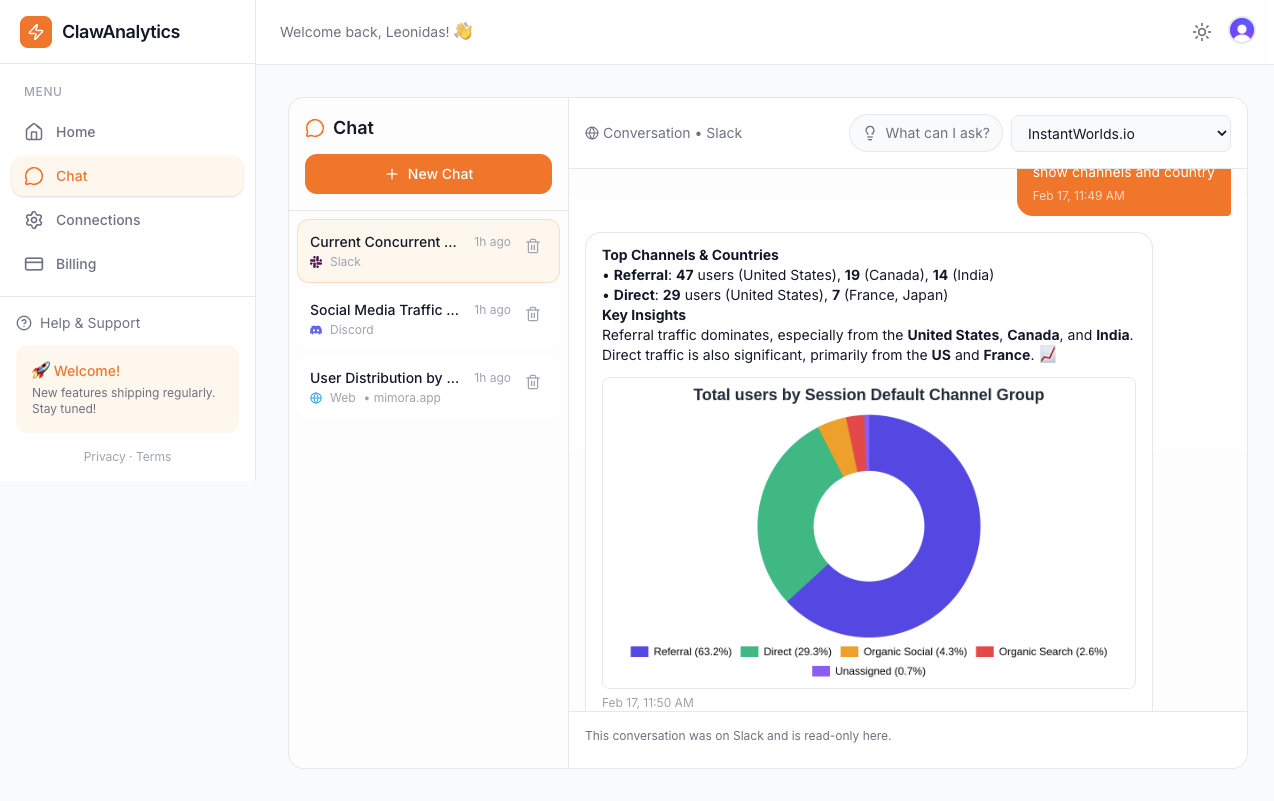
ClawAnalytics mobile chat showing engagement rate breakdown with charts

How ClawAnalytics helps

Skip the dashboards. Get answers in seconds.

🔗
1

Connect GA4

One-click OAuth. Read-only access. Takes 30 seconds to link your Google Analytics property.

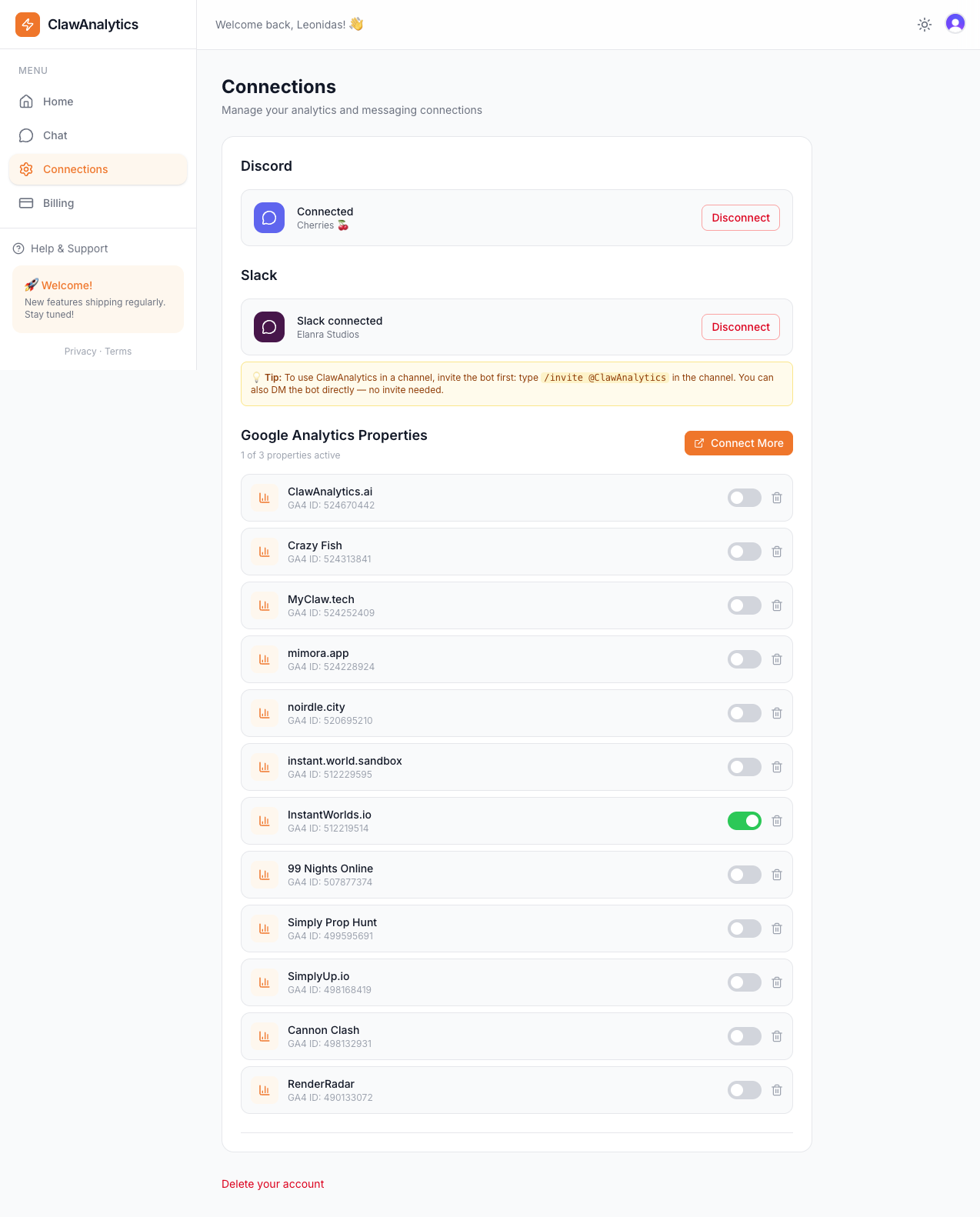
ClawAnalytics connections page showing Google Analytics properties linked
💬
2

Ask questions

Type in plain English. No query language, no filters, no date pickers. Just ask what you want to know.

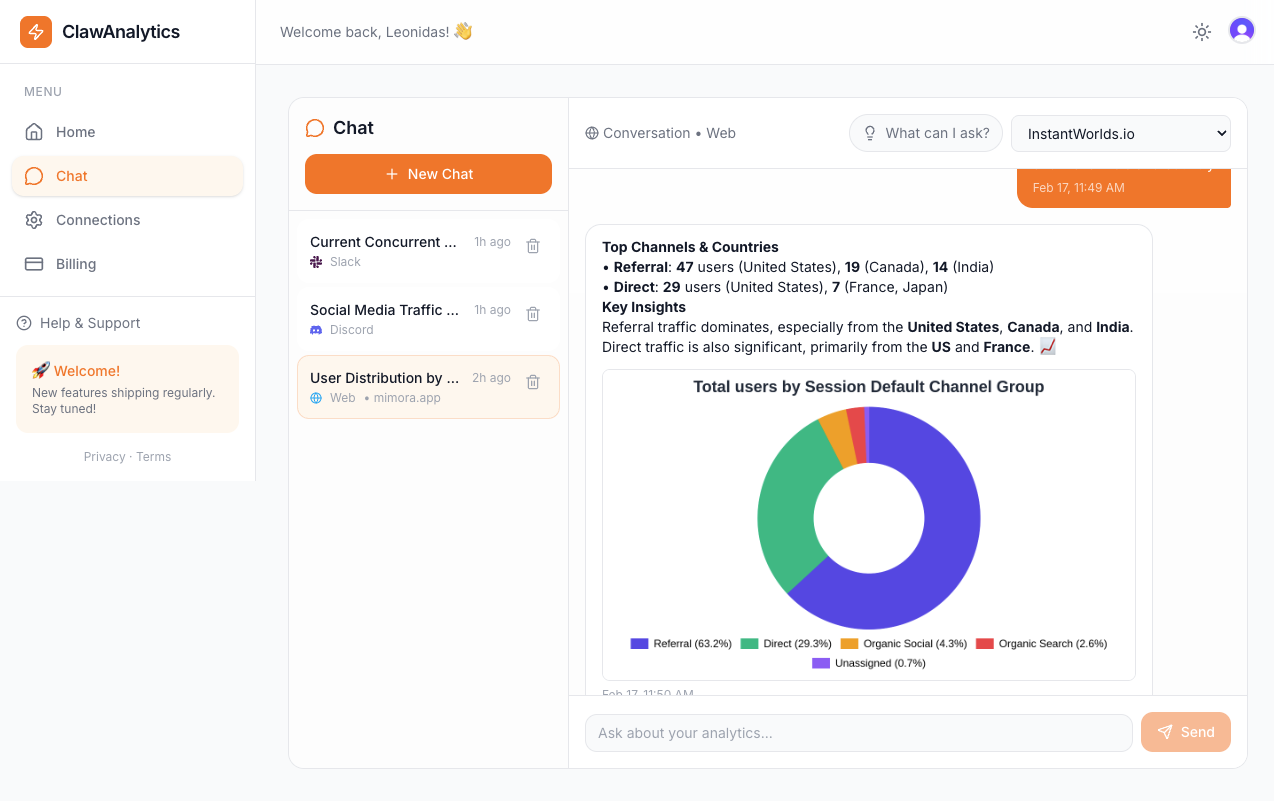
ClawAnalytics chat interface with natural language query
📊
3

Get answers with charts

Instant responses with visualizations. Share charts with your team or export the data.

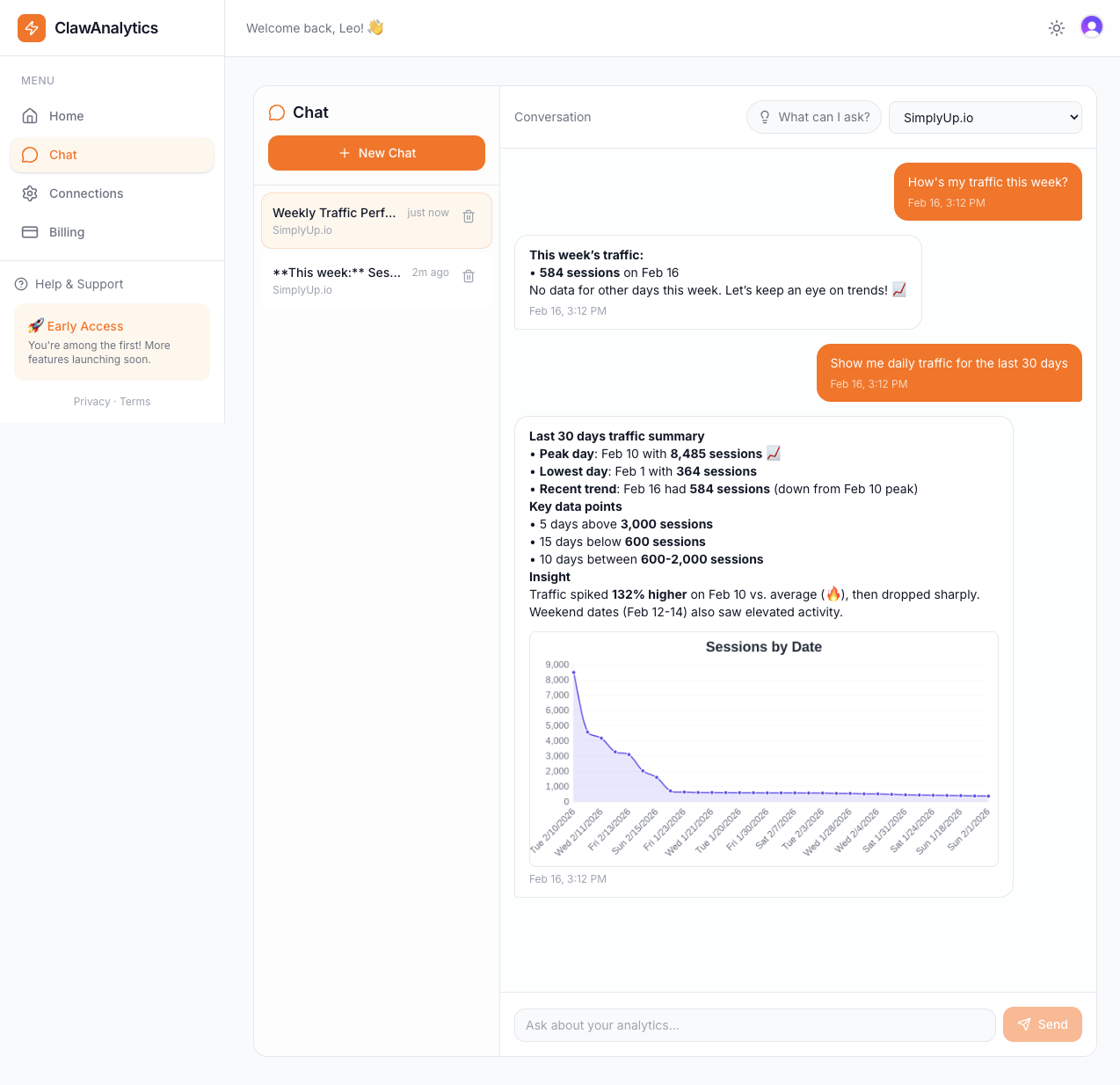
ClawAnalytics showing chart response to analytics query

See it in action

Ask a question. Get a chart. That simple.

ClawAnalytics Chat
ClawAnalytics chat interface showing a natural language analytics query with chart response

Works on web, Discord, and Slack. Also available as an MCP server for AI agents.

Leonidas Maliokas
"I used to open Google Analytics 5 times a day and still miss things. Now I get a summary every morning and ask follow-ups when something looks off. Takes 10 seconds instead of 10 minutes."

Leonidas Maliokas

Founder, Elanra Studios

🎮 5 games monitored 💼 3 businesses

Simple, honest pricing

Start free. Upgrade when you're ready.

Free

Try it out

$0 /month
  • 5 websites
  • 30 questions/month
  • Web dashboard
  • No credit card
Start Free

Website

For small businesses

$9 /month
  • 5 websites connected
  • 100 questions/month
  • Daily morning summary
  • Web dashboard + Discord
Get Started

Business

For agencies and portfolios

$79 /month
  • Unlimited websites
  • 2,000 questions/month
  • Everything in Pro
  • ✅ API access
  • ✅ MCP integration
  • ⭐ Priority support
Get Started

Stop opening dashboards.
Start asking.

Connect Google Analytics in 30 seconds. Get answers from the dashboard or Discord. Start free — no credit card needed.

Try it free — ask your first question
30-second setup Free plan available Cancel anytime

Got questions?

Why does page load time matter for healthcare websites?
Patients often search for medical information on mobile devices during emergencies. Slow loading pages can mean the difference between a patient finding your practice or clicking to a competitor.
How do I check page load time in Google Analytics 4?
In GA4, go to Reports > Engagement > Web Vitals. Look for the Core Web Vitals report which includes Largest Contentful Paint (LCP) as a key metric.
Can ClawAnalytics help with healthcare website performance?
Yes. ClawAnalytics provides real-time page load monitoring with alerts when performance drops, helping healthcare providers maintain fast websites that keep patients engaged.

Related guides

More resources to help you get the most from your analytics.