How to Track Page Load Time for Moving Companies
Imagine a customer frantically searching for movers at midnight before their lease ends tomorrow. They find your company, click the link, and… nothing. Five seconds pass. Ten. They bounce to a competitor with a faster site. You just lost a booking worth $800 to $3,000 because your page took too long to load.
This happens more often than you think. The moving industry sees high-intent traffic at unpredictable hours, and speed matters.
Why Page Load Time Matters for Moving Companies
First impressions happen in seconds. Research shows 53% of mobile users abandon sites that take longer than 3 seconds to load. For moving companies, this means half your potential customers are leaving before seeing your services.
Quote request forms must load fast. Your conversion funnel likely starts with a quote form. If the form takes 4+ seconds to become interactive, abandonment rates spike. Speed directly impacts your bottom line.
Local SEO rewards fast sites. Google uses Core Web Vitals as ranking signals. Faster websites rank higher in local search results for terms like “movers near me.” Slow sites get buried under competitors.
Mobile traffic is dominant. Most customers search for movers on their phones, often while on the go or between tasks. Mobile users are even more impatient with slow-loading pages than desktop users.
How to Check in GA4
Google Analytics 4 tracks page load time automatically. Here’s how to find it:
- Open GA4 and navigate to Reports > Engagement > Pages and screens
- Click the Add metric button above the data table
- Search for “Load speed” or scroll to find Average page load time
- Add this metric to see how fast each page loads on average
Look for pages with load times exceeding 3 seconds. These are your problem pages. Focus your optimization efforts there first.
Pay attention to your quote form pages specifically. These should load in under 2 seconds if possible, since that’s where conversions happen.
The Easier Way
Checking GA4 manually every week is tedious. Most moving company owners don’t have time for that.
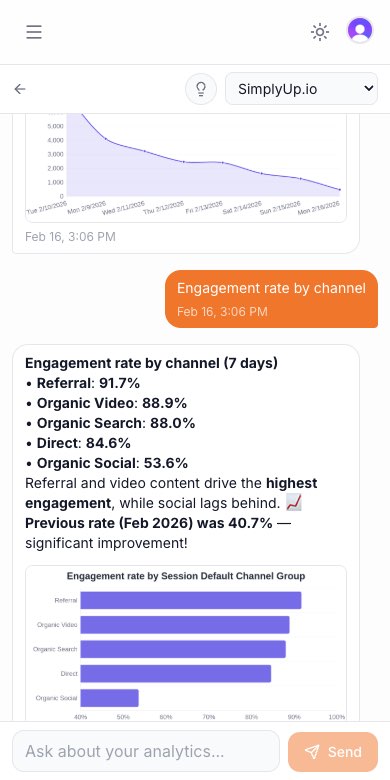
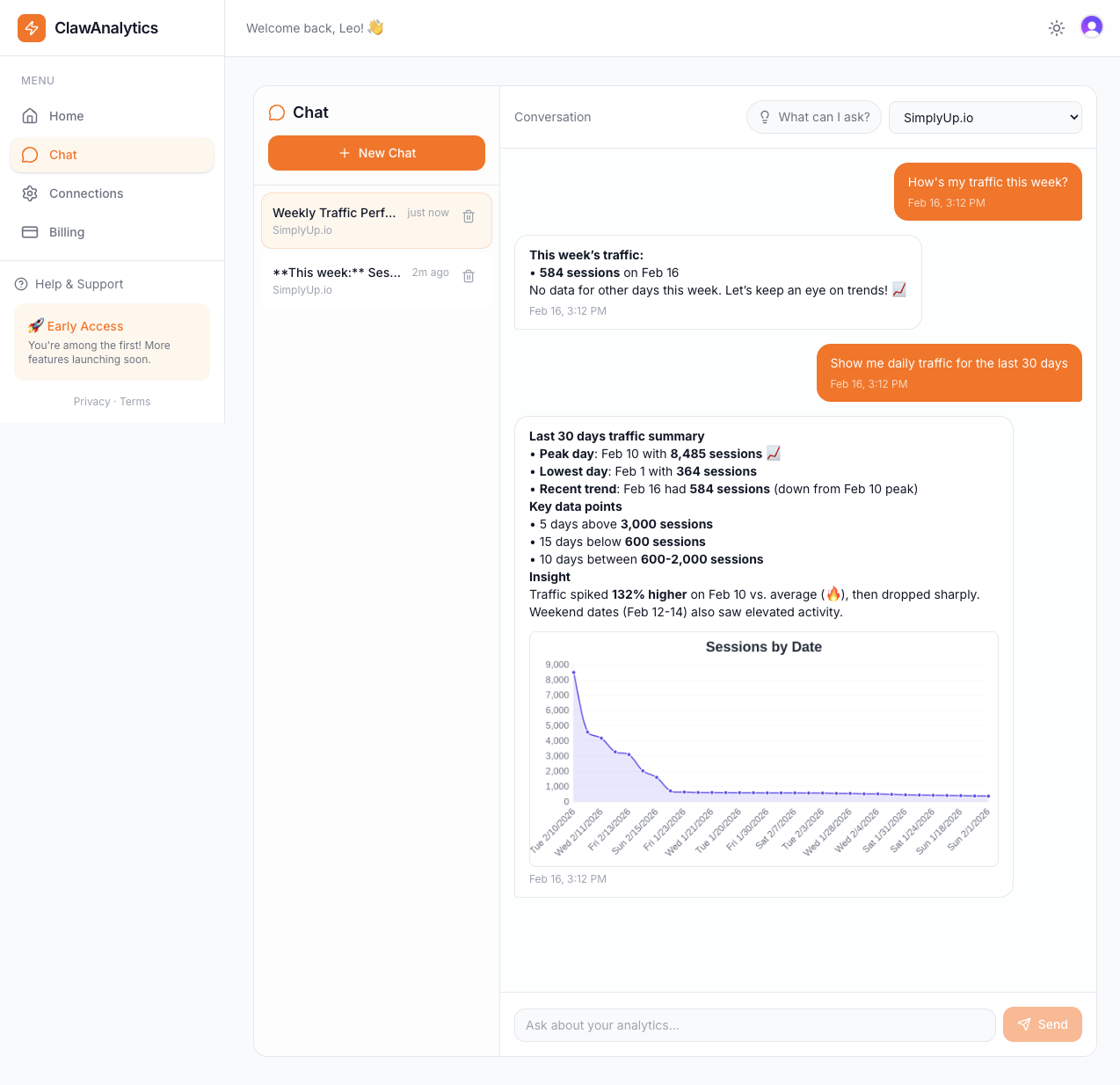
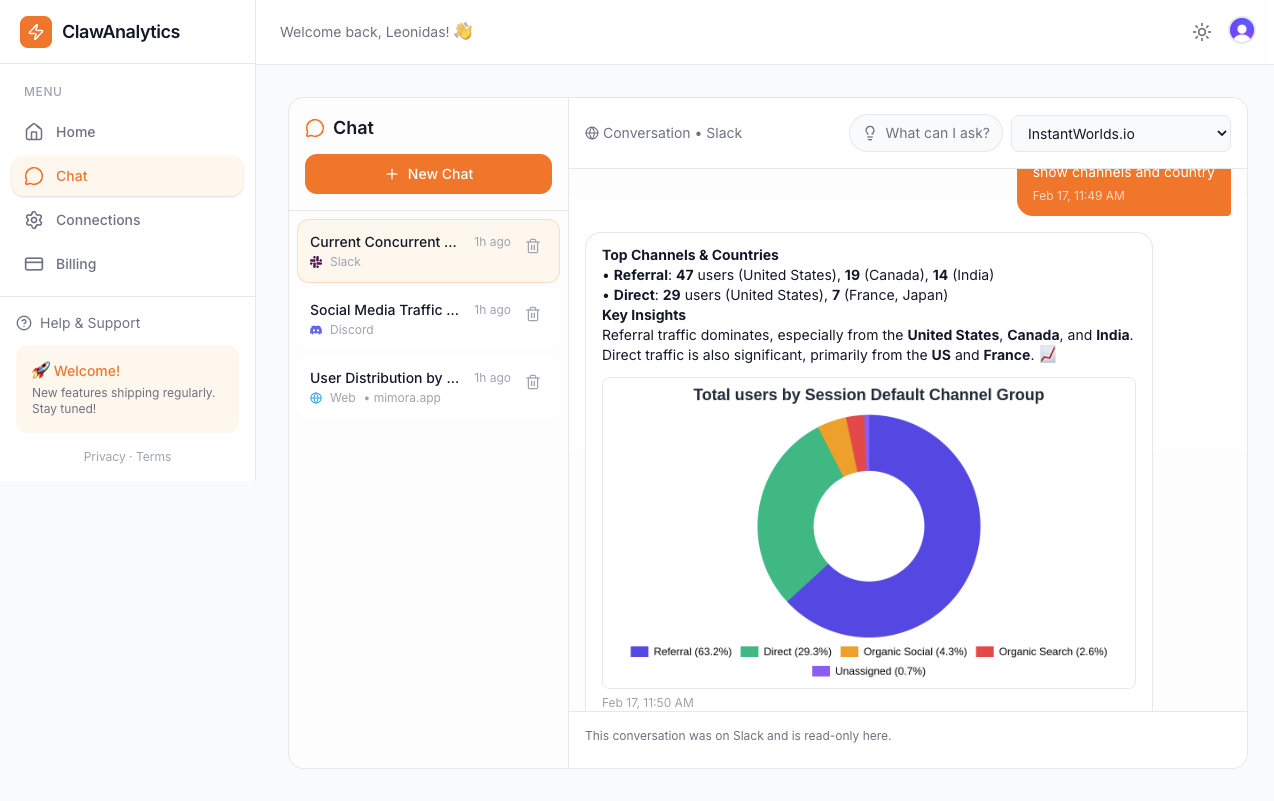
ClawAnalytics simplifies page speed monitoring by consolidating your Core Web Vitals data into one dashboard. You can see at a glance whether your homepage, services page, and quote form are performing well.
For example, you might ask:
- “Which page on my site has the slowest load time this week?”
- “Is my mobile page speed improving after the recent updates?”
- “Are there specific pages where users are bouncing due to slow loads?”
ClawAnalytics sends alerts when page performance degrades, so you know immediately when something breaks rather than discovering it through lost customers.
Quick Wins
Compress your images. Moving company websites often have large photos of trucks and teams. Use WebP format and compress images to reduce file sizes by 30-50% without visible quality loss.
Enable browser caching. Set caching headers so repeat visitors don’t re-download every asset on each visit. This can cut load times in half for returning customers.
Minimize JavaScript. Review your tracking scripts, chatbots, and third-party widgets. Each one adds load time. Remove unnecessary plugins and defer non-critical scripts.
Use a content delivery network. CDN services cache your content globally, serving files from servers closest to each visitor. This dramatically speeds up delivery for customers in different regions.
Start with these fixes and recheck your load times monthly. Even small improvements can mean the difference between a booked move and a lost customer.