Music Schools

How to Track Page Load Time for Music Schools

Learn how music schools can monitor page load time to attract more students and grow their programs.

How to Track Page Load Time for Music Schools

An adult learner searches “piano lessons near me” and clicks your school. They want to see available times, pricing, and teacher backgrounds. But your teacher bios are slow to load. They get frustrated and checks the next school instead.

That student could have been taking lessons from you this week. Slow website speed silently pushes potential students to faster competitors.

Why Page Load Time Matters for Music Schools

These points directly impact your student enrollment:

  • Research-heavy decisions: Music lessons require commitment. Prospective students browse teacher bios, lesson formats, and pricing. Slow sites lose them mid-research.

  • Parent decision-making: Parents choosing music education for kids are particularly thorough. Slow sites signal outdated or unprofessional operations.

  • Multiple instrument interest: Visitors often explore several instruments. Fast navigation between instrument pages keeps them engaged.

  • Trial lesson conversions: Free trial lessons are a major entry point. Slow signup forms directly reduce trial bookings.

  • Mobile learners: Adults often research on phones during commutes or breaks. Mobile speed is critical for reaching them.

How to Check in GA4

GA4 tracks music school pages through its Web Vitals reports:

  1. Open GA4 and go to the Engagement section
  2. Click on Web Vitals to access Core Web Vitals data
  3. Filter by pages like “/piano,” “/guitar,” “/teachers,” or “/book”
  4. Check LCP for your homepage and lesson information pages
  5. Look at FID for trial lesson signup forms
  6. Compare load times to booking conversion rates

This helps you understand how speed affects actual trial sign-ups.

The Easier Way

ClawAnalytics makes music school speed tracking simple and effective.

For a music school, ClawAnalytics answers questions like:

  • “Which page causes most visitors to leave before booking a trial?”
  • “Is my teacher bio page fast on mobile during evening hours?”
  • “Did my new booking system slow down lesson sign-ups?”

You’ll receive alerts when key pages slow down and clear recommendations on what to fix. No technical expertise required.

Quick Wins

Here are fast ways to improve your music school site speed:

  • Optimize teacher photos: Use compressed WebP images for instructor headshots. They should load instantly.

  • Streamline booking forms: Only ask for essential information. Long forms cause mobile users to abandon.

  • Lazy load audio samples: If you have music samples, load them only when users click play. This saves significant load time.

  • Use a fast booking system: If using third-party scheduling software, ensure it’s optimized for mobile performance.

  • Minimize JavaScript: Remove unused scripts and plugins. Every unnecessary element slows your pages.

Focus on your trial lesson signup page—that’s where slow speed costs you most directly.
Check your analytics from anywhere

On your morning commute. At a coffee shop. In a meeting. Pull up your analytics on any device and get instant answers.

  • Web dashboard on desktop & mobile
  • Discord bot for team channels
  • Slack integration for your workspace
  • MCP server for AI agents (Claude, Cursor)
See your traffic in 60 seconds →
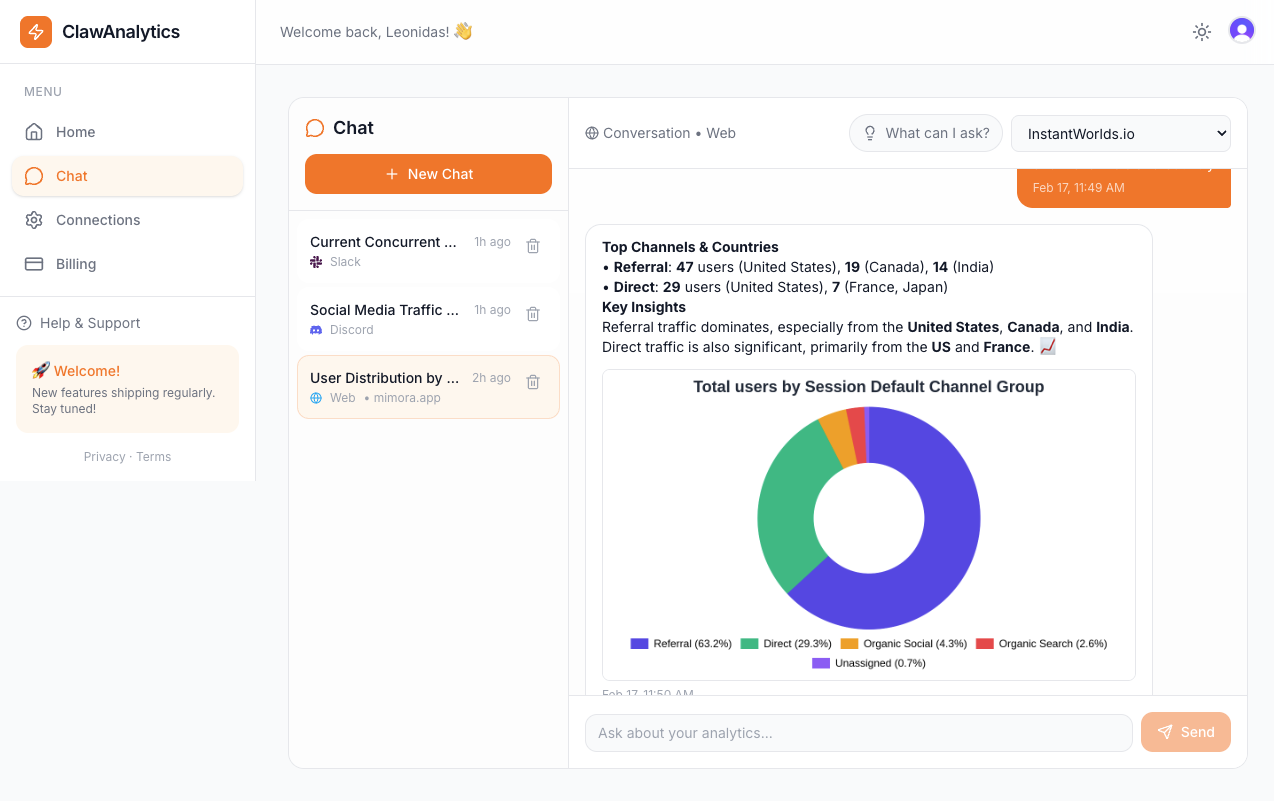
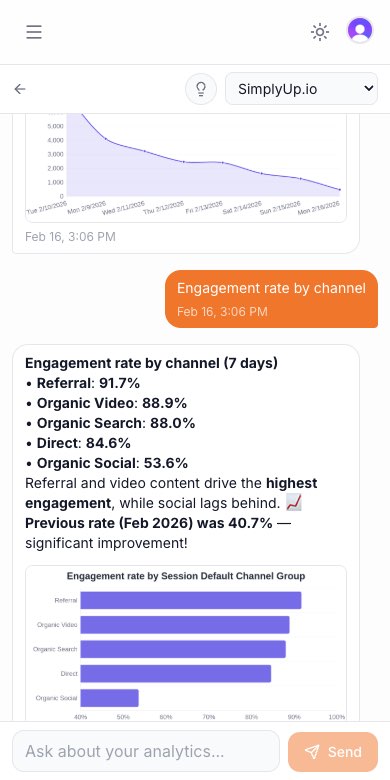
ClawAnalytics mobile chat showing engagement rate breakdown with charts

How ClawAnalytics helps

Skip the dashboards. Get answers in seconds.

🔗
1

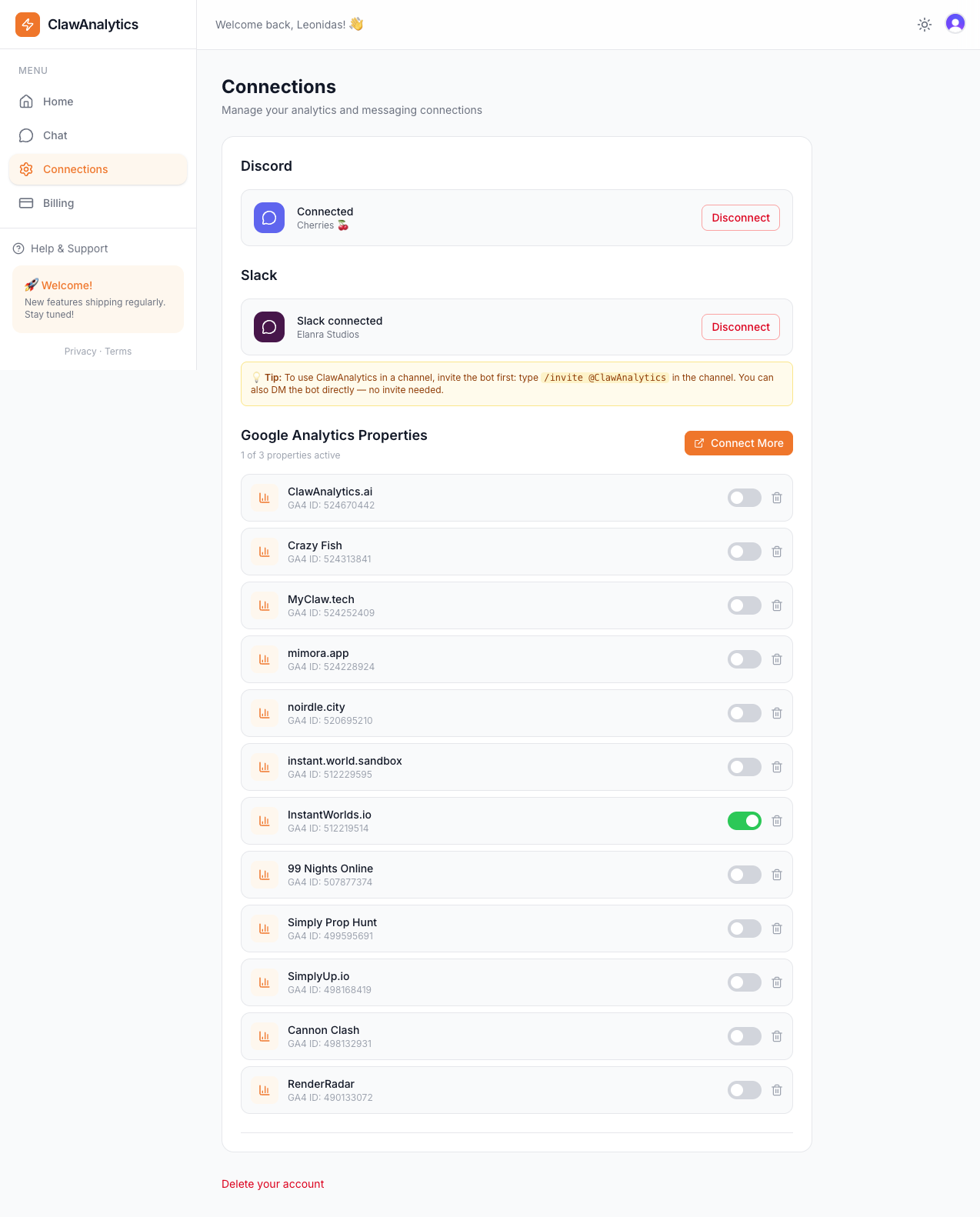
Connect GA4

One-click OAuth. Read-only access. Takes 30 seconds to link your Google Analytics property.

ClawAnalytics connections page showing Google Analytics properties linked
💬
2

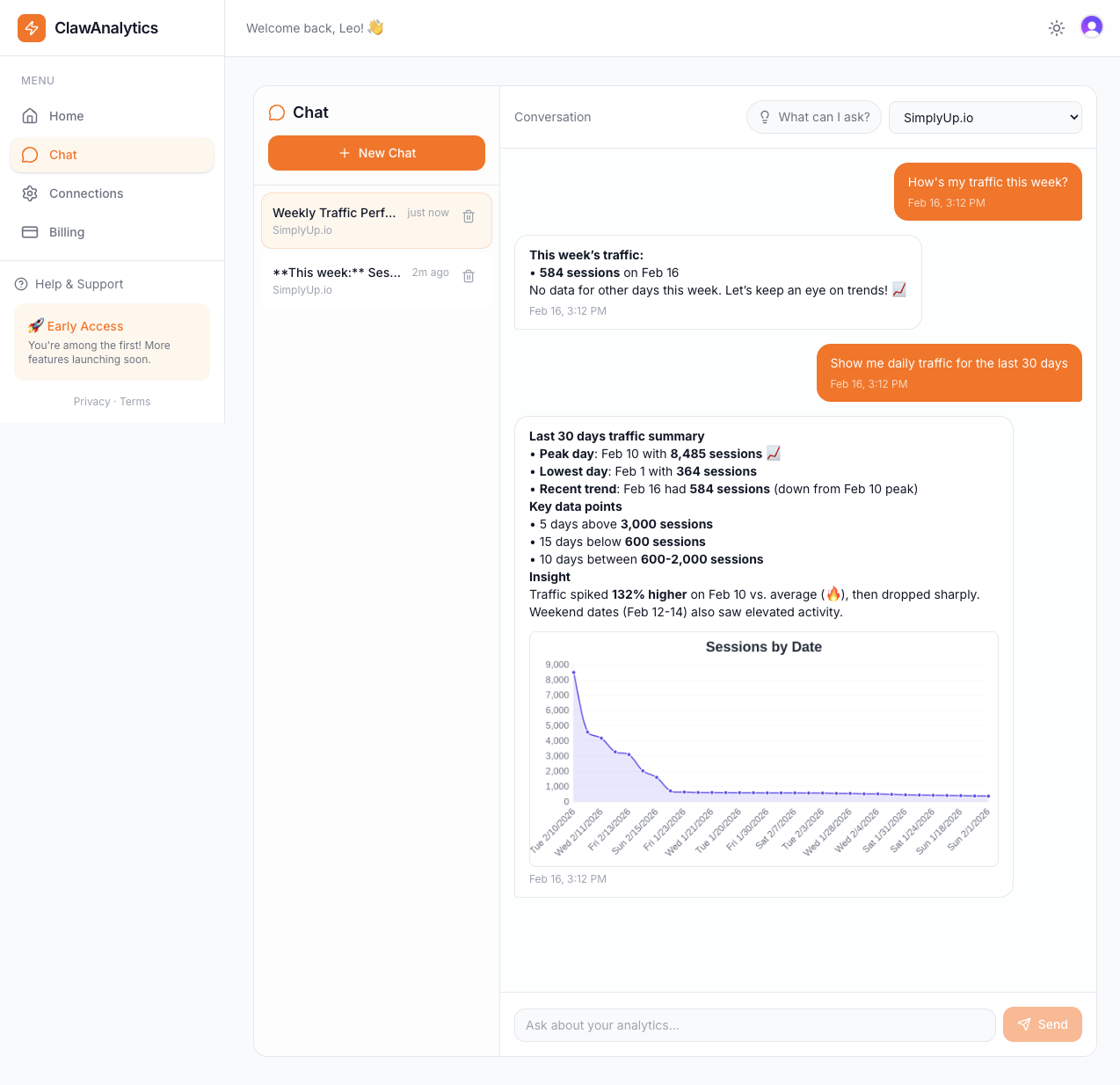
Ask questions

Type in plain English. No query language, no filters, no date pickers. Just ask what you want to know.

ClawAnalytics chat interface with natural language query
📊
3

Get answers with charts

Instant responses with visualizations. Share charts with your team or export the data.

ClawAnalytics showing chart response to analytics query

See it in action

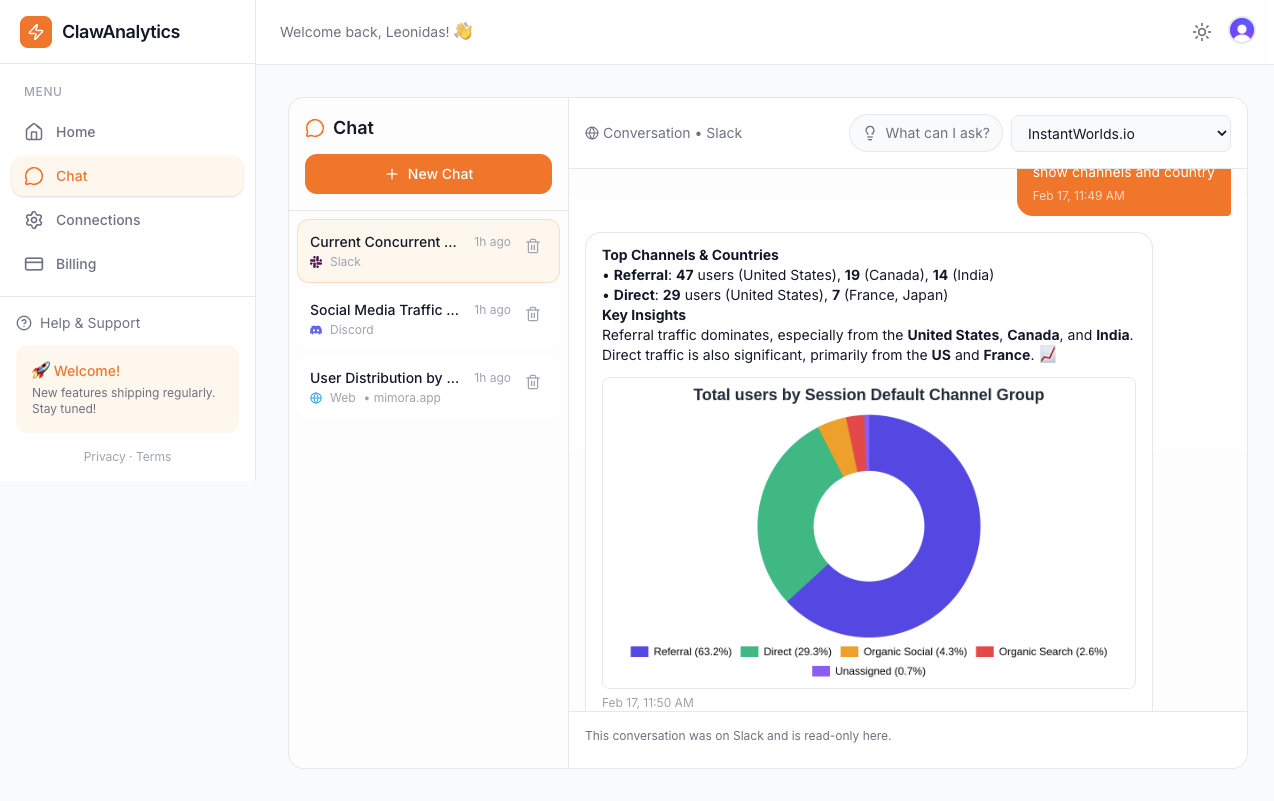
Ask a question. Get a chart. That simple.

ClawAnalytics Chat
ClawAnalytics chat interface showing a natural language analytics query with chart response

Works on web, Discord, and Slack. Also available as an MCP server for AI agents.

Leonidas Maliokas
"I used to open Google Analytics 5 times a day and still miss things. Now I get a summary every morning and ask follow-ups when something looks off. Takes 10 seconds instead of 10 minutes."

Leonidas Maliokas

Founder, Elanra Studios

🎮 5 games monitored 💼 3 businesses

Simple, honest pricing

Start free. Upgrade when you're ready.

Free

Try it out

$0 /month
  • 5 websites
  • 30 questions/month
  • Web dashboard
  • No credit card
Start Free

Website

For small businesses

$9 /month
  • 5 websites connected
  • 100 questions/month
  • Daily morning summary
  • Web dashboard + Discord
Get Started

Business

For agencies and portfolios

$79 /month
  • Unlimited websites
  • 2,000 questions/month
  • Everything in Pro
  • ✅ API access
  • ✅ MCP integration
  • ⭐ Priority support
Get Started

Stop opening dashboards.
Start asking.

Connect Google Analytics in 30 seconds. Get answers from the dashboard or Discord. Start free — no credit card needed.

Try it free — ask your first question
30-second setup Free plan available Cancel anytime

Got questions?

Why does page load time matter for music schools?
Parents and adult learners research music lessons online. Slow sites lose them to competitors with faster, more modern websites.
How do I check my music school site speed in Google Analytics?
In GA4, use the Web Vitals report under Engagement to see load times for your lesson pages, teacher bios, and booking forms.
Can ClawAnalytics help music schools track performance?
ClawAnalytics monitors your lesson booking and instructor pages so you can fix speed issues before they cost you students.

Related guides

More resources to help you get the most from your analytics.