Agency websites live or die by how effectively they demonstrate expertise across multiple touchpoints. Low page view counts often signal that visitors find one page, conclude the agency is not the right fit, and leave without exploring the full offer.
Why Page Views Matter for Agencies
Every page view represents an opportunity to build trust and move a prospect closer to reaching out. A visitor who views only your homepage sees one message. A visitor who views your homepage, two case studies, and a service page has seen three proof points for your expertise.
Agencies with blog-driven content strategies see 3x more page views than those relying solely on service pages. Each blog post becomes an entry point for organic search traffic and a pathway to conversion pages through internal linking.
Portfolio-heavy agencies often struggle with page views because visitors land on case studies and have nowhere logical to go next. Adding clear next steps and related projects keeps prospects engaged longer.
What Causes Agencies Issues with Page Views
No internal linking strategy. Service pages exist in isolation with no connections to relevant case studies or blog content. Visitors have no reason to click deeper.
Weak blog-to-service connections. Blog posts end without calls to action or links to related services. The content builds authority but fails to convert readers into prospects.
Missing related content. Case studies do not link to similar projects. Visitors interested in one type of work never discover other relevant examples of your expertise.
Slow page load times. Multi-page browsing sessions drop significantly when pages take more than 3 seconds to load. Mobile visitors especially abandon slow sites after the first page.
No resource hub. Agencies without a library of guides, templates, or tools miss opportunities for repeat visits and deeper engagement.
How to Track It
In GA4, navigate to the Pages and screens report to see your top-performing pages by view count. Sort by views and look for patterns: which entry pages lead to longer sessions and which cause immediate bounces.
Create a custom exploration comparing pages per session by traffic source. This reveals which channels drive engaged visitors versus casual browsers. If LinkedIn traffic averages 5 pages per session but Twitter/X averages 1.5, adjust your content distribution accordingly.
Set up a segment for “converters” and compare their page view patterns against the overall average. Identify which pages consistently appear in their journey and prioritize making those pages more prominent.
Quick Wins
-
Add “Related Case Studies” sections to every case study page. Link to 2-3 similar projects with brief descriptions of what makes each relevant.
-
Create service-to-blog bridges. Write blog posts addressing common client questions and naturally link to the services that solve those problems.
-
Build a resource hub. Collect useful templates, checklists, or guides that require multiple pages to access. This creates a reason for visitors to return and explore more.
-
Audit internal links monthly. Use GA4’s link analysis to find orphaned pages with no inbound connections from other site content.
How ClawAnalytics Makes This Easy
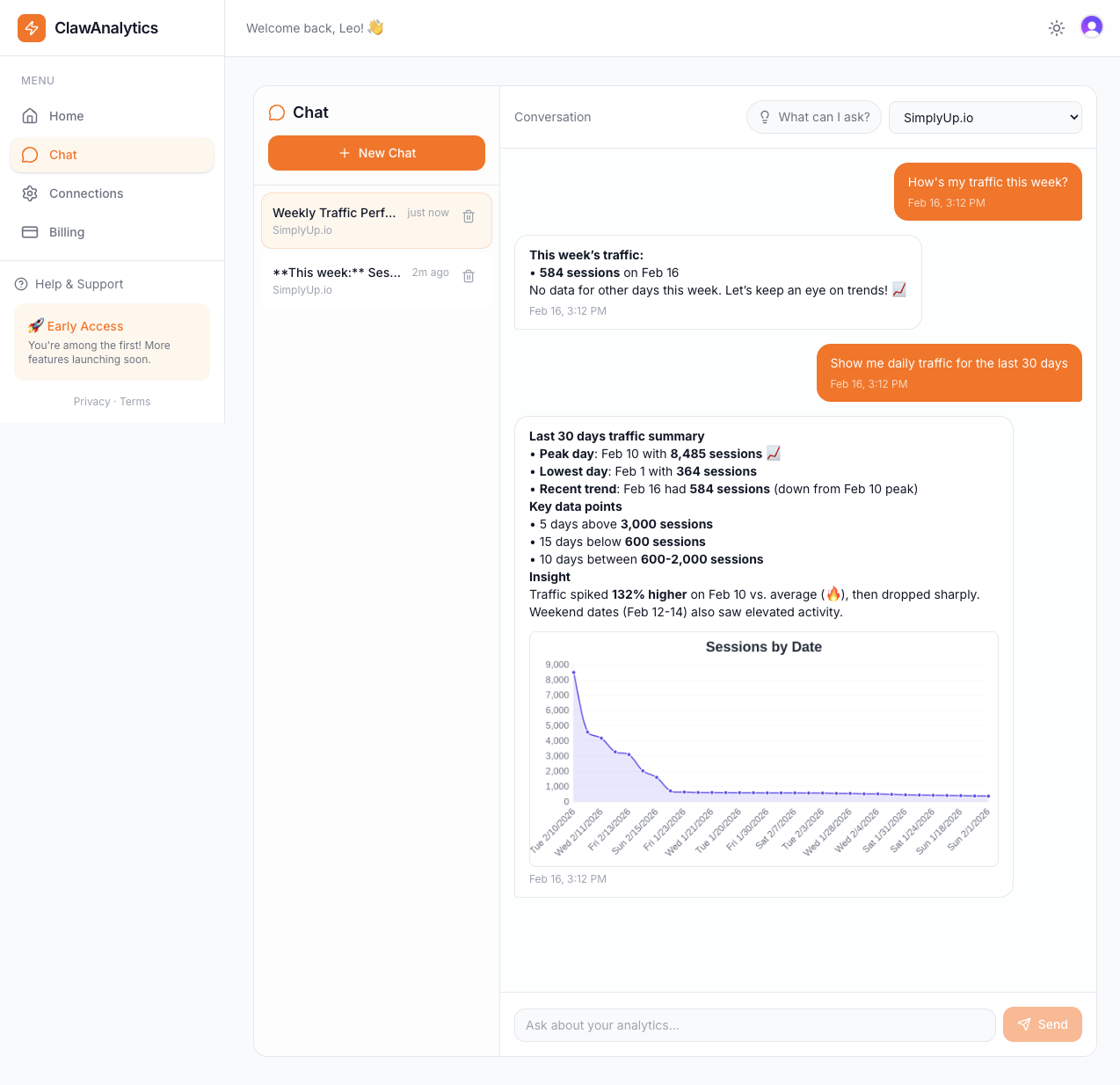
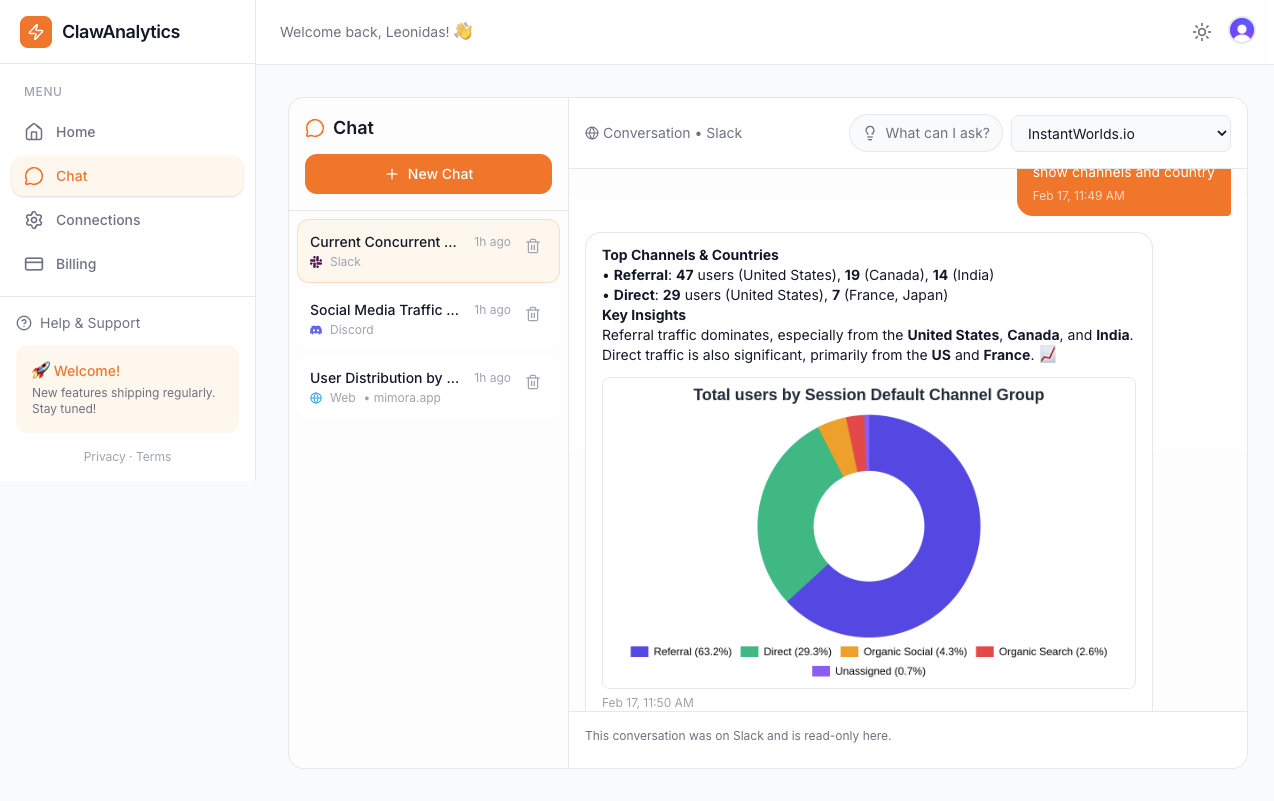
Instead of digging through GA4 reports, ask ClawAnalytics: “Which of my service pages should link to more case studies?” The AI analyzes your actual traffic patterns and suggests specific internal linking improvements based on what drives conversions for similar agencies.
You also get instant answers to questions like “Which blog posts are most visited but have no service page links?” This helps you prioritize content updates that actually impact business results rather than guessing what might work.