How to Track Page Views for SaaS
A software buyer does not click “buy now” after viewing one page. They check features, compare pricing, read how it solves problems, look for customer stories, and maybe read the documentation. Page views track this research journey. Each page view is a step toward that moment they trust your software enough to start a trial.
Why Page Views Matter for SaaS
Page views count every page a visitor loads. In SaaS, this measures how thoroughly prospects research before converting to a free trial or demo request.
Here is the dollar example: A SaaS company with 6,000 monthly visitors averaging 3 pages per session generates 18,000 page views. At a 3% trial conversion rate with 20% trial-to-paid conversion and $100/month average contract value, monthly revenue attributed to web traffic is roughly $36,000. Improving page views to 5 per session increases product exposure. Even at the same conversion rates, the additional touchpoints typically lift trial conversion to 5%, resulting in roughly $90,000 monthly revenue.
Low page views might mean traffic landing on the wrong pages or content that does not address buyer concerns. High page views with low conversions might mean visitors reading but not finding what they need to commit.
What Causes SaaS Issues with Page Views
Disconnected navigation. If visitors cannot naturally flow from problem awareness to solution to pricing, they view one or two pages and leave. Each section should link logically to the next.
Missing social proof. Software purchases require trust. No case studies, customer logos, or testimonials mean visitors keep searching for proof rather than moving to conversion pages.
Confusing pricing presentation. SaaS pricing should show tiers clearly. Visitors who cannot quickly understand what each tier includes navigate away without viewing more pages.
No clear next steps. Every page should guide visitors toward the next step. Without clear CTAs or links to trials, visitors reach a dead end.
Technical content without business context. Blog posts bringing traffic that never views product pages indicate a content-to-product funnel problem. Great content needs clear paths to your software.
How to Track It
Set up Google Analytics 4 to track page views on your SaaS website with specific attention to conversion path analysis.
Install GA4 with enhanced measurement. Create a “Pages per Session” report showing this metric segmented by traffic source: organic search, paid ads, and direct traffic should all be compared.
Track the funnel: Home to Features to Pricing to Trial Signup. Where page views drop off tells you exactly where the funnel leaks.
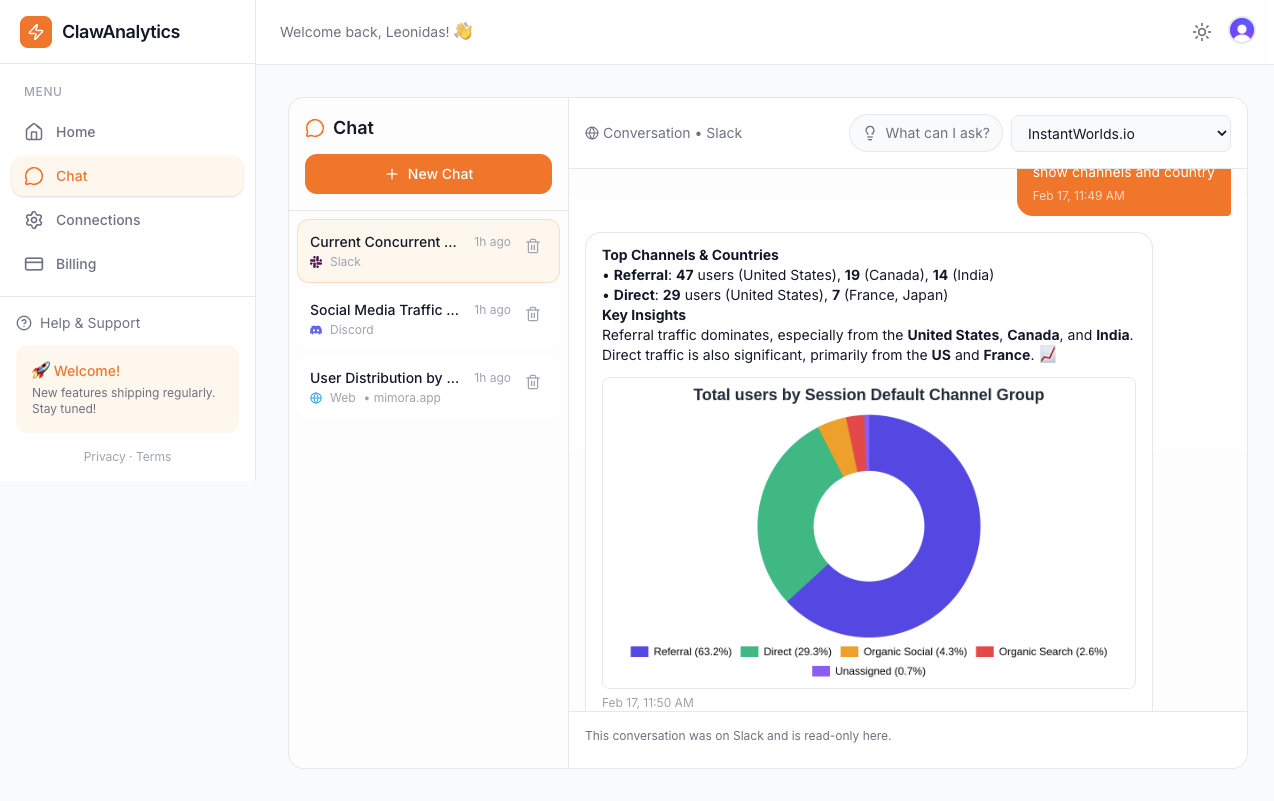
Add ClawAnalytics to see what visitors search for on your site. If prospects search “enterprise features” or “API documentation” and bounce, they need those pages or clearer navigation to them. Example: if demo requesters commonly search “integration” before converting, add integration details prominently to your product page.
Set up custom events for key actions: “Viewed Pricing,” “Viewed Case Study,” “Started Trial.” This lets you see not just page views but meaningful engagement.
Quick Wins
-
Add customer logos on every page. Build trust continuously. Place logos in your header, footer, or sidebar so they appear everywhere.
-
Create pricing tier comparison. A clear table showing what is included at each level helps buyers self-select and move to signup.
-
Link blog content to product pages. Every blog post should include relevant calls to action or links to related product features. Do not let content stand alone.
-
Add “Related Features” sections. After visitors view a feature page, show them related capabilities. This keeps them exploring your product depth.