Pages per session measures how many pages a visitor views in one website visit. For ecommerce, this number tells you whether shoppers find what they want quickly or browse extensively before buying. Higher numbers often mean deeper engagement, but only if those extra pages lead to conversions.
Why Pages Per Session Matters for Ecommerce
Identify product discovery issues. Visitors who leave after viewing one page might not find what they need. Low pages per session with low conversion signals navigation or search problems.
Measure category engagement. Some product categories naturally get more browsing. Knowing which categories keep visitors exploring helps prioritize inventory and marketing.
Optimize cross-selling. Visitors who view multiple product pages are prime targets for recommendations. Higher pages per session creates more cross-sell opportunities.
Benchmark against competitors. Industry averages vary, but tracking your own pages per session over time reveals whether site improvements work.
How to Check in GA4
- Open GA4 and go to Reports > Engagement > Pages and Screens
- Find the Average pages per session metric at the top of the report
- Break down by traffic source or campaign to see which brings engaged browsers
- Compare pages per session for converters versus non-converters
- Set up a custom exploration to track this metric alongside conversion events
This data reveals how effectively your site keeps shoppers browsing.
The Easier Way
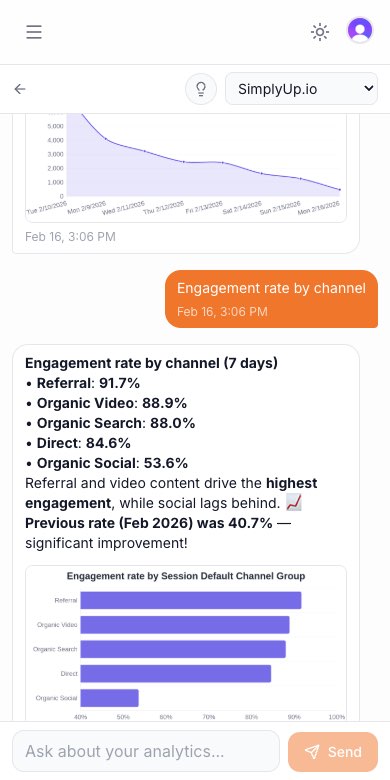
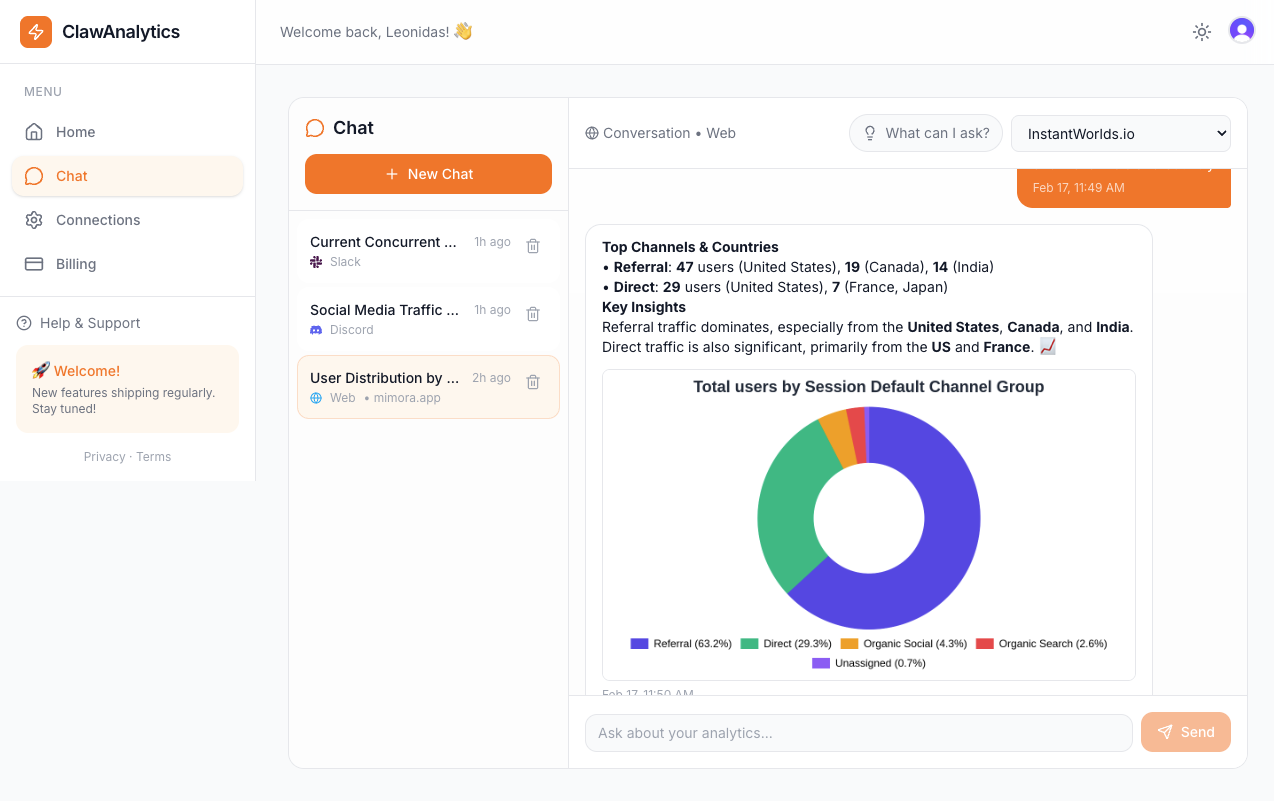
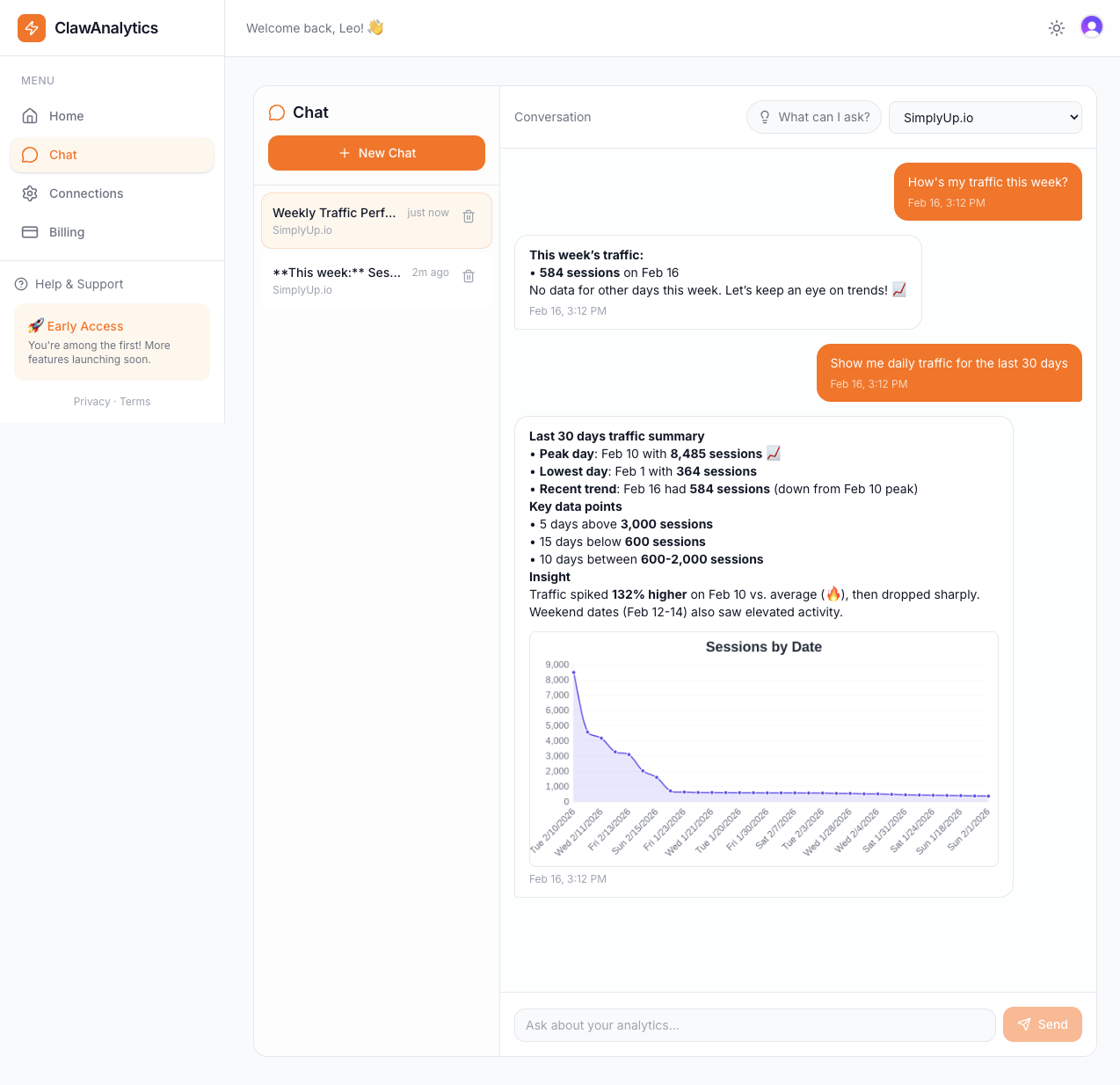
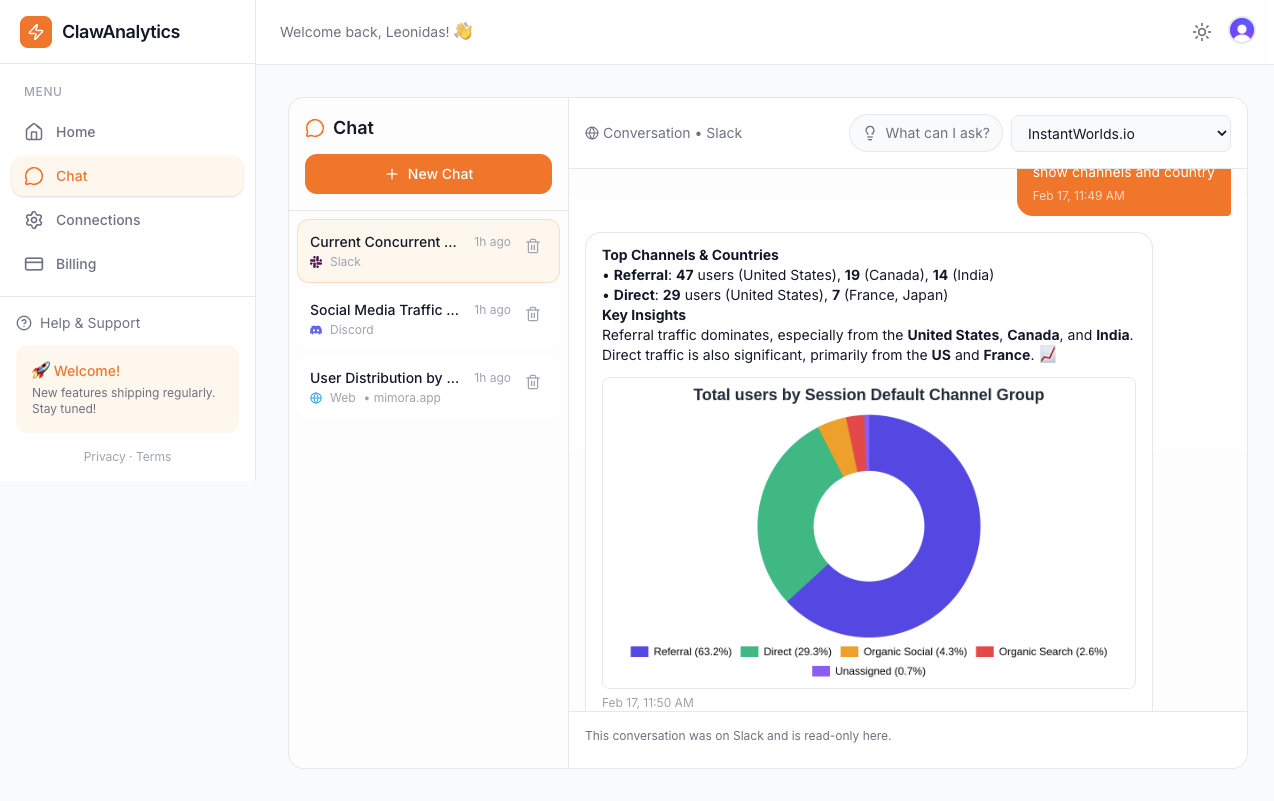
ClawAnalytics simplifies GA4 for ecommerce owners. You see instantly: how many pages do shoppers view before buying?
For example, you might find that customers who view 5+ pages convert at 3x the rate of single-page visitors. That insight justifies investing in product recommendations and category pages.
Another question ClawAnalytics answers: Which traffic sources bring the most engaged shoppers? If organic search visitors browse more pages than paid ads visitors, adjust your channel mix.
You can also ask: Does my new homepage layout increase pages per session? Test changes and track whether engagement improves.
Quick Wins
Improve category navigation. If visitors bounce after viewing one category page, add featured subcategories or popular products to encourage deeper browsing.
Add product recommendations. Show “customers also viewed” or “similar items” to increase pages per session and cross-sell opportunities.
Fix broken paths. Use GA4 to find high-exit pages. Add clear next steps or related product links to keep visitors engaged.
Test internal search. Visitors who use search often browse more pages. Make sure search results are relevant and easy to navigate.
Track your pages per session. Optimize for engagement. Increase conversions.