Imagine your university website is losing prospective students because they leave after viewing just one page. Every abandoned session costs you recruitment dollars. Now imagine you discover that program pages with related course links keep visitors on your site twice as long. This is the power of tracking pages per session.
Why Pages Per Session Matters for Education
Student Engagement Indicators: Pages per session tells you how deeply students and parents explore your content. A low count often means your navigation is confusing or content doesn’t match search intent.
Content Performance: You can identify which pages successfully drive further exploration. Course pages that link to scholarships, housing, and campus life naturally increase session depth.
Conversion Optimization: For education institutions, conversions mean applications, tour requests, or information downloads. More pages viewed typically correlates with higher conversion intent.
Cost Efficiency: Understanding session depth helps you allocate budget to the pages that actually work. You stop spending on pages that nobody visits beyond the entry point.
How to Check in GA4
- Open Google Analytics 4 and select your education property
- Navigate to Reports > Engagement > Pages and screens
- Look for the “Average pages per session” metric in the overview table
- Compare pages per session across different traffic sources to find patterns
You can also create a custom report filtering by user type (prospective students, current students, parents) to see engagement differences.
The Easier Way
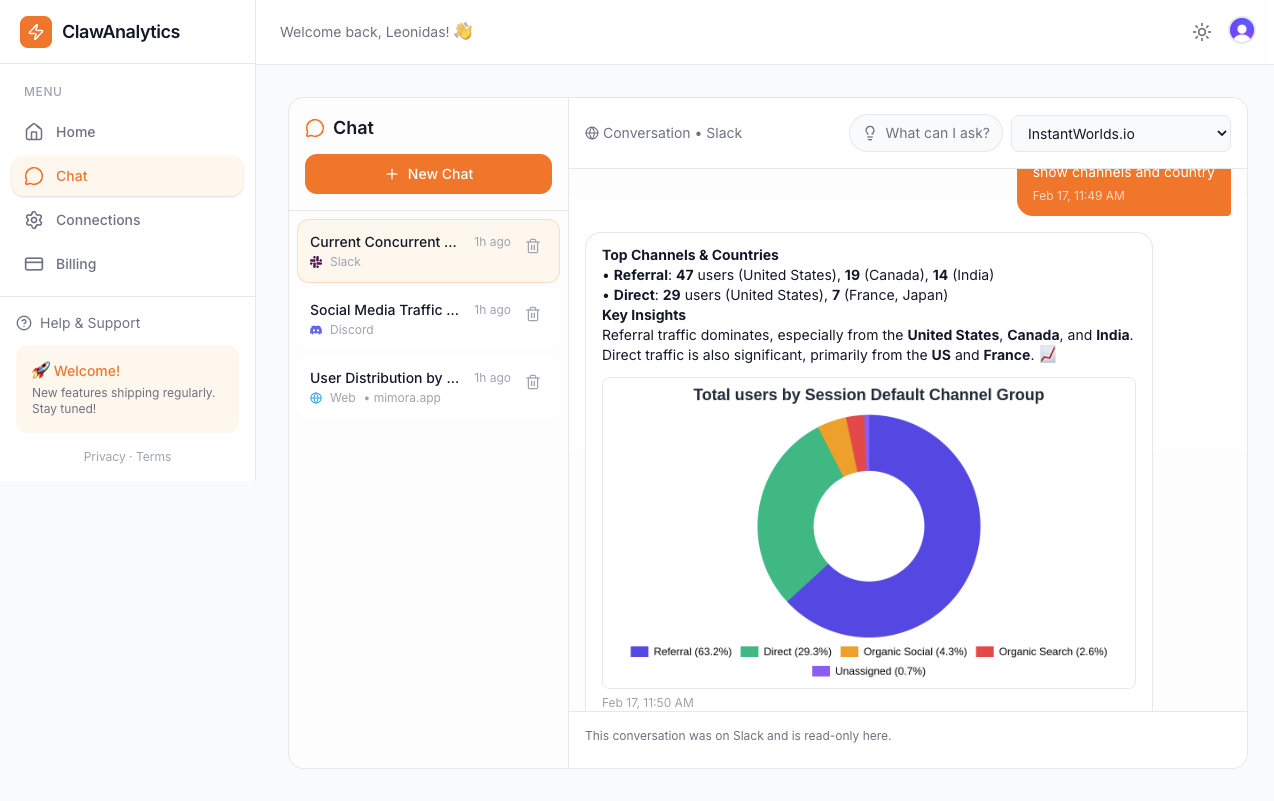
ClawAnalytics simplifies pages per session tracking with clear dashboards that highlight which content keeps visitors engaged. Instead of digging through complex GA4 reports, you see instantly which program pages need improvement.
Example questions ClawAnalytics answers:
- Which landing pages have the highest pages per session from organic search?
- How do pages per session trends change during enrollment periods?
- Which content updates actually improved session depth this semester?
Quick Wins
- Add related program links at the bottom of each course page to increase internal navigation
- Use breadcrumb navigation so students can easily move between academic departments
- Create topic clusters that connect related programs and increase natural page flows
- Monitor your pages per session weekly during peak enrollment to catch drops early
- Test different calls-to-action on low-engagement pages to encourage deeper exploration