How to Track Pages Per Session for Plumbers
Imagine a homeowner lands on your website at 9 PM. They need a plumber ASAP. They see your emergency service page, click to check your service areas, then look at your pricing. Three pages in five minutes. That is pages per session in action.
When customers view multiple pages, they are telling you they trust you. Tracking this metric helps you understand if your website is doing its job.
Why Pages Per Session Matters for Plumbers
It shows customer interest. If someone visits once and leaves, they might not have found what they needed. But three or more pages means they are researching you. More research usually means a phone call.
It reveals content gaps. Your plumbing website might get plenty of visits but low pages per session. That tells you people are not finding what they need. Add more service pages or helpful articles.
It improves conversion rates. Customers who read about drain cleaning, water heater installation, and emergency services understand your full offerings. They are more likely to book a job.
It helps you benchmark performance. Compare pages per session across months. If it drops, something changed on your site. If it rises, your new content is working.
How to Check in GA4
Google Analytics 4 makes this straightforward. Open your GA4 property and follow these steps:
- Log in to your GA4 account
- Navigate to Reports on the left sidebar
- Click Engagement then select Pages and Screens
- Look for the Users by Session section
- Find Average Sessions Dimensions showing pages per session
You can also create a custom report. Go to Explore, start a Blank Report, and add Pages Per Session as your metric. Filter by users who viewed more than two pages. This shows you engaged visitors specifically.
Set up alerts. In GA4, create an alert if pages per session drops below your baseline. This way you know immediately when something breaks.
The Easier Way
Let us be honest. Logging into Google Analytics every week takes time. ClawAnalytics was built for trade contractors who would rather run jobs than analyze data.
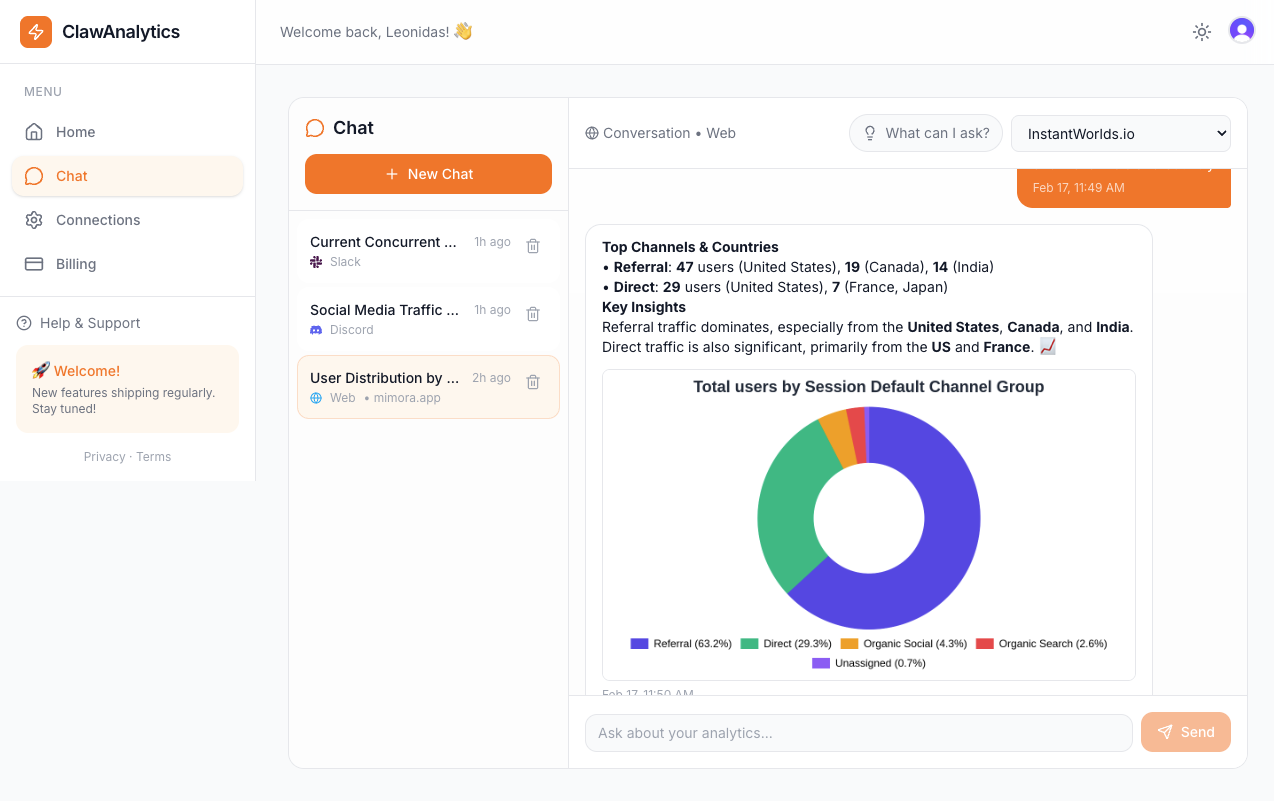
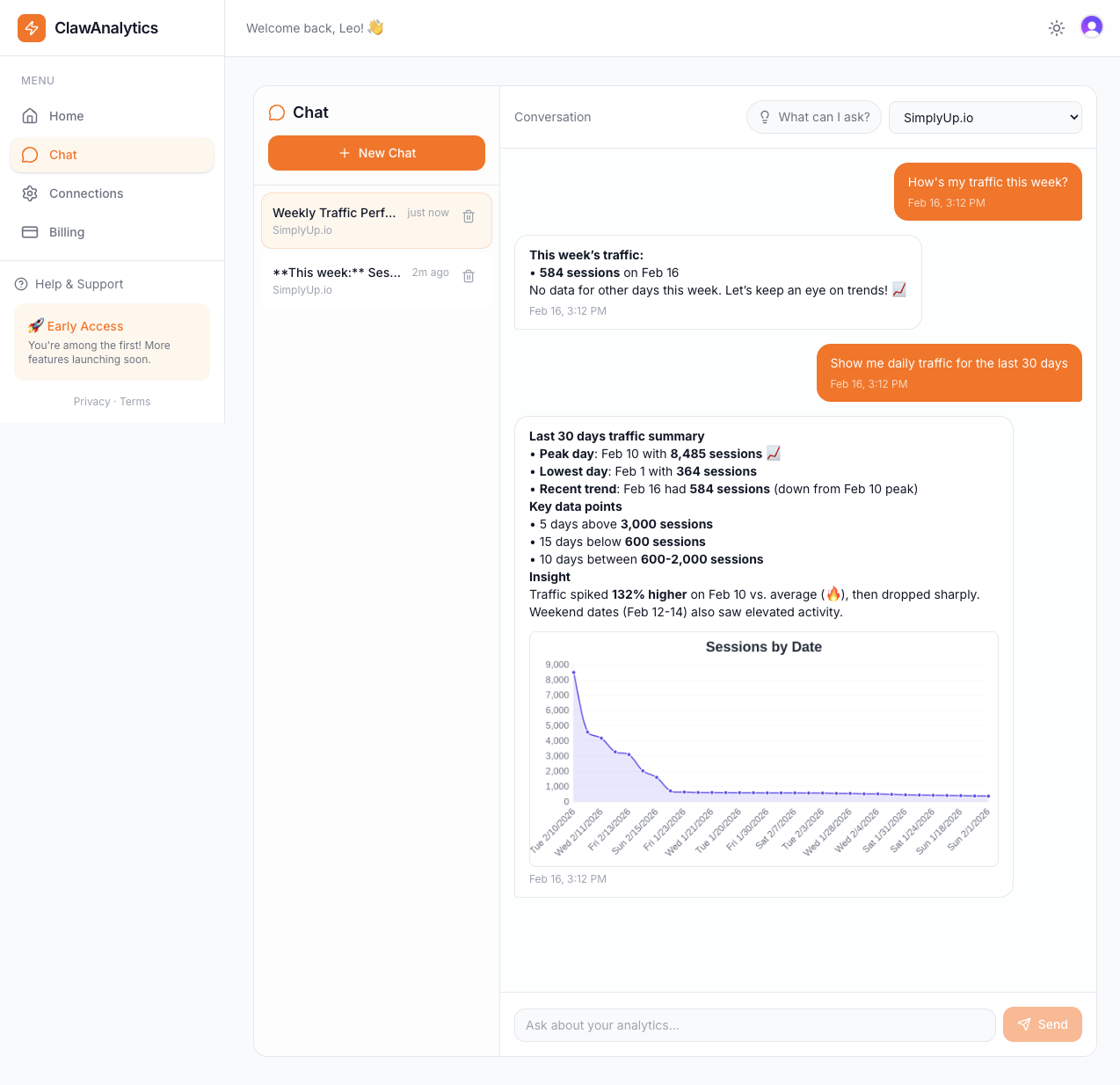
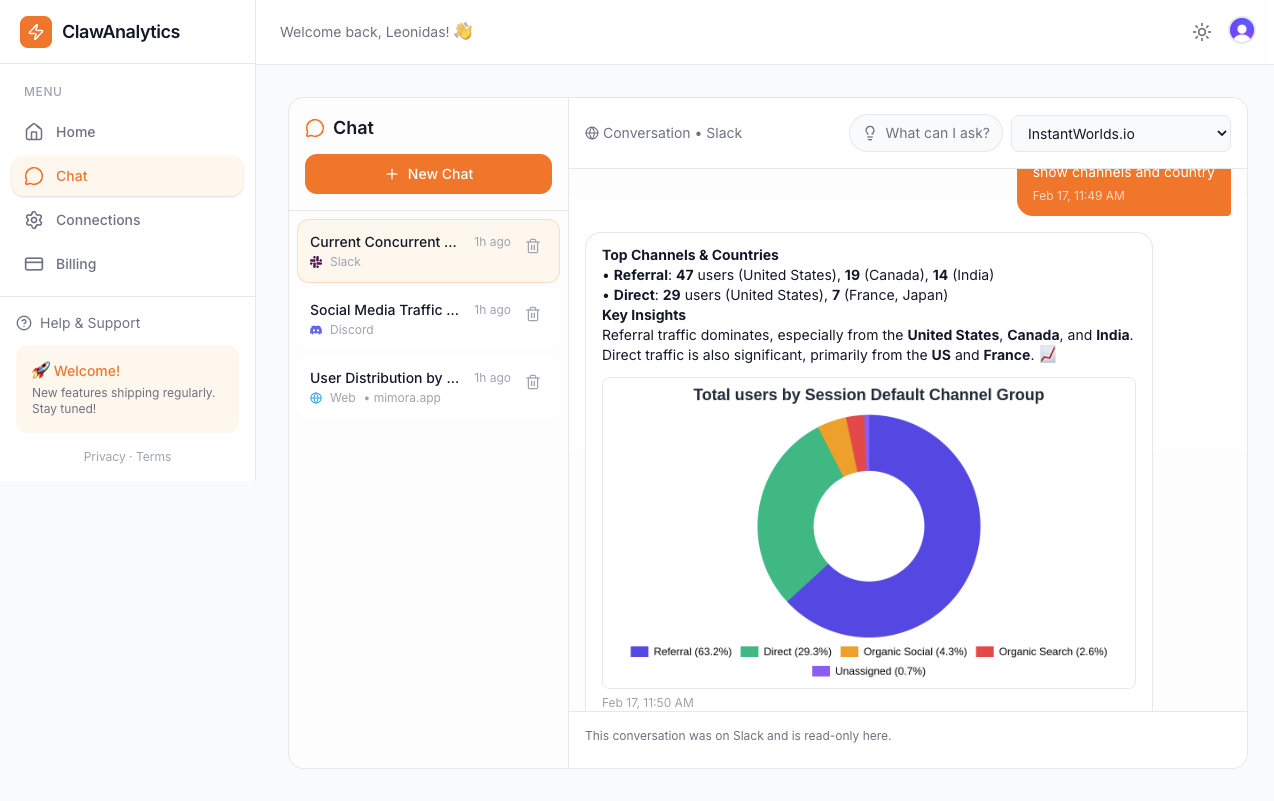
ClawAnalytics pulls your pages per session automatically. You see a simple dashboard with trends. No digging through reports.
For plumbers, ClawAnalytics answers questions like:
- Are customers reading my service pages?
- Which blog posts keep people on my site longer?
- Should I add a page for sewer line repairs?
You get actionable insights without becoming a data analyst.
Quick Wins
Add more service pages. If you only have one page for all plumbing services, split it up. Separate pages for water heaters, drain cleaning, leak repair, and pipe installation each get indexed by Google and keep visitors reading.
Use internal links. When you mention “water heater installation,” link to your water heater page. This guides visitors to more content and boosts pages per session.
Add a blog. Post about common plumbing problems, seasonal maintenance tips, and “how to” guides. Customers searching for answers land on your blog, then click to your services.
Make navigation clear. Put your services in a dropdown menu. Add a “Related Services” section at the bottom of each page. The easier someone can find more content, the more pages they view.
Track your pages per session every month. Watch for trends. When you add new content, see if numbers go up. That is how you know your website is working for your plumbing business.