How to Track Real Time Visitors for Fitness
Picture this: it’s 6 PM on a Tuesday and your busiest spin class is half-empty. Meanwhile, your yoga room is overflowing with people standing in the corner. Without real time data, you only discover this problem when the weekly report lands in your inbox. By then, you’ve lost a week of potential revenue and member satisfaction.
Real time visitor tracking changes this entirely. Fitness studios that monitor who is in their facility as it happens can immediately reallocate instructors, open additional class slots, or send a quick push notification to members saying “Spots available in tonight’s 6:30 PM yoga!” The data becomes actionable the moment it matters.
Why Real Time Visitors Matters for Fitness
Peak hour optimization. Different times of day bring different crowds. Morning workouts tend to attract serious early risers who want efficient, high-intensity sessions. Evening crowds often prefer longer, more social workouts. Knowing exactly when people arrive helps you schedule the right instructors for the right crowds.
No-show reduction. Fitness studios lose significant revenue when members book classes and never show up. Real time data lets you see exactly how many people have checked in versus how many are expected. If 10 people have not arrived 5 minutes before class starts, you can open those spots to waitlist members instantly.
Staff scheduling made simple. Instead of guessing how many front desk staff or personal trainers you need, real time visitor counts help you match staffing to actual demand. Slow Tuesday mornings might only need one receptionist while Friday evenings require three.
Equipment and space management. If your treadmills are always full at 7 AM but your rowers sit idle, real time tracking reveals these patterns. You can reposition equipment, create circuit zones, or schedule equipment-focused classes to balance usage.
How to Check in GA4
Google Analytics 4 offers real time reporting that can work for fitness businesses. Here’s how to access it:
- Open GA4 and click on “Real Time” in the left sidebar.
- The main dashboard shows “Active users right now” across your entire site or app.
- Use the “By event count” card to see which specific events are firing, such as check-ins or class registrations.
- The “By user” section shows details about individual users currently on your site.
The limitation is that GA4 real time data only shows what is happening in that exact moment. It does not save snapshots of who was there 30 minutes ago. You would need to keep the dashboard open constantly or export data frequently to capture trends.
The Easier Way
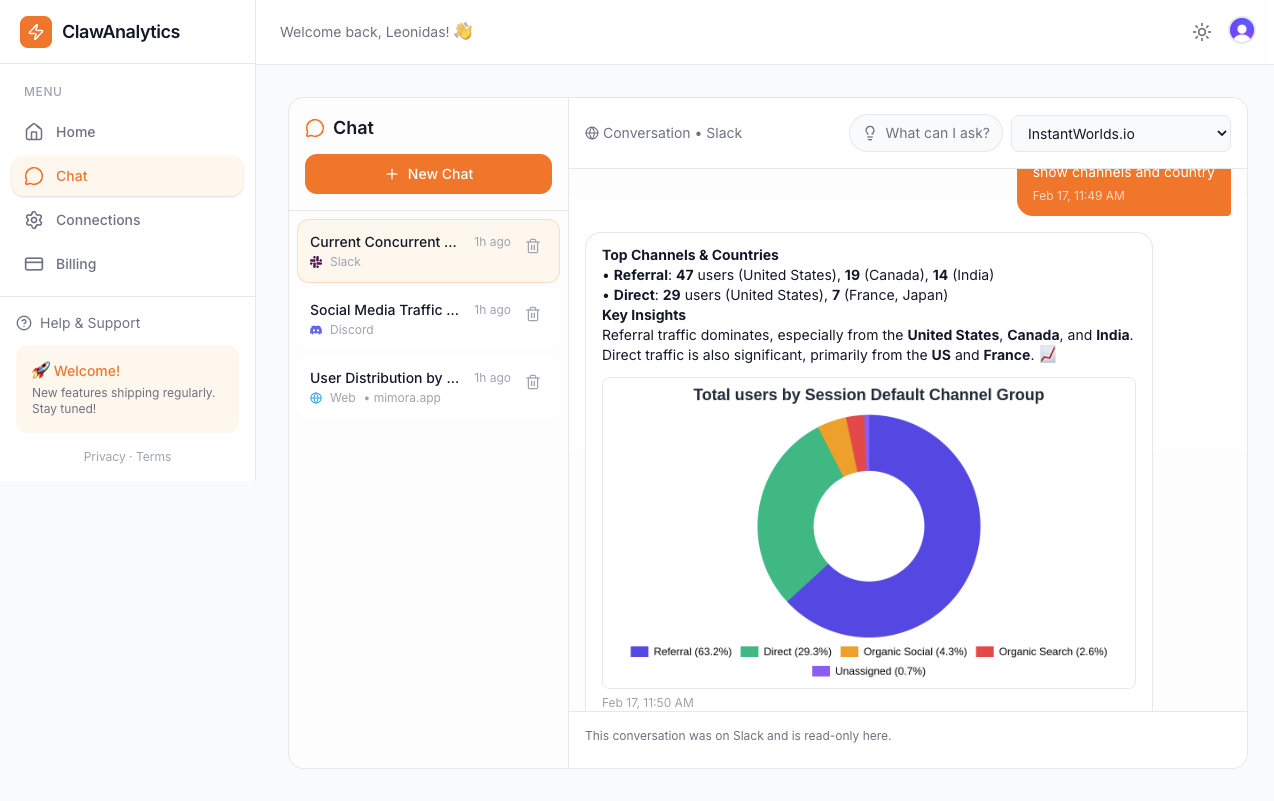
ClawAnalytics builds on GA4 data to give fitness professionals a much clearer picture. Instead of staring at a dashboard waiting for patterns to emerge, you get automated alerts and historical comparisons.
For example, you might discover that your Tuesday 6 PM spin class typically has 18 people but last week only had 12. ClawAnalytics can flag this drop automatically and suggest possible reasons, such as a competitor offering a promotional class at the same time.
You can also ask questions like:
- “What time do most of our members check in on Saturdays?”
- “Are we getting more visitors this month compared to last month?”
- “Which class generates the most real time traffic to our booking page?”
This approach turns raw data into answers you can act on immediately, without needing to be a data analyst.
Quick Wins
Start tracking real time visitors today with these simple steps:
Connect your booking system. If members book classes through your website, make sure those check-ins flow into your analytics. Most booking platforms integrate with GA4 or ClawAnalytics in just a few clicks.
Set up hourly snapshots. Even if GA4 real time view resets every few minutes, you can create a simple script to record visitor counts every hour and save them to a spreadsheet for comparison.
Create a “busy hours” cheat sheet. After two weeks of tracking, you will have enough data to know exactly when your facility is busiest. Print this schedule and post it where staff can see it for immediate scheduling decisions.
Use SMS or app alerts. When real time traffic exceeds a threshold you set, trigger a notification to your team so they can respond immediately.