Your website gets traffic but visitors leave almost immediately. You have spent money on ads, time on content, and effort on SEO. Yet most people see one page and disappear. A high bounce rate is not just a number in your dashboard. It represents real people who decided your site was not worth their time. Here are 15 ways to change that.
Understanding Your Bounce Rate First
Before fixing anything, know where the problem lives. Not all pages should have low bounce rates. A blog post that answers a quick question might naturally have a 75% bounce rate, and that is fine. A product page with 75% is a problem.
Open GA4, go to Engagement, then Pages and screens. Sort by bounce rate and focus on pages that should be converting visitors but are not. Those are your priorities.
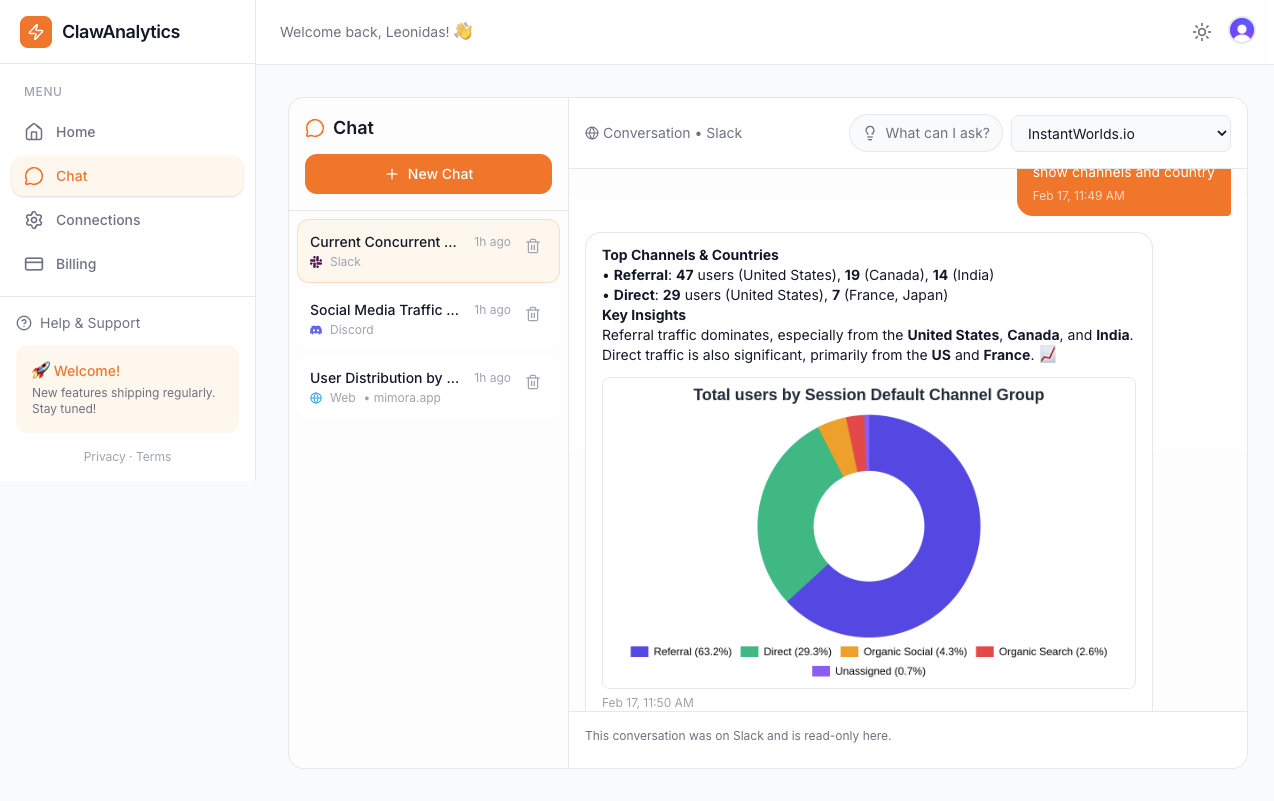
ClawAnalytics makes this faster. Ask “which landing pages have bounce rates above 70% and get more than 100 visits per month” to instantly find the pages worth fixing.
15 Ways to Lower Your Bounce Rate
1. Speed up your site. Every extra second of load time increases bounce rate by roughly 7%. Test your speed at PageSpeed Insights and fix what it flags. Start with image compression and removing unused scripts.
2. Match your headline to the search intent. If someone searches “best running shoes for flat feet” and lands on a generic shoe page, they bounce. Your headline should mirror what brought them there.
3. Put the answer above the fold. Do not make visitors scroll past three paragraphs of introduction to find what they came for. Lead with value.
4. Use clear visual hierarchy. Break up walls of text with headers, bullet points, bold text, and images. Scannable pages keep people engaged longer than dense paragraphs.
5. Fix mobile experience. Over half your traffic is probably mobile. If buttons are too small, text is unreadable, or the layout breaks on phones, those visitors are gone in seconds.
6. Add internal links that make sense. Link to related content naturally within your text. Give visitors a clear next step instead of a dead end.
7. Remove intrusive popups. A full-screen popup that appears before someone reads a single word is a guaranteed bounce generator. If you must use popups, trigger them on exit intent or after 30 seconds.
8. Improve your call to action. Vague buttons like “Learn More” or “Submit” do not motivate clicks. Be specific: “Get Your Free Quote” or “See Pricing Plans” tells visitors exactly what happens next.
9. Add social proof early. Customer reviews, client logos, or usage numbers build trust quickly. Place them near the top of the page where bouncing visitors will actually see them.
10. Make navigation intuitive. If visitors cannot figure out where to go next within five seconds, they leave. Keep your menu simple with clear labels. No clever names that confuse people.
11. Target the right keywords. High bounce rates sometimes mean you are ranking for the wrong searches. Check which queries bring traffic to high-bounce pages. If the intent does not match your content, adjust your targeting.
12. Use engaging media. A relevant video or interactive element can increase time on page significantly. Even a well-chosen image that breaks up text helps keep attention.
13. Check your fonts and readability. Small text, low contrast, or decorative fonts make reading painful. Use 16px minimum font size, high contrast colors, and clean typefaces.
14. Eliminate broken elements. Missing images, dead links, and error messages destroy credibility instantly. Run a monthly audit to catch these before visitors do.
15. Test different layouts. A/B test your highest-traffic pages. Sometimes moving a CTA button, changing a headline, or rearranging sections drops bounce rate by 10% or more without changing any content.
Track Your Progress
After implementing changes, monitor bounce rate weekly for each modified page. Use GA4 date comparisons to see if your changes made a difference. Give each change at least two weeks of data before judging results.
With ClawAnalytics, you can ask “how has the bounce rate changed on my homepage this month vs last month” to track improvements without digging through reports manually.
Quick Wins
-
Fix your slowest page first. Find your highest-traffic page with the slowest load time. Speeding it up gives you the biggest immediate impact.
-
Rewrite one headline today. Pick your top landing page and make the headline match exactly what visitors are searching for. This single change often drops bounce rate by 5% to 15%.
-
Remove one popup. If you have an aggressive popup on your homepage, disable it for two weeks and compare bounce rates. The data usually speaks for itself.
-
Add one internal link per page. Go through your top five pages and add a relevant link that guides visitors deeper into your site. Simple but effective.