How to Track Referral Traffic for Dropshipping
Your store just made five sales from Instagram. But which post brought those customers? Without tracking referral traffic, you’re guessing which marketing efforts actually pay off. For dropshippers running thin margins, every untracked source means lost optimization opportunities.
Why Referral Traffic Matters for Dropshipping
Dropshipping means you never see or touch products. Your customers buy based on trust, often from recommendations they find online. Referral traffic from trusted sources converts better than cold traffic.
First, referral traffic often costs less per acquisition. Influencers, affiliates, and review sites sometimes work on performance models. You pay only when their referrals convert, reducing upfront risk.
Second, referrals build credibility. When a trusted blogger recommends your product, visitors arrive pre-convinced. They convert at rates that paid ads rarely match.
Third, referral data reveals winning products. If a specific review or influencer drives consistent sales, that product data helps you decide what to add to your store next.
Finally, referrals scale predictably. Find one profitable affiliate or influencer, then replicate that relationship across similar creators. The playbook works repeatedly.
How to Check in GA4
Set up GA4 and install the tracking code on your store. Connect your Shopify or WooCommerce data streams so purchase data flows automatically.
In GA4, go to Traffic Acquisition. Filter by “referral” to see all incoming links. Look beyond just session counts. Focus on conversion rate and revenue per user to find quality sources.
Create custom dimensions for your affiliate codes. In GA4 Admin, add user properties that capture which promo code each visitor used. This lets you attribute sales directly to specific affiliates.
Set up conversion events for completed purchases. Track purchase revenue so you can calculate ROI per referral source. Sort by revenue to find your most profitable referrers.
Build audiences from top referral sources. In GA4, create remarketing audiences from visitors who came via high-converting referrals. Target these audiences with ads to increase their lifetime value.
The Easier Way
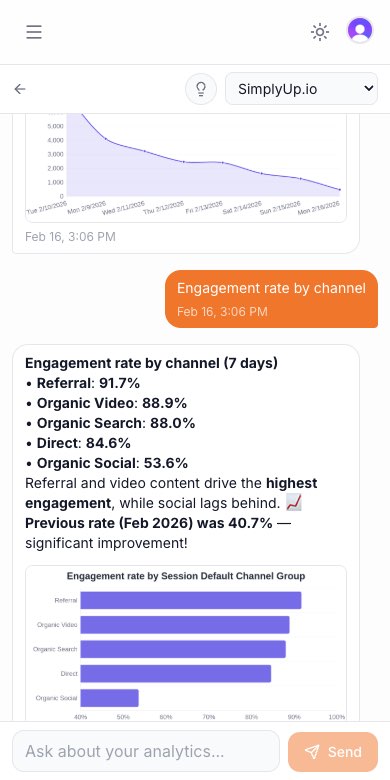
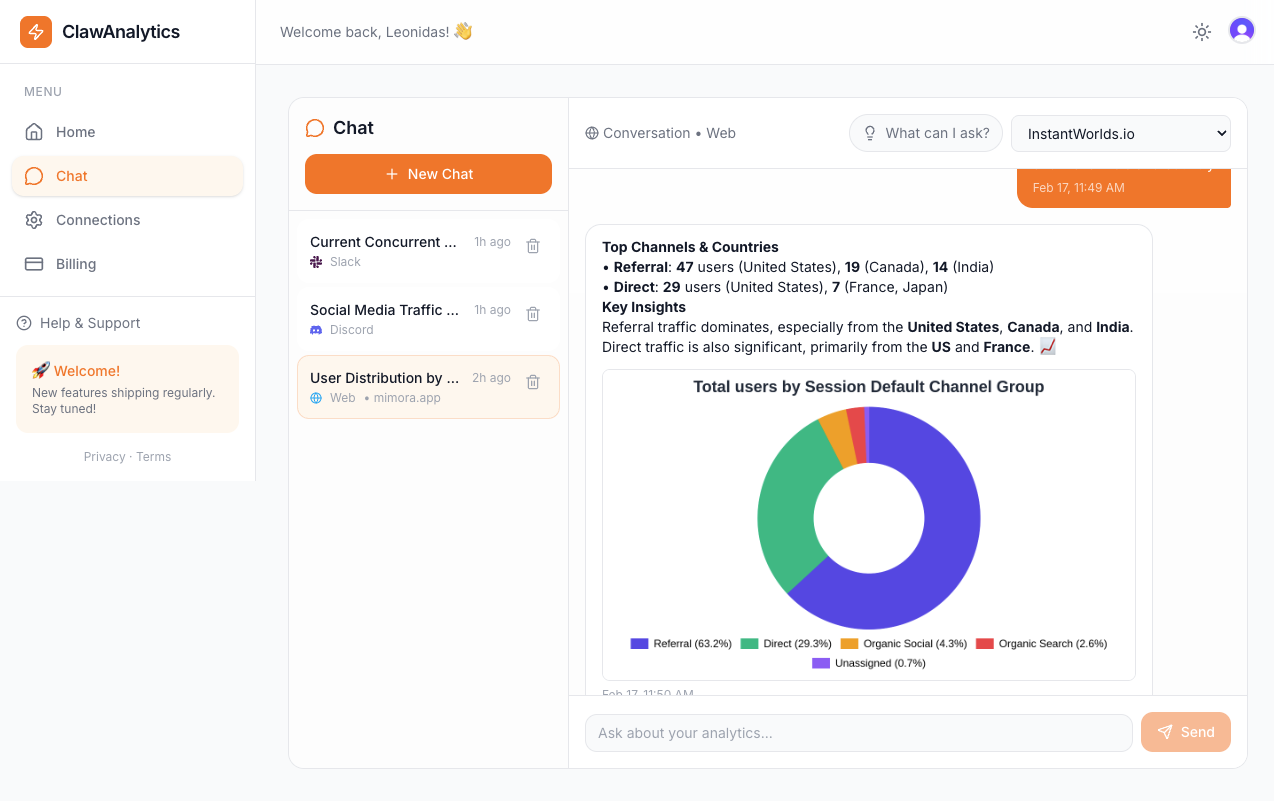
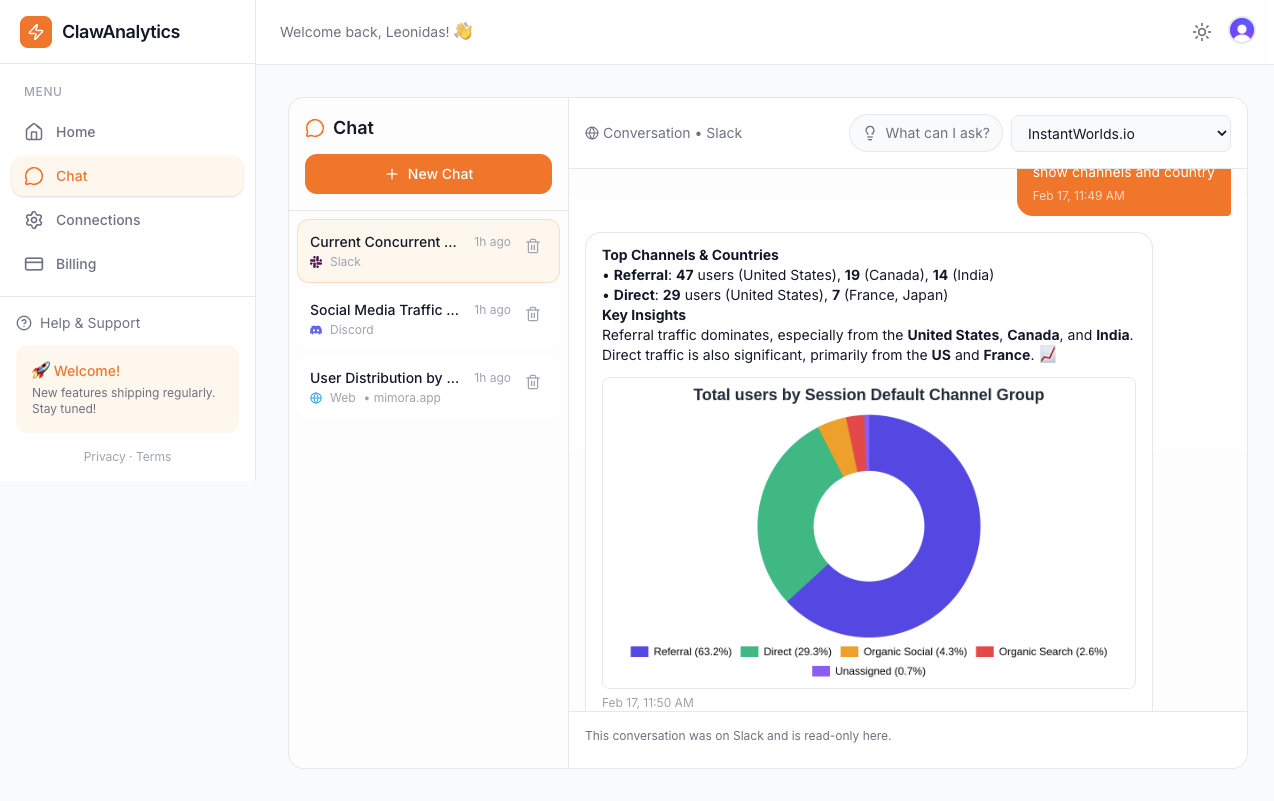
ClawAnalytics handles the complex attribution that dropshippers struggle with. When you’re working with dozens of affiliates and influencers, manual tracking breaks down.
The platform automatically connects referral sources to purchase data, showing you which affiliates actually make money. You see revenue, costs, and profit per referrer in one view.
For example, you might discover that Influencer A’s TikToks drive 20 sales per week while Influencer B’s YouTube reviews drive only 3, despite similar follower counts. ClawAnalytics reveals this difference instantly.
Questions the platform answers: Which affiliate’s audience has the highest average order value? Which review sites send customers who don’t return products? Which partnership delivers the best ROI after factoring in fees and returns?
This clarity helps you negotiate better deals with affiliates and cut relationships with underperformers.
Quick Wins
Create unique landing pages for major affiliates. Send each influencer or affiliate to a dedicated URL so you can track their specific performance without mixing their traffic with other sources.
Negotiate performance-based deals. Ask affiliates to accept payment only when their referrals result in sales. This aligns incentives and reduces risk for your business.
Build an affiliate program with clear tracking. Use software like FirstPromoter or Rewardful to automate commission tracking and payouts. Integrate this data with your analytics.
Test new referral sources with small budgets first. Run a one-week test with a new influencer before committing to long-term arrangements. Measure conversion rates before scaling.
Track return rates by referral source. Some audiences might love your products but return them frequently. This data helps you identify which sources deliver quality customers versus just volume.